TL;DR

Get workout gear delivered free with Prime
- Fast, free delivery on millions of items
- Prime Video, Amazon Music and more included
- Member-only deals all year
Fit&Well reports that PVOLVE chief training officer Antonietta Vicario recommends combining core-stabilization exercises with single-leg movements to train balance and control. Her home workout uses two dumbbells and takes about 20 minutes; the source does not provide evidence that the routine prevents falls or guarantees independence.
Trainer Antonietta Vicario, chief training officer at PVOLVE, recommends a roughly 20-minute home workout combining core-control exercises and single-leg movements to challenge balance and stability. Fit&Well reports that the routine requires two dumbbells, but the article frames the workout as a way to practice these skills—not as a proven method of preventing falls or preserving independence.
Vicario’s approach centers on exercises in which the body must stay controlled while its position changes. She says that this kind of movement asks muscles and joints to produce strength and control at the same time. The article describes the goal as getting the core and smaller stabilizing muscles to work with the rest of the body to maintain alignment.
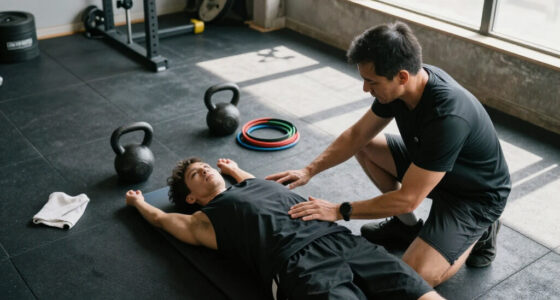
One example in the report is the leg flutter: a person lies on their back, extends their legs, lifts their torso and moves their feet up and down. Though the movement may look straightforward, Fit&Well says it challenges the core to keep the torso from rocking side to side. The report does not provide a set or repetition count for this example.
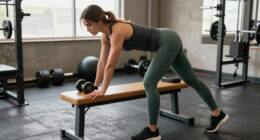
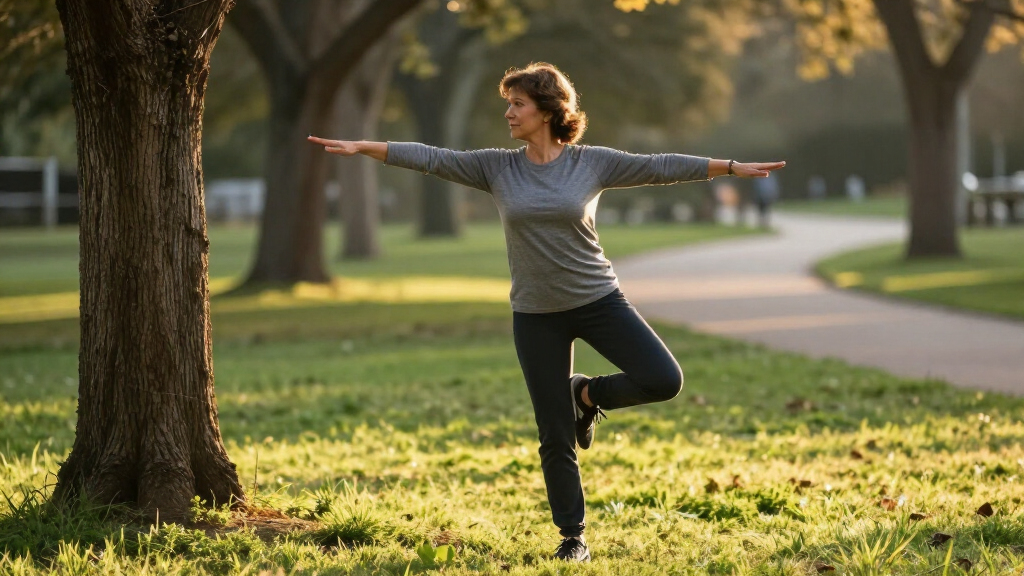
Vicario also recommends unilateral exercises, which work one side of the body at a time. The source names single-leg deadlifts and lunges as examples. The featured workout is described as using a lighter and a somewhat heavier dumbbell, with around 20 minutes set aside, but the supplied report does not include a full exercise sequence, weights, or detailed instructions.
Training Control for Everyday Movement
The recommendation highlights a fitness goal beyond lifting heavier weights: practicing how to remain steady while moving. Balance and stability are relevant to everyday actions that involve shifting position or relying on one leg, while Vicario connects these abilities with confidence and independence as people age.
That is the trainer’s rationale, not a reported clinical finding. The source offers no study results, injury data, or evidence that this particular routine reduces falls or extends healthspan. Readers can take the article as an expert’s suggested way to include balance challenges in exercise, rather than a guarantee of a specific health outcome.
The practical appeal is that the routine is presented as a short, at-home option requiring only two dumbbells. However, the source does not say that equipment is mandatory for every movement or provide modifications for people who need support, have pain, or are new to exercise.
As an affiliate, we earn on qualifying purchases.
Strength Is Only One Training Focus
Fit&Well sets Vicario’s advice against the familiar emphasis on strength training with age. The report says strength work is often discussed for its role in maintaining muscle mass and bone density, then adds balance and stability as other abilities to train. It does not argue that one type of exercise replaces another.
The workout combines two broad movement demands: keeping the trunk steady during motion and controlling the body in one-sided exercises. In the report’s examples, the leg flutter challenges trunk control, while a single-leg deadlift or lunge tests balance as the body moves through a less symmetrical position. Vicario says combining these styles can train the core to stabilize the body when balance is challenged.
The source identifies Vicario as PVOLVE’s chief training officer and attributes the workout rationale to her. It does not provide independent expert commentary or explain how the routine was tested. Its scope is a trainer’s practical recommendation, not a comparison of workout programs.
““Balance and stability aren’t just fitness skills. They’re part of maintaining independence and continuing to do the things we love, increasing our healthspan.””
— Antonietta Vicario, PVOLVE chief training officer, as quoted by Fit&Well
As an affiliate, we earn on qualifying purchases.
Workout Details and Evidence Gaps
The source material does not include the workout’s complete exercise list, order, repetitions, rest periods, or recommended dumbbell weights. It also gives no publication date, so the timing of the report cannot be pinned down more precisely from the supplied information.
There is no evidence in the report establishing that this workout prevents falls, improves independence, or produces a particular healthspan benefit. It does not describe participant testing or cite research specific to Vicario’s routine. People with balance concerns, injuries, pain, or health conditions may need individualized advice before trying loaded single-leg movements; the source does not offer tailored safety guidance.
core stabilization exercise equipment
As an affiliate, we earn on qualifying purchases.
As an affiliate, we earn on qualifying purchases.
How Readers Can Use the Advice
Fit&Well presents the routine as an at-home workout, but its supplied report does not give enough detail to reproduce every part of the program. Readers seeking the exact sequence would need to consult the original Fit&Well article or workout instructions. Before attempting exercises with dumbbells, people should choose loads they can control and use a stable support if needed; those with existing conditions or concerns about balance should seek guidance from a qualified health or exercise professional.
No follow-up study, new publication, or additional milestone is identified in the source. The development is the publication of Vicario’s recommendation, and any claims about results beyond the exercise rationale remain unconfirmed here.
balance and stability training gear
As an affiliate, we earn on qualifying purchases.
As an affiliate, we earn on qualifying purchases.
Key Questions
What does the workout aim to train?
It combines core-control work with unilateral movements, such as single-leg deadlifts or lunges, to challenge balance and stability.
What equipment does the report say is needed?
Fit&Well describes a home workout using two dumbbells: one lighter weight and one somewhat heavier. The supplied text does not specify exact weights.
How long is the workout?
The report says to set aside about 20 minutes. It does not provide a complete timed schedule in the source material supplied here.
Does this routine prevent falls or guarantee independence?
No such result is established in the report. Vicario explains why she values balance and stability training, but the source gives no clinical evidence that this particular workout prevents falls or guarantees independence.
Source: rss
Fall Picks
fall essentials
As an affiliate, we earn on qualifying purchases.