
TL;DR

Get workout gear delivered free with Prime
- Fast, free delivery on millions of items
- Prime Video, Amazon Music and more included
- Member-only deals all year
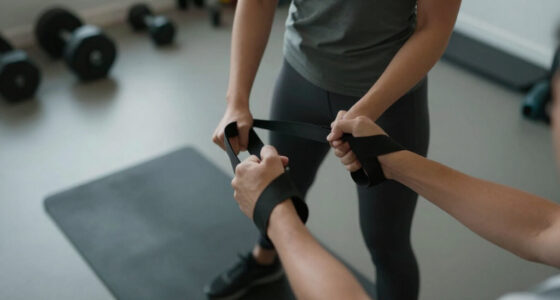
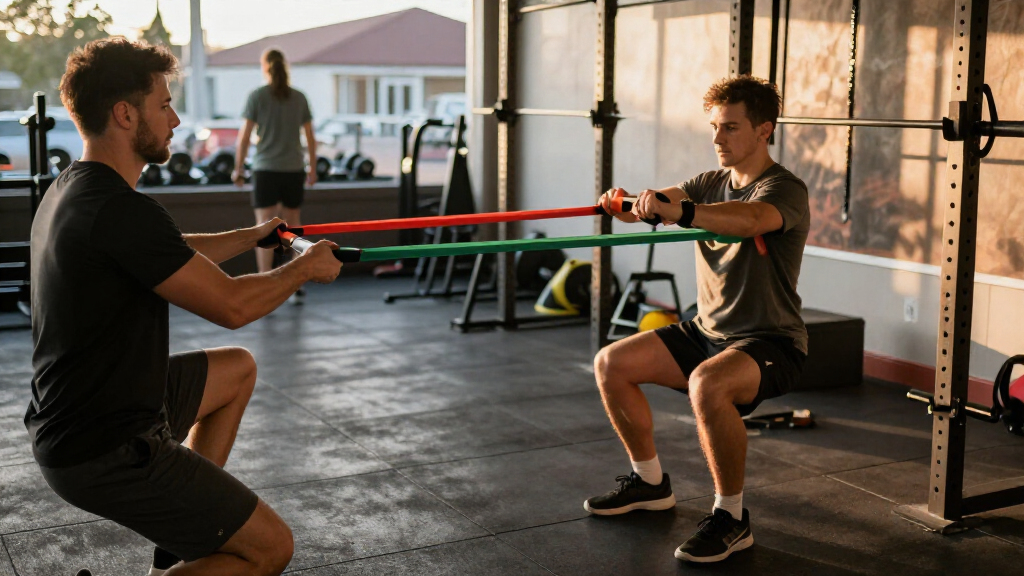
Strength and conditioning coach Matt Van Mol shared four resistance-band exercises he says he uses most days to work on mobility in the shoulders, lower back and hips. The routine uses a long-loop band and takes about four minutes, according to Fit&Well; its benefits for other people have not been established by the source report.
Strength and conditioning coach Matt Van Mol has shared a four-move resistance-band routine that he says he uses most days to work on mobility in his shoulders, hips and lower back. In a report by Fit&Well, Van Mol said the sequence takes about four minutes and requires a long-loop resistance band; the publication did not report research showing that the routine produces the same results for everyone.
The four exercises are a shoulder dislocation, a banded cat-cow, a kickstand-stance hinge pulse and a band side bend. Fit&Well reports that Van Mol developed the routine after years of lower-back pain and now uses it most days. He is also a co-founder of resistance-band brand Strong Band.
For the shoulder movement, the band is held with the hands wide apart and moved overhead, behind the body and back to the starting position. The listed dose is 10 to 12 repetitions. The cat-cow is performed on hands and knees with the band lightly pressing against the lower back, focusing on arching and rounding that area for 60 seconds.
The hinge pulse is done for 30 seconds per side, with most weight on the forward leg as the hips move through a small range. The side bend also takes 30 seconds per side: the user bends away from the band’s pull, returns to center and bends against it. Fit&Well advises starting with the lightest resistance. Van Mol’s routine is a coach’s recommendation, not a treatment plan or a guarantee of improved mobility.
A Short Routine for Daily Mobility Work
The routine offers readers a specific, time-limited sequence rather than a general recommendation to stretch. Its movements target different areas: shoulder rotation, controlled movement in the lower back, hip motion and the muscles along the sides of the torso. A band can provide resistance or a tactile cue during those movements, as Van Mol describes.
That does not establish that four minutes a day will resolve pain or improve mobility for every person. The source report describes Van Mol’s own practice and explanations, but gives no clinical evidence, comparison group or measured outcomes for this particular sequence. People with pain, injuries or other health concerns may need individual guidance before trying it.
Products Worth Considering

Garmin Venu 3S GPS Smartwatch with AMOLED Display, Soft Gold and French Gray Silicone Band

Fitbit Versa 2 Health and Fitness Smartwatch with Heart Rate, Alexa, Music, Sleep and Swim Tracking

Therabody SmartGoggles 2nd Gen Heated Eye and Temple Massager
As an affiliate, we earn on qualifying purchases.
How the Coach Describes Mobility
Van Mol told Fit&Well that mobility is not only the distance a person can stretch, but also the range of motion they can control. He said bands may assist someone into a position or add resistance near the end of a movement. These are his explanations of the exercises, rather than findings independently evaluated in the report.
Fit&Well presents the exercises as usable with a long-loop resistance band. The publication also mentions progress lines on Strong Band products, which Van Mol said can help users adjust tension. Those branded lines are not required for the routine, and the report does not provide independent evidence that they improve results.
“Mobility isn’t just how far you can stretch; it’s how much range you can actually control.”
— Matt Van Mol, strength and conditioning coach, speaking to Fit&Well
Evidence and Individual Suitability
The source material does not say when the Fit&Well report was published, nor does it provide independent testing of Van Mol’s routine. It is therefore unclear how much, or for whom, the sequence improves mobility. The report also does not establish that the exercises prevent or treat lower-back pain.
Instructions in the article do not cover every possible limitation, such as a pre-existing injury or difficulty performing a movement. The appropriate band resistance and range of motion will vary by person. Readers should stop if an exercise causes pain and seek qualified professional advice when health conditions or persistent symptoms are involved.
What Readers Can Check Before Starting
Fit&Well’s report provides the exercise order, time or repetition guidance and basic setup, but readers should check the original demonstrations for movement details before attempting the sequence. Start with a light resistance band and controlled motion, as the report recommends, rather than pulling into a position aggressively.
No follow-up study, expert review or additional outcome data is included in the supplied source material. For now, the routine should be understood as one coach’s personal mobility practice, not a universally tested program. Anyone with an injury, significant pain or a health condition should ask a qualified health professional whether these movements are suitable.
Key Questions
What are the four resistance-band exercises?
They are a shoulder dislocation, banded cat-cow, kickstand-stance hinge pulse and band side bend.
How long does the routine take?
Van Mol told Fit&Well it takes about four minutes. The listed timings include 60 seconds for the cat-cow and 30 seconds per side for the hinge pulse and side bend, plus 10 to 12 shoulder repetitions.
What equipment is needed?
The routine calls for a long-loop resistance band. Fit&Well advises starting with the lightest resistance; it does not say that a Strong Band product is necessary.
Is the routine proven to relieve back pain?
No such finding is established in the source report. Van Mol said he developed the routine after years of lower-back pain, but the article provides no clinical evidence that it treats pain or works the same way for other people.
Source: fitandwell.com