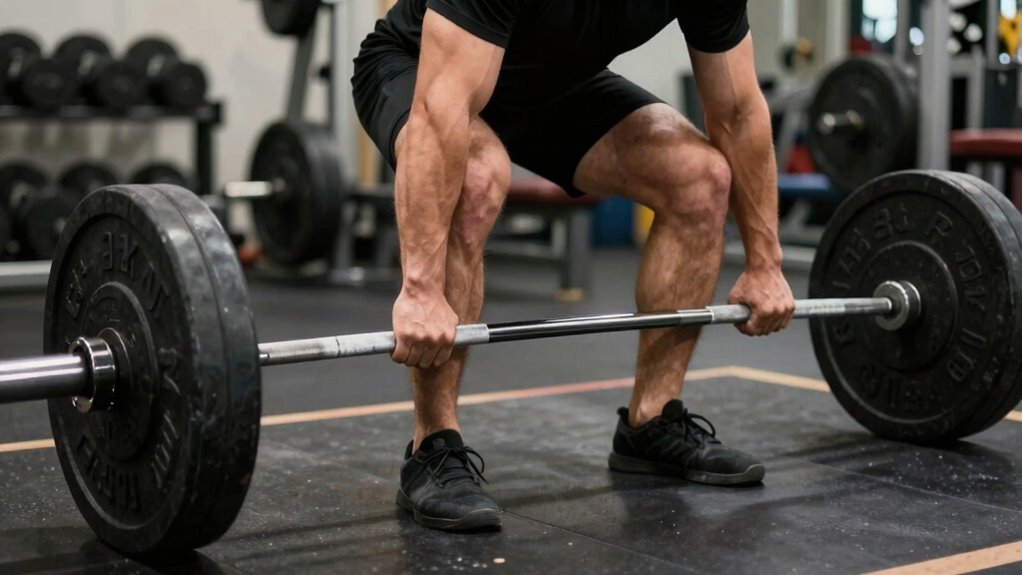
To stop yanking the bar during your deadlift, focus on proper form by initiating the movement with a smooth push through your heels, engaging your hips and legs early. Keep the bar close to your body and avoid jerky pulls by maintaining steady, controlled motion. Remember, lifting should be deliberate, not explosive. Mastering these mechanics helps prevent pulling with your arms. Keep paying attention to your technique—you’ll find more subtle tips that can make a big difference.

Get workout gear delivered free with Prime
- Fast, free delivery on millions of items
- Prime Video, Amazon Music and more included
- Member-only deals all year
Key Takeaways
- Push through your heels and drive with your hips and legs, avoiding pulling with your arms.
- Keep the bar close to your body throughout the lift to prevent yanking.
- Initiate the lift with a steady, controlled motion rather than explosive or jerky movements.
- Use a proper grip (e.g., hook grip) to improve control and reduce the tendency to yank.
- Focus on maintaining a neutral spine and engaging your core for stability during the lift.
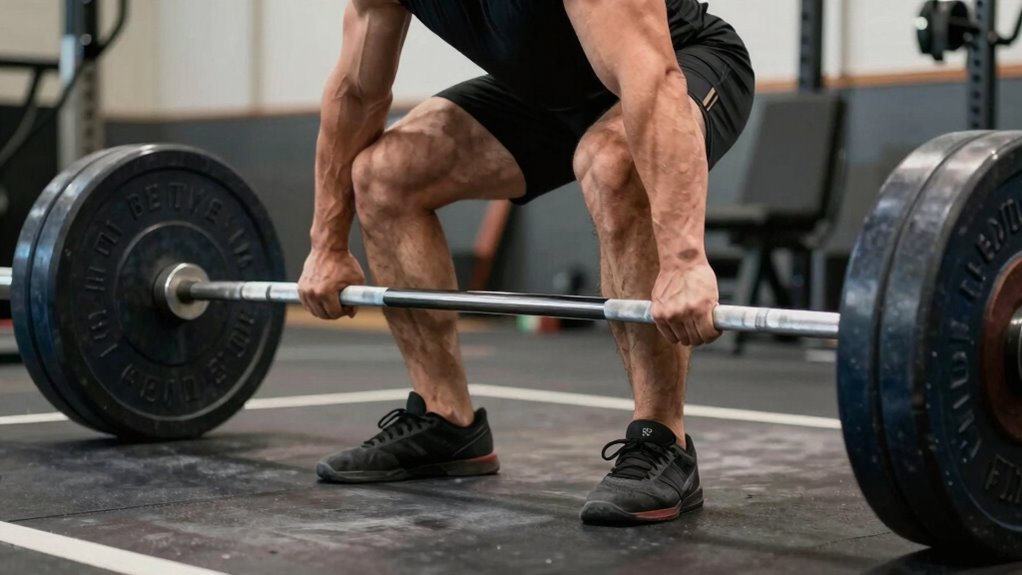
The deadlift from the floor is a fundamental strength exercise that targets multiple muscle groups, including your hamstrings, glutes, lower back, and grip. To perform it effectively and safely, you need to understand the importance of proper lifting biomechanics. When you lift, your goal is to generate force smoothly from the ground up, using your legs and hips to drive the movement rather than yanking the bar with your arms. This means maintaining a neutral spine, engaging your core, and driving through your heels rather than pulling with your arms or jerking the bar upward. Proper lifting biomechanics ensure that your muscles work together efficiently, reducing the risk of injury and helping you lift heavier with better form.
Focus on proper lifting biomechanics—drive through your heels, keep a neutral spine, and lift smoothly to prevent injury and maximize strength.
One common mistake people make when deadlifting is yanking the bar off the ground. This often happens when you rely too heavily on your arms or attempt to lift with a sudden, explosive pull without proper technique. Instead, focus on initiating the lift with your legs by pushing through your heels, keeping the bar close to your body, and maintaining a steady, controlled movement. Think of it as a smooth, deliberate effort rather than a quick, jerky pull. This approach not only improves your lifting biomechanics but also maximizes muscle engagement and minimizes stress on your lower back.
Another key aspect to acknowledge is grip variations. Your grip plays a crucial role in how effectively and comfortably you lift. There are several grip options, such as double overhand, mixed grip, or hook grip, each with its pros and cons. Double overhand grip is straightforward but can limit how much weight you can hold as your grip fatigues. The mixed grip, with one hand over and one under, provides a stronger hold and is often used for heavier lifts, but it can create imbalances and potential bicep strain if overused. The hook grip, commonly used in Olympic lifting, offers a secure hold with less strain on your grip muscles, allowing you to lift heavier without yanking or losing control of the bar. Additionally, training grip strength**** can significantly improve your deadlift performance and safety.
Regardless of grip choice, focus on maintaining grip strength and consistency. A secure grip ensures that you don’t have to compensate with improper technique or yank the bar up. Practice grip training and experiment with different variations to find what feels most natural and efficient for your body. By understanding lifting biomechanics and choosing the right grip variation, you’ll develop a more controlled, safe deadlift that progresses steadily and helps you avoid the temptation to yank the bar.
As an affiliate, we earn on qualifying purchases.
Frequently Asked Questions
What Are Common Mistakes Beginners Make During Deadlifts?
You often make mistakes like improper foot placement, which can cause instability, and neglecting breathing techniques, leading to poor form. Focus on stance and grip to stay balanced, and breathe correctly—inhale before lifting, exhale as you drive up. Avoid yanking the bar; instead, engage your core and use controlled movements. Paying attention to these details helps prevent injury and improves your deadlift efficiency.
How Can I Improve My Grip Strength for Deadlifting?
To improve your grip strength for deadlifting, focus on grip training exercises like farmer’s carries and plate pinches. Incorporate hand endurance workouts such as dead hangs and towel wrings. Consistently challenge your grip by increasing weight or duration gradually. Using grip aids like chalk or straps sparingly can help, but prioritize building your natural grip strength first. This approach enhances your control and prevents yanking the bar during lifts.
What Warm-Up Exercises Are Recommended Before Deadlifting?
Imagine your muscles waking up like a sleeping giant—ready to conquer! You should start with dynamic stretching to loosen up your hips, hamstrings, and back, then move into mobility drills like hip circles and arm swings. These warm-up exercises activate your muscles, improve flexibility, and prevent injury. Spending just 10-15 minutes on these routines primes your body, making your deadlift smoother, safer, and more powerful.
How Do I Prevent Lower Back Strain During Deadlifts?
To prevent lower back strain during deadlifts, focus on core engagement and proper hip hinge technique. Keep your core tight throughout the lift to stabilize your spine, and hinge at your hips rather than bending your back. Maintain a neutral spine, and avoid overextending or rounding. Practicing controlled movements with proper form helps safeguard your lower back and ensures safe, effective deadlifting.
When Should I Increase My Deadlift Weight?
Think of your progress like climbing Everest—you shouldn’t push for the next level until you’ve comfortably mastered the current. You should increase your deadlift weight when your form feels solid, and you’re consistently hitting your target reps without struggling. Focus on progression timing—gradually add weight instead of rushing—and overcoming plateaus by adjusting your training. Patience guarantees steady gains and helps prevent injury, making your ascent safer and more sustainable.
As an affiliate, we earn on qualifying purchases.
Conclusion
Now that you know how to avoid yanking the bar, you’re ready to lift with proper form. Imagine Sarah, a beginner who struggled with her deadlifts—once she focused on a smooth, controlled lift, her strength improved and her injury risk dropped. Keep practicing these tips consistently, stay mindful of your technique, and you’ll see progress without risking injury. Remember, a controlled lift is a stronger lift—so lift smart and stay safe!
As an affiliate, we earn on qualifying purchases.
As an affiliate, we earn on qualifying purchases.
Fall Picks
fall essentials
As an affiliate, we earn on qualifying purchases.