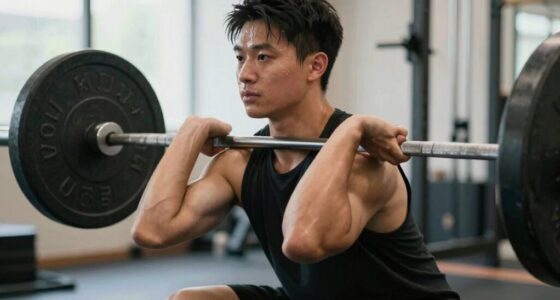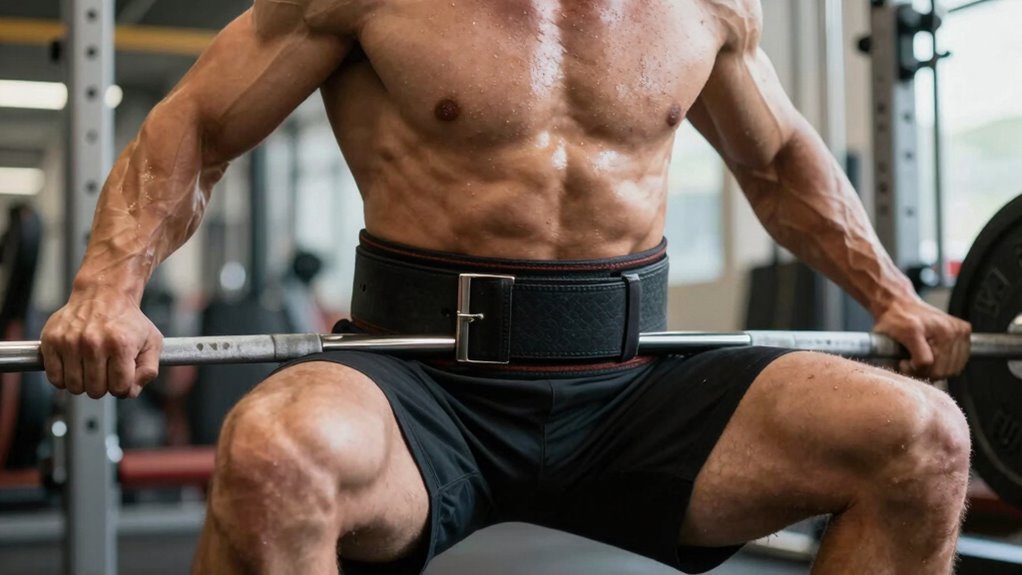

To make belt bracing work, focus on the cue to “breathe into your belly” or “create intra-abdominal pressure” before lifting. This helps activate your core muscles, stabilizing your spine. Make certain the belt is snug but comfortable and avoid over-tightening. Practice engaging your core before each lift and coordinate your breath to maintain tension. If you follow these tips, you’ll gain better support and strength—more strategies to improve stability await you.

Get workout gear delivered free with Prime
- Fast, free delivery on millions of items
- Prime Video, Amazon Music and more included
- Member-only deals all year
Key Takeaways
- Focus on diaphragmatic breathing to effectively engage the core before tightening the belt.
- Take a deep breath into your belly to increase intra-abdominal pressure for better support.
- Tighten the belt gradually while maintaining core engagement for optimal stability.
- Synchronize belt tension with core activation to create a stable, unified brace.
- Consistently practice proper bracing cues to reinforce effective belt use during lifts.
Products Worth Considering

Bowflex SelectTech 840 Adjustable Kettlebell

Levoit Core 400S-P Smart Air Purifier for Large Rooms

BowFlex Results Series SelectTech 552 Adjustable Dumbbell
As an affiliate, we earn on qualifying purchases.
Why Bracing With a Belt Improves Your Core Stability During Lifts
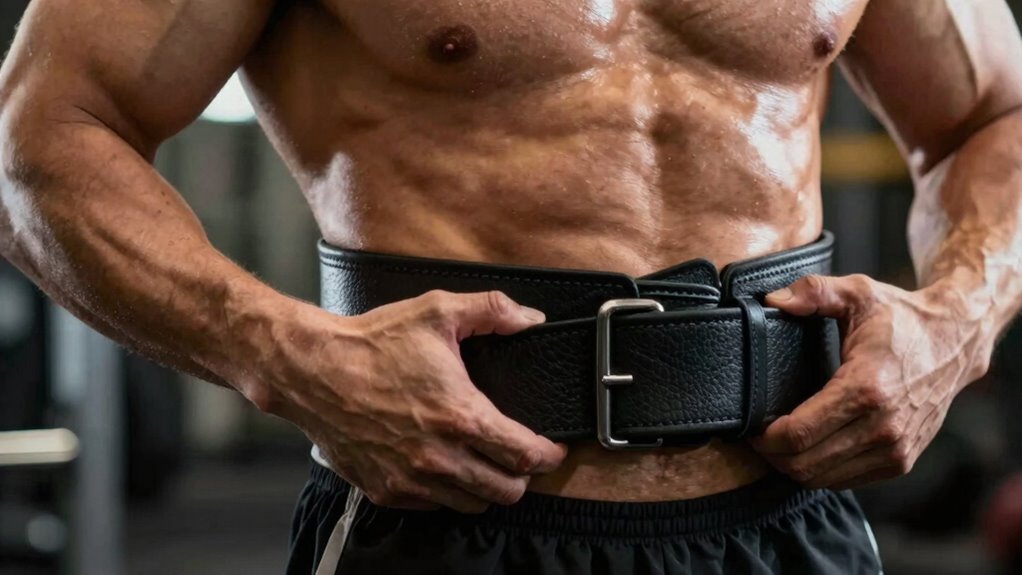
Wearing a belt when you lift can considerably enhance your core stability, especially during heavy or challenging lifts. A belt helps increase core activation by providing external support, which prompts your muscles to engage more effectively. This added support creates a firm intra-abdominal pressure, helping you maintain proper spinal alignment and control throughout the lift. As a result, your risk of injury decreases because your core is better equipped to handle the load, reducing undue stress on your lower back. By stabilizing your midsection, a belt allows you to lift heavier with confidence, knowing your core is actively supporting your spine. Overall, using a belt during demanding lifts boosts core stability and plays a crucial role in injury prevention.
How to Properly Brace With a Belt for Better Lifting Performance
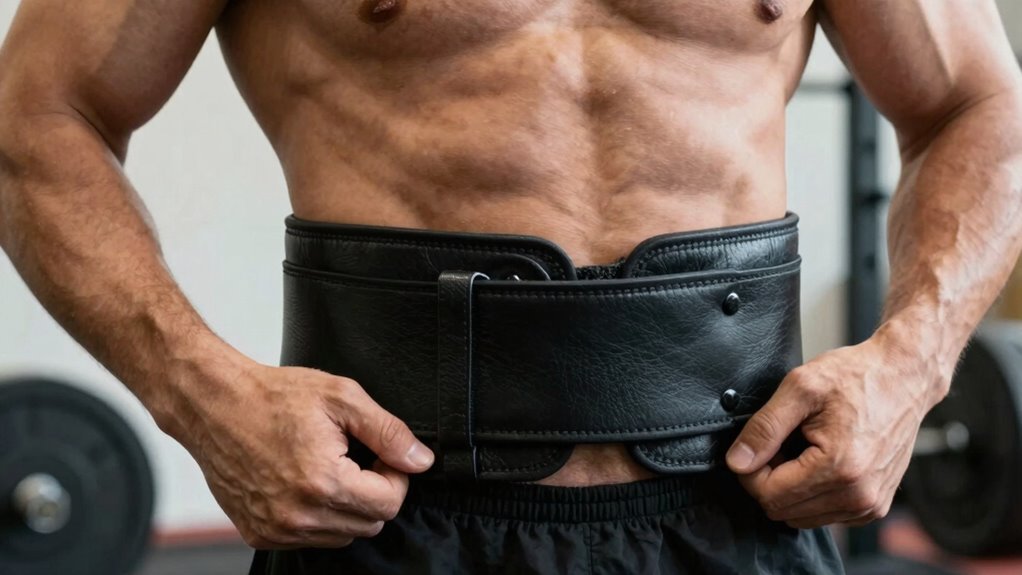
To maximize the benefits of your belt during lifts, it’s important to learn how to brace properly. First, ensure your belt fits well; proper belt sizing means it’s snug but not uncomfortable. Next, choose the right material—leather offers durability, while nylon provides flexibility. When bracing, tighten the belt just enough to feel secure without restricting breathing. Focus on engaging your core by taking a deep breath into your belly, then brace as if preparing for a punch. Maintain this tension throughout the lift. Here’s how to do it:
Proper belt fit and core engagement are key to maximizing lifting benefits.
- Select the correct belt size for a snug fit.
- Pick a material suited to your lifting style.
- Tighten the belt progressively as you prepare to lift.
- Focus on core engagement and consistent pressure during the lift.
- Remember that proper bracing techniques can influence how effectively you learn and apply bracing techniques.
Common Mistakes When Using a Belt for Bracing: And How to Fix Them
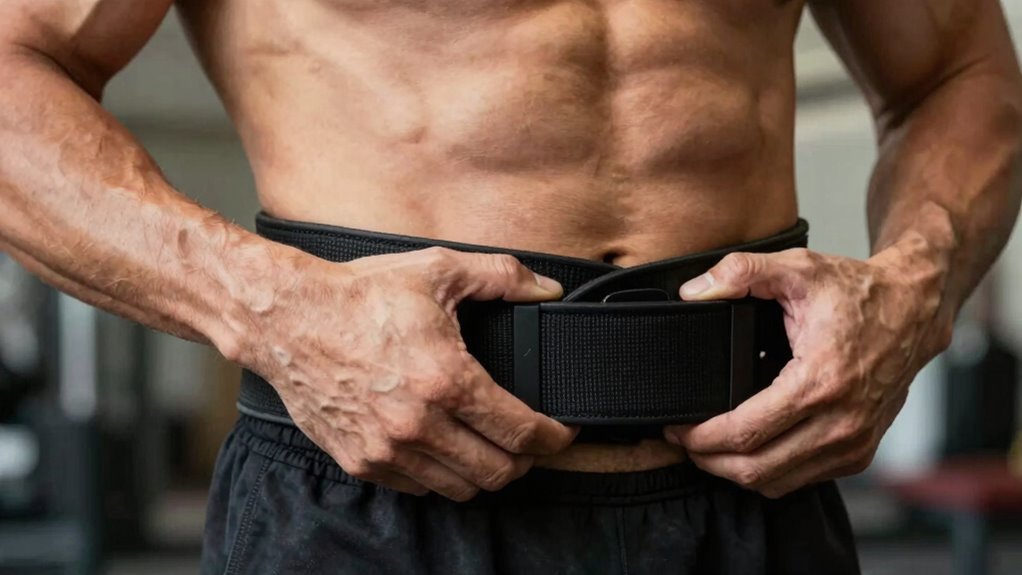
Many lifters make common mistakes when using a belt for bracing, which can reduce stability and increase injury risk. One mistake is poor belt positioning, often placing it too high or low, which compromises core support. Another is neglecting breath coordination; you should inhale deeply before tightening the belt to activate your core effectively. Failing to practice proper breath control can lead to inadequate bracing during lifts. To fix these issues, ensure your belt sits snugly around your lower ribs and hips, not your waist. Focus on diaphragmatic breathing, filling your belly first. Proper belt placement and breath control are essential for maximum stability during heavy lifts. Developing consistent bracing techniques, including proper core engagement, can significantly enhance lifting safety and performance. Additionally, understanding the importance of proper technique can prevent common pitfalls and optimize your lifting routine. Here’s a quick comparison:
| Mistake | Fix |
|---|---|
| Incorrect belt placement | Position belt around lower ribs and hips |
| Poor breath coordination | Practice deep diaphragmatic breaths before bracing |
| Over-tightening | Adjust to snug, not painfully tight |
| Under-tightening | Ensure belt is firm but comfortable |
| Relying only on belt | Combine belt use with proper breath and core engagement |
How to Incorporate Belt Bracing Into Your Lifting Routine for Maximum Gains
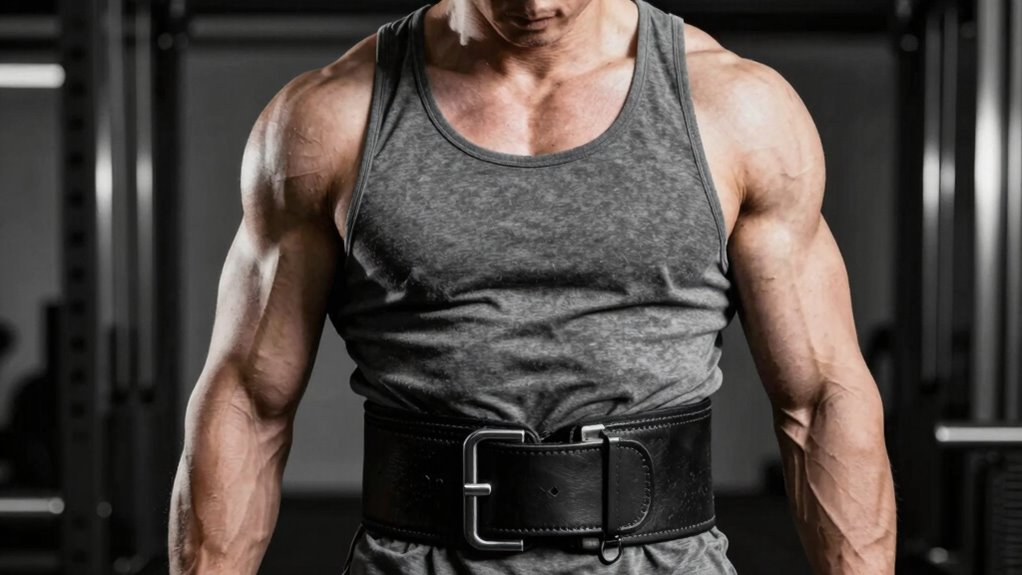
Integrating belt bracing into your lifting routine can considerably enhance stability and power during heavy lifts. To do this effectively, consider these steps:
- Choose the right belt material—leather or nylon—that suits your comfort and durability needs.
- Make certain proper belt sizing; it should fit snugly around your waist without restricting breathing.
- Practice bracing techniques consistently, focusing on engaging your core before lifting.
- Incorporate belt use gradually, starting with lighter weights to build confidence and proper form.
- Understanding cybersecurity tactics such as red and blue team strategies can also help you recognize and adapt to potential vulnerabilities in your training routines. Additionally, paying attention to training safety protocols ensures you minimize injury risks while maximizing gains.
- Developing proper technique and awareness of ergonomics can further optimize your lifting safety and effectiveness. Emphasizing core engagement can enhance the effectiveness of your belt bracing and improve overall stability. Incorporating training evidence-based methods can also help you refine your routine based on proven practices.
Troubleshooting Belt Bracing: Fixing Common Issues to Improve Stability
Even with proper technique, you might encounter issues that hinder your belt bracing effectiveness. One common problem is inconsistent belt tension, which can cause instability during lifts. Make sure your belt is snug but not overly tight; too tight can restrict breathing, while too loose fails to support your core. Additionally, poor brace timing reduces stability. Before lifting, brace your core by tightening your abs and engaging your lats in a coordinated manner. Practice engaging your core before each set to develop a consistent brace timing. Adjust your belt tension gradually and focus on syncing your brace with your lifting movement. Regularly check and refine your technique to ensure your belt provides ideal support, helping you lift heavier with better control and safety. Incorporating body piercings such as clitoral hood piercings can also improve your overall lifting efficiency by providing additional confidence and comfort during movement. Paying attention to core activation can further enhance your bracing effectiveness and overall stability during lifts. Developing a consistent technique cue can serve as a mental reminder to maintain proper form throughout your lifts. Furthermore, understanding the battery maintenance tips, such as proper charger settings and low-voltage cutoff, can help ensure your equipment performs reliably during training sessions.
Frequently Asked Questions
Can Belt Bracing Be Effective Without Proper Technique?
Belt bracing can’t be effective without proper technique, no matter how comfortable the belt feels. If you don’t maintain technique consistency, you risk losing stability and increasing injury chances. Focus on tight, controlled bracing with a snug belt that supports your core, but avoid over-tightening, which can compromise comfort. Proper technique guarantees your belt provides maximum benefit, helping you lift safely and effectively every time.
What Types of Belts Are Best for Bracing?
You should choose a sturdy leather belt for bracing, as it provides better support and durability compared to nylon. Opt for a belt with sufficient thickness—typically around 10-13mm—to guarantee stability during heavy lifts. Thicker belts distribute pressure more evenly, helping you brace effectively. While nylon belts are lighter and more flexible, leather belts with the right thickness give you the firm support needed for ideal bracing.
How Tight Should a Belt Be for Optimal Stability?
Think of your belt as a supportive partner—tight enough to feel secure but not so tight you can’t breathe. For ideal stability, position it snugly around your waist, just above your hips, ensuring core engagement. You want enough tension to activate your core muscles without restricting movement. Focus on a comfortable, firm fit that encourages proper bracing, helping you lift safely and maintain control during heavy lifts.
Does Belt Bracing Work Equally Well for All Lifts?
Belt bracing works differently depending on your lift, belt material, and width. For heavy lifts like deadlifts and squats, a sturdy leather or nylon belt with a wider design provides better support. Narrower belts may be less effective for maximal effort lifts. You should adjust your bracing and belt tightness based on the lift’s demands, ensuring your core stays engaged and stable, regardless of the belt’s specifics.
Are There Risks Associated With Incorrect Belt Bracing?
Yes, incorrect belt bracing can pose risks, such as injury or compromised technique. When you don’t brace properly, you might strain your back or shoulders, increasing injury chances. To prevent this, focus on technique mastery and make certain you’re engaging your core correctly before lifting. Always practice proper bracing, use a belt suited to your size, and listen to your body to maintain safety and maximize injury prevention during heavy lifts.
Conclusion
Think of your belt as a sturdy shield, anchoring your core like a fortress against chaos. When you brace correctly, you’re building a strong wall that withstands any pressure during lifts. Keep practicing this technique like tending to a garden—steady and intentional. With consistent effort, you’ll transform your belt from mere equipment into a symbol of resilience, empowering you to conquer heavier weights and reach new heights with unwavering confidence.