

Sandbag training feels harder than it looks because the unpredictable shifts in weight require you to constantly stabilize and adjust, engaging multiple muscles and challenging your balance. The uneven load forces your core and grip strength to work harder, making even simple movements feel tough. This instability makes exercises more demanding and effective. Keep going, and you’ll discover how this controlled chaos boosts strength, stability, and mental toughness in ways traditional workouts can’t match.

Get workout gear delivered free with Prime
- Fast, free delivery on millions of items
- Prime Video, Amazon Music and more included
- Member-only deals all year
Key Takeaways
- Unpredictable weight shifts create instability, requiring constant body adjustments that increase effort and muscle engagement.
- Shifting loads challenge balance, activating stabilizer muscles and making exercises feel more demanding.
- Maintaining proper form is harder due to movement unpredictability, intensifying muscle work and core activation.
- Sandbags force muscles to stabilize dynamically, preventing plateaus and enhancing functional strength.
- The mental focus needed to control unstable loads contributes to the perception that sandbag exercises are tougher than they appear.
As an affiliate, we earn on qualifying purchases.
Why Do Sandbag Exercises Feel So Much Harder Than They Look?

Sandbag exercises often feel much harder than they look because of the unpredictable nature of the bag’s weight distribution. This instability challenges your muscles in ways that traditional weights can’t, leading to quicker muscle fatigue. As you shift and lift the bag, your body must constantly adjust, engaging multiple muscle groups simultaneously. This requires intense mental toughness, pushing you past your comfort zone. The unpredictable weight forces you to stay focused and adapt quickly, making each rep more demanding. You’ll notice fatigue setting in faster, but with persistence, your strength and endurance improve. The mental challenge is just as significant as the physical, helping you develop resilience and concentration. Incorporating training variability enhances your ability to handle unpredictable loads, further boosting your overall fitness. Understanding the dynamic nature of sandbag training can help you better tailor your workouts for maximum results. Additionally, recognizing the importance of functional strength can make your training more applicable to real-world scenarios. Embracing mental grit during these workouts not only increases physical toughness but also builds confidence in your capabilities.
adjustable sandbag for strength training
As an affiliate, we earn on qualifying purchases.
As an affiliate, we earn on qualifying purchases.
How Instability Makes Sandbag Training Tougher
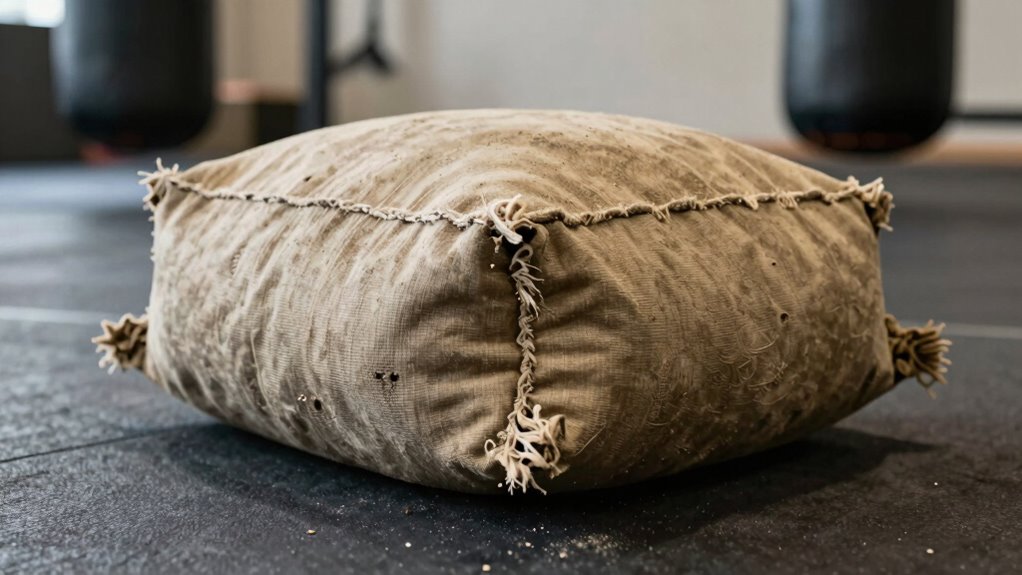
Because of its shifting weight, instability substantially increases the difficulty of sandbag training. When the sandbag moves unpredictably, you face constant balance challenges, forcing your stabilizer muscles to work harder. This instability affects key stability factors, demanding greater engagement of core muscles and improved coordination. As the weight shifts during lifts or holds, maintaining proper form becomes tougher, making every movement more complex. You can’t rely solely on strength; you must also focus on controlling the bag’s position. This added instability pushes your muscles to adapt quickly, enhancing overall strength and stability. Incorporating psychological resilience training can help you better cope with the unpredictability and maintain focus during challenging exercises. Additionally, developing motor control is crucial for managing the dynamic nature of sandbag movements. Improving sensorimotor integration can further boost your ability to react swiftly and accurately. Recognizing the importance of stability training can lead to better long-term results. Furthermore, targeted balance exercises can accelerate your ability to stabilize under shifting loads. While it feels demanding, embracing these stability factors leads to better functional fitness, helping you develop balance and coordination that carry over to everyday activities.
As an affiliate, we earn on qualifying purchases.
Why Sandbag Variability Challenges Your Muscles Differently
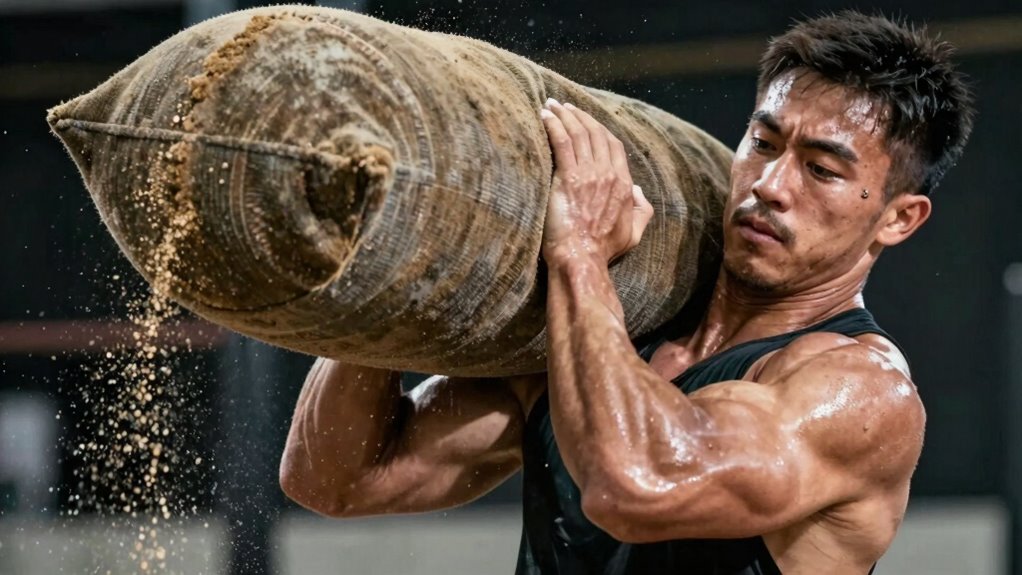
The variability of sandbags forces your muscles to adapt to constantly changing conditions, which differs markedly from traditional fixed-weight training. This training variability challenges your muscles to stabilize and recruit different muscle fibers with each lift. As a result, your muscles undergo continuous adaptation, preventing plateaus and enhancing overall strength. Here’s how different load distributions affect muscle engagement:
| Load Distribution | Muscle Focus | Stability Challenge |
|---|---|---|
| Even | Symmetrical strength | Less dynamic stability |
| Uneven | Core and grip activation | High stability demands |
| Shifting | Dynamic muscle engagement | Constant stabilization |
This constant muscle adaptation boosts functional strength and improves your resilience to real-world movements.
As an affiliate, we earn on qualifying purchases.
The Importance of Core and Grip Strength in Sandbag Workouts
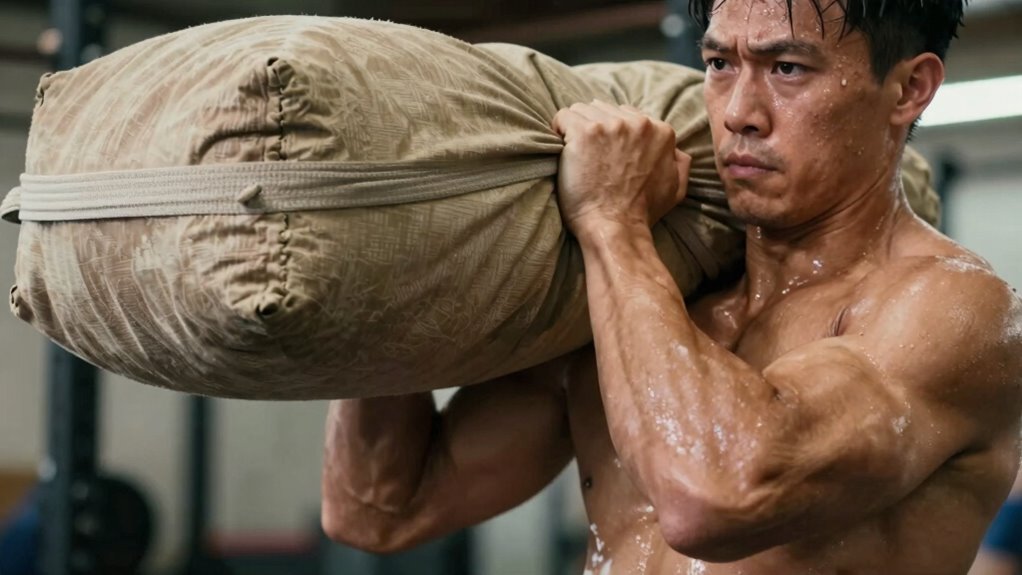
As you challenge your muscles with shifting load distributions, your core and grip muscles are put to the test in new ways. Maintaining balance during sandbag exercises depends heavily on your core stability, which supports your spine and transmits power efficiently. Additionally, grip endurance becomes indispensable as you hold and lift uneven weights, preventing fatigue that could compromise form. To improve these areas, focus on:
- Engaging your core to stabilize your entire body during lifts.
- Incorporating grip-strengthening exercises like farmer’s carries.
- Practicing holds to boost grip endurance under fatigue.
- Recognizing that muscle activation during sandbag work enhances overall stability and performance. Proper technique also plays a crucial role in maximizing effectiveness and reducing injury risk.
Furthermore, understanding how neuromuscular coordination influences muscle engagement can lead to more effective training outcomes. Developing strength training techniques specific to sandbag workouts can further enhance your ability to handle unpredictable loads.
Building both core stability and grip endurance helps you control the sandbag better, reduces injury risk, and allows you to handle heavier loads with confidence. These fundamentals make your workouts more effective and safer.
Common Mistakes That Make Sandbag Training More Difficult
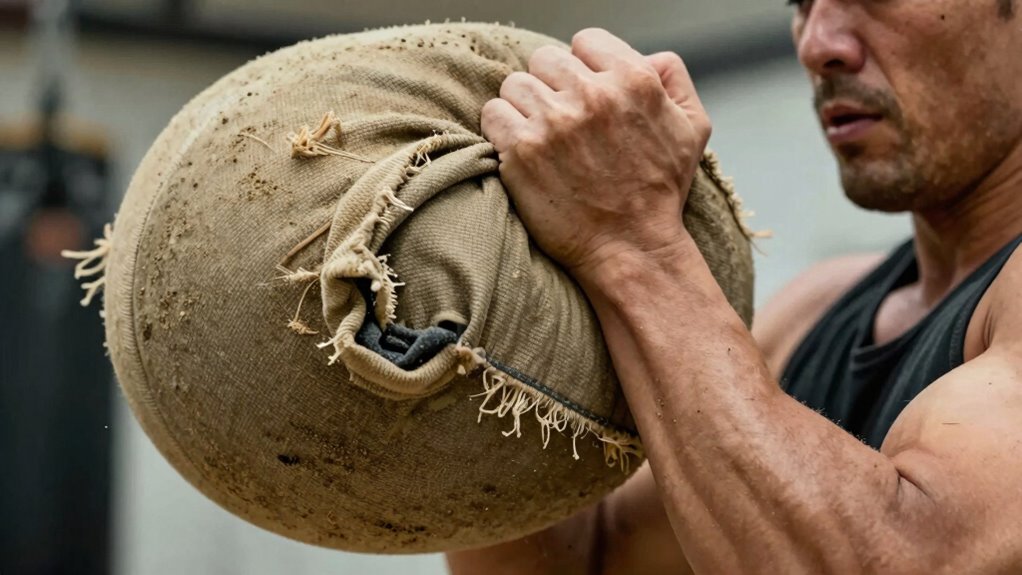
One common mistake that makes sandbag training more difficult is neglecting proper form, which can cause instability and increase injury risk. Poor technique often stems from ignoring balancing techniques, leading to uneven weight distribution and difficulty controlling the sandbag. Additionally, overlooking equipment maintenance can make workouts harder; a worn or damaged sandbag may shift unpredictably, disrupting your movement. To avoid these issues, focus on maintaining proper posture and engaging your core to stay balanced. Regularly check and maintain your equipment—replace worn straps or torn bags—to ensure safe, smooth training. Paying attention to gear and dress codes can also improve comfort and safety during training sessions. Being mindful of training environment and proper attire helps prevent accidents and enhances performance. Proper form and well-maintained equipment help you execute movements more efficiently, reducing the chances of accidents and making your workouts more effective. Incorporating equipment maintenance routines into your training schedule can further prevent unexpected setbacks. Additionally, understanding the importance of dog breed characteristics can help tailor your training approach for better results. Staying informed about performance metrics can guide you in making necessary adjustments to improve your training outcomes.
Tips for Progressing Safely and Effectively With Sandbags
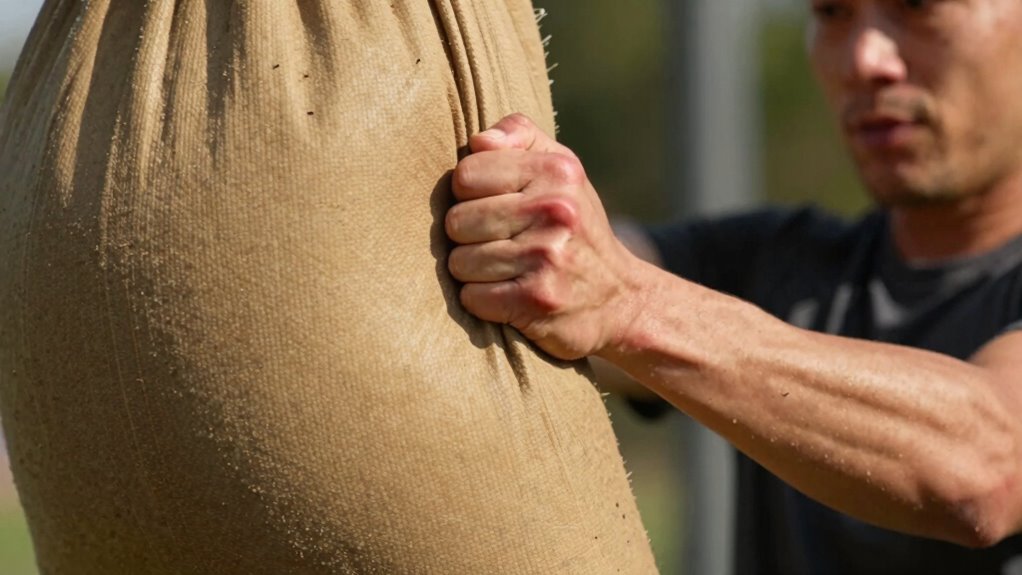
To progress safely and effectively with sandbag training, it’s vital to increase the challenge gradually rather than rushing into heavier weights or more complex movements. Focus on applying progressive overload thoughtfully, which means incrementally increasing the weight or intensity while maintaining proper form. This approach helps prevent injury and ensures continued gains. Additionally, paying attention to work-life harmony can help maintain motivation and prevent burnout during your training journey. Here are some tips to consider: 1. Start with lighter sandbags to master proper form before adding weight. 2. Incrementally increase load or complexity once your technique feels stable. 3. Never sacrifice proper form for more reps or heavier weights; quality over quantity is key. Incorporating proper training techniques and understanding training progression can further enhance safety and effectiveness. Recognizing the importance of training volume can also help you avoid overtraining and optimize recovery.
How to Incorporate Sandbags Into Your Fitness Routine
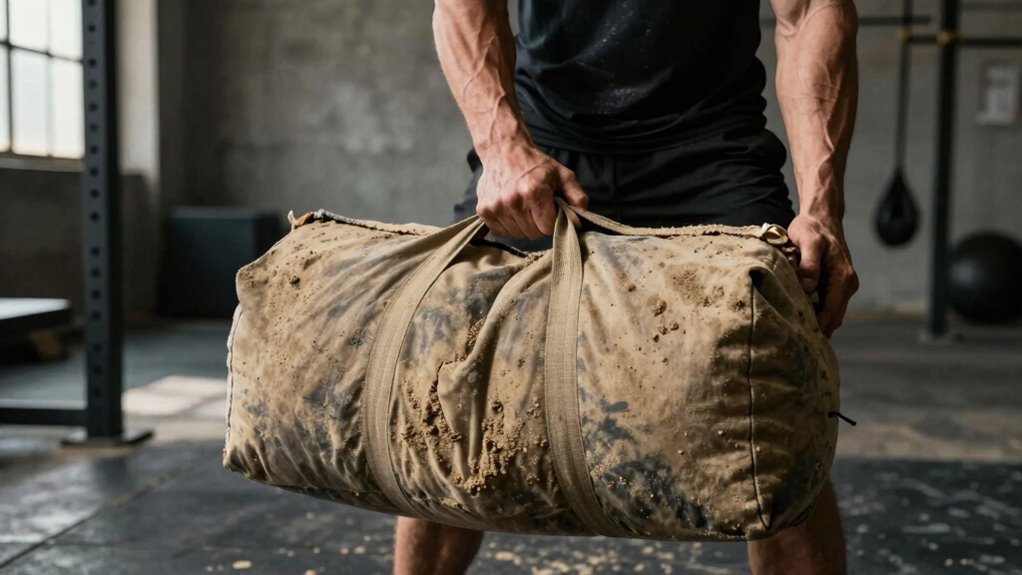
To incorporate sandbags into your routine effectively, start by choosing the right sandbag for your fitness level and goals. Focus on proper lifting techniques to prevent injury and maximize benefits. Then, seamlessly integrate sandbag exercises into your existing workouts for variety and added challenge. Additionally, understanding cultural exploration can enhance your motivation and overall experience with fitness routines, as it can foster a deeper connection to the community and its shared practices. Recognizing the historical significance of traditional strength training methods can also enrich your appreciation and commitment to diverse exercise modalities. Being aware of different wall surfaces and finishes can help you select appropriate training environments that support safe and effective workouts.
Selecting the Right Sandbag
Choosing the right sandbag is essential for maximizing your workout and preventing injury. To do this effectively, consider these factors:
- Sandbag weight selection: Start with a manageable weight that challenges you without sacrificing form. Gradually increase as your strength improves.
- Material durability considerations: Opt for bags made from tough, rip-resistant fabrics like heavy-duty vinyl or Cordura to withstand intense use.
- Shape and design: Choose a bag with a stable, compact shape that allows for versatile movements and better control during exercises.
Proper Lifting Techniques
Incorporating sandbags into your workout requires proper lifting techniques to maximize effectiveness and prevent injury. Start with a solid lifting posture: keep your back straight, engage your core, and bend at your hips and knees rather than your waist. This helps maintain balance and reduces strain. Your grip technique is equally important—firmly grasp the handles or sides of the sandbag, ensuring a secure hold before lifting. Avoid overly tight grips that cause fatigue; instead, aim for a controlled grip that allows smooth movement. When lifting, lift with your legs rather than your back, and keep the sandbag close to your body to reduce stress on your spine. Consistently applying these techniques ensures safe, efficient training and better results.
Integrating Into Workouts
Adding sandbags to your workouts is a versatile way to boost strength and endurance, because they challenge your stability and engage multiple muscle groups simultaneously. To maximize sandbag versatility, consider these strategies:
- Incorporate sandbag moves into existing routines, such as squats, presses, or deadlifts, to add instability and increase muscle engagement.
- Use sandbags for dynamic exercises like carries or throws, which enhance functional strength and explosive power.
- Vary the load and movement tempo regularly to keep your workout variety fresh and your muscles adapting.
Integrating sandbags seamlessly into your routine not only diversifies your training but also elevates your overall fitness level. These simple adjustments help you access the full potential of sandbag training while keeping your workouts challenging and effective.
FAQs: Troubleshooting Common Sandbag Training Challenges
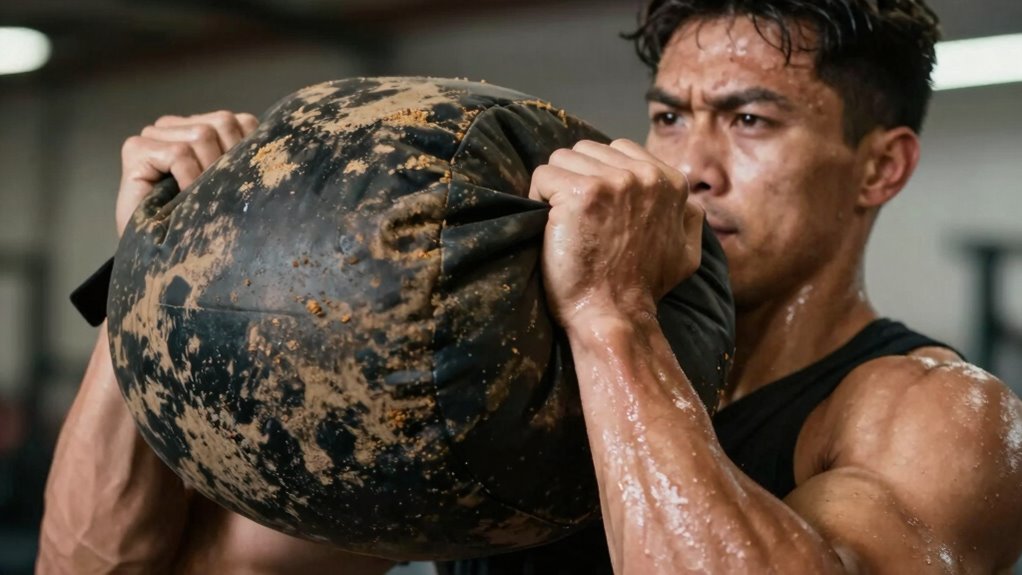
Even experienced sandbag trainers encounter challenges that can hinder their progress. Common issues include choosing the right sandbag weight and managing exercise duration. If your workouts feel too tough or too easy, adjusting these factors can help. For example, a heavier sandbag increases difficulty, but if your form suffers, reduce the weight. Similarly, overly long exercise durations can lead to fatigue and poor technique. Use this table as a guide:
| Challenge | Solution | Tips |
|---|---|---|
| Sandbag feels too heavy | Decrease weight or increase reps | Focus on proper form over load |
| Exercise too easy | Increase weight or reps | Add more challenging movements |
| Fatigue during workout | Shorten exercise duration or rest more | Listen to your body |
| Poor form after fatigue | Reduce weight or duration, focus on technique | Prioritize quality over quantity |
| Inconsistent progress | Vary sandbag weight and exercise duration | Track progress and adjust accordingly |
Frequently Asked Questions
How Often Should I Incorporate Sandbag Exercises Into My Workout?
You should incorporate sandbag exercises 2-3 times a week, allowing for proper progression strategies to avoid overtraining. Focus on gradually increasing the weight and intensity as your strength improves. Remember to include recovery tips, like stretching and rest days, to prevent injury and optimize results. Listen to your body, and adjust frequency based on how you feel, ensuring consistent progress without overexertion.
Can Beginners Safely Start With Sandbag Training?
Starting with sandbag training is like stepping into uncharted waters, but yes, beginners can safely begin with proper guidance. Focus on mastering basic sandbag technique, keep the weight manageable, and prioritize form over intensity. To guarantee beginner safety, start slow, listen to your body, and consider working with a trainer. This approach helps you build strength safely while avoiding injury, making your journey into sandbag workouts both effective and enjoyable.
What Types of Sandbags Are Best for Home Use?
For home use, you should consider both DIY options and commercial sandbags. DIY sandbags are budget-friendly, customizable, and easy to make with old duffel bags and sand. Commercial options, however, offer durability, better handles, and consistency. If you’re just starting out, a sturdy commercial sandbag designed for fitness provides safety and reliability. Choose based on your budget, space, and training goals to get the most out of your workouts.
How Do I Choose the Right Weight for My Fitness Level?
Start with a weight that challenges you without sacrificing proper grip or form. As you build strength, incorporate progressive overload by gradually increasing the sandbag’s weight. Listen to your body and avoid going too heavy too fast, which can lead to poor technique or injury. Focus on maintaining a proper grip throughout your workout, ensuring effective training and steady progress toward your fitness goals.
Are There Specific Injuries Associated With Sandbag Training?
You might experience muscle strain or joint stress if you don’t use proper form during sandbag training. It’s essential to start with a manageable weight and focus on technique to prevent injuries. Pay attention to your body—if you feel pain or discomfort, stop immediately. Gradually increase the weight as your strength improves, and consider consulting a trainer to ensure you’re performing movements securely.
Conclusion
Sandbag training may feel like battling a wild storm—unpredictable and tough, but incredibly rewarding. Embrace the challenge, knowing each wobble and shift is sculpting your strength and stability. With patience and proper technique, you’ll tame the chaos and turn it into a powerful tool in your fitness arsenal. Remember, progress is a journey through unpredictable waters—stay steady, and you’ll come out stronger on the other side.
Halloween Picks
halloween
As an affiliate, we earn on qualifying purchases.