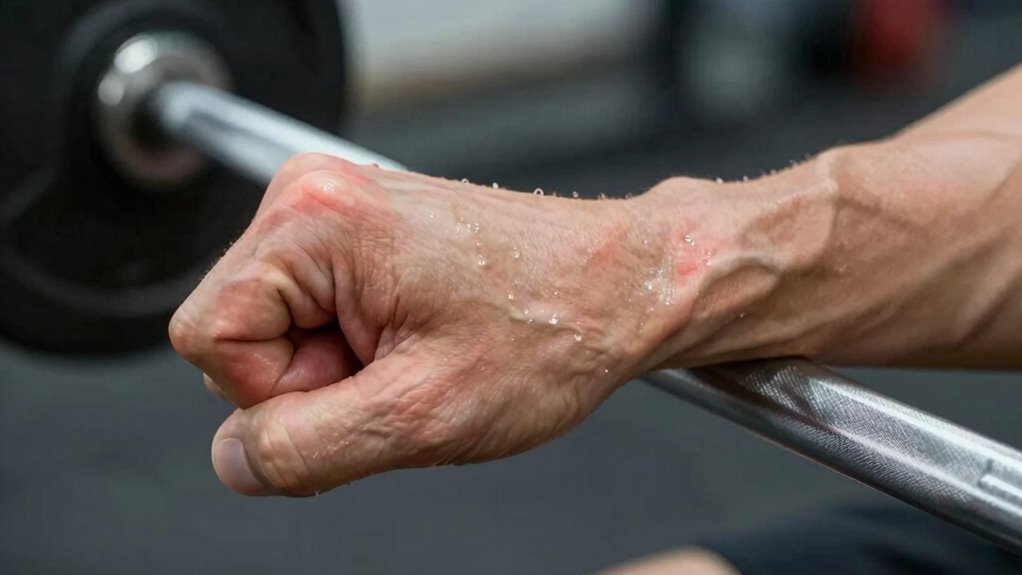

The most common setup error leading to wrist pain during pressing is poor wrist positioning, often caused by collapsing or bending your wrists inward. This misalignment puts extra strain on your joints and increases injury risk. To avoid this, keep your wrists straight and aligned with your forearms, maintaining a neutral position throughout the movement. If you want to learn how to correct your form and prevent wrist pain, keep going for expert tips.

Get workout gear delivered free with Prime
- Fast, free delivery on millions of items
- Prime Video, Amazon Music and more included
- Member-only deals all year
Key Takeaways
- Improper wrist positioning, such as bending backward or forward, causes strain during pressing.
- Using grips that are too narrow or wide reduces wrist stability and increases pain risk.
- Neglecting wrist mobility warm-up exercises leads to poor joint positioning and discomfort.
- Rushing reps or ignoring early signs of pain can worsen improper setup issues.
- Failing to keep wrists aligned with forearms results in uneven force distribution and wrist pain.
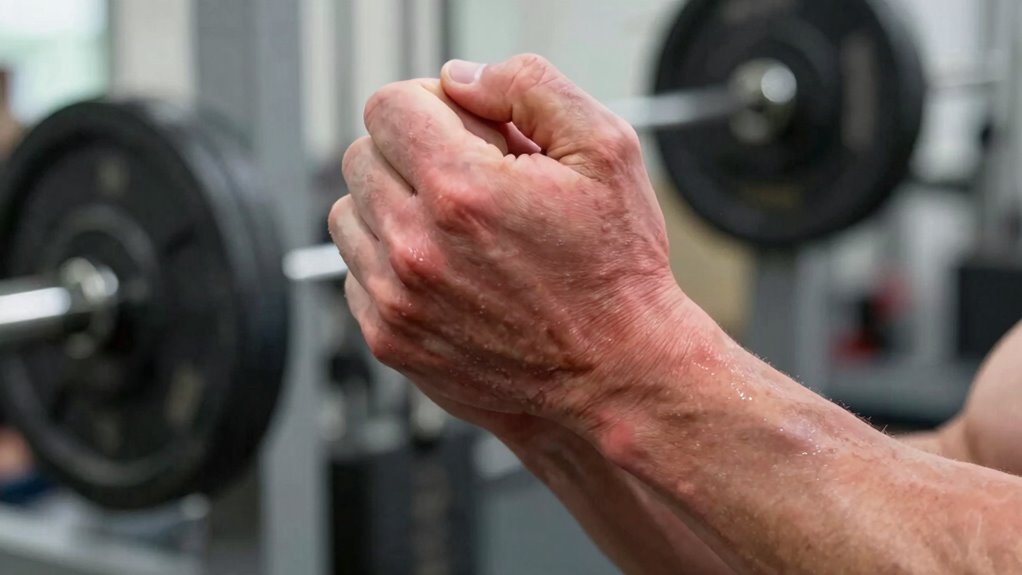
Have you ever experienced wrist pain while pressing weights or doing push-ups? If so, you’re not alone. Many lifters and fitness enthusiasts encounter this discomfort, often because of common mistakes during pressing exercises. The good news is, by understanding techniques to prevent wrist pain, you can protect yourself and improve your form.
One of the most frequent errors is poor wrist positioning. When your wrists bend excessively or collapse inward during pressing, it puts unnecessary strain on the joint and tends to lead to pain. To avoid this, focus on keeping your wrists in a neutral position—aligning them straight with your forearms. This alignment distributes force more evenly and reduces stress on the joint. Using a grip that feels comfortable and secure also helps; too narrow or too wide a grip can compromise wrist stability.
Poor wrist positioning causes strain and pain; keep wrists neutral and aligned with forearms for safer pressing.
Another common mistake is failing to engage proper setup techniques before starting the lift. Many people neglect warming up their wrists or skip mobility drills, which can leave the joint vulnerable to injury. Incorporate wrist mobility exercises and light warm-up sets into your routine. This prepares the joint for heavier loads and enhances flexibility, reducing the risk of strain. Additionally, ensure your forearms are perpendicular to the floor when pressing, which helps maintain correct wrist alignment throughout the movement.
A key aspect of preventing wrist pain lies in the equipment you use. Wrist wraps or straps can provide extra support, especially during heavy lifts. However, rely on them as a supplement, not a crutch. Proper technique should always be your primary focus. If you notice pain developing, it’s often due to a setup that doesn’t favor your wrist health. Adjust your grip width, keep your wrists straight, and avoid letting your wrists bend backward or forward excessively during presses.
Furthermore, common mistakes during pressing involve rushing through reps or not paying attention to your body’s signals. Pushing too quickly or ignoring discomfort can exacerbate existing issues or cause new injuries. Always prioritize controlled movements and listen to your body. If you feel any pain, stop and assess your technique. Sometimes, reducing the weight or modifying your hand placement can make a significant difference. Ensuring proper wrist stability during pressing is essential for injury prevention and overall lifting performance.
As an affiliate, we earn on qualifying purchases.
Frequently Asked Questions
Can Wrist Pain Be Caused by Improper Grip Technique?
Yes, improper grip technique can cause wrist pain. If your grip positioning or hand placement isn’t ideal, it puts unnecessary strain on your wrists during pressing movements. Make sure you keep your wrists straight and aligned with your forearms, and grip the bar firmly but not too tightly. Correct hand placement and a solid grip position help reduce stress, preventing pain and injury while improving your pressing performance.
What Are Early Signs of Wrist Strain During Pressing?
You might notice early signs of wrist strain during pressing as wrist fatigue and grip discomfort. If your wrists start feeling tired quickly or you experience pain or a tingling sensation during lifts, it’s a signal to check your technique. Pay attention to any aching or tightness, especially in the wrists or forearms, and adjust your grip or reduce weight to prevent further injury.
How Does Wrist Flexibility Affect Pressing Form?
Imagine your wrists as flexible branches swaying with the wind. When you have good wrist flexibility benefits, you can adapt your pressing form more easily, avoiding stiff, awkward angles that cause pain. This allows smoother movement and better control. To optimize, make pressing form adjustments that accommodate your wrist’s natural range, reducing strain and enhancing performance. Flexibility empowers your wrists to move freely, supporting safe, effective pressing.
Are Wrist Wraps Effective in Preventing Press-Related Pain?
Wrist wraps can be effective in providing wrist support and preventing press-related pain, especially during heavy lifts. They stabilize your wrists, reducing strain and helping you maintain proper form. While they’re not a substitute for good technique or flexibility, using wrist wraps as a preventative measure can protect you from injury and discomfort. Always combine them with proper warm-up and technique adjustments for the best results.
When Should I See a Doctor for Wrist Pain?
If your wrist pain persists despite proper injury prevention and wrist strengthening, you should see a doctor. Don’t ignore ongoing discomfort, as it’s like a flashing warning light on your dashboard—urgent attention needed. Seek professional help if pain worsens, limits your movement, or if swelling and bruising appear. Addressing issues early helps prevent long-term damage, so listen to your body and prioritize your wrist health.
As an affiliate, we earn on qualifying purchases.
Conclusion
Remember, even the best setup can falter if your form isn’t right. By paying close attention to your wrist position and avoiding common errors, you can prevent pain and improve your pressing technique. Don’t forget the saying, “A stitch in time saves nine”—addressing small mistakes now keeps bigger problems at bay. Stay mindful of your form, listen to your body, and you’ll lift stronger and pain-free for years to come.
wrist mobility exercise equipment
As an affiliate, we earn on qualifying purchases.
As an affiliate, we earn on qualifying purchases.
wrist support straps for pressing
As an affiliate, we earn on qualifying purchases.
As an affiliate, we earn on qualifying purchases.
Halloween Picks
halloween
As an affiliate, we earn on qualifying purchases.