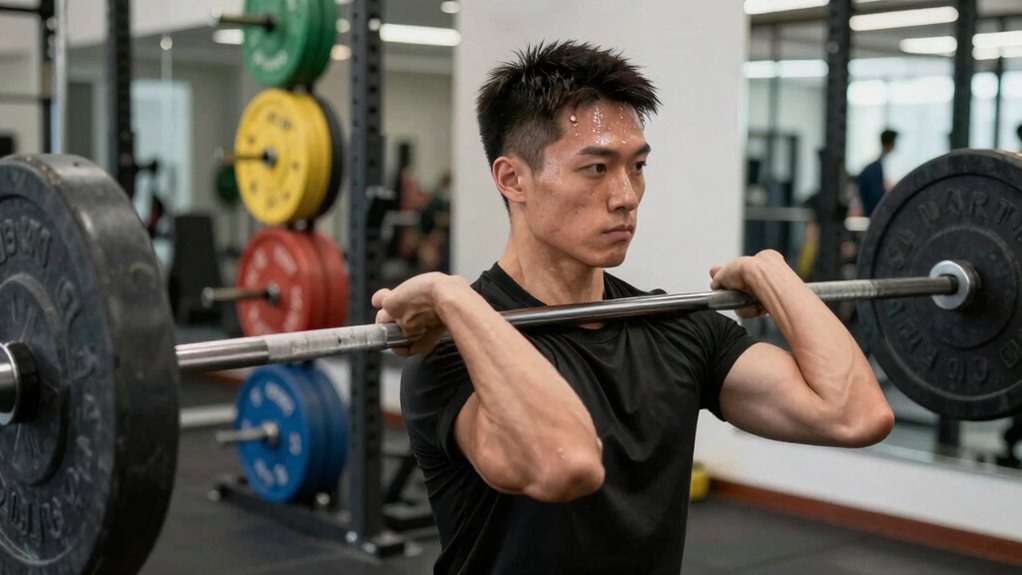

Rest-pause training can boost your workout intensity by letting you push beyond fatigue with short rests, helping you lift more reps or heavier weights in less time. However, it still demands discipline and proper recovery strategies, including good nutrition, rest days, and sleep, to avoid overtraining and injury. Maintaining this balance guarantees long-term progress. Keep going, and you’ll discover how to optimize this approach for even better results.

Get workout gear delivered free with Prime
- Fast, free delivery on millions of items
- Prime Video, Amazon Music and more included
- Member-only deals all year
Key Takeaways
- Rest-pause training boosts intensity but demands disciplined adherence to proper rest intervals and set execution.
- Consistent recovery strategies are essential to prevent overtraining despite the shortcut in workout duration.
- Maintaining discipline in nutrition, hydration, and sleep is crucial to support the increased training demands.
- Balancing rest periods within sets requires focus to maximize growth without compromising recovery.
- Long-term progress relies on disciplined planning, including rest days and periodization, alongside rest-pause techniques.

Rest-pause training is an effective technique that allows you to push your muscles beyond traditional fatigue points by incorporating short, planned rest intervals within a set. This approach considerably increases training intensity, forcing your muscles to work harder in a shorter amount of time. Instead of completing a set until failure and stopping, you perform a few reps, rest briefly—usually 10 to 20 seconds—and then continue with more reps. This cycle repeats until you reach your desired number of repetitions or fatigue. By doing so, you’re essentially extending the effort phase, which stimulates greater muscle growth without necessarily increasing the overall workout duration.
One of the main benefits of rest-pause training is how it amplifies training intensity. When you take these brief rests, your muscles temporarily recover, allowing you to lift more weight or perform more reps than you would in a traditional set. This elevated intensity can lead to better strength gains and hypertrophy. However, to maximize these gains, you need to incorporate effective recovery strategies. Proper recovery isn’t just about taking short breaks during a set; it also involves planning your workout frequency, nutrition, hydration, and sleep. If you ignore these recovery strategies, you risk overtraining, injury, or burnout, which can derail your progress.
During rest-pause training, it’s imperative to listen to your body. If you push too hard without adequate recovery, your performance might decline, and your risk of injury increases. Balancing workout intensity with proper recovery strategies ensures you’re progressing steadily without overexerting yourself. For example, scheduling rest days and including lighter sessions or active recovery can help your muscles repair and grow stronger. Nutrition also plays an indispensable role; consuming enough protein and calories supports muscle repair, while staying hydrated helps maintain performance during intense sessions. Incorporating adequate rest and recovery is essential for preventing fatigue and promoting sustainable progress.
Another fundamental recovery strategy is managing your overall training volume. Rest-pause training can be very demanding, so you should adjust your overall weekly volume accordingly. Incorporate periods of lower intensity or volume to allow your body to recover fully. Rest-pause workouts are most effective when combined with a well-rounded recovery plan that emphasizes sleep, proper nutrition, and adequate rest days. This way, you’ll sustain high training intensity over the long term, avoiding plateaus and setbacks.
As an affiliate, we earn on qualifying purchases.
Frequently Asked Questions
How Does Rest-Pause Training Compare to Traditional Sets?
Rest-pause training boosts workout efficiency by allowing you to push through muscle fatigue with brief rest periods, leading to more reps in less time. Unlike traditional sets, it intensifies muscle stimulation without extending workout duration. This method helps you maximize gains by focusing on quality over quantity, making each session more effective. If you stay disciplined, you’ll notice faster progress compared to solely doing traditional sets.
Can Beginners Safely Incorporate Rest-Pause Training?
Did you know that 60% of beginners experience overtraining with intense workout methods? Yes, beginners can incorporate rest-pause training, but you need to prioritize progression strategies and recovery considerations. Start slowly, using lighter weights and fewer reps, and listen to your body. Rest-pause can be safe if you build up gradually, giving your muscles time to recover and avoiding overtraining. Discipline and patience are key to seeing results without injury.
What Are the Best Exercises for Rest-Pause Methods?
You should focus on exercises that promote muscle activation and allow for exercise variety, such as bench presses, bicep curls, squats, and rows. These movements engage multiple muscle groups, making rest-pause effective. Choose exercises with manageable weight, ensuring proper form. Incorporate rest-pause by performing a set, resting briefly, then continuing. This approach boosts intensity, enhances muscle activation, and keeps your workouts challenging and effective.
How Often Should Rest-Pause Training Be Performed Weekly?
For rest-pause training, you should typically target two to three sessions per week. This frequency allows your muscles to recover while still reaping the benefits of the method. Remember, proper recovery strategies are essential—incorporate rest days, hydrate, and nourish your body. By balancing training frequency with adequate recovery, you’ll optimize progress and prevent overtraining, making your workouts more effective and sustainable.
Are There Any Risks or Drawbacks to Rest-Pause Training?
Yes, there are risks with rest-pause training. You might experience overtraining risks if you push too hard without proper rest, leading to fatigue or burnout. There’s also injury potential if you don’t maintain proper form or ignore your body’s signals. To avoid these drawbacks, listen to your body, limit the frequency, and guarantee adequate recovery. Discipline is key to reaping benefits while minimizing these risks.
As an affiliate, we earn on qualifying purchases.
Conclusion
Rest-pause training is like a secret shortcut on a tough trail—you get there faster, but only if you stay disciplined. It allows you to push your limits without overtraining, making every set count. Just remember, it’s not a magic fix; consistency and focus are still your best friends. Like a skilled sailor steering through rough waters, your discipline will steer you through to better gains. Use it wisely, and you’ll see the results you’re after.
high-protein nutrition for muscle growth
As an affiliate, we earn on qualifying purchases.
As an affiliate, we earn on qualifying purchases.
As an affiliate, we earn on qualifying purchases.
Halloween Picks
halloween
As an affiliate, we earn on qualifying purchases.