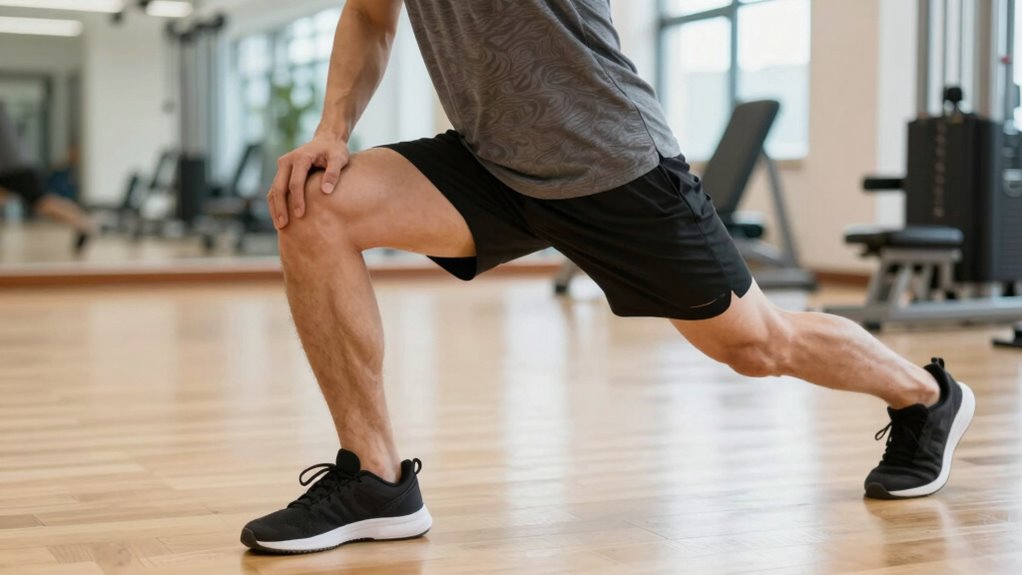

To reduce knee pain during lunges, focus on aligning your ankles and hips properly. Keep your front heel firmly planted and avoid inward collapsing of the ankle—strengthening ankle muscles helps. Make certain your hips are mobile enough to prevent compensatory twisting; incorporating hip stretches can help. Maintain an upright torso with a slight forward lean and adjust your stance if needed. Small form tweaks like these can make a big difference—keep exploring the details to protect your knees.

Get workout gear delivered free — and shop member deals
- Fast, free delivery on millions of items
- Access to Prime Big Deal Days deals on October 6–7
- Prime Video, Amazon Music and more included
Key Takeaways
- Ensure your front knee tracks directly over your toes to prevent inward or outward collapse.
- Keep your ankles properly aligned and engaged to provide stable support during lunges.
- Maintain an upright torso and avoid leaning forward excessively to reduce knee stress.
- Improve hip mobility with dynamic stretches to facilitate correct movement mechanics.
- Adjust lunge depth and stance width to maintain proper form and reduce knee strain.
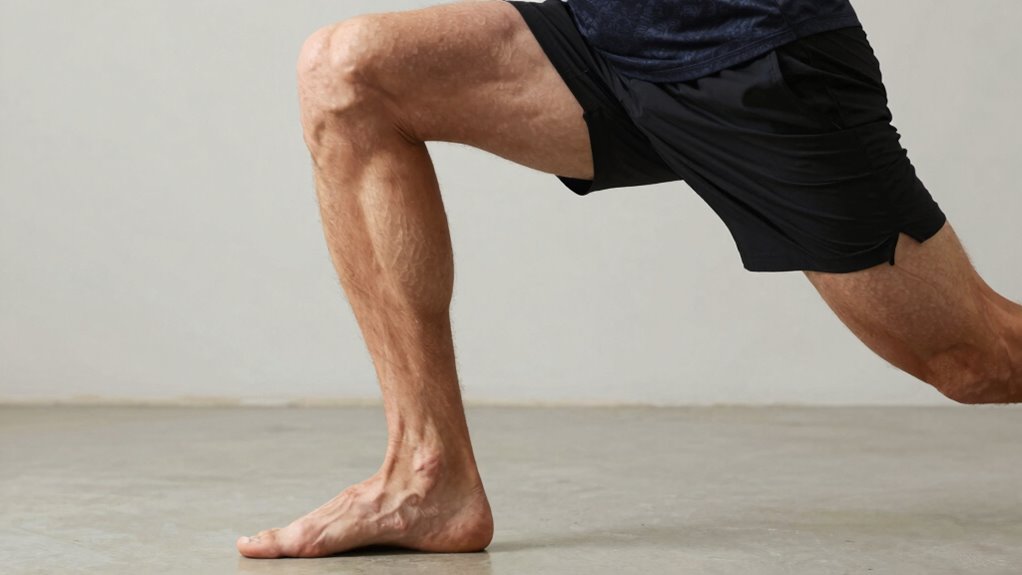
Lunges are a popular exercise for building strength and improving stability, but many people experience knee pain while performing them. If that’s you, the culprit could be how your ankle alignment and hip mobility influence your movement. Proper ankle alignment is essential because when your ankles roll inward or outward during a lunge, it throws off your knee’s tracking. This misalignment puts extra stress on the knee joint, leading to discomfort or pain. To fix this, focus on keeping your front foot’s heel planted firmly on the ground and ensuring your knee stays aligned over your toes. Engaging your ankle muscles and consciously avoiding collapsing inward can make a significant difference. Strengthening the muscles around your ankles, like your calves and tibialis anterior, can also improve stability and help maintain proper ankle alignment during lunges. Correct ankle alignment is crucial for maintaining proper knee tracking and reducing strain. Hip mobility is another key factor that influences knee health during lunges. When your hips are stiff or lack mobility, you tend to compensate by shifting your weight forward or twisting your torso, which can overload the knee joint. Improving your hip mobility allows for better movement mechanics, reducing unnecessary strain on your knees. Incorporate dynamic stretches and mobility drills for your hips into your warm-up routine. Exercises like hip circles, leg swings, and deep lunges with a focus on maintaining a neutral spine help open up your hips. This increased mobility enables your hips to do more of the work during a lunge, decreasing the load on your knees. When your hips move freely, your knee stays in a safer, more aligned position, helping to prevent pain and injury. Pay attention to how you perform each step of the lunge. Keep your torso upright, engage your core, and avoid leaning excessively forward. If your hips are tight or your ankles aren’t aligned, you might find yourself doing compensatory movements that strain your knees. Adjust your stance width to find a position that allows your hips and ankles to work comfortably within their range of motion. Sometimes, reducing the depth of your lunge can help you maintain proper form until your mobility improves. Using mirrors or filming yourself can give visual feedback, helping you spot and correct misalignments.
ankle strengthening exercises for lunges
As an affiliate, we earn on qualifying purchases.
As an affiliate, we earn on qualifying purchases.
Frequently Asked Questions
Can Knee Pain From Lunges Be a Sign of a Serious Injury?
Knee pain from lunges can sometimes indicate a serious injury, but often it’s due to improper form or overuse. Causes include poor alignment, muscle imbalances, or excessive load, which increase injury risk factors. If pain persists, worsens, or is accompanied by swelling or instability, you should see a healthcare professional. Ignoring symptoms might lead to more serious issues like ligament or cartilage injuries, so listen to your body.
How Long Should I Rest if I Experience Knee Pain During Lunges?
When knee pain strikes during lunges, think of your body as a delicate garden needing time to heal. Rest duration depends on pain severity—mild discomfort might need only a day or two, while sharper pain warrants a longer break of a week or more. Listen closely to your body’s signals; pushing through intense pain risks further injury. Prioritize recovery, then gently ease back into your routine when the pain subsides.
Are There Specific Warm-Up Exercises to Prevent Knee Pain in Lunges?
To prevent knee pain in lunges, you should start with a proper warm-up that focuses on joint mobility. Incorporate dynamic stretches like leg swings, hip circles, and ankle rolls to loosen up your hips, knees, and ankles. This prepares your joints for the movement, reduces stiffness, and helps avoid strain. Warming up properly increases circulation and flexibility, making lunges safer and more comfortable, ultimately reducing your risk of knee pain.
Does Age Affect the Likelihood of Experiencing Knee Pain in Lunges?
Yes, age can influence your likelihood of knee pain in lunges due to age-related joint changes like cartilage wear and decreased flexibility. To stay comfortable, adapt your exercises by reducing lunge depth, increasing rest periods, and focusing on strengthening supporting muscles. These strategies help minimize strain, improve joint stability, and make lunges safer and more effective regardless of your age.
Can Footwear Influence Knee Pain During Lunges?
Yes, footwear can influence knee pain during lunges. You should choose shoes with good shoe cushioning to absorb impact and reduce stress on your knees. Additionally, opt for shoes that provide foot stability, helping maintain proper alignment during movement. Proper footwear supports your arches and prevents unnecessary knee strain, making lunges safer and more comfortable, especially if you experience knee pain or are prone to it.
As an affiliate, we earn on qualifying purchases.
Conclusion
By paying attention to your form, you turn a simple lunge into a powerful tool for strength and mobility, much like a skilled artist perfects each stroke. Instead of risking knee pain—like a crack in a fragile sculpture—you can create a smooth, fluid movement that supports your goals. Think of each tweak as the brushstroke that brings your fitness masterpiece into focus. With mindful adjustments, your lunges become both safe and effective, guiding you toward lasting progress.
As an affiliate, we earn on qualifying purchases.
As an affiliate, we earn on qualifying purchases.
Halloween Picks
halloween
As an affiliate, we earn on qualifying purchases.