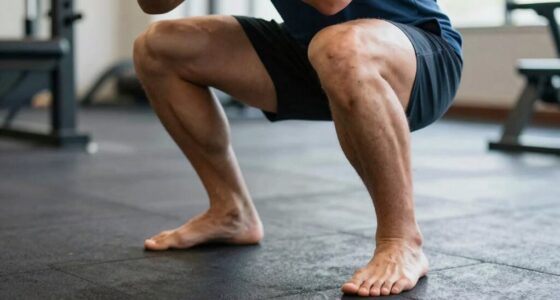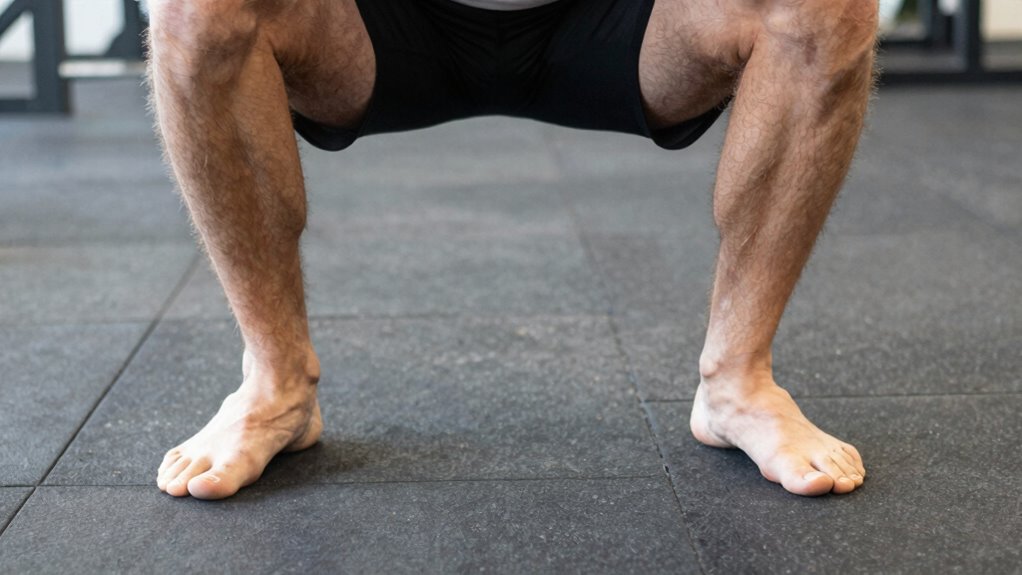

To find the right foot placement for comfort and balance in a Smith squat, start with a shoulder-width stance and adjust toes slightly outward or inward based on your body and ankle mobility. Keep your weight evenly distributed and choose shoes with firm, flat soles to improve grip. Make sure your stance feels natural and stable. If you keep these tips in mind, you’ll improve both your comfort and stability—more details ahead can help fine-tune your technique.
Key Takeaways
- Start with a shoulder-width stance and adjust toes slightly outward or inward for comfort and natural alignment.
- Use supportive, flat-soled shoes to enhance grip and stability during the squat.
- Ensure even weight distribution across both feet, avoiding leaning or shifting.
- Incorporate ankle mobility exercises to improve flexibility and support proper foot placement.
- Focus on engaging core muscles and maintaining proper posture for better balance and technique.
supportive flat sole weightlifting shoes
As an affiliate, we earn on qualifying purchases.
As an affiliate, we earn on qualifying purchases.
Why Foot Placement Matters in the Smith Squat
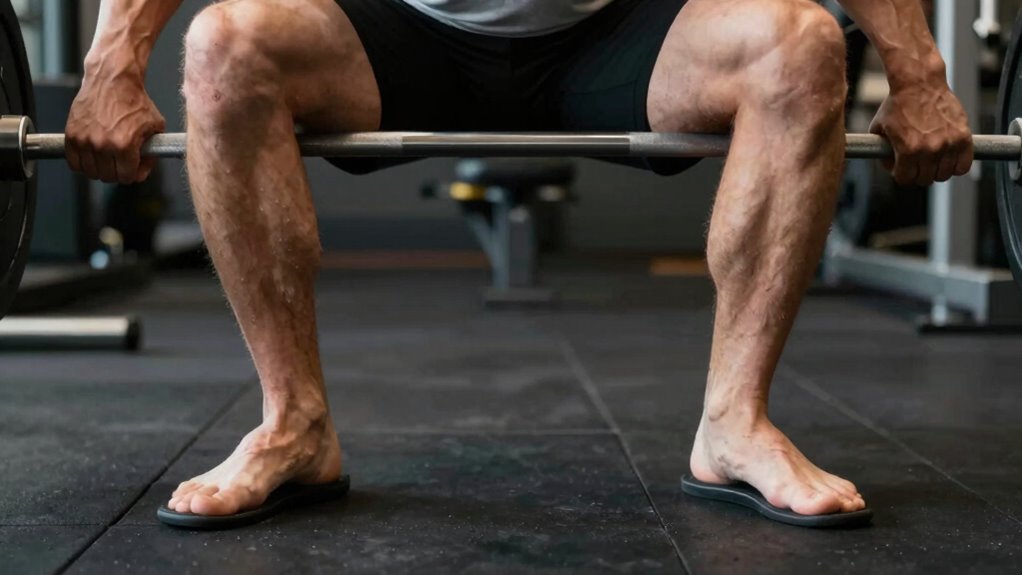
Your foot placement plays a crucial role in maintaining proper form and maximizing safety during the Smith squat. Proper foot alignment helps distribute your weight evenly, preventing unnecessary strain on your knees and lower back. It also influences your balance and stability throughout the lift. Your shoe choice is equally important; wearing supportive, flat-soled shoes or weightlifting shoes provides better grip and firm footing. Avoid running shoes with cushioned soles, which can cause instability. Position your feet shoulder-width apart or slightly wider, pointing slightly outward to optimize leverage and mobility. Correct foot placement ensures you engage the right muscles and keep your knees tracking in line with your toes, reducing injury risk and improving overall squat effectiveness. Foot positioning is essential for ensuring proper biomechanics and preventing injury during the lift. Proper foot alignment can also enhance your overall lifting performance by providing a stable foundation, especially when mindful of balance and stability. Additionally, understanding the influence of body mechanics can help you refine your stance for safer and more efficient squats. Incorporating awareness of muscle engagement further supports optimal form and reduces discomfort.
Smith squat foot placement guide
As an affiliate, we earn on qualifying purchases.
As an affiliate, we earn on qualifying purchases.
How to Find the Best Foot Position for Your Body Type and Height
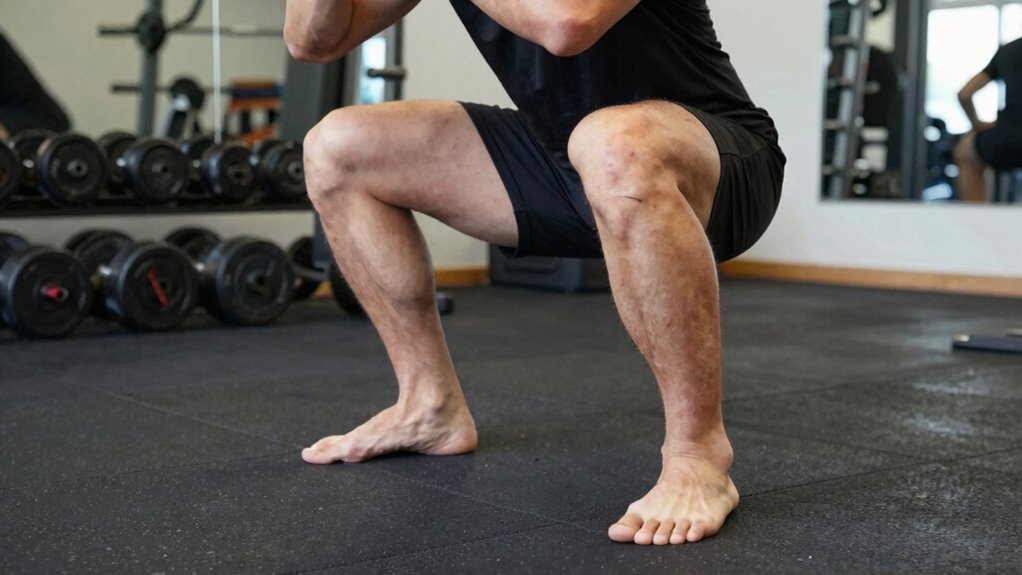
To find the best foot position, start by adjusting your foot width to see what feels most stable. Next, identify your natural stance by standing comfortably and noticing where your body relaxes. Finally, consider your hip mobility, since it influences how wide your stance can comfortably be without strain. Incorporating an understanding of your posture and ergonomic alignment can further enhance stability and comfort during the squat. Additionally, assessing your dog breeds overview can inspire you to adapt your stance based on your own unique body composition. Recognizing the significance of timing and balance in your movements can also help optimize your stance for both safety and effectiveness. Being mindful of body biomechanics can help you fine-tune your foot placement to suit your individual needs.
Adjust Foot Width
Finding the right foot width for your squat involves experimenting with different stances until you discover what feels most stable and comfortable. Start by adjusting your stance gradually, paying attention to how your ankles feel. If you have good ankle flexibility, you might opt for a wider stance that allows deeper squat depth without strain. Conversely, limited ankle flexibility may require a narrower stance or supportive footwear choices, such as shoes with a slight heel, to improve stability. Focus on maintaining balance and comfort throughout each adjustment. Incorporating proper footwear can also help enhance stability and comfort during your squat. Ensuring proper foot placement is essential for optimizing your form and reducing injury risk during your Smith squats. Adjusting your stance to match your body proportions can lead to more effective and safer workouts. Finding the right stance ensures better control and reduces injury risk during your Smith squats, especially when considering body mechanics for optimal performance. Additionally, paying attention to joint alignment can further improve your overall squat technique and safety.
Find Natural Stance
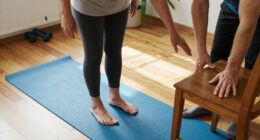
Discovering your natural stance involves paying close attention to how your body feels during the squat movement. Pay attention to your ankle flexibility, as it influences how wide or narrow your stance can comfortably be. If you have limited ankle mobility, a slightly wider stance with toes turned out might feel more natural and stable. Your footwear choice also plays a vital role; shoes with a flat, firm sole provide better stability and help you find a comfortable position more easily. Experiment with different foot placements, starting with shoulder-width and adjusting gradually. Listen to how your knees, hips, and ankles respond—your ideal stance should feel balanced, stable, and pain-free. Recognizing the importance of ankle flexibility can help you tailor your stance for optimal comfort and performance. Additionally, understanding proper foot placement techniques can further enhance your squat stability and efficiency. Being aware of proper foot alignment ensures better comfort and improved squat performance, and incorporating movement assessment tools can help identify the best stance for your unique body type.
Consider Hip Mobility
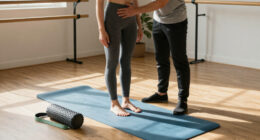
Hip mobility critically influences your ideal foot position during a squat, so paying attention to how your hips move can help you find the best stance for your body type and height. Limited hip flexibility may require adjusting your foot angle or stance width to prevent discomfort and ensure proper form. Incorporate mobility exercises like hip circles, lunges, or pigeon stretches regularly to improve flexibility. Understanding your body type can guide you in choosing the most effective exercises and stance adjustments. Proper solar system safety measures are also essential when designing your workout space to prevent injuries. Additionally, assessing your hip flexibility level can help you tailor your stretching routine for better results. Being aware of firewood safety practices is also vital if your squat training space involves outdoor or rugged environments. Regularly evaluating your body mechanics can further enhance your squat technique and prevent strain. Here’s a quick guide:
| Hip Flexibility Level | Recommended Foot Position | Mobility Exercises |
|---|---|---|
| High flexibility | Narrow stance, toes forward | Hip stretches, yoga poses |
| Moderate flexibility | Slightly wider stance, toes outward | Dynamic hip openers |
| Limited flexibility | Wider stance, more outward toes | Targeted mobility drills |
Focus on consistent mobility exercises to optimize your hip movement and find the most comfortable, balanced foot placement.
ankle mobility exercise equipment
As an affiliate, we earn on qualifying purchases.
As an affiliate, we earn on qualifying purchases.
Step-by-Step: How to Correctly Set Your Feet in the Smith Squat
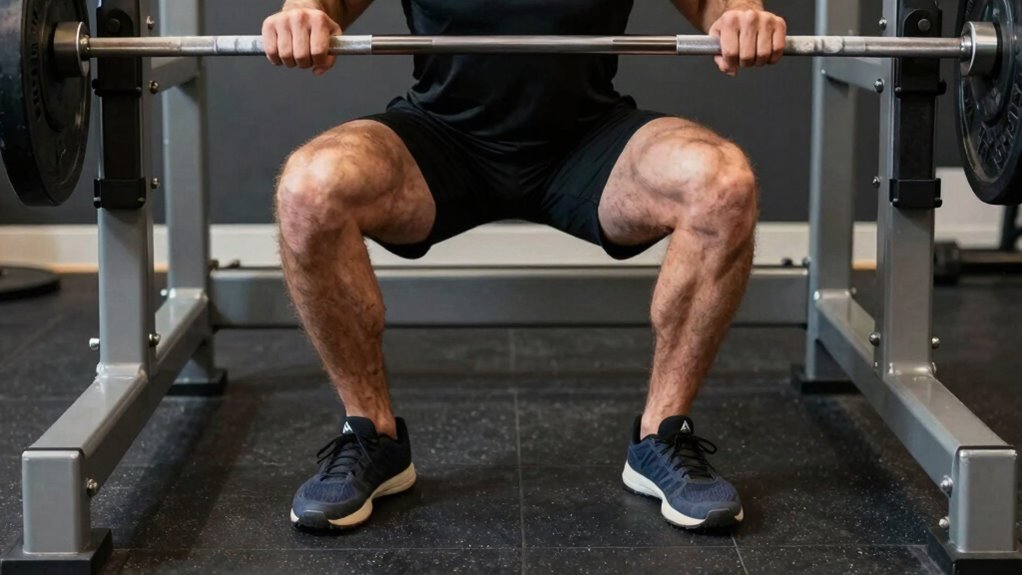
To set your feet correctly in the Smith squat, focus on proper foot placement techniques that suit your body. Make sure your feet are shoulder-width apart and pointed slightly outward to maintain balance. By doing so, you’ll improve stability and keep proper balance throughout the movement. Additionally, using the right DIY tools and safety tips can help ensure your workout environment remains safe and effective.
Foot Placement Techniques
Have you ever wondered if your foot placement is ideal for the Smith squat? Proper foot positioning depends on your ankle flexibility and shoe choice. If you have limited ankle mobility, set your feet slightly wider with toes pointed outward to improve comfort and stability. Choose shoes with a flat, firm sole to better distribute weight and enhance balance. Start by standing with your feet shoulder-width apart, then adjust your toes outward or inward based on what feels natural. Experiment with small changes until you find a stance that keeps you balanced without discomfort. Remember, your foot placement should support your body’s natural alignment, so don’t force a position that causes strain. Focus on feeling stable and secure throughout each repetition.
Maintaining Proper Balance
Once your foot placement feels natural and stable, it’s important to guarantee your balance stays centered throughout the movement. Focus on maintaining good ankle flexibility, which helps you adjust your stance if needed and prevents wobbling. Pay attention to how your footwear choices affect your stability; shoes with a firm, flat sole provide better grip and control during the squat. Keep your weight evenly distributed across your feet, avoiding leaning forward or backward. Engage your core to support your spine and help stabilize your entire body. If you notice imbalance, small adjustments in foot angle or stance width can improve your balance. Incorporating connected fitness technology can help monitor your form and ensure consistent technique during each set. Regularly practicing proper foot positioning and considering footwear selection and ankle flexibility will help you stay steady and safe in each repetition.
comfortable squat shoes for men women
As an affiliate, we earn on qualifying purchases.
As an affiliate, we earn on qualifying purchases.
Common Foot Placement Mistakes and How to Fix Them
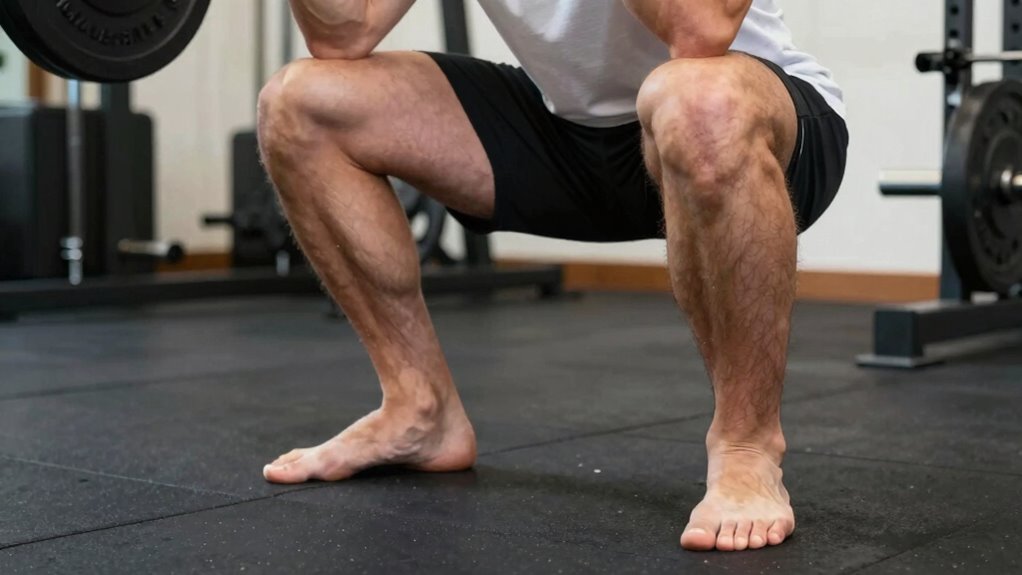
Many lifters make common mistakes with foot placement that can compromise their squat form and safety. One mistake is ignoring ankle mobility, which can cause your feet to turn outward or inward excessively, leading to imbalance. If your ankles lack flexibility, forcing a wide stance may strain your knees or reduce stability. Additionally, footwear choice plays a big role; shoes with unstable or overly cushioned soles can hinder proper foot positioning. To fix these issues, work on ankle mobility exercises to improve flexibility and stability. Choose footwear with a firm, flat sole that supports proper foot alignment. Avoid overly narrow or unstable shoes that restrict natural movement. Incorporating proper foot positioning techniques and paying attention to your stance width can significantly enhance your squat performance. Correcting these mistakes helps you maintain better balance, reduces injury risk, and ensures a more effective squat.
Variations in Foot Position to Target Different Muscles
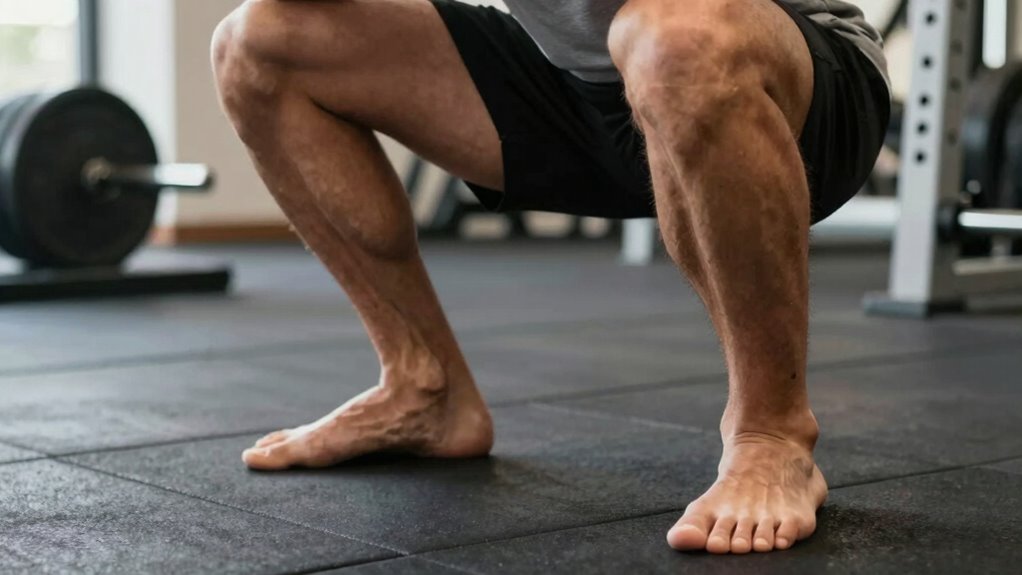
Adjusting your foot position during the squat allows you to target different muscle groups effectively. By changing your stance width and foot angle, you can emphasize specific muscles like the glutes, quads, or hamstrings. Your ankle flexibility and footwear choice influence how comfortably you can adapt these variations. For example:
Adjusting foot position during squats targets different muscles for optimal engagement.
- Narrow stance to focus on quads and improve balance
- Widened stance to engage glutes and adductors more
- Pointing toes slightly outward to activate the inner thigh muscles
- Using supportive footwear to accommodate ankle flexibility and maintain proper form
Experimenting with these variations helps you find the most comfortable and effective setup for your goals. Remember, your ankle flexibility and footwear choice play vital roles in achieving the ideal foot position for targeted muscle engagement.
Troubleshooting Foot Placement Issues for Better Stability and Comfort
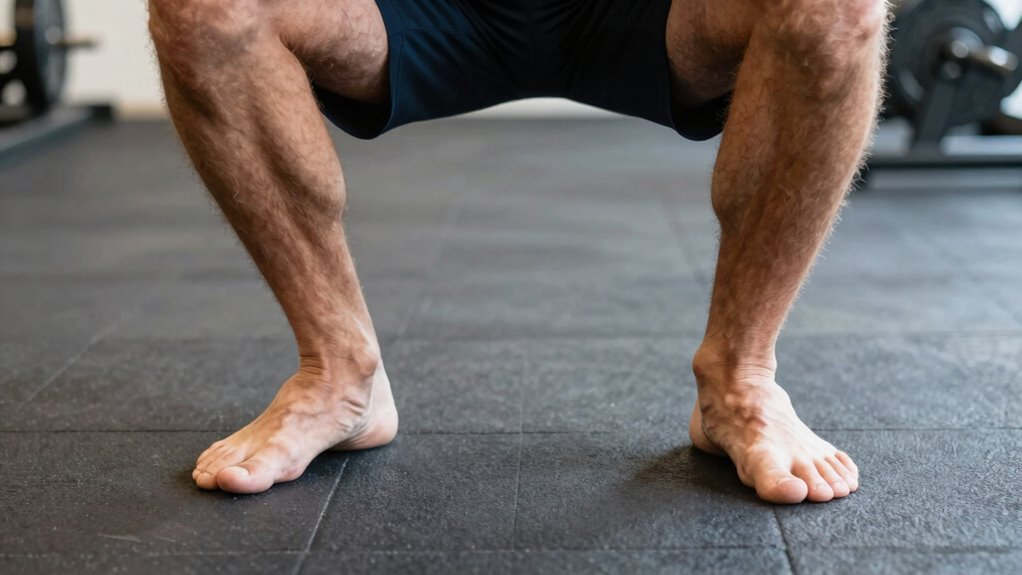
Are you struggling with foot placement during your squat? Poor positioning can affect stability and cause discomfort. To troubleshoot, focus on ankle flexibility and footwear choice. Limited ankle mobility might cause your toes to lift or shift, so incorporate ankle stretches to improve range. When selecting footwear, opt for shoes with a stable, supportive sole to enhance balance. Use this quick guide:
| Issue | Solution | Tip |
|---|---|---|
| Feet too wide or narrow | Adjust stance for comfort and balance | Experiment with stance width |
| Heel lifting off ground | Improve ankle flexibility, choose supportive shoes | Use heel wedges if necessary |
| Foot rolling inward/outward | Strengthen foot muscles, switch footwear | Consider footwear with proper grip |
Addressing these issues leads to better stability and comfort during your Smith squat.
Frequently Asked Questions
Can I Adjust Foot Placement During the Squat?
Yes, you can adjust your foot placement during the squat. Incorporate dynamic foot positioning to find what feels most stable and comfortable, allowing you to adapt as needed. Your personalized foot stance can improve balance and prevent discomfort. Experiment with slight variations in width and angle, and listen to your body to identify the best setup. Flexibility in your foot positioning helps optimize performance and reduce injury risk.
How Does Footwear Affect Foot Stability in the Smith Squat?
Your footwear substantially affects foot stability during a Smith squat. Shoes with good grip help prevent slipping, ensuring you maintain proper balance. Meanwhile, cushioned shoes can provide comfort but might reduce stability if they’re too soft or thick. Opt for footwear with a firm sole and solid grip to enhance stability, especially when adjusting foot placement. This combination helps you squat safely and comfortably, reducing injury risk.
Is There an Ideal Foot Width for Everyone?
Think of your feet as the foundation of a house; there’s no one-size-fits-all. Your ideal foot width depends on your personal comfort and balance, like choosing the right size of a shoe or a puzzle piece. Too narrow, and you might wobble; too wide, and movement feels awkward. Trust your body’s signals to find that natural stance that keeps you steady and comfortable during your Smith squat.
How Often Should I Reassess My Foot Position?
You should reassess your foot position every few weeks or whenever you notice discomfort or instability during your Smith squats. Incorporate dynamic foot positioning to find what feels best as your strength and flexibility change. Consider footwear customization options if needed, as they can improve balance and comfort. Regularly checking in helps guarantee your foot placement remains ideal, reducing injury risk and enhancing your overall squat performance.
Can Improper Foot Placement Cause Long-Term Injuries?
Like building a house on shaky ground, improper foot placement can cause long-term injuries. If your ankle mobility or hip flexibility isn’t ideal, misaligned footing stresses your joints and muscles over time. This can lead to issues like knee pain or lower back problems. To avoid this, always make certain your foot position supports your natural movement, and reassess regularly to prevent long-term damage.
Conclusion
Getting your foot placement right in the Smith squat isn’t just about balance—it’s about forging a sturdy foundation like roots anchoring a mighty tree. When your feet are set just right, every rep feels smoother, safer, and more effective. So, take the time to find that perfect stance, and watch your strength grow as steadily as a mighty oak reaching for the sky. Your best squat starts with the right footing—plant it firmly and rise confidently.