TL;DR

Get workout gear delivered free with Prime
- Fast, free delivery on millions of items
- Prime Video, Amazon Music and more included
- Member-only deals all year
A Fit&Well contributor says he helped his 73-year-old father restart strength training with goblet squats, single-arm rows and overhead presses. The routine is a personal account, not a reported study, and the source does not provide measured outcomes or a medical assessment.
Fit&Well has published a personal account in which a contributor describes helping his 73-year-old father return to strength training with three dumbbell exercises: a goblet squat, a single-arm row and an overhead press. The writer says the plan was intended to fit his father’s limited free time and support practical, full-body strength, but the report does not document measured results or establish that the routine is suitable for every older adult.
The contributor says his father had been active but had recently neglected strength work while helping care for his mother, who has Parkinson’s. The writer, describing himself as a personal trainer, says he supplied light-to-medium dumbbells and reviewed basic lifting form, including holding a weight close to the body, bracing the core and keeping an upright posture.
Before adding weights, the pair spent a few weeks practicing bodyweight movements, according to the report. The selected routine has three exercises, each listed for three sets of eight to 12 repetitions: the dumbbell goblet squat, single-arm dumbbell row and dumbbell overhead press. The article presents these as a time-conscious plan, but does not specify how many days per week his father performs them or how long each session takes.
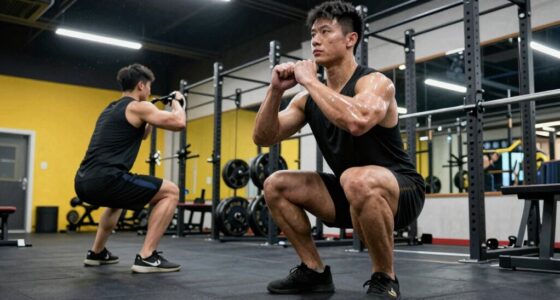
For the goblet squat, the report advises holding one dumbbell at the chest, sitting the hips back and bending the knees while keeping the chest upright. It suggests starting with bodyweight squats or using a chair for sit-to-stand practice if a weighted version is too difficult. For the row, it describes hinging at the hips, supporting the free hand on a sturdy surface and pulling the dumbbell toward the ribs; kneeling with one knee down is offered as a stability option.
The overhead press is performed by pressing dumbbells from shoulder height above the head and lowering them with control. The article gives a seated version using a chair with back support, or pressing one arm at a time, as alternatives. It also describes increasing the load or using a push press as harder options, though it does not report that the father used those variations.
Everyday Tasks Shape the Routine
The article connects the exercises to movements used in ordinary activities. A squat resembles standing from a chair or lowering toward the floor; a row trains a pulling motion; and an overhead press relates to reaching for shelves or lifting objects. That framing may help readers understand the routine’s intended function beyond exercise itself.
The report also highlights a common practical constraint in this particular household: caregiving leaves the father with little time for himself, according to his child. A short list of movements may feel more manageable than a longer program. Still, the source offers one family’s experience, not evidence that these three exercises alone preserve mobility, prevent injury or produce a particular strength gain.
For older adults considering resistance exercise, the described progressions matter as much as the exercise names: begin with a movement that can be performed under control, use support where needed, and avoid treating heavier weights as an automatic goal. Anyone with health concerns, pain, balance problems or a condition affecting movement should seek individualized guidance from a qualified health professional or trainer before starting or changing a program.
As an affiliate, we earn on qualifying purchases.
From Bodyweight Practice to Dumbbells
The contributor’s account describes a staged approach rather than starting immediately with loaded exercises. He says he first reviewed technique and spent a few weeks with his father practicing bodyweight squats, hip hinges, lunges and pushing movements. He then proposed three dumbbell exercises, selected for the time available and the functional movements they were intended to train.
The report gives general exercise instructions and easier variations, but it is not a clinical protocol or an independently assessed training plan. It does not identify the weights used, the father’s prior training history in detail, or how the exercises were adjusted to his individual abilities. The source’s description of the routine as building full-body strength is the contributor’s rationale, not a claim supported in the article by test results.
lightweight dumbbell set for beginners
As an affiliate, we earn on qualifying purchases.
As an affiliate, we earn on qualifying purchases.
Results and Training Schedule Unreported
The source does not say how often the father completed the routine, what dumbbell weights he used, or whether he experienced changes in strength, balance or mobility. It also gives no clinical assessment of his health, injuries or exercise capacity, and does not report independent verification of the described results. The account therefore cannot show whether the routine produced the outcomes its author hoped for.
It is also unclear whether the father follows the listed three sets of eight to 12 repetitions for every exercise, how the plan changes over time, or whether a professional assessed his form beyond the writer’s own coaching. The article’s instructions are general; individual ability and safety needs can differ.
As an affiliate, we earn on qualifying purchases.
No Follow-Up Results Provided
The supplied report does not announce a follow-up, a formal evaluation or a next training milestone. Its immediate practical focus is explaining the three movements and offering easier variations. Readers interested in the father’s progress would need a later update from the contributor; none is included in the material provided.
For anyone considering a similar routine, the source recommends technique practice and presents lower-demand options such as bodyweight squats, supported rows and seated presses. A suitable starting load, exercise range and schedule should be based on the person’s abilities; professional guidance is advisable when health conditions or mobility concerns are present.
dumbbell exercise guide for older adults
As an affiliate, we earn on qualifying purchases.
As an affiliate, we earn on qualifying purchases.
Key Questions
Which three exercises are in the routine?
The Fit&Well account lists a dumbbell goblet squat, a single-arm dumbbell row and a dumbbell overhead press.
How many sets and repetitions does the article suggest?
It lists three sets of eight to 12 repetitions for each exercise. The report does not say how often per week the father trained or confirm that he used the same prescription throughout.
What easier options does the report describe?
It suggests bodyweight squats or chair-based sit-to-stands, a kneeling row for added stability, and a seated overhead press with back support. The press can also be done one arm at a time, according to the article.
Does the account show that the routine improved the father’s strength?
No measured results are provided. The contributor describes the plan’s intended purpose, but the article does not report strength tests, mobility changes or other outcomes.
Should every older adult try this routine?
The report is a personal account, not individualized medical advice. People with pain, balance difficulties, health conditions or other concerns should seek guidance from a qualified professional before beginning or changing strength exercises.
Source: rss
Halloween Picks
halloween
As an affiliate, we earn on qualifying purchases.