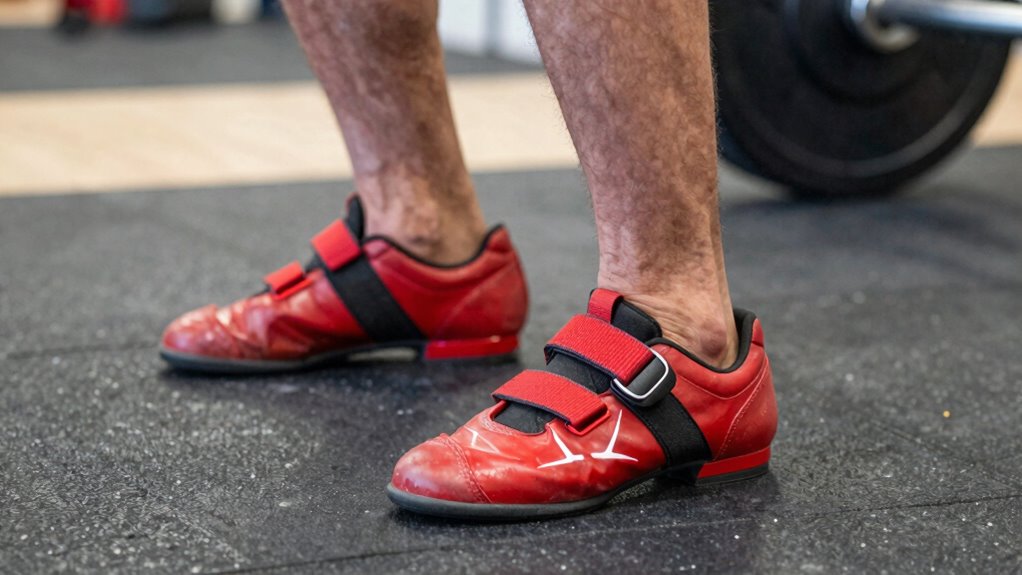
Your weightlifting shoe’s heel height substantially impacts your squat mechanics by affecting ankle mobility, body positioning, and load distribution. Higher heels make it easier to squat deeper by reducing ankle flexibility needs and promoting proper posture, especially if your ankles are tight. Lower heels or flat shoes might restrict your squat depth but offer stability and natural movement. Choosing the right heel height depends on your flexibility, experience, and goals. Keep going to discover how to select the best fit for your lifts.
Key Takeaways
- Heel height in weightlifting shoes influences squat depth, stability, and joint alignment by compensating for ankle flexibility limitations.
- Higher heels reduce the ankle dorsiflexion demand, enabling deeper squats and promoting proper torso and knee positioning.
- Lower heels or flat shoes require greater ankle mobility, affecting squat mechanics and potentially limiting depth or causing compensations.
- Selecting the appropriate heel height depends on individual mobility, experience, and training goals to optimize performance and reduce injury risk.
- Transitioning between heel heights should be gradual, using insoles or lifts, to maintain proper form and prevent injury during adjustments.
weightlifting shoes with high heel
As an affiliate, we earn on qualifying purchases.
As an affiliate, we earn on qualifying purchases.
Why Heel Height Matters for Squat Performance
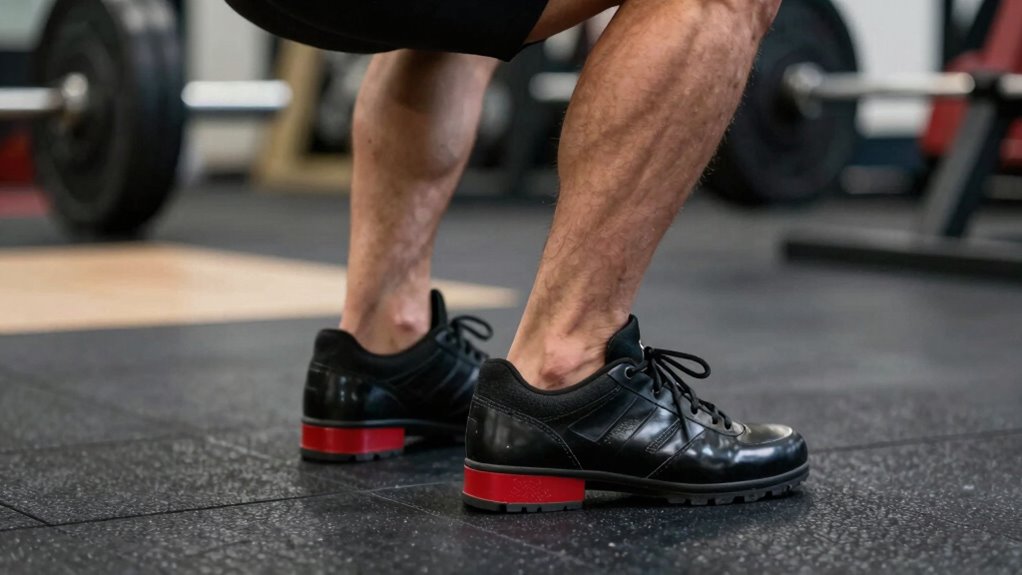
The heel height of your weightlifting shoes plays a essential role in how effectively you perform squats. A higher heel can help compensate for limited ankle flexibility, allowing you to sit deeper into your squat without sacrificing proper form. This extra elevation encourages greater squat depth, which is imperative for engaging the right muscles and improving strength. If you lack ankle mobility, a shoe with a raised heel makes it easier to maintain an upright torso and keeps your knees tracking over your toes. Conversely, shoes with a lower heel may challenge those with tight ankles, possibly restricting squat depth. Choosing the right heel height ensures you optimize your squat mechanics, enhance stability, and reduce injury risk. Additionally, understanding ankle mobility can help inform your footwear choice and overall squat technique. Recognizing how footwear impact affects your biomechanics can further assist in selecting shoes that support optimal performance. Proper heel height selection can also help prevent compensatory movements that might lead to injury, especially when considering squat depth and overall form. Being aware of your individual mobility needs ensures you select footwear that promotes safe and effective training.
As an affiliate, we earn on qualifying purchases.
How Different Heel Heights Affect Your Squat Mechanics
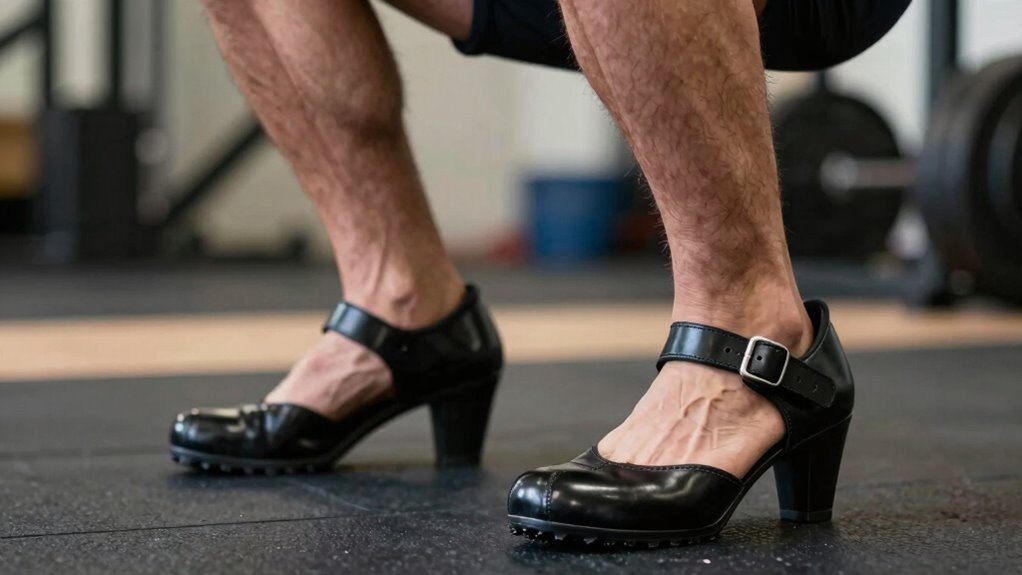
The heel height of your weightlifting shoes influences your squat depth and overall mechanics. A higher heel can improve ankle mobility and help you stay balanced, while a lower heel offers different benefits. Understanding these effects helps you choose the right shoe to optimize your performance and stability. Additionally, selecting the appropriate heel height can also impact lift safety and prevent injuries during heavy lifts. Proper shoe choice can also assist in developing correct squat form, reducing strain on joints and minimizing the risk of injury. Being aware of heel height and biomechanics allows for better customization of your training equipment to suit your individual needs. For example, choosing the correct heel height may also contribute to training efficiency, enabling you to lift more effectively over time. Recognizing how shoe heel height influences biomechanics can help tailor your training for maximum benefit.
Heel Height and Depth
Choosing the right heel height can substantially influence your squat mechanics, as different heights alter your ankle mobility and body positioning. A higher heel typically reduces the need for ankle dorsiflexion, allowing you to squat deeper without losing balance or form. This can improve your squat depth and maintain a more upright torso, which is especially beneficial if you have limited ankle flexibility. Conversely, a lower heel height offers a more natural foot position, encouraging better friction with the ground and potentially more stability. Your choice of heel height impacts how your hips, knees, and torso align during the movement, directly affecting squat depth and overall mechanics. Selecting the appropriate heel height guarantees you’re optimizing your squat mechanics for both safety and performance. Additionally, heel height can influence your injury risk and long-term joint health, emphasizing the importance of choosing the correct footwear for your individual needs. Proper footwear selection plays a crucial role in ensuring that your squat mechanics support your training goals and reduce injury potential. Being aware of how different heel heights interact with squat mechanics can help you make more informed choices to enhance your training and prevent injury. Moreover, understanding the impact on joint health can guide you toward safer lifting practices over time.
Ankle Mobility Impact
Different heel heights directly influence how much ankle mobility you need to perform a proper squat. Higher heels reduce the demand for ankle flexibility by allowing your knees to move forward more easily, making the movement smoother. Low or flat shoes require greater ankle mobility to keep your heels grounded and maintain proper depth without losing balance. If your ankle flexibility is limited, you might struggle with deeper squats or find yourself compensating elsewhere. Incorporating mobility exercises, such as ankle circles or dorsiflexion stretches, can improve your mobility and help you adapt to different heel heights. Recognizing the importance of ankle flexibility is essential for Proper squat mechanics, ensuring you can perform movements safely and effectively. This way, you can optimize your squat mechanics, regardless of your footwear choice, and prevent unnecessary strain or injury caused by limited ankle flexibility. Additionally, understanding the impact of footwear on your squat can help you make informed choices to enhance performance and safety. Recognizing the importance of ankle mobility can further assist in tailoring your training and injury prevention strategies.
Balance and Stability
Heel height considerably influences your balance and stability during squats, as it alters how your weight is distributed across your feet. A higher heel shifts more load onto your midfoot and toes, which can enhance shoe stability and prevent wobbling. If you lack ankle flexibility, a raised heel may help compensate by reducing the need for deep ankle dorsiflexion, making it easier to maintain proper form. However, if your ankles are flexible, a lower heel offers a more natural balance point, allowing for better control and proprioception. The right heel height supports your stability by ensuring your weight stays centered over your midfoot, reducing the risk of tipping forward or backward. Proper heel height selection is crucial for optimizing squat mechanics and maintaining safety during lifts. Ultimately, the heel height you choose should complement your ankle flexibility and provide a solid, stable base during lifts.
As an affiliate, we earn on qualifying purchases.
How to Assess If Your Shoes Are Holding Back Your Technique
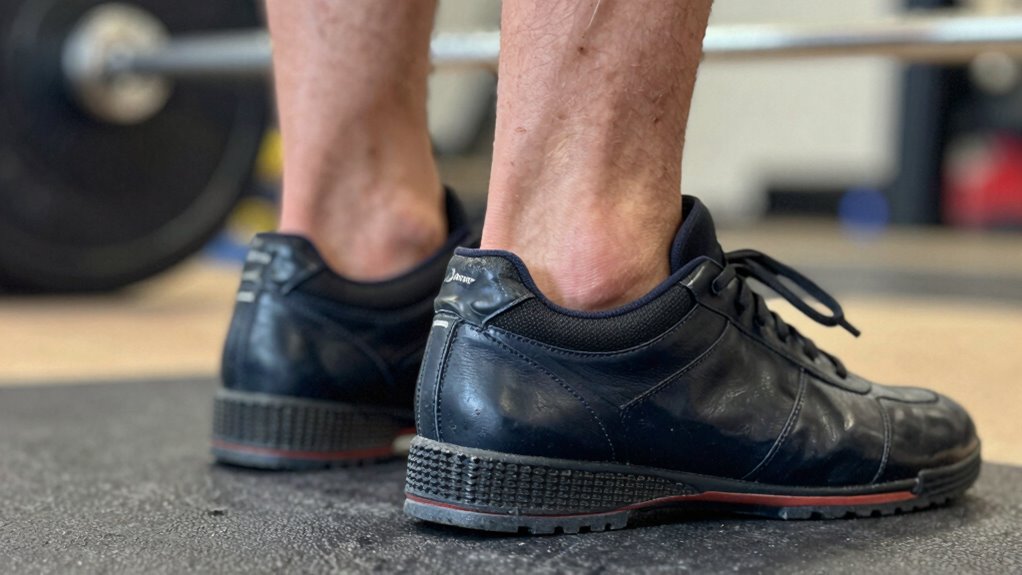
If your weightlifting shoes are hindering your technique, you’ll notice it during your lifts. Pay attention to how your squat depth feels and whether your heel height seems to limit your mobility. An improper fit might cause you to struggle to reach proper depth or maintain stability. To assess this, consider these points:
- Do your heels lift off the ground during squats?
- Is your squat depth limited or inconsistent?
- Are you compensating by shifting your weight forward or backward?
- Do you experience discomfort or lack of control at the bottom of your squat?
- Ensuring correct heel height in your shoes can help improve your overall technique and stability. Proper heel height should support your squat depth and overall stability without causing undue restriction. Additionally, understanding how sound vibrations affect your nervous system can help optimize your focus and performance during lifts. Recognizing the role of biomechanical principles in squat mechanics can further aid in selecting the optimal footwear for your needs. Paying attention to shoe fit ensures your footwear supports proper movement patterns and minimizes injury risk.
weightlifting shoes with adjustable heel height
As an affiliate, we earn on qualifying purchases.
As an affiliate, we earn on qualifying purchases.
Finding the Right Heel Height for Your Body and Flexibility
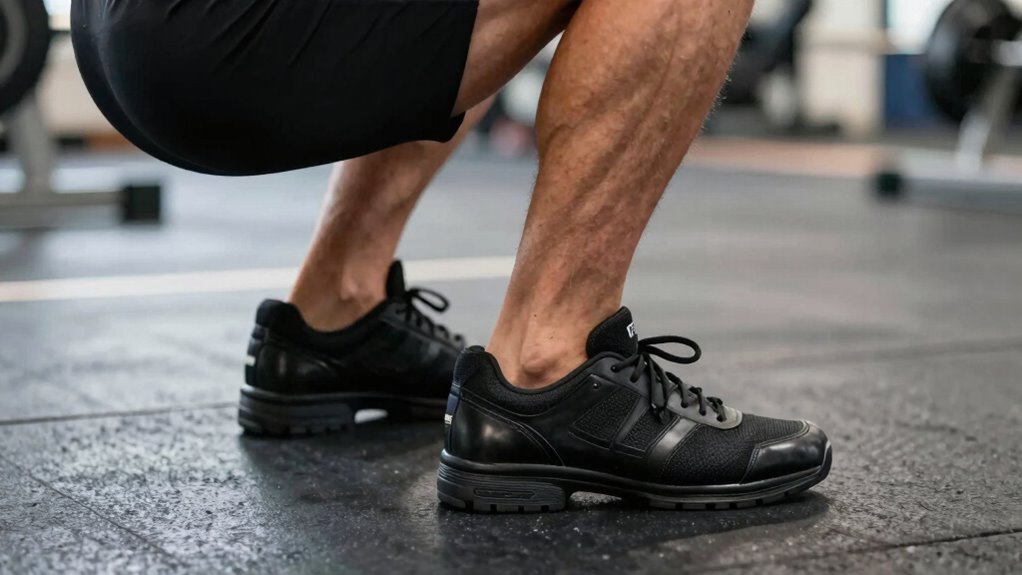
Your flexibility and body proportions play a key role in choosing the right heel height. If you’re more flexible, you might prefer a higher heel for better depth and stability. Conversely, if your flexibility is limited, a lower heel can help you maintain proper form and comfort. Additionally, understanding how to assess your flexibility can guide you in making informed decisions about your gear and training adjustments. Recognizing body proportions can further help tailor your footwear choices to enhance squat mechanics and minimize injury risk.
Flexibility and Heel Height
Choosing the right heel height depends largely on your flexibility and body mechanics, as these factors influence your comfort and stability during lifts. If you have limited ankle flexibility, a higher heel can help you achieve greater squat depth without compromising form. Conversely, if you’re flexible, a lower heel might suit you better, providing a more natural feel. To find your ideal heel height, consider these points:
- Assess your ankle flexibility through simple mobility tests.
- Experiment with different heel heights during squats.
- Notice how each heel height affects your squat depth and stability.
- Pay attention to any discomfort or strain in your calves or knees.
Matching your heel height to your flexibility assures better squat mechanics, improved performance, and reduced injury risk.
Body Proportions and Fit
Body proportions and overall fit play a significant role in determining the most comfortable and effective heel height for your weightlifting shoes. Your ankle flexibility and shoe fit influence how well you can maintain proper squat form. Taller heels may benefit those with limited ankle mobility, helping you achieve deeper squats. Conversely, if you have excellent ankle flexibility, a lower heel might provide better stability and natural movement. Consider your body type and flexibility when selecting heel height. Use this quick guide to assess your needs:
| Body Type | Ankle Flexibility | Recommended Heel Height |
|---|---|---|
| Short torso, long legs | Limited | Higher heel (1.5-2 inches) |
| Long torso, short legs | Good | Lower heel (0.5-1 inch) |
| Average build | Moderate | Moderate heel (1 inch) |
| Flexible ankles | Excellent | Minimal heel (0.5 inch) |
| Limited mobility | Limited | Higher heel (1.5-2 inches) |
Comparing Flat, Moderate, and Elevated Heel Shoes
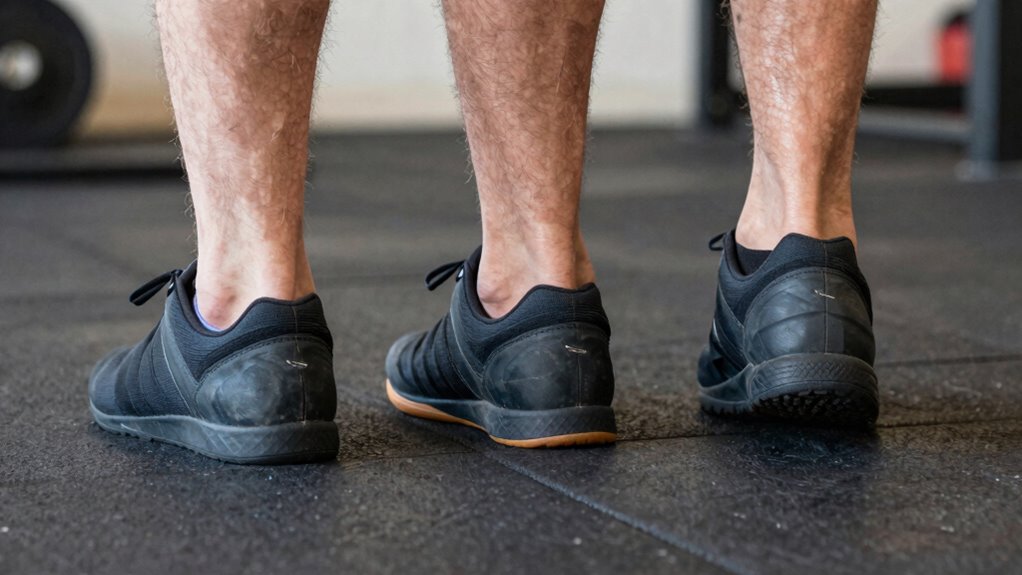
When selecting weightlifting shoes, understanding the differences between flat, moderate, and elevated heel designs is essential for optimizing performance and comfort. Flat shoes provide a stable base, ideal if you have high ankle flexibility or prefer a natural squat. Moderate heels offer a balanced approach, enhancing squat depth without sacrificing stability. Elevated heels increase ankle mobility, making deep squats easier, especially for those with limited flexibility.
Choosing the right weightlifting shoes depends on your flexibility, mobility, and personal preferences for stability and squat depth.
- Flat shoes promote stability and natural movement
- Moderate heels support deeper squats with comfort
- Elevated heels improve ankle flexibility and squat depth
- Your choice depends on flexibility, mobility, and personal preference
Which Heel Height Is Best for Beginners and Advanced Lifters
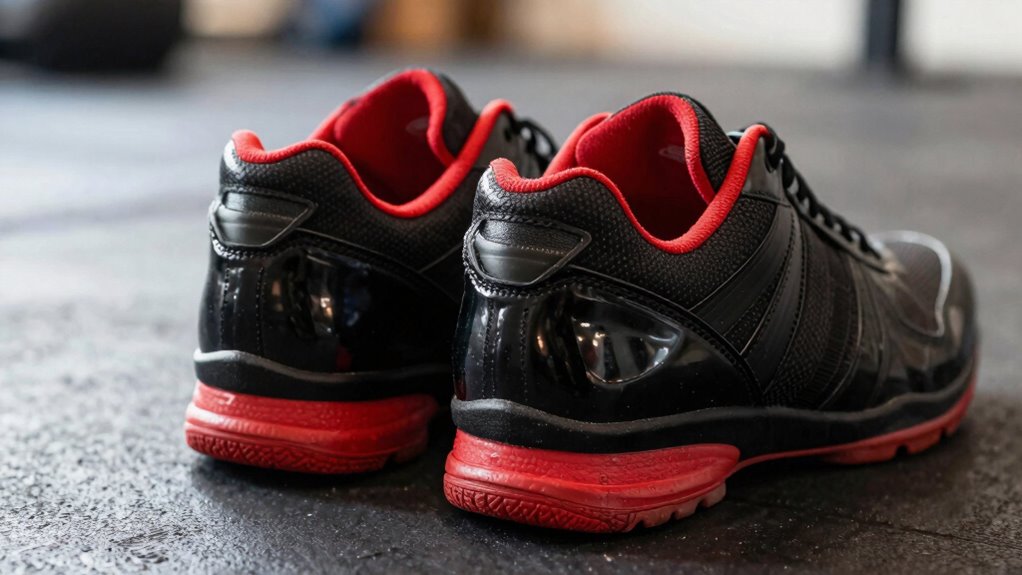
For beginners, flat or low-heeled shoes are often the best choice because they promote stability and help establish proper squat mechanics. A lower heel height encourages a natural, upright torso position, making it easier to learn correct technique without compromising balance. As you advance, you might experiment with higher heel shoes, which can improve ankle mobility and allow for deeper squats with better form. However, the ideal heel height depends on your individual mobility and goals. Beginners should prioritize stability and proper squat mechanics over elevation, gradually exploring other options as they gain strength and confidence. Ultimately, choosing the right heel height supports your training progression and helps prevent injury.
How to Transition Safely Between Different Heel Heights
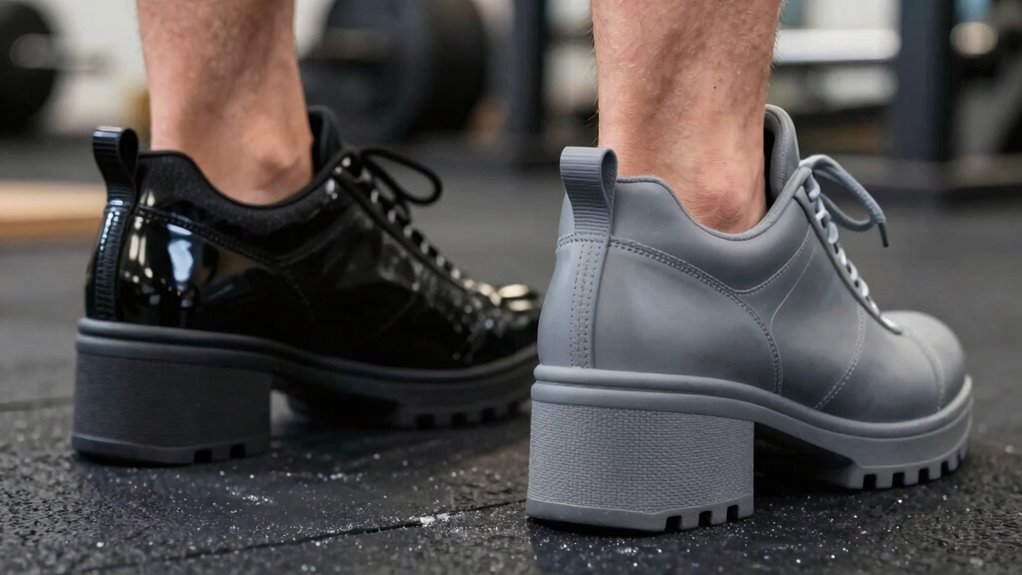
Shifting between different heel heights requires careful planning to avoid injury and guarantee proper technique. To assure a smooth transition safety when adjusting heel height variations, start gradually. Incorporate short sessions with the new heel height, increasing duration over time. Pay attention to your squat form to prevent strain or imbalance. Consider using insoles or heel lifts temporarily to adapt comfortably. Also, listen to your body and avoid rushing the process. Here are some tips for a safe transition:
- Begin with low heel height variations before progressing to higher ones
- Use supportive accessories like insoles for added stability
- Practice controlled movements to build muscle memory
- Consult a coach if you experience discomfort or instability
Common Mistakes When Choosing Weightlifting Shoes
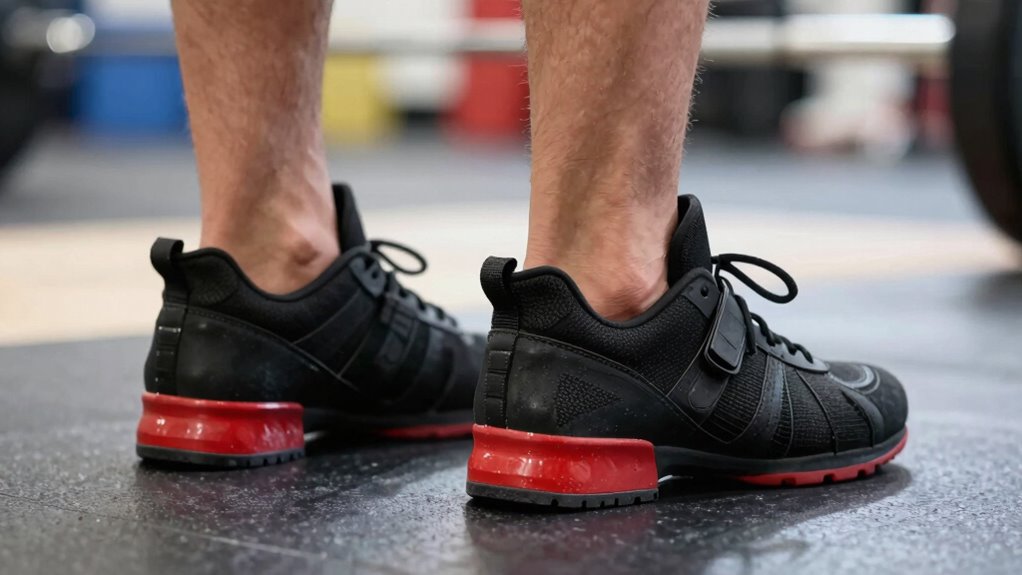
Choosing the right weightlifting shoes is essential for peak performance and safety, but many lifters make common mistakes that can hinder progress. One mistake is selecting shoes based solely on style rather than function, which can lead to overtraining injuries due to poor support or heel height mismatches. Another error is disregarding your specific training needs, like using overly aggressive heel heights when a flatter sole might be better. Incorrect shoe choice can also cause improper squat mechanics, risking injury. Additionally, neglecting to consider diet supplements that support joint health can compound injury risks.
| Mistake | Consequence |
|---|---|
| Choosing shoes based on looks | Poor support, injury risk |
| Ignoring heel height needs | Inefficient squat mechanics |
| Overlooking shoe fit | Discomfort, overtraining injuries |
| Not considering training goals | Reduced progress |
| Ignoring overall health | Increased injury risk |
Expert Tips on Picking the Best Heel Height for Your Goals
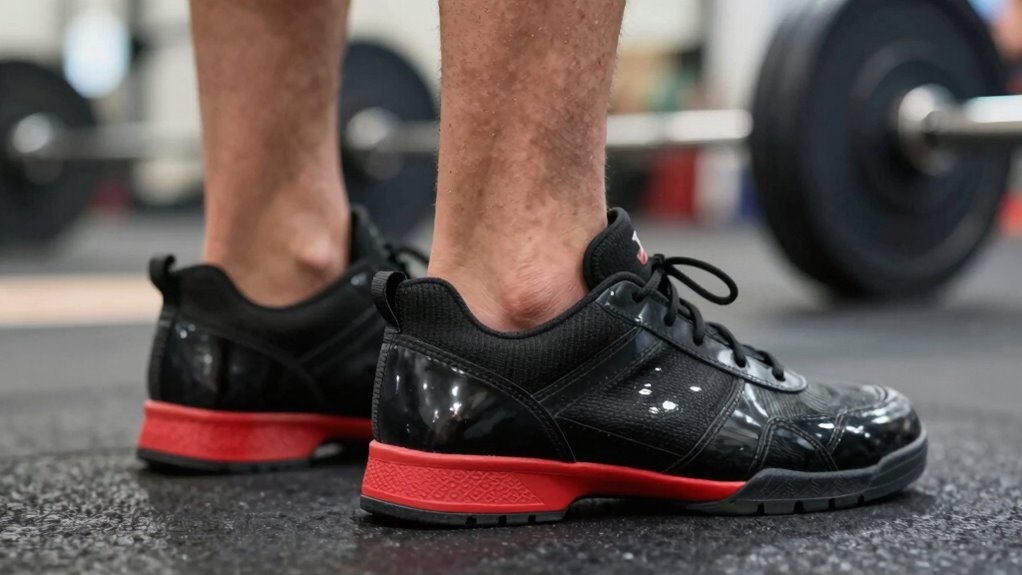
Selecting the right heel height can substantially impact your lifting performance and safety. To choose the best fit for your goals, consider your training style and mobility. For CrossFit footwear, a moderate heel height offers versatility, supporting both Olympic lifts and metabolic conditioning. If you’re mainly focused on deep squats or powerlifting, a higher heel enhances ankle mobility and stability. Be mindful of running shoe compatibility; a heel too high might cause discomfort during running or dynamic movements.
- Match heel height to your mobility and flexibility needs
- Opt for a versatile heel if you switch between lifts and CrossFit workouts
- Avoid heels that clash with your running shoe compatibility
- Test different heights with your typical training movements to find comfort
Frequently Asked Questions
Can Heel Height Influence Squat Depth and Stability?
Yes, heel elevation can influence your squat depth and stability. A higher heel improves squat biomechanics by allowing you to keep your torso more upright and knees forward, enabling deeper squats with better control. It reduces ankle mobility demands, helping you maintain balance and proper form. So, choosing the right heel height enhances your overall performance, making your squats safer and more effective, especially if ankle flexibility is limited.
Do Different Foot Shapes Require Specific Heel Heights?
Your foot shape definitely impacts the ideal heel height you need in weightlifting shoes. If you have a wider or more arched foot, a shoe with a specific heel height can dramatically improve your fit and stability. Ignoring shoe fit based on foot shape is like trying to run a marathon in flip-flops — uncomfortable and inefficient. Find a shoe that matches your foot shape for peak performance and comfort during lifts.
How Does Ankle Mobility Impact Heel Height Choice?
If your ankle mobility is limited, choosing a weightlifting shoe with a higher heel can improve your squat form by compensating for restricted ankle flexibility. This helps you maintain proper depth and upright posture. Incorporate mobility exercises to improve ankle flexibility over time, but in the meantime, a higher heel provides the necessary support. So, prioritize your ankle mobility, and select heel height accordingly to enhance your squat mechanics.
Are There Long-Term Risks Associated With High-Heeled Lifting Shoes?
You might wonder if high-heeled lifting shoes pose long-term risks. While they can improve squat mechanics, they may cause long-term joint strain if misused or worn excessively. Over time, footwear durability could decline, leading to instability and injury. Staying mindful of heel height, choosing quality shoes, and listening to your body can help prevent these risks. Proper use guarantees you benefit from the shoes without compromising your joint health.
How Often Should I Replace My Weightlifting Shoes?
You should replace your weightlifting shoes when their durability starts to decline or if they no longer fit properly. Regularly check for worn-out soles, compromised support, or any damage that affects performance. Proper shoe fitting ensures safety and best mechanics, so replace them promptly if they become uncomfortable or ill-fitting. Doing so helps maintain your squat stability and prevents injury, maximizing your lifting progress over time.
Conclusion
Remember, choosing the right heel height is like finding your own North Star in the vast sky of lifting. It guides your squat form, boosts confidence, and helps you access your full potential. Don’t let missteps hold you back—trust your instincts and experiment wisely. With the right shoes, you’ll stand taller, stronger, and ready to conquer every rep, just like a sailor steering by the shining beacon that is your perfect fit.