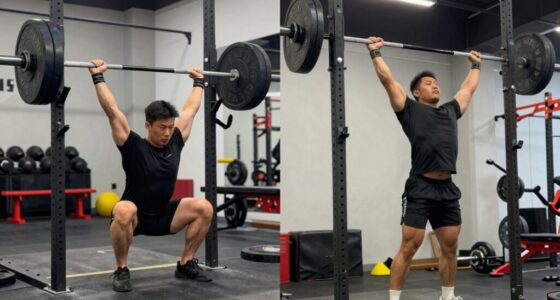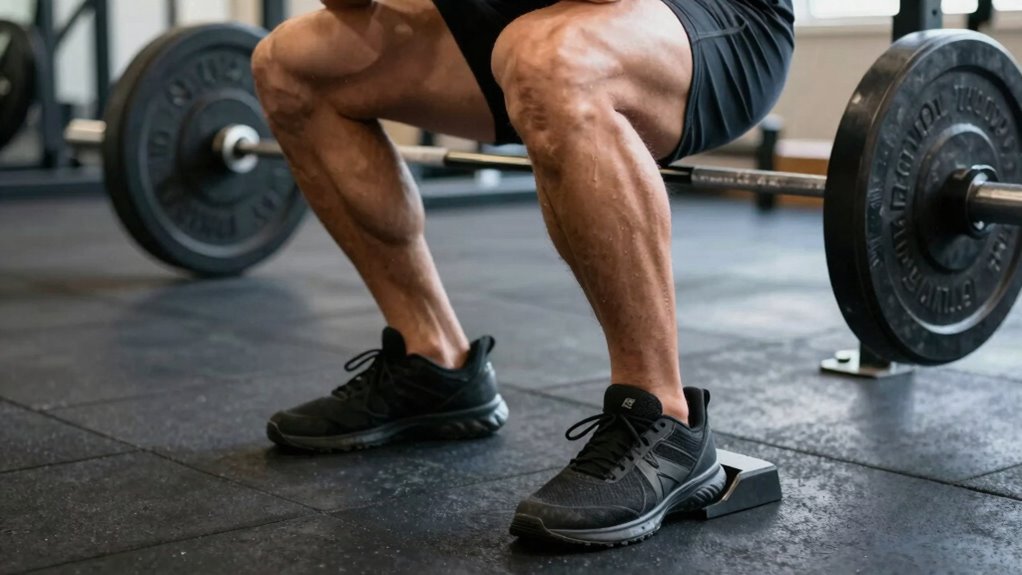

Squat wedges can improve your squat depth and form by helping compensate for limited ankle flexibility, making your lifts safer and more effective. However, if you rely on wedges too much, they might hide underlying mobility or technique issues that need addressing. Pay attention to persistent discomfort or poor progress, which could indicate deeper problems. Continuing along this path will help you understand how to use wedges safely and identify when to seek expert advice.

Get workout gear delivered free — and shop member deals
- Fast, free delivery on millions of items
- Access to Prime Big Deal Days deals on October 6–7
- Prime Video, Amazon Music and more included
Key Takeaways
- Squat wedges help improve depth and form for those with limited ankle mobility, enabling safer and more effective lifts.
- They should be used as a temporary aid, not a substitute for addressing underlying mobility restrictions.
- Persistent discomfort or reliance on wedges may indicate underlying mobility or technique issues needing professional assessment.
- Proper wedge height, placement, and consistent technique are crucial to avoid masking mobility deficits.
- Incorporating mobility exercises alongside wedge use promotes long-term improvements and reduces dependency.
As an affiliate, we earn on qualifying purchases.
What Are Squat Wedges and How Do They Help?
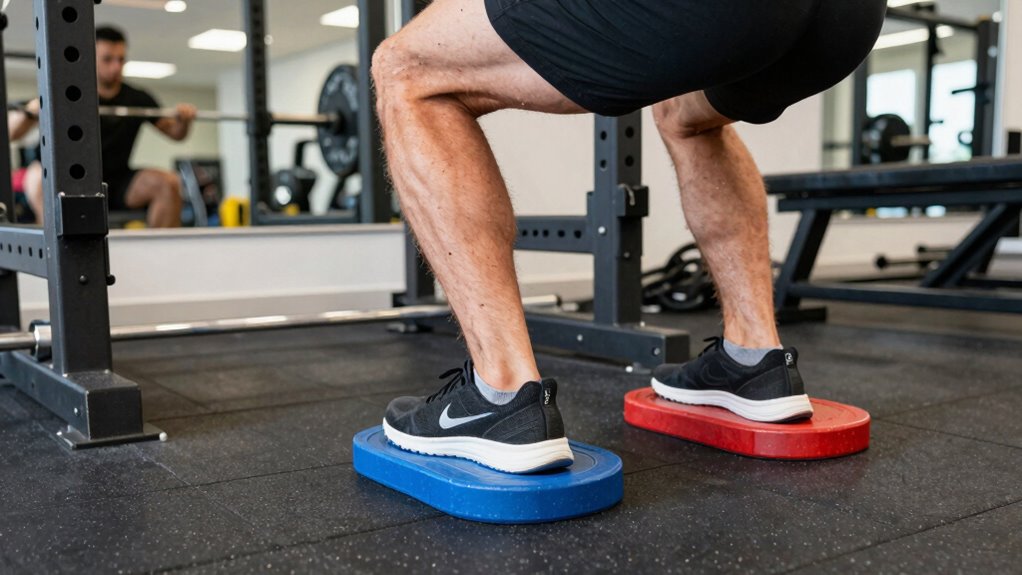
Have you ever struggled to maintain proper squat form or felt discomfort in your heels during lifts? Squat wedges are small, angled accessories placed under your heels to improve your squat technique. They help compensate for limited ankle flexibility, allowing you to keep your heels down and maintain balance. By elevating your heels, squat wedges also encourage better hip mobility, making it easier to achieve deeper, more effective squats. This can reduce strain on your lower back and knees, helping you focus on proper movement patterns. They’re especially useful if tight calves or restricted ankle movement hold you back from full depth. Overall, squat wedges serve as a simple tool to enhance your mobility and form, making your lifts safer and more efficient. Additionally, understanding ergonomics in your training setup can optimize your comfort and performance. Incorporating proper footwear can further improve your stability and overall technique during lifts. Using training accessories like wedges can also help you develop better movement habits over time. Proper technique adjustments combined with the use of wedges can lead to long-term improvements in your squat. Selecting the right wedge height and ensuring proper placement are crucial for maximizing their benefits and avoiding potential issues.
As an affiliate, we earn on qualifying purchases.
Should You Use Squat Wedges in Your Training?
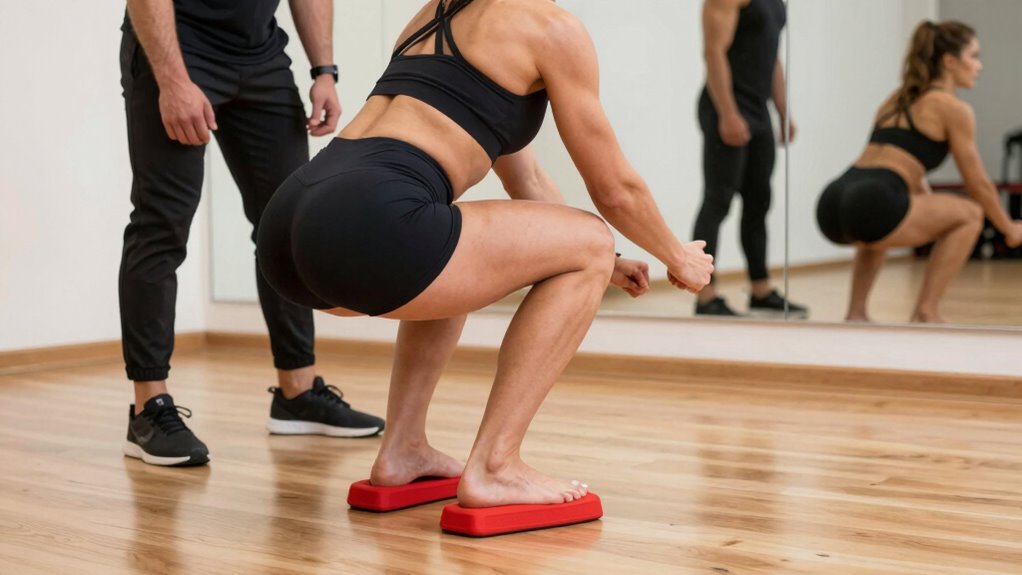
Deciding whether to use squat wedges depends on your training goals and technique needs. They can help correct form or sometimes mask weaknesses if used improperly. Consider when they’re truly beneficial versus when they might hinder your progress. Incorporating proper training tools can significantly impact your results and safety. Using training aids judiciously ensures you develop strength and technique without fostering dependency. Additionally, understanding movement patterns can help you determine whether such tools support your overall training plan. Recognizing muscle activation during exercises can guide you in choosing the right corrective tools to optimize performance and reduce injury risk. Understanding dream symbolism can offer insights into how you perceive time and life challenges, much like how proper training tools can influence your physical progress.
Correcting Technique or Masking?
While squat wedges can help you achieve better positioning, it’s important to contemplate whether they genuinely correct technique or simply mask underlying issues. Using wedges for technique refinement might offer immediate benefits, but they can also hide mobility or stability problems that need addressing. Relying on wedges consistently could prevent you from developing proper movement patterns, potentially leading to injury prevention concerns down the line. If you use wedges to temporarily improve form, ensure you’re also working on the root causes of poor positioning. Otherwise, you risk masking critical issues instead of fixing them. Additionally, understanding the contrast ratio of your training tools can illuminate how visual feedback influences your perception of proper form. Incorporating proper technique training alongside wedge use can help ensure long-term progress. Developing an awareness of movement quality is essential for sustainable improvements and injury prevention. Moreover, paying attention to body alignment during lifts can assist in identifying whether external aids like wedges are compensating for actual mobility limitations. Recognizing training environment factors such as lighting and mirror placement can also impact how effectively you assess your form. Ultimately, the goal should be to develop proper technique without overdependence on external aids, ensuring long-term progress and safety in your training.
When Are They Beneficial?
Squat wedges can be especially beneficial when you’re working to improve your squat depth and positioning, particularly if limited ankle mobility or tight hip flexors prevent you from achieving proper form. Using wedges helps facilitate mobility improvement by allowing you to reach a deeper squat without compensating or overextending other joints. They also aid in technique correction by promoting proper alignment and encouraging a more upright torso. When used correctly, squat wedges can make it easier to practice proper movement patterns and develop strength at the correct joint angles. This targeted support can accelerate progress and build confidence in your squat. Additionally, understanding content formats can enhance how you incorporate these tools into your training routine. However, they should complement, not replace, mobility work and proper training to avoid dependency. Incorporating mobility assessments can help determine when wedge use is most appropriate for your individual needs. Recognizing training cues can also improve how effectively you utilize wedges during your exercises. Furthermore, being aware of muscle imbalances can help ensure you’re addressing underlying issues that wedges alone may not resolve. Incorporating traditional Indonesian decor principles into your space can create a calming environment that encourages focus and consistency in your training routine.
fitness mobility training wedges
As an affiliate, we earn on qualifying purchases.
As an affiliate, we earn on qualifying purchases.
How to Use Squat Wedges Properly for Best Results
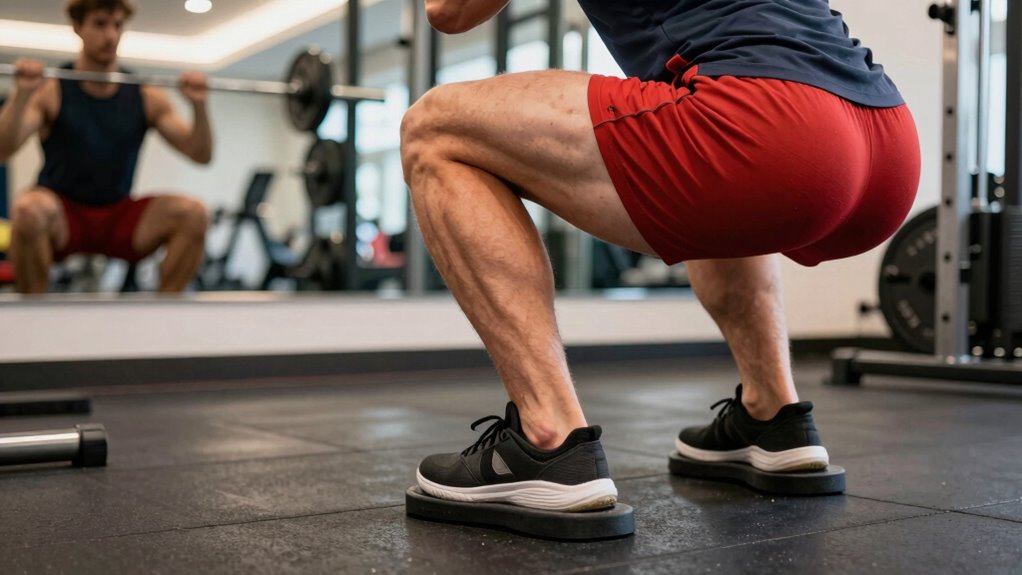
To use squat wedges effectively, you need to focus on proper placement and technique. Start by adjusting the wedge position to support your specific mobility needs—placing it under your heels or along the midfoot can help achieve better balance. Experiment with different wedge angles to find what feels most natural for your squat variation, whether it’s a traditional back squat or a front squat. Make certain your feet are firmly planted and your weight is evenly distributed. Use the wedges as a tool to maintain proper form without over-relying on them. Keep your core engaged, knees tracking over your toes, and avoid pushing into painful ranges. Proper wedge placement enhances your movement, but only when used intentionally and in conjunction with correct technique. Additionally, understanding home safety tips can help prevent injuries during your workouts and daily activities.
As an affiliate, we earn on qualifying purchases.
Signs Wedges Are Covering Up Mobility or Technique Problems
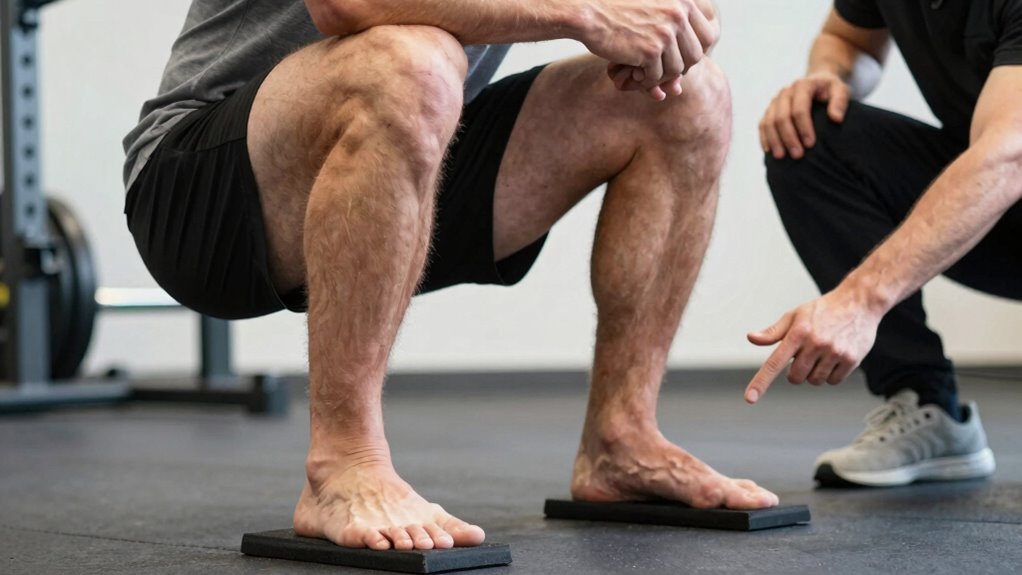
Using squat wedges can make your lifts feel smoother and more controlled, but they can also mask underlying mobility limitations or technique compensation. If you notice you rely heavily on wedges to achieve depth or maintain balance, it may signal that your mobility isn’t fully developed. Similarly, if your technique involves compensating by shifting your hips or leaning forward more than necessary, wedges might be hiding these issues. When you use wedges to “bail out” of proper movement, you risk ingraining poor patterns. Persistent discomfort or difficulty maintaining proper form without wedges can also indicate that your mobility or technique needs targeted attention. Recognizing these signs helps you address root issues instead of just masking them, leading to safer, more effective progress. Additionally, incorporating cycling skills and gear care tips can support overall mobility and confidence in your training. Developing mobility through targeted exercises can prevent over-reliance on wedges and improve your overall lifting technique. Being aware of mobility limitations allows you to tailor your training to build strength and flexibility naturally, reducing the need for external aids and supporting smart home solutions that optimize your recovery and workout environment. Incorporating proper warm-up routines can also enhance your mobility and help you perform lifts more effectively without relying on wedges.
When to Talk to a Coach About Your Wedges
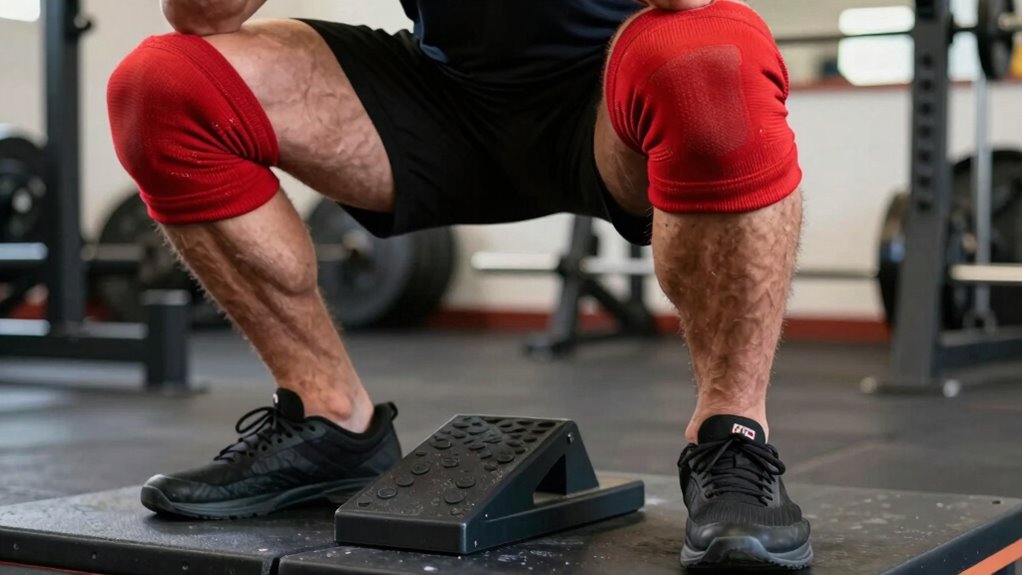
If you experience persistent discomfort when using squat wedges, it’s time to seek guidance from a coach. They can help identify underlying mobility issues and make sure you’re using the right wedge for your body. Don’t hesitate to ask for guidance if your technique isn’t improving or if discomfort continues. Understanding regional flavor profiles can also inform better choices in your training and recovery routines.
Recognize Persistent Discomfort
Persistent discomfort while using squat wedges isn’t something you should dismiss, as it could indicate improper fit or technique issues. If you notice ongoing pain or tightness, it might be a sign of muscle imbalances or movement restrictions that wedges aren’t addressing. Recognizing these signs helps prevent injury and ensures your training remains effective.
| Discomfort Type | Action to Take |
|---|---|
| Sharp or persistent pain | Talk to a coach immediately |
| Tightness that worsens | Reassess wedge fit or technique |
| Discomfort lasting days | Seek professional guidance |
If discomfort persists, working with a coach can help identify underlying issues and prevent long-term problems. Trust your body—don’t push through persistent pain.
Understand Underlying Mobility Issues
Understanding when to talk to a coach about your wedges is crucial, especially if mobility issues hinder your squat performance. Limited hip mobility can restrict your depth and cause compensations, while poor ankle flexibility can prevent proper alignment and stability. If you notice persistent tightness, discomfort, or an inability to maintain proper form despite warming up, these might signal underlying mobility problems. Wedges can mask these issues temporarily, but addressing the root cause is essential for long-term progress. Consulting a coach helps identify whether your mobility limitations are due to tight muscles, joint restrictions, or movement patterns. A professional can recommend targeted stretches, mobility drills, or alternative strategies to improve hip mobility and ankle flexibility, ensuring your squat technique is both effective and sustainable.
Ensure Proper Wedge Use
Using wedges properly can enhance your squat form and mobility, but it’s important to recognize when they’re no longer helping and it’s time to consult a coach. Pay attention to wedge placement—if it feels uncomfortable, shifts during lifts, or causes pain, it’s a sign to reassess. Proper footwear is vital; ensure your shoes provide stability and support that complement your wedges. If you find yourself relying heavily on wedges or adjusting them frequently, it might indicate underlying mobility or alignment issues. A coach can evaluate your technique, refine wedge placement, and recommend appropriate footwear. Remember, wedges should enhance your squat, not mask problems. When in doubt, seek professional guidance to ensure your setup promotes safe, effective lifting.
Final Tips for Using Squat Wedges Safely and Effectively
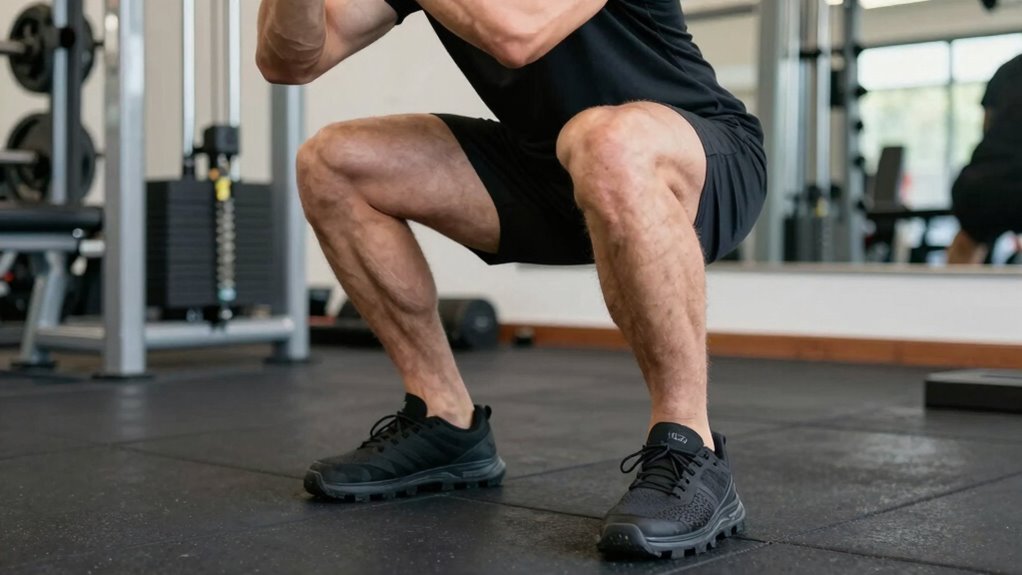
To use squat wedges safely and effectively, it’s essential to start with proper setup and gradually increase the wedge height as your mobility improves. Prioritize wedge safety by ensuring your wedge placement is secure and stable before each lift. Conduct a mobility assessment to identify your current limitations, which helps prevent over-reliance on wedges or masking issues. Always listen to your body; if you feel pain or discomfort, reassess your technique or reduce the wedge height. Incorporate warm-up routines that target your hips, ankles, and thoracic spine to enhance mobility. Remember, the goal is to improve movement patterns over time, not just to compensate with wedges. With cautious progression and mindful use, you can maximize benefits while minimizing risks.
Frequently Asked Questions
Can Squat Wedges Improve Long-Term Mobility or Just Temporary Form?
Squat wedges can improve your long-term mobility if used correctly as part of a consistent stretching and strengthening routine. They help you achieve better flexibility and form over time. However, if you rely solely on wedges without addressing underlying mobility issues, they might only enhance temporary form. To see lasting benefits, combine wedge use with targeted mobility exercises and proper technique, ensuring sustained improvements rather than short-term fixes.
Are There Specific Sports or Activities That Benefit Most From Squat Wedges?
If you participate in weightlifting, CrossFit, or powerlifting, squat wedges can boost your performance by enhancing mobility, supporting proper form, and reducing injury risk. They benefit activities like yoga stretches, weightlifting accessories, and functional training. You’ll find they especially help athletes who need deeper squats, maintain stability, or improve flexibility. By integrating wedges into your routine, you optimize your training, prevent issues, and open your full potential.
How Do I Choose the Right Size or Angle of a Squat Wedge?
You should choose the right size or angle of a squat wedge based on your foot positioning and comfort. Start by considering your flexibility and the angle that promotes proper alignment. Opt for a wedge material that offers durability and grip, like rubber or foam. Test different sizes to find one that helps maintain a natural squat form without forcing your foot or compromising stability.
Can Using Wedges Lead to Muscle Imbalances Over Time?
Using wedges can lead to muscle imbalances if you’re not careful—studies show that uneven muscle development affects over 60% of lifters. They might cause your hip flexibility and core stability to adapt unevenly, especially if relied on excessively. To avoid this, incorporate balanced training, focus on mobility, and use wedges temporarily. Regularly assess your form to make certain you’re not developing compensations or imbalances over time.
What Are Alternatives to Using Squat Wedges for Mobility Issues?
If you’re looking for alternatives to squat wedges for mobility issues, try incorporating targeted stretching routines and mobility drills. Focus on hip flexor stretches, hamstring stretches, and ankle mobility exercises to improve flexibility and range of motion. Consistently practicing these routines can help address mobility limitations naturally, reducing the need for wedges and preventing potential imbalances. Remember, gradual progress and proper technique are key to effective improvement.
Conclusion
Think of squat wedges as a helpful map on your journey, guiding you to better lifts. But beware—if you rely on them too much, you might miss the true path to improvement. Use them wisely, like a compass that points you in the right direction, and consult a coach when needed. With the right approach, wedges can be your trusted guide, helping you reach your goals safely and confidently.
Halloween Picks
halloween
As an affiliate, we earn on qualifying purchases.