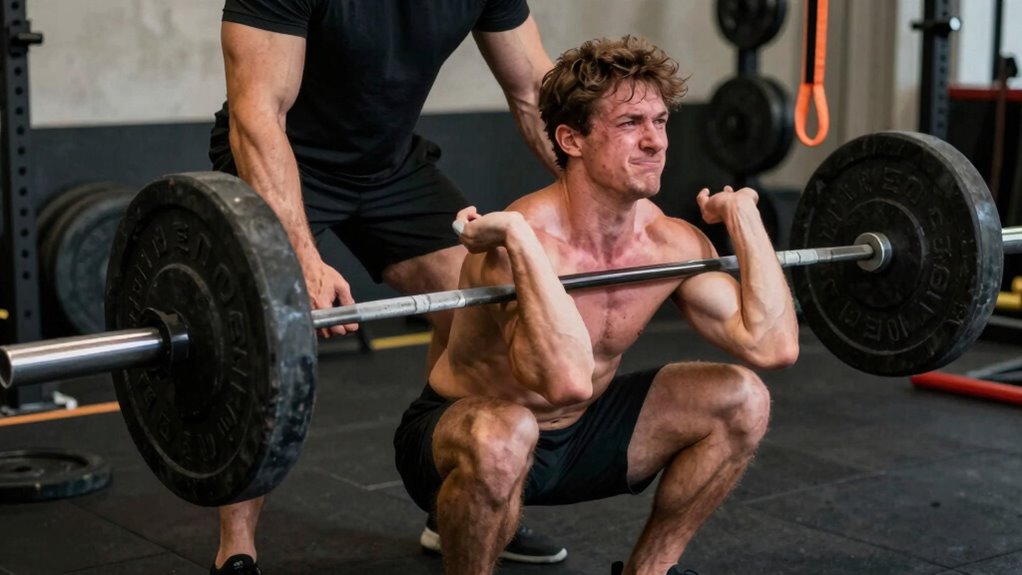

Ignoring the warning signs of overtraining and pushing through pain increases your risk of injuries like stress fractures or tendinitis. Jumping too quickly into heavier weights or higher reps without proper recovery can cause muscle strains and joint issues. Neglecting rest, proper nutrition, and gradual progression weakens tissues and hampers recovery, making injuries more likely. To avoid setbacks, it’s vital to listen to your body and follow safe training practices—keep exploring to learn more about safeguarding your progress.

Get workout gear delivered free with Prime
- Fast, free delivery on millions of items
- Prime Video, Amazon Music and more included
- Member-only deals all year
Key Takeaways
- Increasing workload too rapidly without adequate recovery raises injury risk.
- Neglecting warning signs like persistent fatigue or pain leads to overuse injuries.
- Failing to incorporate proper nutrition hampers tissue repair and recovery, causing setbacks.
- Ignoring the importance of rest days hampers adaptation and increases strain on muscles and joints.
- Overlooking proper warm-up, stretching, and foam rolling heightens the chance of strains and stress fractures.
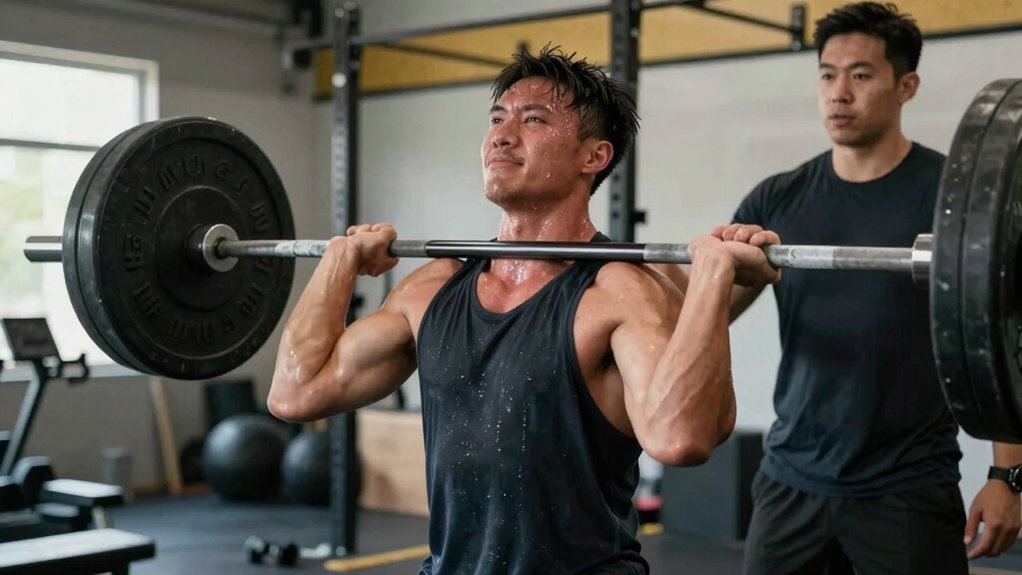
Progressive overload is crucial for continuous fitness gains, but many people make common mistakes that hinder their progress. One of the biggest pitfalls is ignoring overtraining symptoms. When you push yourself too hard without adequate rest, your body starts showing signs of strain—persistent fatigue, nagging aches, irritability, and decreased performance. Ignoring these signals can lead to serious injuries, such as stress fractures, muscle strains, or tendinitis. Instead of recognizing these warning signs early, some push through the pain, believing more effort equals faster results. Unfortunately, this approach often results in setbacks, longer recovery times, and even permanent injury. To avoid this, listen to your body and prioritize recovery days, ensuring your muscles and joints have time to repair and strengthen.
Another critical mistake is neglecting proper nutrition. Many underestimate how crucial nutrition is to support progressive overload. When you’re increasing workout intensity or volume, your body needs more fuel—adequate calories, protein, healthy fats, and hydration—to repair tissues and build strength. Neglecting your diet can leave you depleted of essential nutrients, which hampers recovery and increases injury risk. Without proper nutrition, your muscles don’t recover efficiently, your immune system weakens, and overtraining symptoms become more pronounced. This not only stalls your progress but also makes you more susceptible to injuries. Make sure you’re fueling your body with balanced meals rich in protein for muscle repair, carbohydrates for energy, and fats for overall health. Hydration is equally important, as dehydration can impair performance and slow recovery. Additionally, incorporating proper recovery techniques such as stretching and foam rolling can significantly reduce the risk of injury and enhance your training results. Remember, steady, incremental increases paired with good nutrition and attentive recovery will help you avoid setbacks and achieve sustainable progress.
As an affiliate, we earn on qualifying purchases.
Frequently Asked Questions
How Can I Tell if I’M Progressing Too Quickly?
You can tell you’re progressing too quickly if you experience frequent training plateaus or your motivation drops. If you’re pushing yourself too hard without proper recovery, you might notice persistent soreness, fatigue, or a decline in performance. Listen to your body—if you’re constantly tired or injured, ease up. Slow, steady progress helps prevent injuries, keeps motivation high, and ensures consistent gains without risking burnout.
Are There Specific Signs Indicating Overtraining From Overload?
You’ll notice signs of burnout such as persistent fatigue, irritability, or lack of motivation. Rest vs. overtraining becomes clear when you feel sore all the time, experience decreased performance, or struggle to recover between workouts. If you ignore these signs, you risk injury or prolonged fatigue. It’s essential to listen to your body, incorporate rest days, and avoid pushing too hard too quickly to prevent overtraining and stay healthy.
What Recovery Strategies Prevent Overload Injuries?
To prevent overload injuries, you should incorporate effective recovery strategies like rest days, proper sleep, and active recovery exercises. Stretch regularly, stay hydrated, and listen to your body’s signals to avoid pushing too hard. Injury prevention also involves planning gradual increases in intensity and volume, giving your muscles time to adapt. Consistently prioritizing recovery strategies helps you stay injury-free and maintain steady progress in your training.
How Does Age Affect Safe Progressive Overload?
As you age, safe progressive overload becomes more vital due to age-related muscle loss and decreased joint flexibility. You should increase weights gradually, listen to your body, and incorporate proper warm-ups to prevent injury. Adjust your training intensity based on your current strength levels, and prioritize flexibility exercises. This approach helps you avoid overloading joints and muscles unnecessarily, keeping your progress steady and safe as you age.
Can Nutrition Impact Injury Risk During Overload Training?
Yes, nutrition impacts your injury risk during overload training. Proper nutrient timing guarantees your muscles recover and stay strong, reducing strain. Staying hydrated with effective hydration strategies helps prevent cramps and fatigue that can lead to injury. By fueling your body correctly and timing nutrients well, you support your recovery process, keep your muscles resilient, and lower the chances of overuse injuries during intense training sessions.
protein powder for muscle repair
As an affiliate, we earn on qualifying purchases.
As an affiliate, we earn on qualifying purchases.
Conclusion
Avoid the common mistakes of rushing progress or neglecting proper form. When you respect your body’s signals, you build strength safely. Progress slowly, and injuries become less likely; push too hard, and setbacks follow. Balance becomes your best tool—steadiness over speed, patience over shortcuts. Remember, progress isn’t a race. By listening and adjusting, you create a stronger, injury-free foundation. Stay mindful, stay steady, and you’ll reach your goals with fewer setbacks along the way.
As an affiliate, we earn on qualifying purchases.
As an affiliate, we earn on qualifying purchases.
Halloween Picks
halloween
As an affiliate, we earn on qualifying purchases.