
To keep your wrists and shoulders safe during heavy bag training, focus on proper technique, warm-up thoroughly, and wear supportive gear like gloves and wraps. Maintain good joint alignment, keep your fists tight, and use your hips to generate power without overextending your arms. Watch for signs of fatigue and stop if you feel pain or discomfort. Staying aware of these tips helps protect you—keep going to discover more ways to stay injury-free.

Get workout gear delivered free with Prime
- Fast, free delivery on millions of items
- Prime Video, Amazon Music and more included
- Member-only deals all year
Key Takeaways
- Always warm-up with dynamic stretches and wrist mobility exercises before heavy bag work.
- Use properly fitted gloves and wraps to stabilize wrists and protect against impact injuries.
- Maintain correct punching technique with straight wrists and proper stance to reduce joint strain.
- Focus on controlled punches, avoiding overextension or excessive force to prevent overuse injuries.
- Monitor fatigue levels and rest when experiencing pain or discomfort to prevent long-term shoulder or wrist damage.
As an affiliate, we earn on qualifying purchases.
Understand the Key Risks to Your Wrists and Shoulders During Heavy Bag Training

While heavy bag training can considerably boost your power and endurance, it also poses risks to your wrists and shoulders if you’re not careful. Improper wrist alignment during punches can lead to strains or sprains, reducing control and increasing injury risk. Poor shoulder stability, especially when punching with force repeatedly, can cause instability and shoulder injuries over time. If your wrists aren’t aligned correctly, you might experience pain or even fracture from the impact. Likewise, unstable shoulders may buckle under pressure, compromising your form and safety. Maintaining proper wrist alignment ensures your punches transfer energy effectively and protect your joints. Focusing on shoulder stability helps prevent dislocations or strains, allowing you to punch confidently and safely during heavy bag workouts. Additionally, proper warm-up routines can further reduce injury risk by preparing your joints and muscles for intense training. Incorporating strengthening exercises targeting the shoulders and wrists can also enhance joint stability and resilience during training. Paying attention to correct punching technique can significantly minimize undue stress on your joints and improve overall safety. Moreover, paying close attention to joint stability through targeted training can further safeguard your joints and improve your performance. To further safeguard your joints, consider using appropriate hand wraps and gloves, which can provide additional support and reduce impact stress during training sessions.
As an affiliate, we earn on qualifying purchases.
Warm Up and Stretch Properly to Protect Your Wrists and Shoulders

Properly warming up and stretching your wrists and shoulders prepares these joints for the demands of heavy bag training. Focus on dynamic stretching to increase blood flow and improve flexibility. Incorporate wrist mobility exercises such as circular motions and flexion-extension drills to enhance joint range. To optimize your warm-up, follow these steps:
- Perform dynamic stretches like arm circles and shoulder swings to loosen muscles.
- Include wrist mobility drills to increase flexibility and reduce strain.
- Gradually increase intensity to prepare your joints for more vigorous movements.
- Consider performance-enhancing upgrades like proper gear and technique to further reduce injury risk. Additionally, understanding joint health principles can help maintain their function and prevent injuries over time. Incorporating proper warm-up routines is essential for safeguarding your joints during training. Engaging in consistent injury prevention strategies can also significantly lower the chance of setbacks and ensure sustained progress. Paying attention to joint stability can further support injury prevention and improve overall movement quality.
This approach helps prevent injuries by ensuring your wrists and shoulders are ready for impact. Proper warm-up routines promote better performance and longevity in your heavy bag training sessions.
shoulder stability training equipment
As an affiliate, we earn on qualifying purchases.
As an affiliate, we earn on qualifying purchases.
Choose the Right Gloves and Wraps for Support and Safety

Choosing the right gloves and wraps is essential to provide the support and safety you need during heavy bag training. Look for gloves with adequate glove padding to protect your knuckles and wrists from impact. Proper glove padding cushions your punches, reducing strain and minimizing injury risk. Wrap snugness is equally important; wraps should be tight enough to stabilize your wrists and keep your hands secure, but not so tight that they cut off circulation or cause discomfort. Well-fitted wraps prevent your hands from shifting inside the gloves and support proper wrist alignment. Selecting gloves and wraps tailored to your hand size and training intensity ensures ideal support, helping you punch safely and confidently without compromising your wrist and shoulder health. Additionally, choosing appropriate training equipment designed for your specific activity enhances safety and performance. Being aware of specialized gear options can further improve your safety during heavy bag sessions, especially when incorporating protective accessories that mitigate injury risks. Incorporating proper technique along with the right gear also plays a crucial role in preventing injuries and maintaining long-term joint health. Using proper fitting gear can significantly reduce the likelihood of strain and injury during intense training sessions.
As an affiliate, we earn on qualifying purchases.
Punch Correctly: Technique Tips to Minimize Shoulder and Wrist Strain
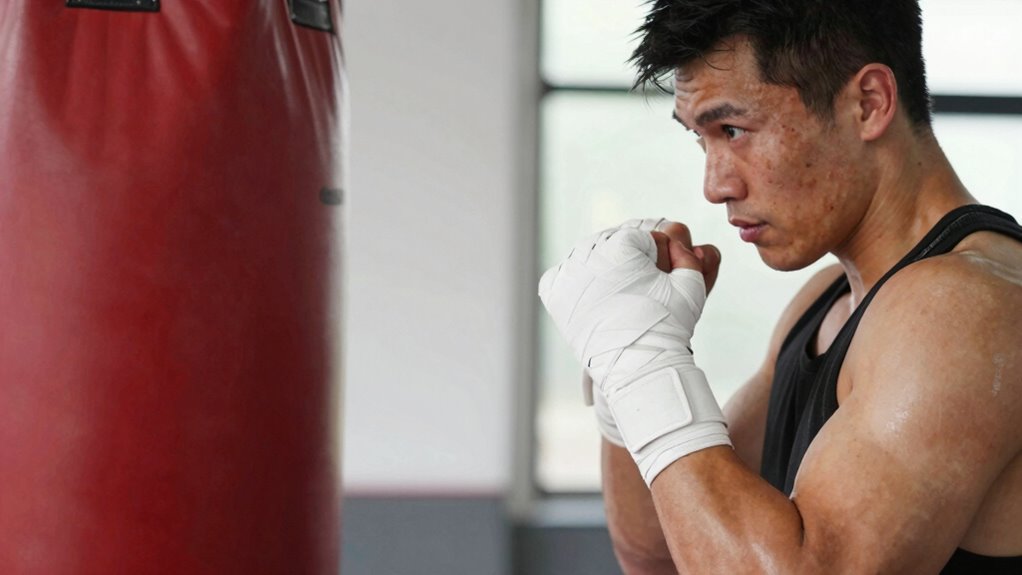
To minimize shoulder and wrist strain during heavy bag training, focus on maintaining proper punch technique. Your punching stance should be stable, with feet shoulder-width apart and knees slightly bent. Hand positioning is vital—keep your fists tight, wrists straight, and align your knuckles with your forearm. To improve technique and reduce injury risk:
- Maintain a relaxed but engaged punching stance, ensuring your weight is balanced.
- Snap your punches from the hips, not just your arm, to generate power without overextending.
- Keep your wrists aligned with your forearm upon impact, avoiding any bending or twisting.
Proper hand positioning and stance promote efficient force transfer and protect your joints, helping you punch effectively without unnecessary strain.
Learn How to Recognize Fatigue and Prevent Overuse Injuries

Recognizing early signs of fatigue is essential to prevent overuse injuries during heavy bag training. Muscle fatigue can cause decreased performance and increase injury signs like pain or lingering soreness. Pay attention to how your muscles feel; if you notice weakness, tingling, or sharp pain, stop and rest. Using the table below, you can better identify fatigue levels and take action:
| Fatigue Level | Injury Signs |
|---|---|
| Mild fatigue | Slight soreness, occasional tiredness |
| Moderate fatigue | Reduced power, muscle trembling |
| High fatigue | Sharp pain, joint discomfort |
| Excessive fatigue | Persistent pain, swelling, instability |
| Critical fatigue | Inability to continue, risk of injury |
Frequently Asked Questions
How Often Should I Replace My Heavy Bag Gloves for Safety?
You should replace your heavy bag gloves every 6 to 12 months for safety, depending on usage. Regularly check glove hygiene and look for signs of wear, like tears or loss of padding. Proper equipment maintenance extends glove lifespan, but worn gloves can compromise support and protection. Investing in new gloves ensures ideal wrist and shoulder safety, keeping your training effective and injury-free.
What Are Signs of Wrist or Shoulder Injury During Training?
If you’re feeling wrist pain or shoulder discomfort mid-sparring with your heavy bag, congratulations—you’re officially auditioning for the “Ouch” Olympics. Signs of injury include persistent pain, swelling, or limited movement. If you notice numbness or tingling, stop immediately! Ignoring these signs only invites more drama. Pay attention to your body, rest when needed, and consider consulting a pro before you turn your workout into a melodrama.
Can I Use Wrist Braces for Added Support During Heavy Bag Workouts?
Yes, you can use wrist braces for added support during heavy bag workouts. Wrist brace benefits include stabilizing your wrists, reducing strain, and preventing injuries. For your shoulders, consider shoulder support options like compression sleeves or wraps to help maintain proper alignment and reduce stress. Always choose braces that fit well and don’t restrict your movement. Combining these supports with proper technique helps you train safely and effectively.
How Long Should I Rest Between Heavy Bag Training Sessions?
You should rest for at least 24 to 48 hours between heavy bag sessions to prevent injury and allow your muscles to recover. Pushing too hard without proper rest is like ignoring a warning sign on a dangerous cliff—you’re risking serious injury. Proper rest duration helps in injury prevention, keeps your performance sharp, and ensures your wrists and shoulders stay safe. Don’t overlook the signs—listen to your body and recover fully.
Are There Specific Warm-Up Exercises for Shoulder and Wrist Flexibility?
You should do shoulder stretches like arm circles and cross-body stretches, along with wrist warm-ups such as wrist rotations and gentle flexion exercises. These movements loosen up your shoulder and wrist muscles, improving flexibility and reducing injury risk. Incorporate these warm-up exercises into your routine before heavy bag training to keep your wrists and shoulders safe while maximizing your performance. Always listen to your body and avoid overstretching.
Conclusion
To keep your wrists and shoulders safe during heavy bag training, stay mindful of proper technique, warm up thoroughly, and listen to your body. Think of your joints as delicate plants—you need to nurture and protect them to grow strong. By choosing the right gear and avoiding overexertion, you’ll hit harder and stay injury-free, just like a well-tuned machine. Keep safety a priority, and your training will be both effective and injury-free.
Halloween Picks
halloween
As an affiliate, we earn on qualifying purchases.