

To tell if soreness is DOMS or an injury, pay attention to pain type and duration. DOMS feels like a dull ache 24-48 hours after exercise and fades with gentle activity and rest. Injury pain is sharper, more intense, and may worsen or prevent movement. If pain persists beyond a few days, or worsens, it’s likely an injury. Keep analyzing these signs, and you’ll learn how to stay safe before you hit the gym again.

Get workout gear delivered free with Prime
- Fast, free delivery on millions of items
- Prime Video, Amazon Music and more included
- Member-only deals all year
Key Takeaways
- DOMS peaks 24-48 hours after exercise and feels like a dull ache, easing with rest and gentle movement.
- Injury pain is sharper, more intense, and may include swelling, bruising, or limited movement.
- Persistent soreness beyond a few days or worsening pain could indicate injury needing medical attention.
- Sudden sharp pain, inability to move normally, or swelling during activity suggests a serious injury.
- Use pain characteristics, duration, and response to activity to decide if you’re ready to train again safely.
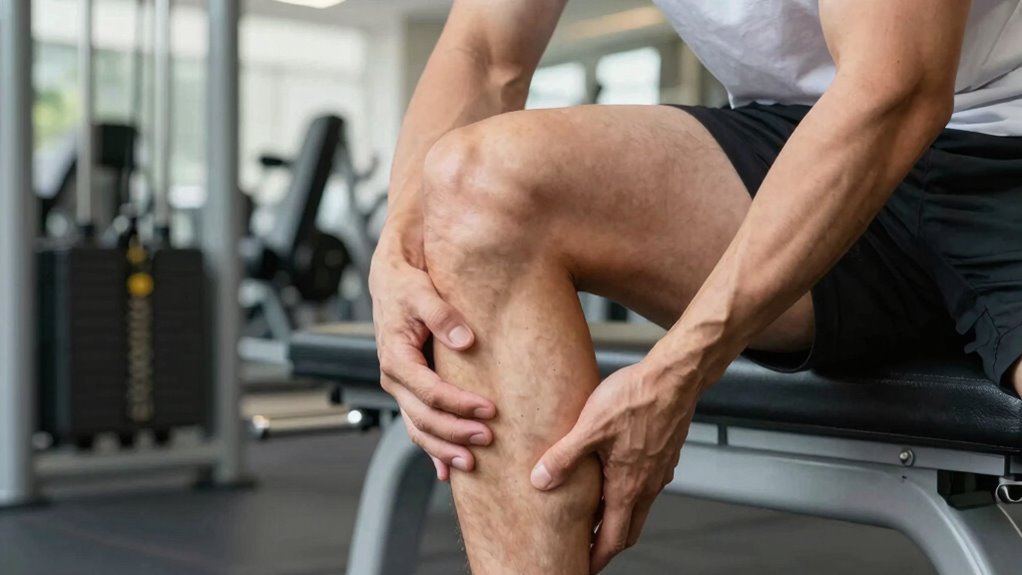
Delayed Onset Muscle Soreness (DOMS) and injuries often feel similar, but understanding the difference is key to proper recovery. When you push your body hard during a workout, you might notice muscle soreness that peaks a day or two afterward. This muscle soreness is usually a normal response to training fatigue, caused by microscopic tears in your muscle fibers. It’s a sign you’ve challenged your muscles, prompting them to repair and grow stronger. However, this discomfort generally diminishes with rest, gentle movement, and proper recovery strategies.
In contrast, injuries tend to produce pain that’s sharper, more intense, or persistent. If your muscle soreness lingers beyond a few days, worsens, or is accompanied by swelling, bruising, or limited movement, it’s likely more than just DOMS. Injury pain often feels different—more localized and severe—and might be associated with a specific incident or unusual discomfort during activity. For example, if you experience a sudden snap or pop, or if the pain is sharp rather than dull and aching, it’s a red flag that you could have strained a muscle or sustained some other injury.
Knowing what to look for can prevent you from rushing back into training too soon, risking further damage. Muscle soreness from training fatigue usually affects larger muscle groups, feels like a dull ache, and eases with light activity or stretching. It’s a sign that your muscles are recovering and adapting. If the soreness persists longer than a few days, or if it’s accompanied by weakness or instability, you should pause and assess further. Rest, ice, compression, and elevation (RICE) can help reduce inflammation, and gentle movement can promote healing.
Another important aspect is to listen to your body. If the pain prevents you from moving normally or worsens with activity, it’s a clear indication you need to rest and consult a medical professional. Pushing through muscle soreness is often fine, but ignoring signs of injury can lead to more serious issues, longer downtimes, and setbacks. Recognizing the role of contrast ratio in your recovery process can also help you gauge the severity of your condition and determine when it’s safe to resume training. Remember, distinguishing between normal training fatigue and injury isn’t just about pain levels—it’s about understanding how your body responds and responds appropriately. Taking a moment for a quick self-check before returning to your workout can save you from aggravating an injury, ensuring you heal properly and get back to training safely.
As an affiliate, we earn on qualifying purchases.
Frequently Asked Questions
How Long Does Delayed Onset Muscle Soreness Usually Last?
Delayed onset muscle soreness (DOMS) usually lasts between 24 to 72 hours after your workout. During this time, focus on muscle recovery and soreness management by gentle stretching, staying hydrated, and getting enough rest. If soreness persists beyond this period or worsens, it might indicate an injury. Pay attention to your body’s signals and avoid pushing through pain, ensuring safe and effective training sessions.
Can DOMS Cause Lasting Muscle Damage?
DOMS doesn’t cause lasting muscle damage; instead, it’s a sign of muscle recovery in progress. While soreness may feel intense, it’s temporary and part of strengthening. To prevent injury, listen to your body, avoid pushing through pain, and give muscles time to recover. Proper rest and gentle activity support healing, reducing the risk of long-term damage. Remember, soreness is normal, but lasting damage isn’t.
What Are the Key Signs of a Muscle Injury?
If you suspect a muscle injury, look for signs like severe soreness that doesn’t improve or worsens over time, which may indicate a muscle strain. You might also experience sharp pain during movement, swelling, or bruising. Pay attention to soreness severity; if it’s intense and persistent, it’s best to rest and seek professional advice before training again. Ignoring these signs can lead to further damage.
Should I Stretch or Rest When Experiencing Soreness?
When experiencing soreness, rest is usually the best choice, especially if it’s intense or sharp. Don’t fall for stretching myths that suggest stretching always helps; sometimes, gentle movement or rest strategies are better for recovery. If soreness feels manageable, light activity may help reduce stiffness. However, if pain worsens, prioritize rest and consult a professional. Listen to your body, and don’t push through serious discomfort.
When Is It Safe to Resume Intense Training After Soreness?
You can safely resume intense training once your muscle recovery is complete and soreness has considerably subsided. If you feel strong, pain-free, and your range of motion is restored, it’s a good sign you’re ready. Remember, rushing back too soon can jeopardize training safety and cause injury. Listen to your body, gradually increase intensity, and prioritize proper recovery to avoid setbacks and keep progressing effectively.
compression sleeves for muscle support
As an affiliate, we earn on qualifying purchases.
As an affiliate, we earn on qualifying purchases.
Conclusion
Remember, pushing through pain like a hero in an epic tale isn’t always brave—it can be risky. Think of your body as a finely tuned instrument; ignoring the signs of injury can turn a symphony into dissonance. Before you hit the gym again, do a quick self-check, just like a hero preparing for battle. Respect your body’s signals, and you’ll stay on the path to strength—without turning your journey into a tragic saga.
As an affiliate, we earn on qualifying purchases.
As an affiliate, we earn on qualifying purchases.
Fall Picks
fall essentials
As an affiliate, we earn on qualifying purchases.