To reduce rubber flooring off-gassing, increase ventilation by opening windows, using fans, and adding air purifiers with activated carbon filters to remove VOCs. Properly clean the floor with mild solutions and consider sealing it with a low-VOC sealant to contain odors. Maintaining low humidity levels and choosing eco-friendly, low-VOC options can also help. If odors persist, professional assistance may be needed; discover more effective strategies below.

Get workout gear delivered free with Prime
- Fast, free delivery on millions of items
- Prime Video, Amazon Music and more included
- Member-only deals all year
Key Takeaways
- Improve ventilation by opening windows, using fans, and creating cross-breezes to accelerate off-gassing.
- Clean the flooring with mild soap or rubber-safe cleaners to remove residual chemicals causing odors.
- Use air purifiers with activated carbon filters and maintain humidity below 50% to reduce VOC concentrations.
- Seal the surface with low-VOC, breathable sealants after cleaning to contain chemical emissions.
- Choose eco-friendly, low-VOC rubber flooring materials and consult professionals for persistent odor issues.
air purifier with activated carbon filter
As an affiliate, we earn on qualifying purchases.
As an affiliate, we earn on qualifying purchases.
Why Does Rubber Flooring Smell, and What Causes Off-Gassing?

Rubber flooring often emits a distinct smell shortly after installation because of a process called off-gassing. During manufacturing, chemicals like volatile organic compounds (VOCs) are released as the material settles. This off-gassing contributes to the strong odor you notice initially. While it’s common, it’s important to contemplate the environmental impact, as some chemicals can persist in the air and affect indoor air quality. The chemicals released can cause irritation or allergic reactions in some cases. Understanding the causes of the smell helps you make informed decisions about ventilation and choosing eco-friendly options to minimize potential health risks and reduce environmental impact. Proper ventilation can significantly help reduce the lingering odors and off-gassing effects of rubber flooring. Additionally, selecting eco-friendly materials during purchase can help mitigate the overall chemical release and improve indoor air quality. Implementing air purification systems can further enhance air quality by filtering out residual chemicals and odors. Being aware of VOC emissions from rubber flooring can guide you toward healthier flooring choices and safer indoor environments. Recognizing indoor air quality issues related to off-gassing can also aid in creating a healthier living or working space.
As an affiliate, we earn on qualifying purchases.
How Long Does Rubber Flooring Off-Gas, and When Will the Odor Fade?
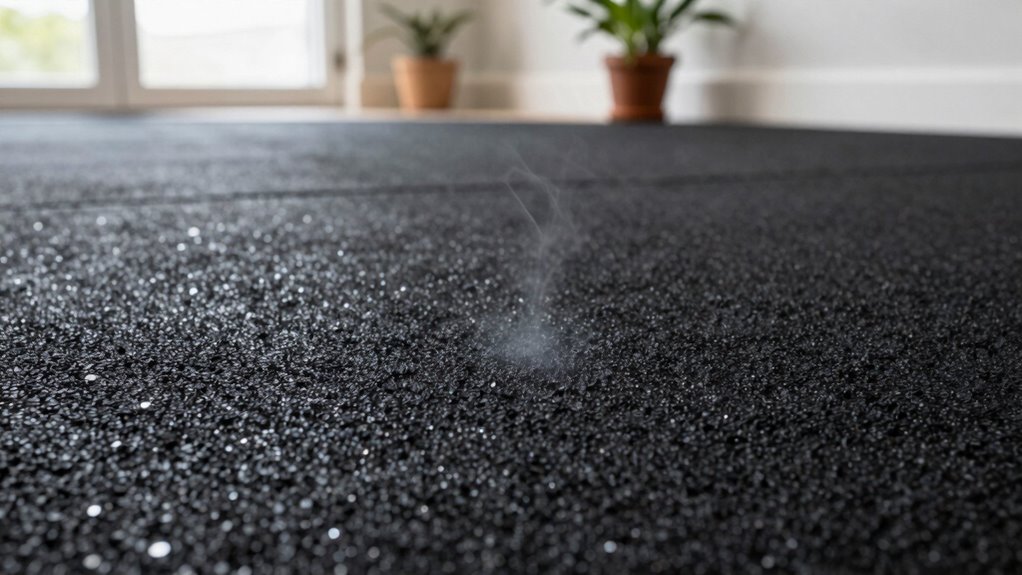
Typically, rubber flooring off-gasses for a few days to a few weeks, but the smell can linger longer. Factors like ventilation, temperature, and the type of rubber affect how quickly the odor fades. Understanding these points helps you anticipate when your space will smell fresh again. Additionally, microplastics in dust can contribute to indoor air quality concerns related to off-gassing odors. Proper ventilation and air purification can help reduce the presence of volatile organic compounds, speeding up the odor dissipation process. Being aware of material composition can also inform you about the potential duration of off-gassing odors. Moreover, air exchange rate plays a crucial role in how swiftly indoor odors disperse and diminish. Increasing ventilation rates can significantly improve how quickly the smell diminishes over time.
Typical Off-Gassing Duration
The off-gassing process for rubber flooring usually lasts between a few days to a few weeks, depending on factors like ventilation, temperature, and the specific type of rubber used. During this period, chemical reactions release volatile organic compounds (VOCs), which impact indoor air quality. You might notice the odor diminishing gradually as these compounds dissipate. Proper ventilation accelerates this process by replacing indoor air with fresh air, helping to clear out the off-gassed chemicals more quickly. Temperatures also influence off-gassing rates: higher temperatures can increase VOC emissions, prolonging odor presence. Typically, most of the off-gassing occurs within the first week, with the smell fading substantially afterward. However, complete dissipation may take longer, especially in poorly ventilated spaces. Effective ventilation plays a crucial role in reducing lingering odors and improving indoor air safety during this period. Additionally, choosing Vetted – Floating on Water rubber flooring options can help minimize the initial off-gassing because of their environmentally friendly manufacturing processes. Incorporating environmentally friendly manufacturing practices can further reduce VOC emissions and promote healthier indoor environments. Moreover, using air purifiers equipped with activated carbon filters can help absorb residual VOCs and speed up the odor elimination process. Understanding VOC emissions can also help you select materials that are safer and less likely to off-gas harmful chemicals.
Factors Influencing Odor Fade
Several factors can considerably influence how quickly the odor from rubber flooring fades. The most significant are the material composition and the level of chemical emissions. Floors with lower VOC content tend to off-gas less and for shorter periods. Additionally, the manufacturing process impacts how long the odor persists. Best Heat Pump technology can also help in maintaining proper airflow and temperature, which may aid in odor reduction. Here’s a quick look at these factors:
| Factor | Effect on Odor Fade |
|---|---|
| Material Composition | Lower VOC materials off-gas faster |
| Chemical Emissions | Higher emissions prolong odor duration |
| Ventilation | Good airflow accelerates odor dissipation |
| Temperature & Humidity | Warm, humid environments slow off-gassing |
Furthermore, emission levels can vary significantly between manufacturers, so choosing high-quality, low-emission rubber flooring can make a difference in how quickly the smell dissipates. It is also helpful to consider VOC regulations, which set standards for emissions and can guide you toward safer, quicker-off-gassing options. Additionally, air exchange can be increased through various ventilation methods to further expedite odor dissipation. Understanding these factors can help you better predict and manage the off-gassing duration of your rubber flooring.
rubber flooring cleaning solution
As an affiliate, we earn on qualifying purchases.
As an affiliate, we earn on qualifying purchases.
How Can I Ventilate My Rubber Flooring to Reduce the Odor Fast?
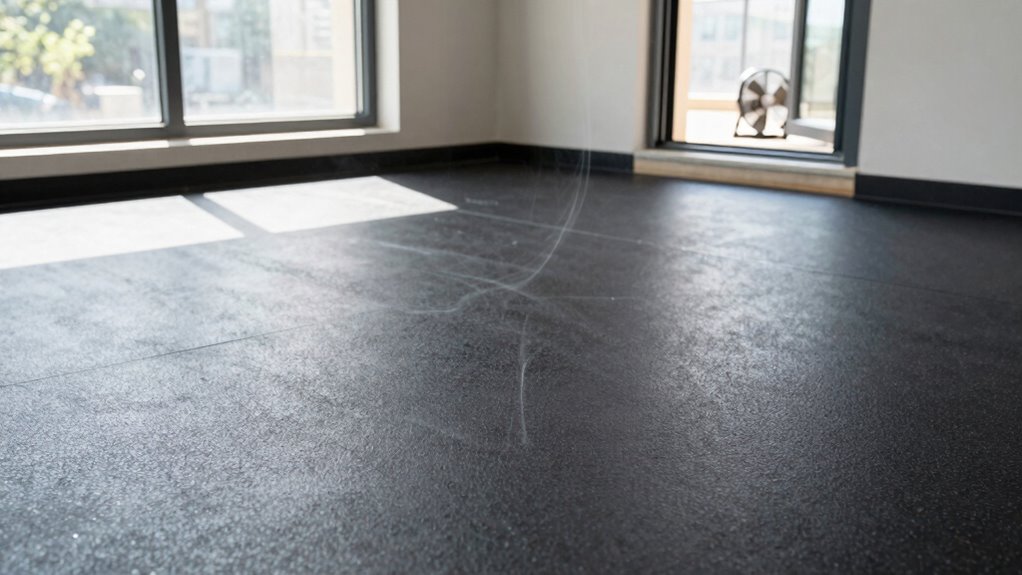
To quickly reduce the odor from rubber flooring, you should focus on increasing ventilation in the area. Using effective ventilation techniques like opening windows, doors, and installing fans helps circulate fresh air and accelerates odor absorption. Positioning fans to direct airflow across the flooring surface encourages the smell to dissipate faster. If possible, create cross-ventilation by opening multiple windows or doors on opposite sides of the room. Using portable air purifiers with activated carbon filters can also help remove airborne VOCs. Proper airflow reduces the concentration of off-gassing particles, making the smell fade more swiftly. Additionally, employing VOC reduction strategies such as sealing the flooring temporarily can help contain and minimize emissions during initial off-gassing. For optimal results, understanding the off-gassing process can help tailor ventilation efforts more effectively. Implementing natural ventilation methods can further enhance air exchange and expedite odor dissipation. Increasing awareness of sustainable indoor air quality can also contribute to safer and healthier environments during the off-gassing period.
As an affiliate, we earn on qualifying purchases.
How to Clean and Seal Rubber Flooring to Minimize Fumes

Cleaning and sealing your rubber flooring properly can considerably reduce the fumes it releases. Use effective cleaning techniques like a mild soap solution or a specially formulated rubber floor cleaner to remove dirt and residues that trap off-gassing. Avoid harsh chemicals that can worsen odors. After cleaning, verify the surface dries completely before sealing. Sealing methods, such as applying a breathable, low-VOC sealant, create a barrier that minimizes fumes escaping from the rubber. Follow the manufacturer’s instructions carefully for application and curing times. Regular cleaning combined with proper sealing helps lock in odors and reduces off-gassing over time. Incorporating proper air quality considerations can further help in managing fumes effectively. Using testing accuracy and appropriate measurement tools can help monitor indoor air quality and ensure that off-gassing levels are kept within safe limits. Keep in mind that sealing also protects the flooring’s surface, making it easier to maintain and less likely to trap odors.
Can Air Purifiers and Dehumidifiers Help Remove Rubber Smell?

Air purifiers and dehumidifiers can be effective tools in reducing the rubber smell in your space. An air purifier’s effectiveness depends on its ability to filter out volatile organic compounds (VOCs) and airborne odors, making it a practical choice for off-gassing issues. Dehumidifiers offer benefits by lowering humidity levels, which can slow the release of rubber fumes and reduce mold growth that worsens odors. To maximize results, consider these steps:
Use air purifiers with activated carbon filters and dehumidifiers to reduce rubber odors effectively.
- Use an air purifier with activated carbon filters for better odor absorption.
- Run a dehumidifier to keep humidity below 50%, limiting off-gassing.
- Maintain proper ventilation alongside these devices to enhance air circulation.
Together, these tools can markedly improve air quality and minimize rubber smells in your environment.
Should I Choose Low-VOC or Eco-Friendly Rubber Flooring Options?
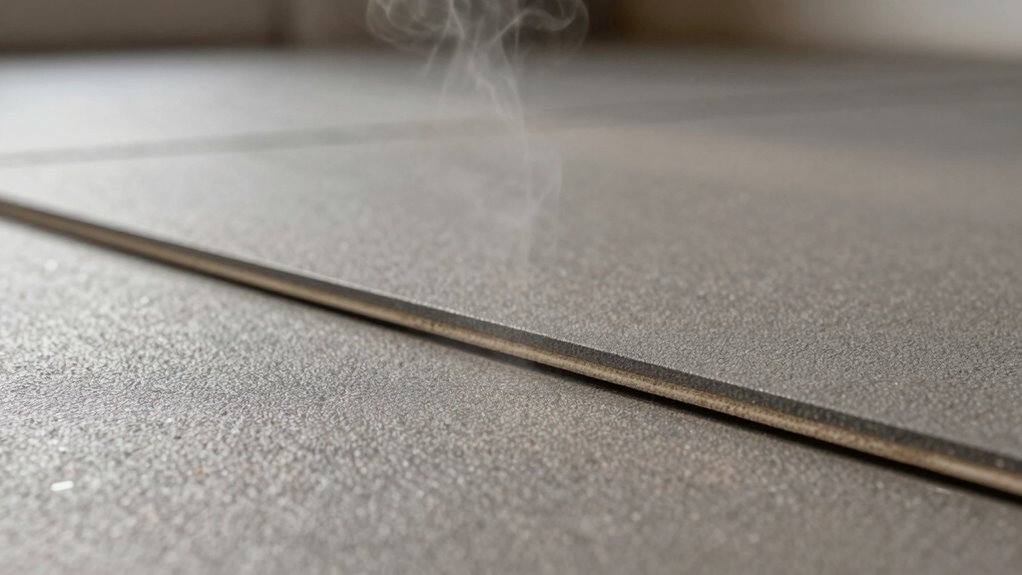
Choosing low-VOC or eco-friendly rubber flooring options can substantially reduce indoor air pollution and minimize health risks. These choices have a lower environmental impact because they emit fewer harmful chemicals during installation and use. When selecting materials, consider their durability; high-quality low-VOC options often last longer and resist wear better, saving you money in the long run. Eco-friendly flooring also tends to be made from sustainable resources or recycled materials, further reducing your environmental footprint. By prioritizing these options, you support healthier indoor air quality and a greener planet. While they may sometimes come at a slightly higher upfront cost, the benefits of reduced off-gassing and improved longevity make them a smart choice for both your health and the environment.
What DIY Steps Can I Take Before Installing to Reduce Rubber Odor?
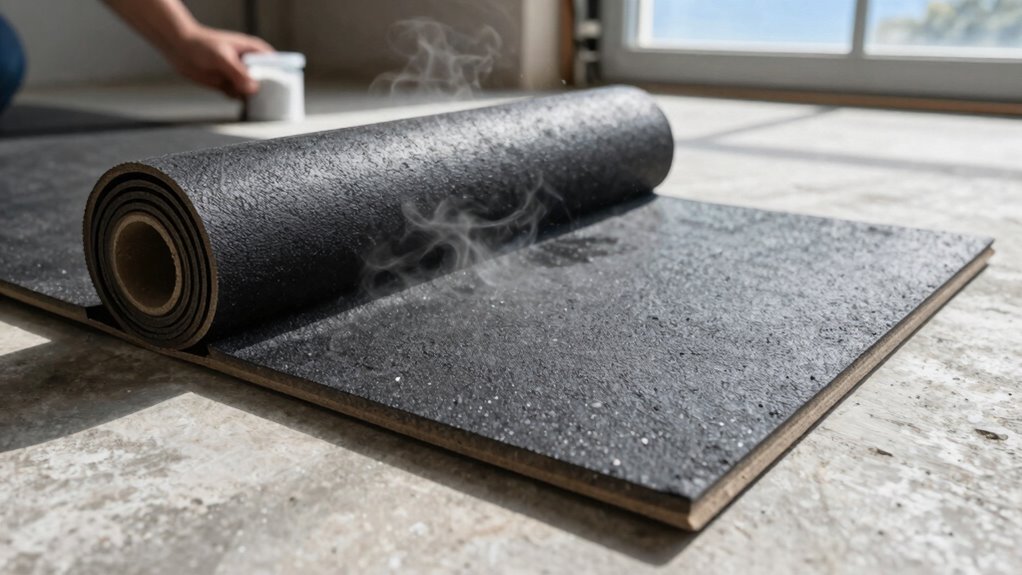
To reduce rubber odor before installing your flooring, start by thoroughly airing out the material in a well-ventilated space. This helps reduce chemical emissions that contribute to off-gassing. Next, consider the following DIY steps:
- Choose low-emission materials during sourcing to minimize initial odor.
- Lay the rubber flooring flat in a ventilated area for several days to accelerate off-gassing.
- Use fans or exhaust fans to increase airflow and carry away volatile compounds.
These steps help lower the smell and chemical emissions before installation, making your space more comfortable. Proper material sourcing and pre-installation airing are key to reducing rubber odor effectively. Taking these simple actions can markedly improve indoor air quality and lessen the need for extensive odor removal later.
When Should I Call Professionals for Off-Gassing and Odor Removal?
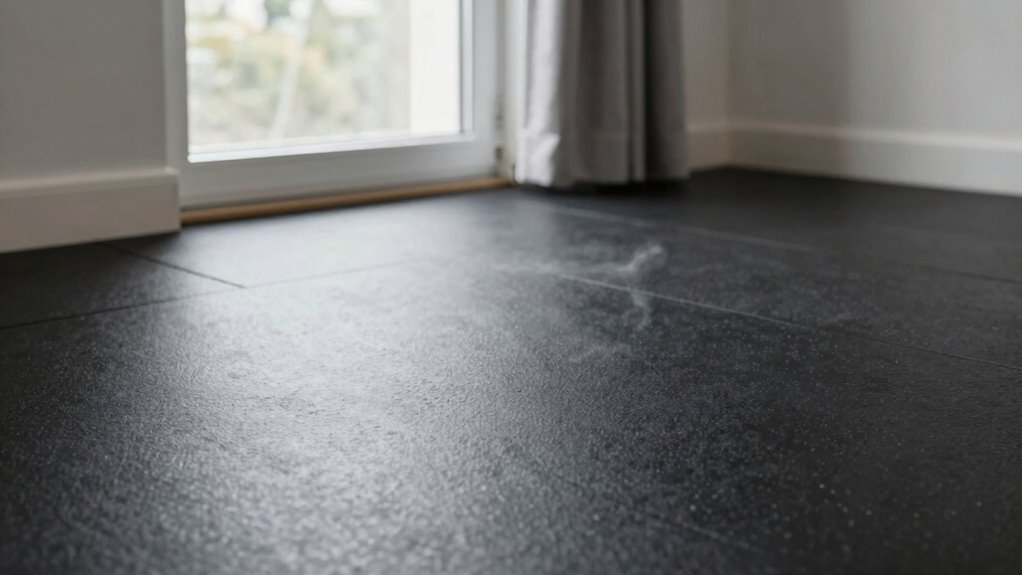
If the rubber flooring’s smell persists despite your efforts, it might be time to call in professionals. Noticeable, intense odors or health symptoms like headaches indicate severe issues that need expert intervention. Don’t hesitate to seek help when odor problems don’t improve or worsen over time.
When to Seek Professional Help
When the odor from rubber flooring persists despite airing out and cleaning efforts, it’s time to contemplate professional help. Persistent VOC emissions often result from ongoing chemical reactions within the material, making DIY solutions less effective. You should call experts if:
- The smell remains strong after several weeks, indicating trapped chemical compounds.
- You notice a chemical or burnt smell, suggesting off-gassing is ongoing or intensifying.
- Indoor air quality tests reveal high VOC levels, posing health risks.
Professionals can assess the situation accurately, use specialized ventilation systems, and recommend safer removal or treatment methods. Addressing severe off-gassing early helps prevent long-term health issues and restores a fresh indoor environment efficiently.
Signs of Severe Odor Issues
Severe odor issues from rubber flooring often signal that professional intervention is necessary. If you notice persistent, overwhelming smells that don’t improve over time, it’s time to act. These strong odors usually indicate ongoing chemical reactions within the material composition, releasing volatile organic compounds (VOCs). When the smell becomes unbearable or causes health symptoms like headaches or respiratory irritation, it’s a clear sign that off-gassing is severe. Sometimes, the odor persists despite proper ventilation, suggesting that the off-gassing has reached dangerous levels. In these cases, professionals can assess the situation, identify the source of the chemical reactions, and implement effective odor removal strategies. Don’t ignore these signs—prompt expert help guarantees a safer, healthier environment.
How to Maintain Your Rubber Flooring to Prevent Future Odor Issues
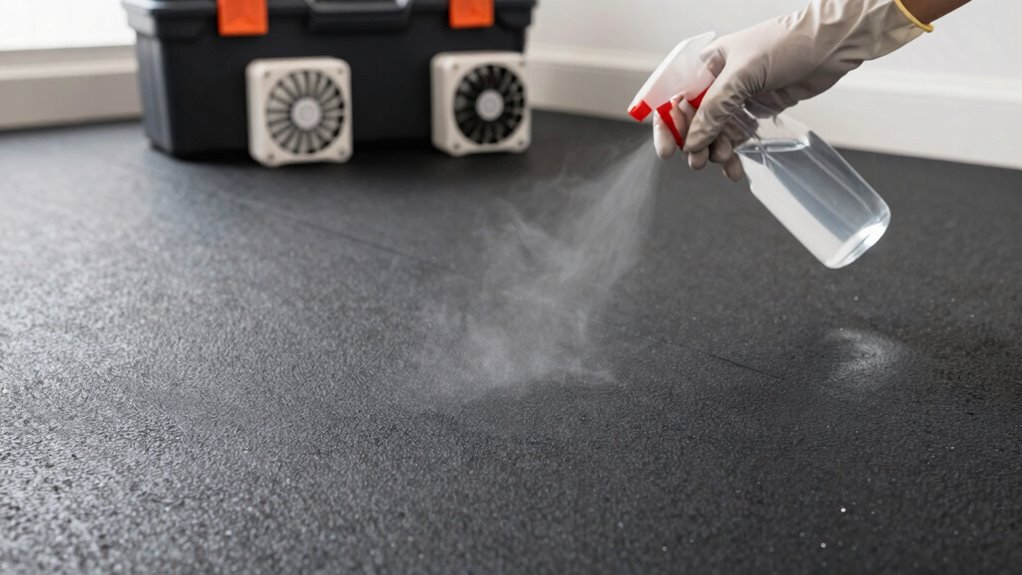
To keep your rubber flooring smelling fresh and prevent odors from developing, regular maintenance is essential. Implement effective cleaning routines by sweeping or vacuuming daily to remove debris and prevent odor buildup. Use mild, pH-neutral cleaners weekly to break down residues that cause smells. Sealing techniques also play a key role; applying a sealant periodically creates a barrier that reduces off-gassing and seals in odors. Additionally, consider the following steps:
- Regularly clean with appropriate products to avoid dirt accumulation.
- Seal the surface every 1-2 years to minimize odor absorption.
- Ensure proper ventilation during cleaning and sealing to enhance odor dispersal.
Consistent care keeps your flooring fresh, reduces future odor issues, and extends its lifespan.
Frequently Asked Questions
Are There Specific Brands Known for Less Rubber Odor?
You should consider brands like Miller Flooring and CrossFit Rubber, which have strong reputations for low odor rubber flooring. These brands often conduct odor testing to guarantee minimal off-gassing, giving you peace of mind. Look for products labeled as low-VOC or low-odor, and check reviews for firsthand experiences. Choosing reputable brands with transparent testing results helps you get rubber flooring that smells less and is safer for your space.
Can Certain Flooring Adhesives Increase Rubber Smell?
Surprisingly, yes—certain flooring adhesives can boost rubber smell. You’d think they’d just stick things together, but their adhesive chemistry can emit strong odors, worsening off-gassing. To combat this, opt for adhesives designed for odor mitigation, which contain low-VOC or natural ingredients. By choosing the right adhesive, you can reduce the rubber smell and create a fresher, healthier environment without sacrificing your flooring’s durability.
Is New Rubber Flooring Safe to Install Indoors?
Yes, new rubber flooring is generally safe to install indoors if you address installation concerns properly. Make sure the area is well-ventilated during and after installation to reduce off-gassing and minimize indoor safety risks. Choose low-VOC or VOC-free rubber options, and follow manufacturer instructions carefully. Allow the flooring to off-gas in a ventilated space before heavy use to ensure a safe, odor-free environment.
What Natural Remedies Can Help Eliminate Rubber Odor?
You can use natural deodorizers like baking soda or activated charcoal to absorb rubber odors. Place bowls of these near the flooring and leave them for a few days. Additionally, improve ventilation by opening windows and using fans to circulate fresh air. This combination helps reduce off-gassing faster, making your space smell fresher. Regularly airing out the room is essential for effectively eliminating rubber odor naturally.
How Does Climate Affect Rubber Off-Gassing Duration?
Climate can considerably impact rubber off-gassing duration. Cooler climates tend to slow down off-gassing, giving you more time before odors dissipate completely. Conversely, warmer temperatures accelerate the off-gassing process, causing the smell to linger longer. Temperature variations can cause fluctuations in odor release, making it seem like the smell fluctuates. To minimize this, maintain a consistent, moderate climate, and guarantee proper ventilation, helping odors fade faster and more comfortably.
Conclusion
In the battle against rubber flooring smell, you’re armed with effective tips to banish that lingering odor. Ventilate, clean, and choose eco-friendly options, and you’ll turn your space into a fresh oasis, not a toxic fog bank. With patience and proper care, you’ll transform your room from a stinky swamp into a gasp of fresh air so pure, it’s like inhaling the crisp mountain breeze every day. Your perfect, odor-free space is well within reach!
Halloween Picks
halloween
As an affiliate, we earn on qualifying purchases.