TL;DR

Get workout gear delivered free with Prime
- Fast, free delivery on millions of items
- Prime Video, Amazon Music and more included
- Member-only deals all year
Podiatrist Steven Thomas identifies plantar fasciitis, Achilles tendinopathy and toenail trauma as common injuries among walkers and runners. His advice focuses on gradual training increases, recovery, lower-leg conditioning and properly fitted footwear; worsening or persistent pain should be assessed by a clinician.
Podiatrist Steven Thomas says the three injuries he most commonly encounters among walkers and runners are plantar fasciitis, Achilles tendinopathy and toenail trauma. In a Fit&Well report, he describes symptoms that can help people recognize each problem and says gradual training increases, recovery and well-fitting shoes can help reduce the risk.
Plantar fasciitis typically causes pain beneath the heel, Thomas says. It may be worse when someone first stands after resting, ease after a few steps, then return following longer periods of walking, running or standing. He recommends increasing mileage gradually and building lower-leg flexibility and strength, including calf raises with both straight and bent knees two or three times a week. Comfortable, well-fitting footwear is another part of his advice.
Achilles tendinopathy can cause pain at the back of the heel, either where the tendon joins the heel bone or farther up the tendon. Thomas describes morning stiffness or tenderness as common signs; the tendon may look thickened, and discomfort can ease during activity before returning afterward or the next morning. He advises progressive calf strengthening, gentle calf stretches, recovery between sessions and avoiding abrupt increases in distance, speed or hill work. A sudden change to substantially flatter or more minimalist footwear can also increase strain on the Achilles, he says.
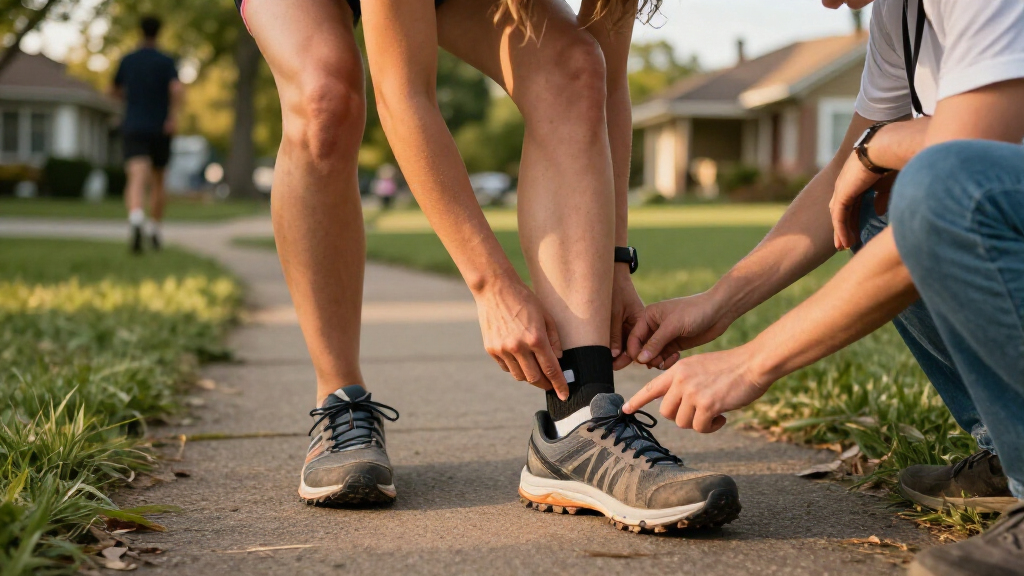
Toenail trauma may involve pain, throbbing or visible nail damage. Thomas lists bruising beneath the nail, horizontal ridges, splitting and lifting as possible early signs. He says shoes should leave enough length, width and depth around the toes while holding the heel and midfoot securely. Short, filed toenails and moisture-wicking socks may also help; runners should test their shoe-and-sock combination before using it for a long distance.
How Training Changes Affect Foot Health
The advice addresses a common risk in recreational exercise: increasing activity faster than the body can adapt. Thomas says the body responds to increased activity when it is matched with sufficient recovery. That makes both the training plan and the time between sessions relevant, rather than mileage alone.
Recognizing symptoms can also help people respond before pain changes how they move. Thomas advises monitoring discomfort during exercise, afterward and the next day. Pain that worsens, alters a person’s walking or running, or does not settle between sessions may indicate the current workload exceeds the body’s capacity, he says. His guidance is general; it does not establish a diagnosis for an individual or mean that every heel or nail symptom has the same cause.
For people who regularly cover longer distances, footwear fit is another practical point. Feet can swell during activity, Thomas says, so shoes that seem acceptable at rest may not provide enough room on a long walk or run. A secure fit through the heel and midfoot, alongside adequate space for the toes, can help limit forward sliding and repeated pressure on the nails.
running shoes wide toe box cushioned heel
As an affiliate, we earn on qualifying purchases.
As an affiliate, we earn on qualifying purchases.
Symptoms and Prevention by Injury
Thomas’s recommendations differ by the location and likely source of symptoms. Heel pain underfoot is associated in his account with plantar fasciitis, while pain at the rear of the heel or along the tendon may fit Achilles tendinopathy. Nail bruising or lifting points to repeated pressure or impact around the toes. These descriptions are signs to watch for, not a substitute for clinical assessment.
Across the three conditions, the shared prevention themes are gradual progression, appropriate recovery and footwear suited to the activity. Thomas recommends calf and lower-leg conditioning for the two heel-related conditions, and careful shoe, sock and toenail care for nail trauma. For Achilles symptoms in particular, he cautions against abrupt changes in distance, pace, hills or footwear, all of which can alter the load on the tendon.
Thomas is a podiatrist and foot-and-ankle specialist based in London, according to the Fit&Well report. The article attributes the injury descriptions and recommendations to him. It does not provide a study comparing injury rates or establish how common each condition is across all walkers and runners.
“The body adapts to increased activity, but only when the increase is matched by sufficient recovery.”
— Steven Thomas, podiatrist, as quoted by Fit&Well
As an affiliate, we earn on qualifying purchases.
When Symptoms Need Assessment
The report does not give population-level data for the frequency of these injuries, define a mileage threshold at which risk rises, or say how quickly an individual should increase distance. Its recommendations are general guidance attributed to one podiatrist, not a personalized training or treatment plan.
Foot pain can have different causes, and the symptoms described do not confirm any specific diagnosis. Thomas says a clinical examination and gait analysis, and sometimes a weight-bearing X-ray, can help distinguish causes of foot pain. He advises assessment if symptoms persist or pain begins to affect normal walking. The report does not specify a single timetable for seeking care, so people with severe, worsening or concerning symptoms may need individualized professional advice.
calf stretch slant board for runners
As an affiliate, we earn on qualifying purchases.
As an affiliate, we earn on qualifying purchases.
Monitor Pain Before Increasing Mileage
Thomas’s immediate recommendation is to track how symptoms respond during exercise, afterward and the following day. If pain worsens, affects walking or running mechanics, or remains between sessions, his advice is to treat that as a signal that the current workload may be too high. Continuing to increase distance or speed without allowing recovery could add to the strain.
For persistent symptoms, or pain that interferes with ordinary walking, the next step described in the report is a clinical assessment. A clinician can examine the foot and consider gait analysis or imaging where appropriate. The source does not announce a policy change, new medical study or scheduled follow-up; it offers practical guidance, while the diagnosis and next steps for any individual remain dependent on their symptoms and examination.
resistance bands for calf strengthening exercises
As an affiliate, we earn on qualifying purchases.
As an affiliate, we earn on qualifying purchases.
Key Questions
What three injuries does the podiatrist identify?
Steven Thomas names plantar fasciitis, Achilles tendinopathy and toenail trauma as the three common walking- and running-related injuries he encounters in his clinic, according to Fit&Well.
What can plantar fasciitis feel like?
Thomas describes pain beneath the heel, often worse when standing after a period of rest. It may ease after a few steps and return after longer periods of walking, running or standing. Those symptoms alone do not confirm a diagnosis.
How might Achilles tendinopathy present?
Possible signs include pain at the back of the heel, morning stiffness or tenderness, and sometimes visible thickening of the tendon. Thomas says pain may ease during activity and return afterward or the next morning.
When should a walker or runner seek an assessment?
Thomas recommends getting symptoms assessed if they persist or begin to affect normal walking. He also flags pain that progressively worsens, changes how someone walks or runs, or fails to settle between sessions as a reason to review training load.
What steps does Thomas suggest to reduce injury risk?
His suggestions include increasing mileage gradually, allowing recovery, strengthening and gently stretching the calves, and wearing properly fitted shoes. For toenail trauma, he also advises keeping nails short and filed and testing shoes and socks before a long-distance outing.
Source: rss
Fall Picks
fall essentials
As an affiliate, we earn on qualifying purchases.