

Relying solely on motivation is unreliable for maintaining workout habits. Instead, focus on the habit loop: identify your cues, establish routines, and reward yourself. By making workouts automatic—using triggers like set times or environmental cues—you reduce willpower dependence. Reinforcing progress with enjoyable rewards and social support keeps you consistent long-term. Keep practicing these strategies, and you’ll discover how habits become second nature, making your fitness journey sustainable even when motivation wanes.

Get workout gear delivered free with Prime
- Fast, free delivery on millions of items
- Prime Video, Amazon Music and more included
- Member-only deals all year
Key Takeaways
- The habit loop—cue, routine, reward—drives consistent training beyond fluctuating motivation.
- Recognizing specific cues helps automate workouts, making them a natural part of daily life.
- Reinforcing positive feelings and rewards strengthens routines, reducing reliance on motivation.
- Building automatic habits involves environmental triggers and habit stacking with existing routines.
- Focusing on consistency and cues ensures long-term adherence, making motivation less critical.
As an affiliate, we earn on qualifying purchases.
Why Do We Struggle to Keep Workout Habits Long-Term?
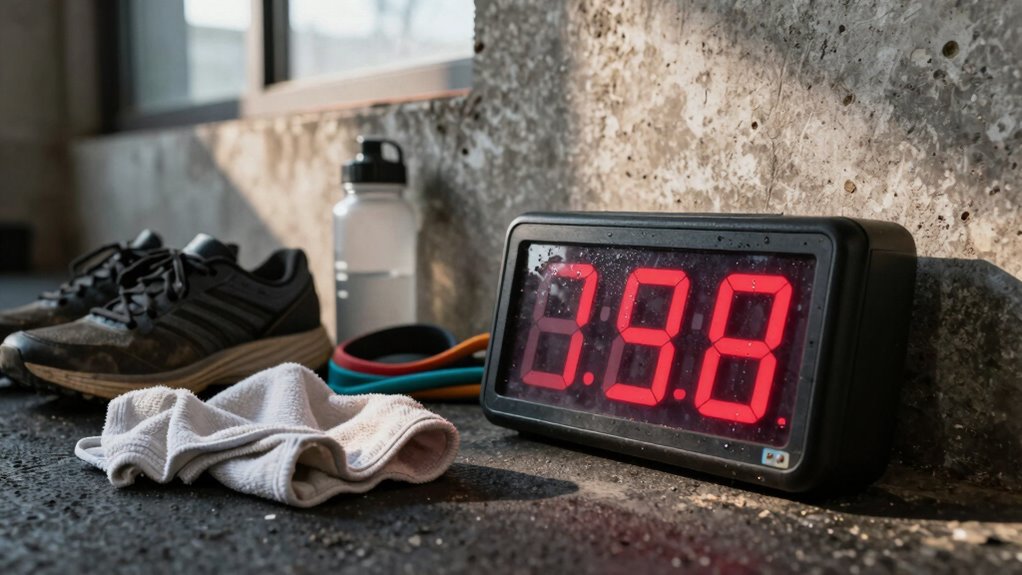
Many people find it difficult to maintain workout habits over the long term because motivation often fades once the initial excitement wears off. To succeed, you need mindset shifts that focus on consistency rather than fleeting motivation. Developing a strong mental approach helps you push through tough days and setbacks. Additionally, accountability partners play a pivotal role—they keep you honest, motivated, and committed. When someone else expects you to show up, you’re more likely to follow through. These shifts in mindset and support systems make your habits more resilient. Relying solely on motivation is unreliable; instead, creating a mental framework and having accountability partners ensure you stay on track, even when enthusiasm wanes. Incorporating habit formation techniques like setting clear cues and rewards can further solidify your routines. This approach transforms workout routines into lasting habits.
As an affiliate, we earn on qualifying purchases.
What Is the Habit Loop, and How Does It Shape Your Training?
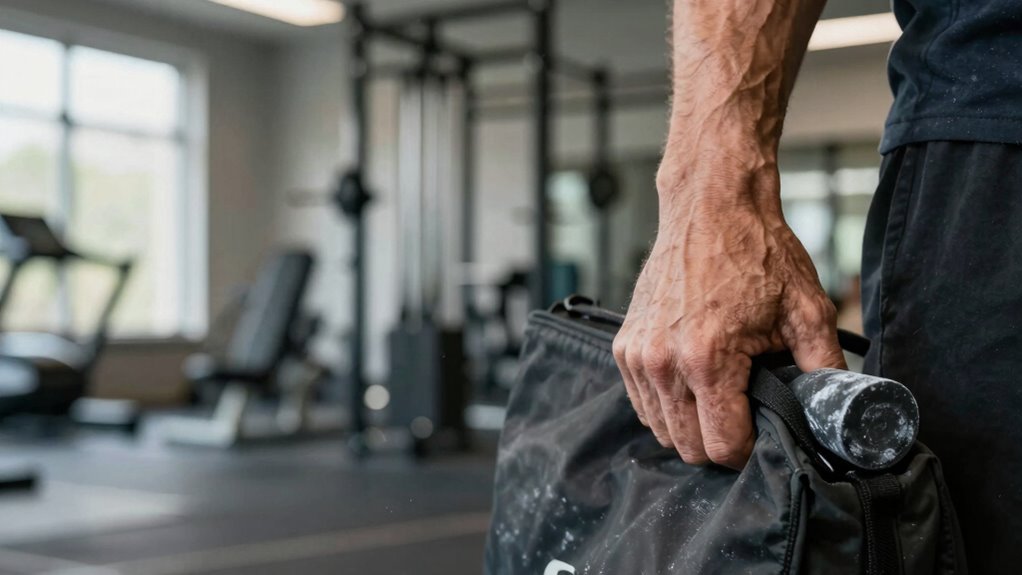
Understanding the habit loop is essential for shaping your training habits because it explains how behaviors are formed and maintained. The habit loop consists of three parts: cue, routine, and reward. When you recognize a specific cue—like feeling stressed or having free time—it triggers your routine, such as doing a workout. The reward afterward reinforces this cycle, making it more likely you’ll repeat the behavior. Effective habit formation depends on identifying these cues accurately, so you can leverage them to trigger your training consistently. By understanding how the habit loop works, you gain control over your routines, making it easier to build long-lasting habits. Recognizing your cues allows you to intentionally set the stage for success, reinforcing positive behaviors over time. Additionally, understanding the influence of cultural impact can help you align your habits with broader societal trends, enhancing motivation.
As an affiliate, we earn on qualifying purchases.
How Can You Identify Your Workout Cues and Use Them to Stay Consistent?

To stay consistent with your workouts, start by noticing what environmental triggers signal it’s time to move, like specific locations or times of day. Establish routines that become automatic, so working out feels natural rather than forced. Reinforce positive feelings around exercise by pairing it with rewards or enjoyable activities to strengthen your motivation. Incorporating consistent performance parts such as reliable routines can help maintain your workout momentum over time.
Recognize Environmental Triggers
Environmental triggers serve as powerful cues that can prompt you to work out without relying solely on motivation. These environmental cues function as habit triggers, signaling your brain to initiate your workout routine. To recognize them, pay attention to specific sights, sounds, or routines that consistently precede exercise. For example, seeing your workout clothes, hearing a certain playlist, or passing your gym can act as strong cues. Once identified, you can intentionally place these triggers in your environment to reinforce your habits. By creating consistent associations between these cues and your workouts, you reduce the need for willpower and make exercise feel automatic. Incorporating essential oils like peppermint or eucalyptus into your pre-workout routine can enhance your alertness and motivation. Recognizing and leveraging environmental triggers helps you stay consistent, even on days when motivation wanes.
Establish Consistent Routines
Recognizing environmental triggers is a strong step toward building lasting exercise habits. Once you identify what prompts your workouts—like waking up, finishing work, or lunchtime—you can establish consistent routines around those cues. Use habit tracking to monitor your progress and keep yourself accountable, making it easier to recognize patterns and stay committed. Consider involving accountability partners who can remind you of your routines or join you for workouts, reinforcing the habit loop. When your cues become routine, the action becomes automatic, reducing reliance on motivation. Additionally, incorporating specific exercise routines that align with these cues can further strengthen your habits. By aligning your workouts with specific cues and tracking your consistency, you create a reliable framework that sustains your effort over time. This steady structure helps transform exercise from a chore into a natural part of your daily life.
Reinforce Positive Associations
Identifying your workout cues is essential because they serve as triggers that prompt you to exercise. Once you recognize these cues, you can reinforce positive associations, making habit formation easier. For example, if you always stretch after waking up, that routine becomes linked to feeling energized, reinforcing the habit. Use positive reinforcement to celebrate small wins, like noting how good you feel after a workout or rewarding yourself with a healthy snack. These associations strengthen your mind’s connection between cues and exercise, making it more automatic over time. By intentionally pairing cues with positive experiences, you create a cycle that encourages consistency without relying solely on motivation. Recognizing passive voice detection tools can help you improve clarity and engagement in your writing. This approach helps embed exercise into your daily routine, turning it into a natural, ingrained habit.
As an affiliate, we earn on qualifying purchases.
What Are Effective Rewards That Reinforce Your Exercise Routine?

Celebrating small wins keeps you motivated and makes progress feel achievable. Incorporate activities you genuinely enjoy to make exercise feel less like a chore. When your rewards align with your interests, sticking to your routine becomes much easier. Additionally, understanding the Free Floating habit loop can help reinforce positive behaviors without relying solely on external rewards.
Celebrate Small Wins
Have you ever noticed how small rewards can boost your motivation and keep you moving forward? Celebrating progress is essential because it reinforces your effort and helps you stay consistent. When you acknowledge small wins, you create a positive feedback loop that fuels your commitment. Here are three effective ways to celebrate small wins:
- Treat yourself to something enjoyable, like a favorite snack or a relaxing bath.
- Share your achievement with friends or family to reinforce your progress.
- Set a mini reward, such as new workout gear or a rest day, to motivate continued effort.
Additionally, understanding the importance of positive reinforcement can help you develop sustainable habits and maintain long-term motivation.
Incorporate Enjoyable Activities
Incorporating enjoyable activities as rewards can make sticking to your exercise routine much easier. When you finish a workout, reward yourself with fun challenges like trying a new dance class or outdoor activity. These activities add excitement and variety, helping you stay motivated. Engaging in social support, such as working out with friends or joining a fitness group, boosts your commitment and makes exercise more enjoyable. Celebrating progress through lighthearted challenges keeps your routine fresh and rewarding. These enjoyable activities create positive associations with exercise, making it feel less like a chore and more like a fun part of your life. Additionally, exploring popular entertainment options like pinball machines can serve as enjoyable rewards that reinforce your habits and make your fitness journey more engaging. By integrating social support and fun challenges, you’ll reinforce your habits and strengthen your commitment over the long term.
How Do You Overcome Barriers Like Time or Motivation by Reinforcing Habits?
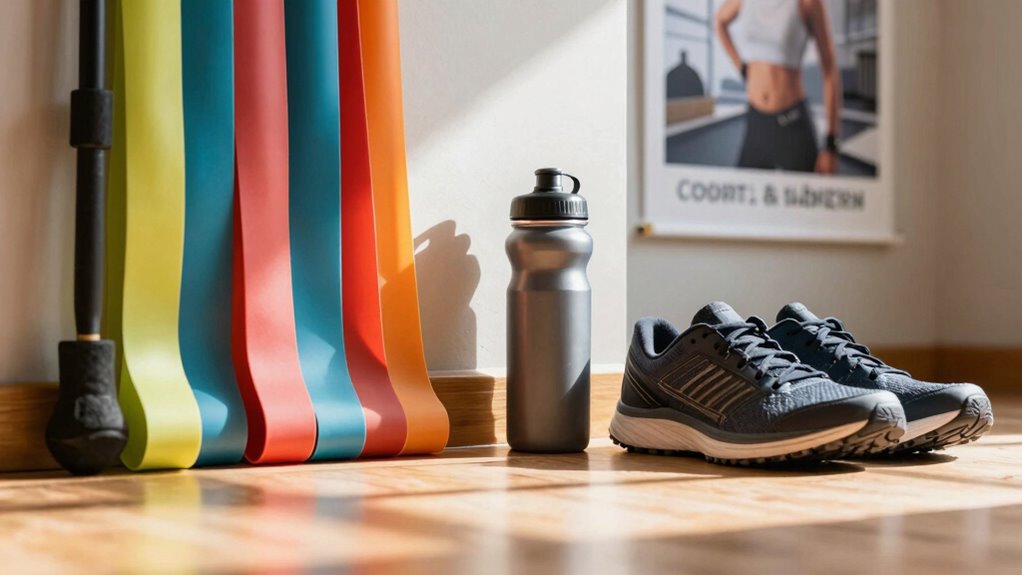
When faced with barriers like limited time or fluctuating motivation, reinforcing habits offers a practical solution. Focus on habit formation to turn small actions into automatic behaviors, reducing reliance on motivation. To do this effectively:
- Start small—break your goal into manageable steps to ensure consistency and build momentum.
- Set cues—anchor your new habit to an existing routine or environment to trigger behavior automatically.
- Track progress—use a journal or app to reinforce behavior change and celebrate small wins.
- Incorporate habit loop principles from behavioral science to better understand and optimize your routines.
How to Build Automatic Workout Habits That Stick Without Motivation?
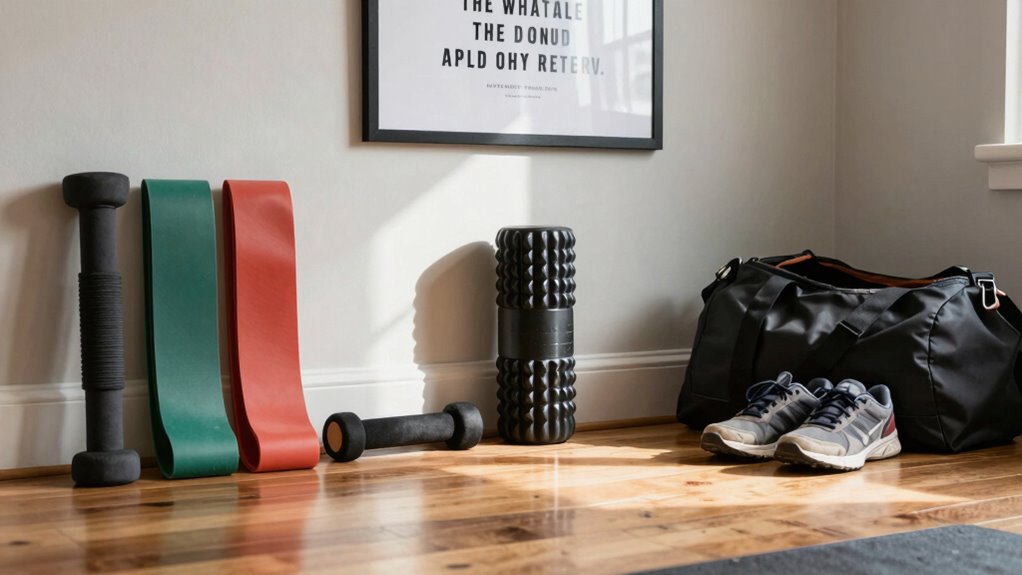
Building automatic workout habits requires more than just motivation; it involves designing your environment and routines to make exercise a seamless part of your day. Habit stacking is a powerful tool—pair your workout with an existing habit, like brushing your teeth or making coffee. This connection cues your brain to activate the new behavior effortlessly. Additionally, accountability partners keep you honest and committed, even when motivation wanes. Sharing your goals or scheduling joint workouts creates social accountability, reinforcing your routine without relying on willpower alone. Over time, these strategies forge habits that become automatic, reducing the need for motivation to get started. Consistently integrating cues and support transforms exercise from a chore into a natural part of your daily life.
What Are Practical Tips to Make Your Training Routine Fully Automatic?

To make your training routine fully automatic, focus on establishing clear cues and consistent triggers that prompt you to work out without hesitation. Use habit stacking by linking your workout to existing routines, such as brushing your teeth or making coffee. This creates a seamless progression that becomes automatic over time. Additionally, leverage environmental cues—place your workout clothes where you’ll see them or keep your gym bag by the door—to serve as visual reminders. Here are some practical tips:
- Pair workouts with a daily habit (habit stacking) to strengthen the cue.
- Set specific, consistent times to exercise, reinforcing routine via environmental cues.
- Arrange your environment to cue action—like placing your sneakers near your bed or desk.
These strategies help your training become second nature, reducing reliance on motivation.
Frequently Asked Questions
Can Visualization Techniques Improve the Habit Loop for Training?
Yes, visualization techniques like mental rehearsal and mental imagery can strengthen your habit loop for training. When you vividly imagine yourself completing workouts or achieving goals, you reinforce positive associations and prepare your mind for action. This mental practice boosts motivation, reduces anxiety, and makes it easier to stick with your routine. Over time, these techniques help embed training into your daily habits, making consistency feel more natural and automatic.
How Does Stress Affect the Formation of Workout Habits?
Stress impact can profoundly disrupt your workout habits by making it harder to stick to routines. When you’re stressed, your brain may prioritize immediate relief over long-term goals, leading to skipped sessions or inconsistent effort. This habit disruption weakens the habit loop, making it tougher to stay motivated. To counteract this, find ways to manage stress, like mindfulness or brief relaxation techniques, so your exercise consistency remains intact.
What Role Does Social Accountability Play in Habit Reinforcement?
They say, “Iron sharpens iron,” and social accountability really does strengthen your habits. When you have peer pressure or accountability partners, you’re more likely to stick with your workout routine. These relationships create a sense of commitment, making it harder to skip sessions. By sharing goals and progress, you stay motivated and consistent, turning habits into a natural part of your life.
Are There Specific Times of Day Better for Establishing Routines?
The best times to establish routines depend on your daily rhythm, but generally, mornings offer ideal timing for consistency. Morning motivation is high, and starting your day with a habit helps reinforce it. By focusing on your routine early, you set a positive tone for the rest of the day. So, aim to build your habits in the morning whenever possible, leveraging the natural boost of morning motivation for lasting change.
How Do Different Personality Types Respond to Habit-Based Training?
You might be surprised to learn that 60% of people adapt their habits based on personality types. For you, personality adaptation plays a key role in how you respond to habit-based training. If you’re more introverted, personalized routines help you stay consistent, while extroverts thrive with social habit cues. Habit customization allows you to tailor your training to your strengths, making it easier to stick with your routines long-term.
Conclusion
Remember, relying solely on motivation isn’t enough—only about 8% of New Year’s resolutions stick long-term. Instead, focus on building habits through consistent cues and rewards. When your training becomes automatic, you’ll train even on days you don’t feel motivated. By making small adjustments and reinforcing your routines, you can turn exercise into a natural part of your life. Stick with it, and soon, working out won’t require willpower—it’ll just be what you do.
Halloween Picks
halloween
As an affiliate, we earn on qualifying purchases.