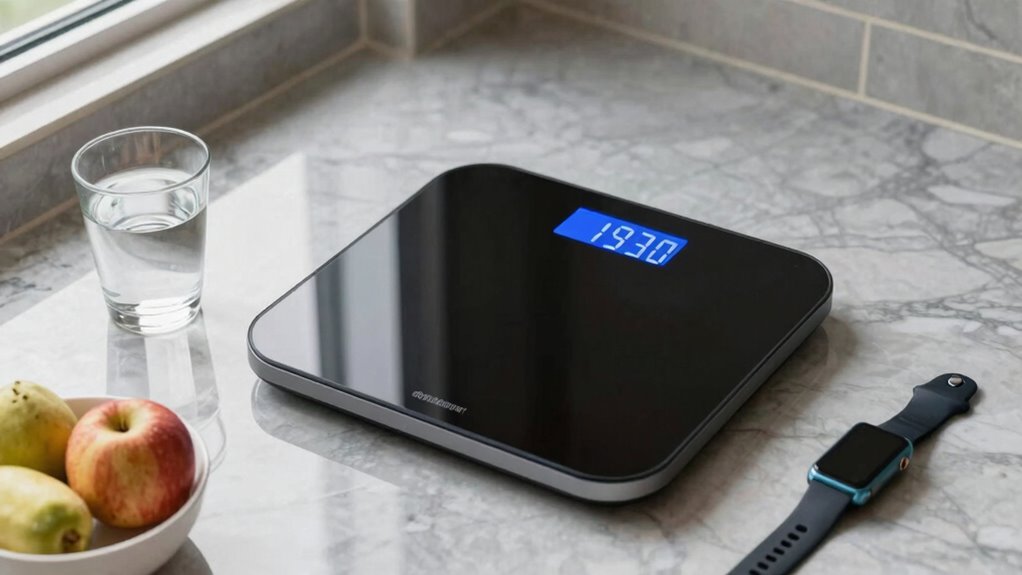

Daily jumps on your smart scale are normal and caused by natural factors like hydration levels, meal timing, and body cycles. Small changes reflect ongoing bodily processes and environmental influences. To get consistent results, weigh yourself at the same time each day on a flat surface and avoid environmental interferences. If you want to better understand what these fluctuations mean and how to track progress effectively, keep exploring for helpful tips and insights.

Get workout gear delivered free with Prime
- Fast, free delivery on millions of items
- Prime Video, Amazon Music and more included
- Member-only deals all year
Key Takeaways
- Daily weight fluctuations are normal due to hydration levels, meal timing, and natural bodily processes.
- Consistent weighing conditions, like same time and surface, help reduce variability in readings.
- Short-term changes can result from salt intake, water retention, or hormonal cycles, not actual weight loss or gain.
- Long-term trend analysis over weeks provides a more accurate picture of progress than daily numbers.
- Sudden unexplained jumps should be checked with a medical professional to rule out health issues.
smart scale with body composition analysis
As an affiliate, we earn on qualifying purchases.
As an affiliate, we earn on qualifying purchases.
What Causes Daily Fluctuations on Smart Scales?
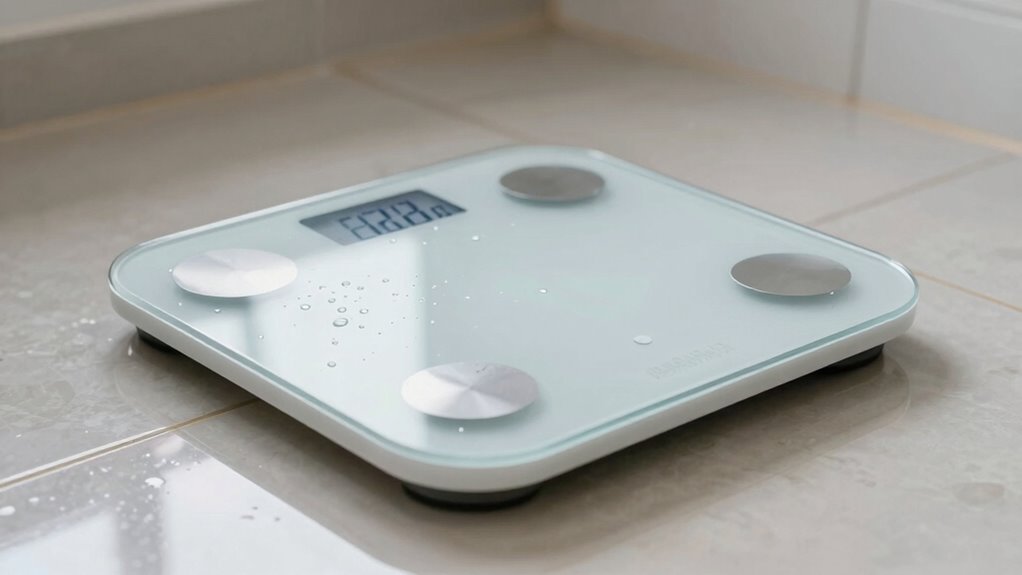
Daily fluctuations on smart scales happen because your body’s weight naturally varies throughout the day. Hydration levels play a big role—drinking water or losing fluids through sweat can cause your weight to go up or down. Meal timing also impacts your scale readings; after eating, your body retains water and food, temporarily increasing weight. Conversely, fasting or waiting several hours post-meal can show a lower number. These shifts are normal and reflect your body’s ongoing processes. It’s important to understand that these daily changes don’t necessarily mean fat gain or loss. Instead, they’re influenced by fluid balance and when you last ate or drank. Recognizing natural weight fluctuations can help you stay focused on long-term trends rather than daily changes. Tracking trends over time gives you a more accurate picture of your progress than daily fluctuations, especially since Hydration levels can vary significantly from day to day. Additionally, understanding body composition can further clarify what these changes truly indicate about your health. Being aware of measurement variability helps you interpret data more accurately and avoid unnecessary concern. Recognizing these factors can also help reduce assisted living guilt or anxiety related to minor weight changes.
digital bathroom scale for accurate weight tracking
As an affiliate, we earn on qualifying purchases.
As an affiliate, we earn on qualifying purchases.
How Do Hydration, Food, and Body Cycles Impact Your Weight?
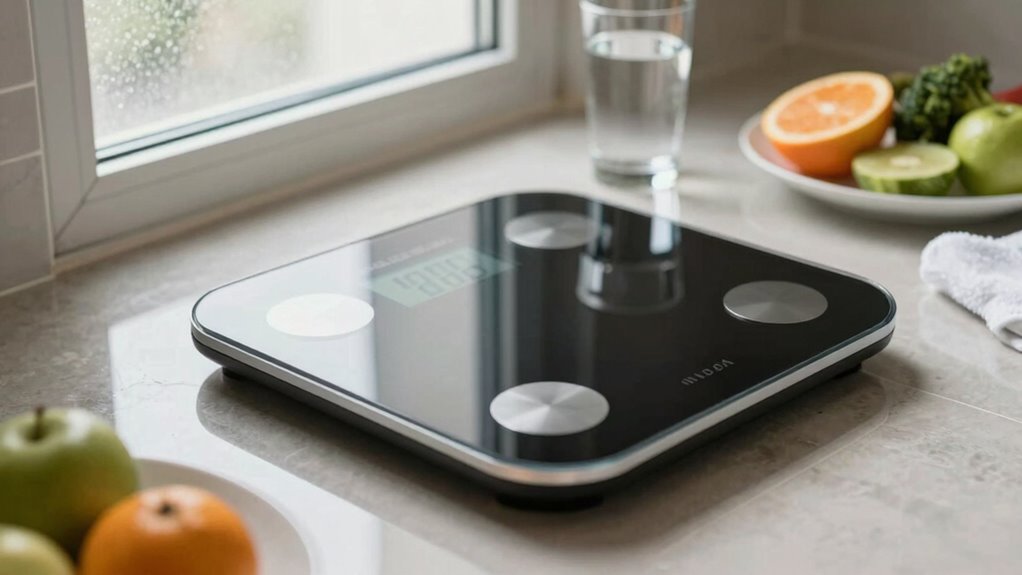
Hydration levels, food intake, and your body’s natural cycles considerably influence your weight fluctuations. When you’re well-hydrated, your scale might show a higher number due to increased water retention. Meal timing also plays a role—eating late or consuming salty foods can cause temporary weight gains. Your body’s natural cycles, like hormonal fluctuations, cause regular shifts in water retention and digestion. Additionally, understanding the impact of contrast ratio can help you better interpret visual data and patterns related to your weight changes. Recognizing these body rhythm patterns can assist you in tracking and understanding your weight variations more accurately, especially when considering the body’s natural fluctuations over time. Incorporating an awareness of vetted health data can further improve your interpretation of these fluctuations. Being aware of temperature-related effects can also help you identify short-term changes influenced by environmental factors.
As an affiliate, we earn on qualifying purchases.
How to Interpret Daily Changes and Long-Term Trends?
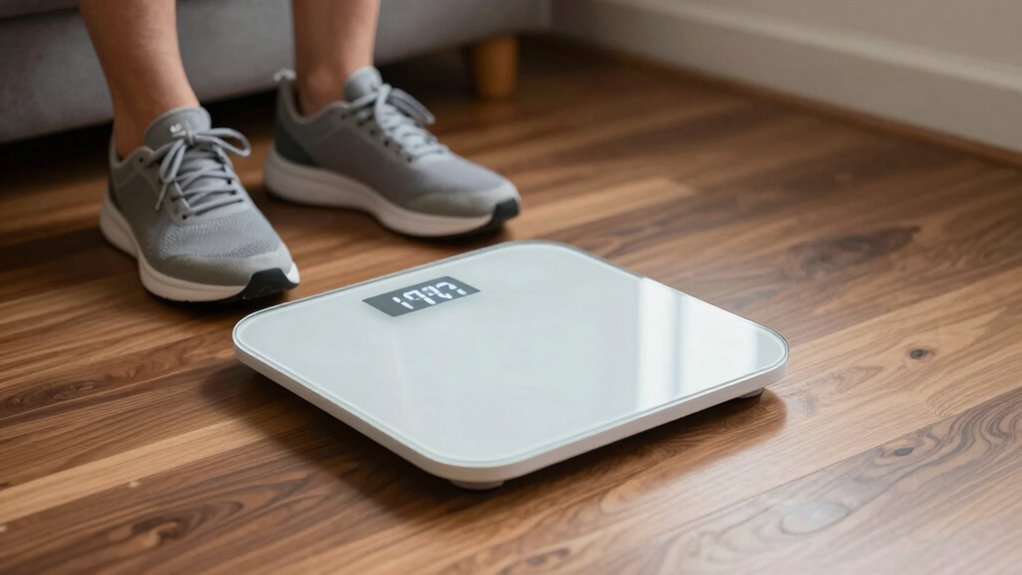
Understanding how to interpret your weight changes requires recognizing that not every fluctuation signals true progress or setbacks. Daily variations can result from calibration accuracy issues or user error, such as inconsistent weighing conditions or improper scale placement. You might notice that some fluctuations are linked to your hydration levels, which can vary significantly throughout the day and affect your weight reading. Focus on long-term trends rather than single-day numbers. Look for patterns over weeks or months to gauge your progress. Small, temporary fluctuations are normal and shouldn’t cause alarm. Keep in mind that hydration levels, food intake, and body cycles influence daily readings. To get a clearer picture, weigh yourself at the same time each day under consistent conditions. This consistency helps filter out user error and improves your ability to interpret meaningful trends, rather than reacting to transient weight changes. Recognizing the influence of AI-driven data interpretation tools can further enhance your understanding of these patterns and support healthier decision-making. Additionally, understanding the accuracy of your scale and how measurement variability impacts readings can help you better interpret daily changes. Employing consistent weighing practices can also minimize discrepancies caused by external factors and improve trend analysis over time. Being aware of measurement accuracy and regularly calibrating your scale can make your readings more reliable and meaningful.
As an affiliate, we earn on qualifying purchases.
Simple Tips to Get Consistent Scale Readings?
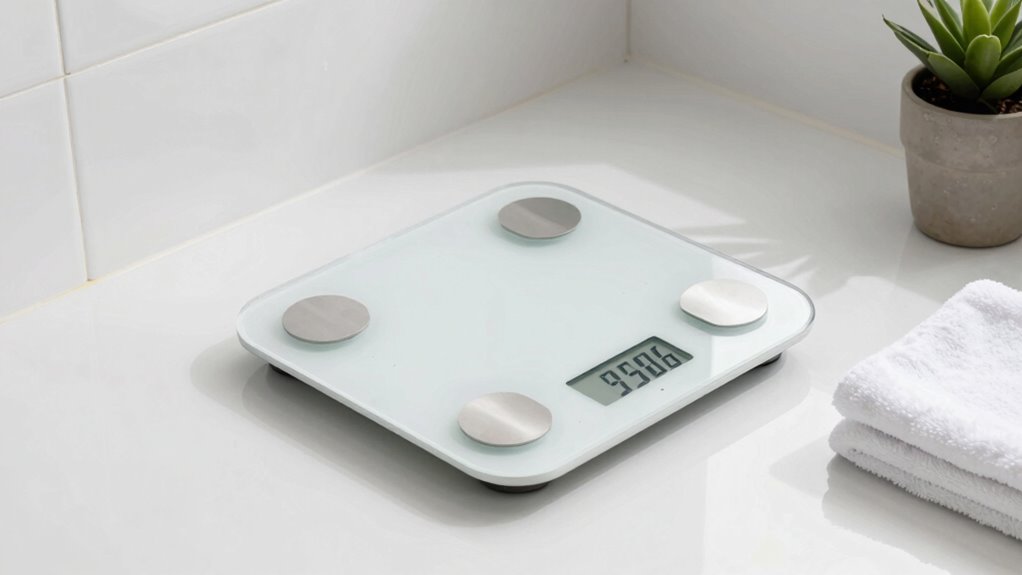
Getting consistent scale readings starts with preparing your body and the environment before weighing yourself. To minimize variability, follow these tips:
- Weigh yourself at the same time each day, preferably in the morning after using the bathroom.
- Ensure your scale is on a flat, hard surface to avoid uneven readings.
- Check the scale’s calibration issues regularly—recalibrate if readings seem inconsistent.
- Keep an eye on battery levels; low batteries can cause inaccurate measurements, so replace them as needed.
- Regularly inspect your scale’s components, such as sensors and internal mechanisms, to ensure optimal performance and accurate readings, similar to maintaining a well-functioning whole-home water system.
- Consider placing your scale away from electronic devices that could interfere with its accuracy.
- Be aware that environmental factors, such as humidity or temperature fluctuations, can also affect your scale’s measurements and should be kept in mind.
- Additionally, understanding the scientific principles behind how scales work can help you interpret your readings more accurately.
- Proper body positioning on the scale, such as standing still with feet evenly spaced, can also improve measurement consistency.
Tracking Progress: What’s Normal and When to See a Doctor?
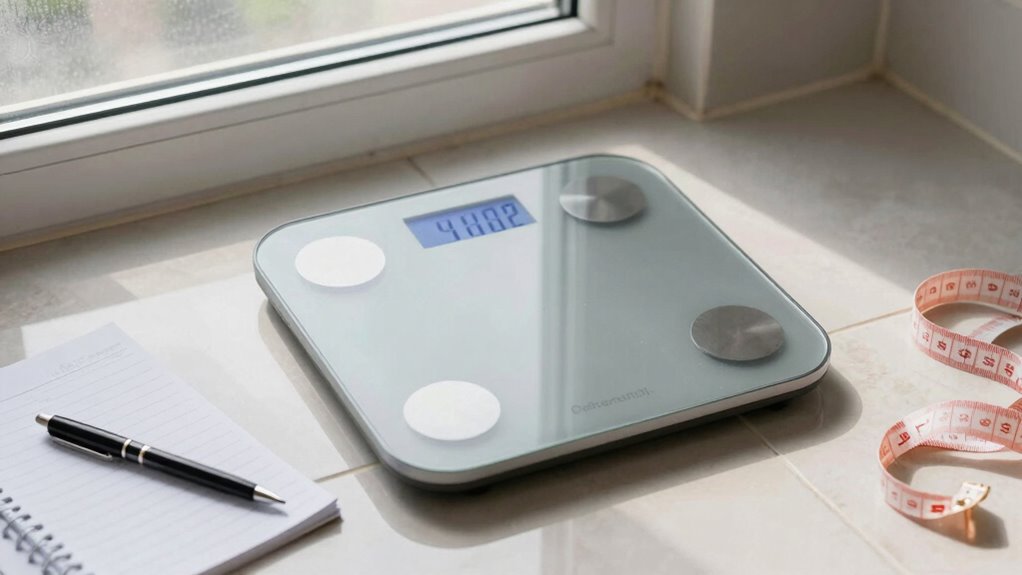
Tracking your progress with the scale helps you stay motivated and identify patterns over time. It’s normal to see fluctuations, especially when you’re adjusting your calorie intake or gaining muscle. Rapid weight changes may signal issues like water retention or medical concerns, so if your weight suddenly spikes or drops without explanation, it’s worth consulting a doctor. Keep in mind that muscle gain can increase your weight even as you lose fat, so don’t rely solely on numbers. Instead, look for consistent trends over weeks. If your weight plateaus or you experience symptoms like fatigue or swelling, seek professional advice. Remember, progress isn’t just about the scale—consider how your clothes fit and your energy levels too. Monitoring water retention can also help you understand unexpected changes in your weight. Additionally, understanding regional differences in health trends can provide context for your fluctuations.
Frequently Asked Questions
How Do Different Types of Smart Scales Compare in Accuracy?
Different types of smart scales vary in accuracy mainly because of calibration issues and sensor differences. You’ll find that high-end models often have better calibration and more precise sensors, giving you consistent readings. Cheaper scales may struggle with calibration, leading to fluctuating results. To get the most accurate data, choose a scale with reliable sensors and make sure it’s properly calibrated regularly. This helps minimize discrepancies and provides more consistent measurements.
Can Sleep Quality Affect Daily Weight Fluctuations?
Yes, sleep quality can affect your daily weight fluctuations. Poor sleep cycles can disrupt your metabolic rate, leading to water retention and temporary weight changes. When you don’t get enough restorative sleep, your body may hold onto more water, causing your scale numbers to jump around. Conversely, good sleep helps regulate hormones and metabolism, resulting in more consistent readings. So, prioritizing quality sleep can stabilize your daily weight variations.
Do Clothing Choices Impact Scale Readings Significantly?
Clothing impact on scale readings can be significant because of scale sensitivity. When you wear heavier or bulkier clothes, your weight appears higher, and lighter clothing can make it seem lower. Even small differences, like shoes or accessories, can influence daily numbers. To get consistent results, weigh yourself in similar clothing or preferably, without clothes. This helps guarantee your readings accurately reflect your true weight, unaffected by clothing choices.
How Does Time of Day Influence Scale Measurements?
Time of day markedly influences your scale measurements because your body’s fluid levels and digestion vary throughout the day. Morning readings tend to be lower due to overnight fasting, while evening measurements can be higher after eating and daily routines. To get consistent results, weigh yourself at the same time each day, ideally in the morning, and consider how your daily routines impact your weight fluctuations.
Are There Specific Foods That Cause Larger Weight Swings?
You might notice bigger weight swings after high-sodium or carb-heavy meals, thanks to food-induced fluctuations. These foods cause water retention and digestion changes, leading to temporary weight increases. Meal timing effects also play a role—eating late or large meals can cause more noticeable jumps on your scale. To minimize these fluctuations, stick to consistent eating habits and watch your intake of salty, sugary, or processed foods.
Conclusion
Remember, daily weight fluctuations are normal, just like how your hydration, food, and body cycles naturally change. Don’t let tiny jumps discourage you; they’re part of your journey. Instead, focus on long-term trends and consistent habits. By paying attention to these patterns, you’ll see progress over time. Sometimes, a small fluctuation is just a coincidence, a reminder that your body’s rhythm keeps moving forward—even when the numbers seem to dance.
Halloween Picks
halloween
As an affiliate, we earn on qualifying purchases.