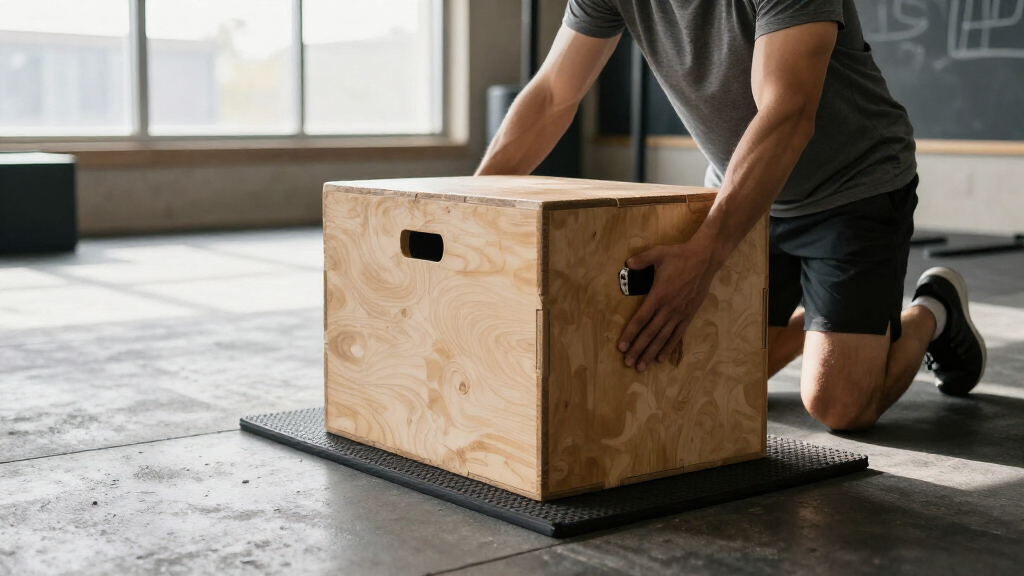

Adjustable plyometric boxes let you train box jumps, step-ups, and elevated push-ups at multiple heights without filling your gym with separate boxes, and the right one depends mostly on how you plan to use it. The REP Adjustable Steel Plyo Box earns the top spot here for its rock-solid steel frame and precise height settings, which matter most once your jumps get higher and misses get scarier. If safety is your priority, the REP Fitness Stackable Soft Foam Plyo Box Set cushions missed landings, while the Fuel Pureformance Adjustable Plyometrics Box keeps things simple and budget-friendly for casual step training. The main tradeoff in this category is stability versus forgiveness: steel and wood-style boxes feel immovable but hurt on a miss, while foam versions protect your shins but wobble at higher settings. Read on for the full breakdown of all six, including who each one is actually for.

Get workout gear delivered free with Prime
- Fast, free delivery on millions of items
- Prime Video, Amazon Music and more included
- Member-only deals all year
Complete the kit
Key Takeaways
- The REP Adjustable Steel Plyo Box and REP Stackable Foam Set landed on top for opposite reasons: steel wins on stability at high jump heights, foam wins on safety for beginners — REP simply offers the most refined versions of both designs.
- Budget adjustable boxes like the Fuel Pureformance and CAP Strength models work fine for step-ups and low jumps, but their height ranges cap out lower, which limits progression as your vertical improves.
- The Stamina X packs the smallest footprint and a modest price, making it the clear pick for apartments — but its lighter build makes it a poor match for heavy users or aggressive jumping.
- Foam boxes that adjust by stacking (REP) felt meaningfully steadier than single-unit foam adjustables, because stacked layers create a wider base at every height.
- Assembly and storage varied more than expected: JFIT‘s no-assembly boxes saved setup time entirely, while the REP steel box requires initial assembly but folds flatter for storage than any wooden option.
| REP Fitness Stackable Soft Foam Plyo Box Set |  | Best Overall | Height options: 6″, 12″, 20″ (stackable) | Maximum height: 20 inches stacked | Platform dimensions: 28″L x 28″W | VIEW LATEST PRICE | See Our Full Breakdown |
| JFIT Adjustable Plyometric Box |  | Best Compact Pick | Height options: Adjustable, approx. 12″–16″ | Platform dimensions: 14″L x 14″W | Weight capacity: 550 pounds | VIEW LATEST PRICE | See Our Full Breakdown |
| Fuel Pureformance Adjustable Plyometrics Box |  | Best Value Steel Option | Height options: 14″, 18″, 22″ | Landing surface: 16″ x 16″ non-slip platform | Overall dimensions: 20.87″W x 22.24″H x 2.87″D (folded profile) | VIEW LATEST PRICE | See Our Full Breakdown |
| REP Adjustable Steel Plyo Box |  | Best Premium Build | Material: Welded steel | Platform surface: Textured rubber | Height: Adjustable | VIEW LATEST PRICE | See Our Full Breakdown |
| Stamina X 12″ to 24″ Adjustable Height Plyo Box |  | Best for Beginners | Height options: 12″, 16″, 20″, 24″ | Platform dimensions: 25.5″W x 15.5″L | Weight capacity: 300 pounds | VIEW LATEST PRICE | See Our Full Breakdown |
| CAP Strength Adjustable Plyometric Jump Box, 3 Heights |  | Best Budget Steel Option | Brand: CAP Strength | Material: Alloy steel | Height settings: 14, 18, and 22 inches | VIEW LATEST PRICE | See Our Full Breakdown |
| adjustable plyometric boxe | Material | Height options | Platform dimensions | Item weight |
|---|---|---|---|---|
| REP Fitness Stackable Soft Foa | Dense foam with PVC vinyl cover | 6", 12", 20" (stackable) | 28"L x 28"W | — |
| JFIT Adjustable Plyometric Box | Heavy-duty iron bar, steel | Adjustable, approx. 12"–16" | 14"L x 14"W | 14.8 pounds |
| Fuel Pureformance Adjustable P | Steel with powder-coat finish | 14", 18", 22" | — | 32 pounds |
| REP Adjustable Steel Plyo Box | Welded steel | — | — | — |
| Stamina X 12" to 24" Adjustabl | Heavy-duty alloy steel | 12", 16", 20", 24" | 25.5"W x 15.5"L | 40 pounds |
| CAP Strength Adjustable Plyome | Alloy steel | — | 16 x 16 inches | — |
More Details on Our Top Picks
REP Fitness Stackable Soft Foam Plyo Box Set
This set earns the top spot because it solves the two problems that plague most adjustable plyo boxes at once: height flexibility and shin-friendly landings. Stacking the 6″, 12″, and 20″ sections with Velcro flaps gives you progressive training heights in one purchase, so beginners and advanced jumpers can share the same equipment. Compared with the Fuel Pureformance steel box, which requires a spring-button adjustment between three fixed heights, this system changes height in seconds without crouching under the platform. The tradeoff is real, though: foam compresses under heavy athletes, the footprint grows as you stack, and a 146-pound listed shipping weight means moving it between stations is a two-person job. For home gyms where safety and versatility outrank portability, this is the strongest all-around pick.
Pros:- Stackable 6″, 12″, and 20″ sections create many height combinations from one set
- Impact-absorbing foam and rounded edges dramatically reduce shin-injury risk on missed jumps
- Wipe-clean vinyl cover with non-slip grip handles repeated HIIT and step training
- Velcro flaps lock sections together so stacked boxes don’t shift mid-jump
Cons:- Foam construction is less stable and less durable than steel under heavy or repeated max-effort landings
- Full stacked setup takes up considerable floor space and sections are bulky to move
- Tall stacks can feel wobbly compared with a single welded platform
Best for: Households and home gyms with multiple users of different fitness levels who want progressive heights without hard edges
Not ideal for: Heavier athletes chasing maximal explosive jumps — dense foam gives a softer, less stable landing than welded steel options like the REP Adjustable Steel Plyo Box
- Height options:6″, 12″, 20″ (stackable)
- Maximum height:20 inches stacked
- Platform dimensions:28″L x 28″W
- Material:Dense foam with PVC vinyl cover
- Adjustment method:Stacking with heavy-duty Velcro flaps
- Number of boxes:3
- Construction:Impact-absorbing foam, non-slip surface
Our verdict“The best choice for mixed-ability home gyms that prioritize safe, progressive jump training over rock-solid steel stability.”
JFIT Adjustable Plyometric Box
If floor space is your limiting factor, the JFIT is the smartest choice in this lineup. At roughly 14.8 pounds with a compact footprint, it moves and stores like a piece of furniture, where the REP Fitness foam set consumes a corner of the room. The steel build with a 550-pound weight capacity also outclasses the Stamina X’s 300-pound rating, making it better for heavier users doing loaded step-ups. The catch is range: this single box adjusts only between about 12 and 16 inches, so tall jumpers working on max-height box jumps will plateau quickly. Compared with the Fuel Pureformance, you give up the 22-inch setting but gain a far lighter frame and no assembly at all. This is a purposeful trade: portability and sturdiness over height ceiling.
Pros:- Extremely light at under 15 pounds — easy to carry, slide under furniture, or store upright
- 550-pound weight capacity is the highest in this roundup
- No assembly required out of the box
- Steel frame construction stays planted during step-ups and lateral drills
Cons:- Limited adjustment range of roughly 12–16 inches caps training progression
- Small landing platform (around 14″ x 14″) demands precise footwork
- Hard steel edges offer no forgiveness on missed landings
Best for: Apartment dwellers or garage-gym owners with tight space who still want a rock-solid steel platform for step-ups and moderate jumps
Not ideal for: Advanced athletes who need 20″+ jump heights for progressive plyometric training
- Height options:Adjustable, approx. 12″–16″
- Platform dimensions:14″L x 14″W
- Weight capacity:550 pounds
- Item weight:14.8 pounds
- Material:Heavy-duty iron bar, steel
- Assembly:None required
- Color:Red/Black
Our verdict“A compact steel workhorse for small spaces and heavy users, as long as modest jump heights fit your programming.”
Fuel Pureformance Adjustable Plyometrics Box
This model hits a sweet spot the others miss: a welded steel platform with three genuine jump heights — 14, 18, and 22 inches — at a straightforward single-box format. The quick spring-button adjustment is faster than reconfiguring anything stackable, and unlike the JFIT, it reaches a true 22-inch setting for serious box jumps. Rubber feet protect floors and keep the 32-pound frame from skating during explosive reps, something lighter boxes can struggle with. The compromises are the smallish 16″ x 16″ landing surface and the fixed-position spring buttons, which sit where your fingers can pinch if you’re careless. It’s also less forgiving than the REP Fitness foam set — miss a jump here and your shins will know. For buyers who want steel durability and a full height range from one box, this is the value play.
Pros:- Three usable heights (14″, 18″, 22″) cover the full typical plyo progression
- Quick spring-button height changes take seconds without tools
- Rubber, non-marking feet protect flooring and anchor the box during jumps
- Powder-coated steel frame handles repeated explosive landings
Cons:- 16″ x 16″ landing surface is on the small side for beginners
- Unforgiving steel platform with exposed edges on missed jumps
- At 32 pounds it’s heavier to reposition than the JFIT
Best for: Budget-conscious buyers who want a single steel box covering beginner through advanced jump heights
Not ideal for: Users prioritizing a soft landing surface or a wide platform for step-off-heavy HIIT circuits
- Height options:14″, 18″, 22″
- Landing surface:16″ x 16″ non-slip platform
- Overall dimensions:20.87″W x 22.24″H x 2.87″D (folded profile)
- Item weight:32 pounds
- Material:Steel with powder-coat finish
- Adjustment method:Quick spring button
- Floor protection:Rubber non-marking feet
- Color:Blue/Black
Our verdict“The most sensible single-box steel purchase for progressing from step-ups to 22-inch box jumps without buying multiple platforms.”
REP Adjustable Steel Plyo Box
This is the gym-grade option in the lineup. Where the Fuel Pureformance uses a spring-button frame, REP’s welded steel construction and textured rubber platform feel closer to commercial box-jump stations — grip is consistent even with sweaty shoes, and there’s no foam to compress or vinyl to tear over time. The nesting frame design also collapses flatter than any fixed-frame competitor, which matters if you store equipment between sessions. The honest drawback is information: REP doesn’t publish specific height settings or a weight capacity here, so buyers are trusting the build rather than comparing numbers — a real gap next to the JFIT’s stated 550-pound rating. And like every steel box in this guide, it punishes missed jumps. This pick makes the most sense for lifters who want one buy-it-for-life platform and accept a firmer landing than the REP foam set offers.
Pros:- Welded steel frame delivers rock-solid stability for box jumps and loaded step-ups
- Textured rubber platform maintains reliable grip during sweaty, high-intensity sessions
- Nesting design stores flatter than traditional fixed-frame plyo boxes
- No foam or vinyl cover to compress, tear, or degrade over years of use
Cons:- Height options and weight capacity are not published, making comparison shopping harder
- Premium welded-steel construction typically costs more than budget steel alternatives
- Hard surface offers zero forgiveness on clipped or missed landings
Best for: Serious lifters and garage-gym owners who want commercial-grade steel construction and compact storage
Not ideal for: Beginners nervous about hard landings — the foam-based REP stackable set is far more forgiving while learning
- Material:Welded steel
- Platform surface:Textured rubber
- Height:Adjustable
- Frame design:Compact, nesting frame
- Assembly:Welded construction
- Supported exercises:Step-ups, box jumps, squats, plyometric training
Our verdict“A buy-it-for-life steel platform for dedicated training spaces, provided you’re comfortable jumping onto unforgiving metal.”
Stamina X 12″ to 24″ Adjustable Height Plyo Box
The Stamina X is built around one idea: gradual, confidence-building progression. Four height settings — 12, 16, 20, and 24 inches — start lower than anything else here, so a true novice can begin with modest step-ups and climb toward full box jumps over months. The wide 25.5″ x 15.5″ platform is notably more generous than the Fuel Pureformance’s 16″ x 16″ surface, giving hesitant jumpers room to land slightly off-center. It arrives assembly-free and includes the müüv guided-workout app, which no competitor in this lineup matches. The 300-pound weight capacity, however, is the lowest of the steel options — the JFIT nearly doubles it — and the 40-pound frame is the heaviest to reposition. For new athletes who value structure and a big landing zone, those are acceptable costs.
Pros:- Four height settings from 12″ to 24″ support a long progression curve from step-ups to advanced jumps
- Extra-wide 25.5″ x 15.5″ non-slip platform is forgiving for unsteady landings
- Arrives ready to use with no assembly
- Includes müüv app access with guided workouts tailored to the equipment
Cons:- 300-pound weight capacity is the lowest among the steel options here
- At 40 pounds it’s the heaviest box in this lineup to move or store
- Fixed rectangular footprint doesn’t collapse or nest for storage
Best for: Beginners and returning exercisers who want a low starting height, a wide landing platform, and guided workouts
Not ideal for: Heavier or advanced athletes — the 300-pound capacity and lower build rating lag behind the JFIT and REP steel boxes
- Height options:12″, 16″, 20″, 24″
- Platform dimensions:25.5″W x 15.5″L
- Weight capacity:300 pounds
- Item weight:40 pounds
- Material:Heavy-duty alloy steel
- Assembly:None required
- Extras:Workout guide and müüv app access (no subscription)
- Color:Black/Red
Our verdict“The easiest adjustable box to grow into — ideal for newcomers who want a low entry point and guided programming over maximum weight capacity.”
CAP Strength Adjustable Plyometric Jump Box, 3 Heights
Buyers who want steel-frame durability without the premium price of the REP Adjustable Steel Plyo Box will find a lot to like here. The spring-button adjustment system moves the platform between 14, 18, and 22 inches in seconds, which covers the height range most home athletes actually use — from low step-ups to standard box jumps. Compared with soft foam options like the REP Fitness Stackable Soft Foam Plyo Box Set, this model trades shin-friendly padding for a stable, rigid platform that doesn’t compress on landing, and the rubber feet keep it planted on hard floors. The tradeoffs are real, though: at 32 pounds it’s awkward to drag out of a closet for every workout, and the 250-pound weight cap rules out heavier lifters or anyone loading weighted jumps. Still, for a compact single-unit alternative to multi-box sets, this pick makes the most sense for value-focused buyers.
Pros:- Spring-button system switches between 14, 18, and 22 inches faster than swapping stacked foam boxes
- Textured 16 x 16-inch platform gives secure footing for jumps and step-ups
- Rubber feet stabilize the box on hard floors and prevent scratching
- Steel construction won’t compress or degrade like foam over time
Cons:- At 32 pounds, it’s cumbersome to move or store between workouts
- 250-pound maximum capacity excludes heavier users and loaded plyometrics
Best for: Home gym owners on a budget who want one steel box covering beginner through intermediate jump heights
Not ideal for: Lifters over 250 pounds or athletes wanting weighted jumps — the capacity ceiling is a hard limit, not a soft one
- Brand:CAP Strength
- Material:Alloy steel
- Height settings:14, 18, and 22 inches
- Platform dimensions:16 x 16 inches
- Adjustment system:Spring-button
- Weight:32 pounds
- Maximum weight capacity:250 pounds
- Levels:3
Our verdict“A sensible pick if you want adjustable steel construction at a lower price than premium options like the REP Adjustable Steel Plyo Box, provided you’re under 250 pounds.”

How We Picked
My ranking logic starts with one question: does the box stay stable at its highest setting? That is where most adjustable boxes fail, because raised platforms shift weight onto a narrower or taller footprint. I compared frame materials (steel versus foam versus molded plastic), how each height adjustment works, and whether the mechanism introduces wobble or slip. From there I weighed height range and progression — a box that tops out at 20 inches can’t grow with you — and safety on a missed jump, which is the single most common injury scenario with plyo training.
Usability factors separated the middle of the pack: assembly time, weight for repositioning, storage footprint, and surface grip. I also factored in value as a ratio of versatility to cost — a box with three usable heights earns its price faster than one locked into two. The lineup is ordered so the most universally capable boxes come first, with later picks serving narrower buyers like apartment dwellers, step-training-only users, or beginners prioritizing soft landings.
| adjustable plyometric boxe | Material | Assembly | Color |
|---|---|---|---|
| REP Fitness Stackable Soft Foa | Dense foam with PVC vinyl cover | — | — |
| JFIT Adjustable Plyometric Box | Heavy-duty iron bar, steel | None required | Red/Black |
| Fuel Pureformance Adjustable P | Steel with powder-coat finish | — | Blue/Black |
| REP Adjustable Steel Plyo Box | Welded steel | Welded construction | — |
| Stamina X 12" to 24" Adjustabl | Heavy-duty alloy steel | None required | Black/Red |
| CAP Strength Adjustable Plyome | Alloy steel | — | — |
Factors to Consider When Choosing Adjustable Plyometric Boxes
Before picking a specific model, it helps to understand what actually separates a good adjustable plyo box from one you’ll outgrow or distrust within months. These are the factors that drove my rankings — and the mistakes I see buyers make most often.Height Range and How You’ll Progress
The most common buying mistake is purchasing for the height you jump today rather than the height you’ll jump in a year. Beginners often start at 12 to 14 inches, but most intermediate trainees progress to 20 to 24 inches within months of consistent box jumps, and a box that caps out at 20 inches becomes a step-up platform pretty quickly. Look for at least three usable settings spanning roughly 14 to 24 inches, or a stackable system that lets you add height later. Also pay attention to how the heights are achieved — flip-style wooden boxes and stackable foam layers give fixed, predictable increments, while pin-style steel adjustables offer finer control. If multiple people in your household will use the box, a wider range matters even more, since a 5’2″ beginner and a 6′ runner have very different starting points.
Stability at Maximum Height
A box that feels solid at 16 inches can feel treacherous at 24, and this is where cheap adjustables quietly fail. The physics are simple: raising the platform raises the center of gravity and often reduces the effective footprint, so any lightweight base becomes tippier exactly when the stakes are highest. Steel-frame adjustables and stackable foam systems handle this best because their bases stay wide regardless of setting. Before buying, check the product’s weight capacity and compare it to your body weight plus the impact forces of landing — a landing generates far more force than your static weight. A box rated barely above your body weight is a liability for jumps, even if it’s fine for step-ups. This single factor explains why I rank steel and wide-base foam options above molded single-unit adjustables.
Foam Versus Steel Versus Wood: The Injury Tradeoff
Every material is a compromise between stability and forgiveness. Foam boxes protect your shins on missed jumps — the most common plyo injury — but compress slightly on landing and cost more per inch of height. Steel and wood feel absolutely immovable, which builds confidence at higher jumps, but a clipped edge means bruised or bloody shins. If you’re new to box jumps, doing high-rep HIIT workouts, or training kids, foam is almost always the right call. Confident jumpers chasing maximum height usually prefer steel or wood because the platform doesn’t give at all underfoot. There’s no universally superior material, which is why my top two picks are a steel box and a foam set rather than two versions of the same thing.
Footprint, Storage, and Real Room Dimensions
Measure your space before buying, not after — an adjustable box is one of the larger single items in a home gym, and stackable sets need vertical clearance you might not have under a low ceiling or shelf. A typical plyo box occupies a 20 x 30 inch floor area, but the jump zone around it needs several feet of clear space on all sides, so the effective footprint is much bigger than the spec sheet suggests. Storage matters if you share the space: folding steel adjustables and lightweight molded boxes slide under a bed or into a closet, while a three-piece foam stack eats real vertical storage. Also consider whether you’ll move the box between rooms — a 40-pound steel unit becomes a chore quickly, whereas a foam box can be carried under one arm. Buyers in garages have more freedom; apartment dwellers should weight this factor heavily.
Surface Grip and Floor Protection
Grip works in two directions, and cheap boxes often fail at one of them. The platform surface needs enough texture that sweaty shoes don’t slide during explosive takeoffs — look for rubberized or laminated non-slip tops rather than slick bare metal or vinyl. Equally important is the bottom: a box that slides on hardwood or tile when you land is dangerous, so rubber feet or a high-friction base are non-negotiable on hard floors. Foam boxes generally grip floors well but can have slicker tops, while steel boxes usually do the opposite. If your home gym is on a smooth surface, test the box at low heights first and add a rubber mat underneath if anything shifts. This is also the cheapest problem to fix yourself, so don’t overpay for grip features you can replicate with a $20 mat.
When to Pay More (and When Not To)
Premium pricing in this category buys three things: wider height ranges, heavier-gauge frames, and better surface materials. Pay up if you jump above 24 inches, weigh over 220 pounds, or plan daily training — the durability math favors a quality steel or layered foam box within a year of heavy use. Skip the premium tier if your box will mostly serve step-ups, elevated push-ups, and occasional low jumps, because a basic adjustable handles those loads without complaint. Another point of diminishing returns is adjustment convenience: pin-and-pop mechanisms and three-position flips are worth a modest premium, but motorized or tool-heavy systems add cost without adding training benefit. My advice is to match the price tier to your jump height, not your enthusiasm — plenty of beginners buy commercial-grade boxes they never jump high enough to stress.
Frequently Asked Questions
Are foam adjustable plyo boxes stable enough for real box jumps?
Yes, provided you buy a proper layered foam design rather than a thin single block. Quality foam boxes use dense high-compression foam cores that barely compress under body weight, and stackable systems keep a wide base at every height, which addresses the wobble problem. Foam boxes do feel slightly softer on landing than steel or wood, which some jumpers describe as less “crisp,” but this doesn’t reduce the training effect. The tradeoff runs in your favor on misses: hitting the edge of a foam box bruises, while hitting a steel or wooden box often breaks skin. If you’re jumping at heights below 24 inches with good mechanics, a well-made foam adjustable is entirely stable. The caveat is very heavy users — anyone over roughly 300 pounds may find foam compression noticeable and should lean toward steel.
What height should a beginner start with for box jumps?
Most beginners should start between 12 and 16 inches, and the right answer depends more on your squat mechanics than your ambition. Stand facing the box, drop into a quarter squat, and see whether your thighs reach parallel — if the box is above your natural squat depth, it’s too high to jump onto with good form. The mistake I see constantly is starting at 20 inches because that’s what a CrossFit class uses; improper landings at that height stress the knees and Achilles. An adjustable box solves this by letting you start low and raise the height in small increments as your landing mechanics become consistent. A good progression marker: once you can land quietly in a half-squat with your full foot on the platform for ten straight reps, you’re ready for the next setting. Step-ups, unlike jumps, can start higher since there’s no impact to absorb.
Is an adjustable box worth it versus buying a fixed-height box?
For most home gym owners, yes, because a single adjustable replaces two or three fixed boxes while taking the floor space of one. Fixed boxes win on two fronts: they’re cheaper per unit, and they have no adjustment mechanism to add wobble or weight. But your training will likely outgrow a single fixed height within months, and stacking multiple fixed boxes for higher jumps is exactly as unstable as it sounds. Adjustables also serve multi-person households better — a beginner and an advanced jumper can share one box by changing a pin or flipping the platform. The one case for a fixed box is a dedicated studio space where you can buy several heights at once, or a budget so tight that one inexpensive 20-inch box covers your immediate needs. If you’re buying one box for a home gym, adjustable is the safer long-term bet.
Can I use an adjustable plyo box on hardwood or carpet?
Both surfaces work, but each needs a different precaution. On hardwood or tile, the risk is the box sliding during explosive takeoffs, so look for rubberized feet or place a dense exercise mat underneath — this also protects the floor from impact scuffs. On carpet, the risk is the opposite: thick pile carpet can make lightweight boxes rock slightly side to side, which is worse for molded plastic adjustables than for heavier steel or wide foam bases. Low-pile carpet and rubber gym flooring are the ideal surfaces and require nothing extra. One thing to avoid is placing a foam box on a slick rug with no grip, since foam bottoms that hold firm on hardwood can slide on loose rug fibers. Whatever your floor, do a few low test jumps before every high-intensity session; a box that shifted during storage may not be sitting flat anymore.
How much weight can adjustable plyo boxes actually hold?
Most quality models in this lineup are rated somewhere between 300 and 600 pounds, but the rating needs context because landing force exceeds static weight. A hard jump landing can briefly generate two to three times your body weight in force, so a 250-pound jumper stresses a box far beyond 250 pounds of load. Steel adjustables handle this best since their ratings include generous safety margins; foam boxes hold their rated weight but with visible compression for heavier users. Height matters too — a box near its rated limit performs differently at its highest setting than at its lowest, because leverage shifts. My practical guidance: pick a box rated at least 1.5 times your body weight if you jump aggressively, and treat any rating under 300 pounds as suitable only for step-ups and light training. Checking the capacity before buying is the single fastest way to filter out boxes that won’t last.
Conclusion
The right adjustable plyo box comes down to how you jump and where you’ll use it. For best overall, the REP Adjustable Steel Plyo Box is the pick I’d point most buyers toward — its stability at high settings and precise height options make it the one box that grows with you for years. The REP Fitness Stackable Soft Foam Plyo Box Set takes best for beginners: the foam construction forgives the missed jumps everyone throws at their shins early on, and stacking keeps it steady at every height. For best value, the Fuel Pureformance Adjustable Plyometrics Box covers the essentials without paying for features casual users won’t touch, while the CAP Strength Adjustable Plyometric Jump Box is a solid runner-up if Fuel’s availability or size doesn’t fit your space. The JFIT Plyometric Box earns best premium for no-assembly convenience and conditioning-grade build — worth it if you train daily and hate setup hassle. Finally, the Stamina X Adjustable Plyo Box is best for small spaces and step-focused training: its compact footprint and guided workout access suit apartment dwellers who’ll mostly do step-ups and low jumps. Match the pick to your jump height and floor space, and you’ll end up with a box you trust rather than one you merely tolerate.
Halloween Picks
halloween
As an affiliate, we earn on qualifying purchases.