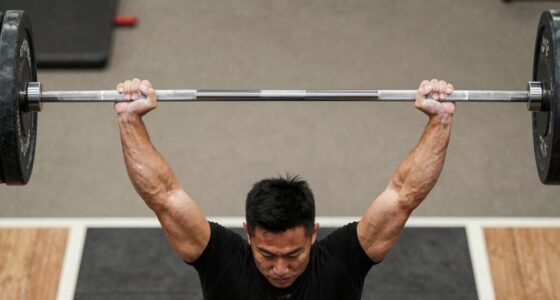

To brace your core using the “360°” trick, start by engaging all your core muscles simultaneously around your trunk—front, sides, and back—creating a supportive cylinder. Breathe deeply, then tighten your abs as if preparing for a punch, maintaining steady tension without holding your breath. Focus on outward radial tension for full stability. If you want to master this technique and make your core support reliable during movement, keep exploring these essential steps.
Key Takeaways
- Engage all core muscles simultaneously by tightening the front, sides, and back as if preparing for a punch, maintaining steady tension.
- Use the “360°” concept to activate muscles around the entire torso, creating outward radial tension for full support.
- Breathe deeply, inhaling to fill your belly, then exhale slowly while maintaining core engagement without holding your breath.
- Incorporate dynamic movements like twists and planks to sustain core activation through full range and movement.
- Practice controlled, consistent bracing to develop muscle memory, ensuring stability during both exercise and daily activities.

ProsourceFit Core Balance Disc Trainer, 14" Diameter with Pump for Fitness, Balance Training, or Seating; Wobble Board for Core Stability; Flexible Floor Cushions for Kids, Gray
IMPROVE CORE STRENGTH & BALANCE – Strengthens and engages multiple core muscles at once to maintain balance during…
As an affiliate, we earn on qualifying purchases.
As an affiliate, we earn on qualifying purchases.
What Is Core Bracing and Why Is It Key to Stability?

Understanding core bracing is essential because it’s the foundation of stability during any movement. When you engage in core activation, you tighten your abdominal, back, and pelvic muscles to create a solid, supportive core. This stability is crucial for preventing injuries during dynamic activities. Stability training focuses on strengthening these muscles to improve overall balance and control. Proper bracing involves subtle, controlled contractions rather than just holding your breath or tensing excessively. By mastering core bracing, you guarantee your body can handle various loads and movements efficiently. It also mimics natural stability mechanisms used in everyday movements. Accessing safer, more effective exercise routines and daily movements becomes easier with a strong, resilient core.

NYOrtho Abdominal Binder Lower Waist Support Belt – Compression Wrap for Men and Women MADE IN USA (45" – 60") 3 Panel – 9"
PROUDLY MADE IN USA: Experience the Superior Quality of American Craftsmanship. We uphold the highest standards of manufacturing,…
As an affiliate, we earn on qualifying purchases.
As an affiliate, we earn on qualifying purchases.
How Does the “360°” Core Engagement Work?

When you engage your core in a 360° manner, you’re activating all the muscles around your trunk, creating a solid, unified support system. This radial tension helps stabilize your body during movement, making your actions more controlled and efficient. As a result, your stability improves, reducing the risk of injury and enhancing performance. Incorporating core engagement principles into your routine ensures that you develop a resilient and balanced core that supports all your lifts and daily activities.
Engages All Core Muscles
To effectively activate all your core muscles in the 360° trick, you need to engage them simultaneously from every angle. This thorough engagement ensures a core burn that lights up all the key muscles, including your transverse abdominis, obliques, rectus abdominis, and erector spinae. When you do this, you’re not just stabilizing—you’re creating a solid foundation that helps prevent injuries during movement and lifting. This full activation boosts your overall strength and stability, making your core more resilient. By consciously contracting your muscles in a coordinated way, you distribute tension evenly across your entire core. Understanding core anatomy can help you target and activate these muscles more effectively. The result? A more effective, safer exercise that maximizes benefits and minimizes risk.
Creates Radial Tension
The 360° core engagement works by generating radial tension, which is the outward force created when all your core muscles contract simultaneously. This tension acts like a tight brace around your torso, helping maintain proper posture and alignment. When you create this tension, your spine is supported from every angle, reducing unnecessary strain. Improved posture from radial tension not only makes you look more confident but also helps prevent injuries by stabilizing your entire midsection. This uniform force distributes forces evenly across your core, minimizing weak spots that could lead to strains or imbalances. By mastering this tension, you’ll build a solid foundation for safer, more efficient movement and lift heavier weights with less risk of injury.
Enhances Movement Stability
By engaging your core in a 360° manner, you create a stable foundation that enhances your movement control. This full-spectrum activation improves core stability, allowing your body to move more efficiently and with better coordination. When your core is engaged evenly around your torso, it prevents unnecessary wobbling or compensation, reducing strain on your joints and muscles. This stability helps you maintain proper posture and technique during dynamic activities, which is essential for injury prevention. As your core becomes more resilient and balanced, your movements become more precise and controlled. Ultimately, this extensive engagement supports safer, more effective training, and daily activities, ensuring your body stays strong and protected against potential injuries. Incorporating mind-body healing practices can further enhance your overall stability and well-being.

Resistance Bands for Working Out, Exercise Bands Resistance Bands Set with 5 Resistance Levels, Latex Loop Bands for Women Men, Workout Bands for Legs, Glutes, Strength Training, Yoga, Home Gym
Full-Body Training with Resistance Bands for Women: Our resistance bands for working out include 5 exercise bands from…
As an affiliate, we earn on qualifying purchases.
As an affiliate, we earn on qualifying purchases.
What Does a Proper Core Brace Look Like?

A proper core brace starts with engaging your abdominal muscles, making your midsection firm without holding your breath. Keep your spine aligned and maintain controlled breathing to support stability. When these elements come together, you create a solid foundation for safe and effective movement. Incorporating optical drives and enterprise USB backups can also ensure your data remains secure during physical activity or emergencies.
Engaged Abdominal Muscles
Engaging your abdominal muscles means tightening your core as if preparing to be gently punched in the stomach. This abdominal activation creates a firm, supportive feeling across your midsection. You’ll notice your abs draw inward and upward, stabilizing your spine and pelvis. Proper core stability involves maintaining this tension without holding your breath or overexerting. Your abs should feel engaged but not painfully tight. The goal is to create a solid, resilient core that can handle loads and movement without collapsing. Keep in mind, the engagement should be controlled, not excessive, ensuring your muscles work efficiently. This balance helps maintain posture and supports your entire body during lifts or movement, making your core a reliable foundation for any exercise. Proper core engagement is essential for protecting your back and improving overall stability.
Proper Spinal Alignment
When you properly brace your core, your spine stays in a neutral, aligned position that supports efficient movement and reduces injury risk. Maintaining good spinal posture means avoiding excessive arching or rounding, keeping your head, shoulders, and hips in a straight line. This alignment allows your core muscles to work effectively, providing stability. Proper spinal alignment also enhances muscle isolation, ensuring that the targeted muscles engage without overcompensation from others. Focus on gently pulling your ribcage down and engaging your deep core muscles to stabilize your spine. When your spine remains neutral, you maximize core engagement and create a solid foundation for safe, powerful movement. This precise control helps prevent strain and promotes long-term strength. Additionally, understanding spinal biomechanics can help you refine your core bracing technique for optimal results.
Controlled Breathing Technique
To maintain a proper core brace, you should breathe steadily and intentionally, coordinating your breath with your movements. This controlled breathing technique helps establish the right breathing rhythm, ensuring your muscles work in harmony. When you breathe correctly, your core muscles activate smoothly, enhancing muscle coordination and stability. Focus on inhaling deeply through your nose, filling your belly, then exhaling slowly. This pattern keeps your core engaged without tension or strain. Here’s a simple visual guide:
| Step | Breathing Pattern | Muscle Engagement |
|---|---|---|
| Inhale | Deep belly breath | Activate transverse abdominis |
| Hold | Maintain tension | Keep core tight |
| Exhale | Slow, controlled outflow | Sustain muscle stability |
This technique sharpens your core control, making your brace more effective. Proper core engagement is essential for optimal stability and performance during physical activity.

Trideer Exercise Ball for Yoga, Pilates & Fitness – Stability Ball Equipment for Home Gym & Office Chair, Core & Balance Training Accessories, Physical Therapy Equipment, Quick Pump Included, 5 Sizes
Designed with anti-slip stripes and a fine frosted texture for enhanced grip and stability. The increased surface friction…
As an affiliate, we earn on qualifying purchases.
As an affiliate, we earn on qualifying purchases.
How to Master the “360°” Core Bracing Technique

Mastering the “360°” core bracing technique requires you to engage your entire core evenly, creating a solid and stable foundation for your movements. To do this, focus on activating muscles around your abdomen, back, and sides simultaneously. Think of tightening all directions—front, sides, and rear—to enhance core stability. Start by taking a deep breath, then brace your abs as if preparing for a gentle punch, ensuring muscle activation across the entire core. Maintain this engagement throughout your lift or exercise, without holding your breath. Proper bracing stabilizes your spine and transfers power efficiently, reducing injury risk. Consistent practice helps you develop the muscle awareness needed to maintain this balanced tension, making your core more resilient and your movements more controlled. Incorporating AI trend insights can also help tailor personalized training strategies for better core development.
What Common Mistakes Should You Avoid When Bracing?

One common mistake people make when bracing is failing to engage all parts of the core equally, which creates uneven stability and weakens the foundation. This often leads to core fatigue faster, as some muscles overcompensate while others remain inactive. Another mistake is neglecting proper breathing patterns; holding your breath or shallow breathing can increase intra-abdominal pressure unevenly, disrupting your brace. Instead, focus on maintaining steady, controlled breaths to support full core activation without sacrificing stability. Avoid tensing only your superficial muscles, as this can cause imbalance and reduce effectiveness. Consistently poor bracing habits undermine your progress and increase injury risk. Pay close attention to engaging your entire core, using proper breathing techniques, to build a solid, resilient foundation for your lifts and movements. Additionally, incorporating home safety tips can help prevent injuries during training sessions at home.
How to Incorporate Full-Range Core Activation Into Your Workouts

Incorporating full-range core activation into your workouts requires deliberate effort to engage all muscle groups throughout the movement. Focus on maintaining core stability from every angle, not just during static holds. Use dynamic exercises like rotational twists, planks with arm reach, and controlled side bends to guarantee your core works across its entire range. Consistent engagement helps strengthen deep and superficial muscles, improving overall stability. This thorough activation is key to injury prevention, especially during functional movements or heavy lifts. Be mindful to breathe steadily and avoid compensatory patterns that weaken core engagement. Integrating these techniques into your routine ensures that your core remains engaged throughout your workout, creating a solid foundation for all physical activity.
What Are the Benefits of Engaging Your Core Fully From All Angles?

Engaging your core fully from all angles activate a range of significant benefits for your overall fitness and daily movement. When you activate your core thoroughly, you improve core endurance, allowing you to sustain stability during prolonged activities. This complete engagement also enhances core flexibility, making your muscles more adaptable and reducing stiffness that can limit movement. Fully engaging your core helps distribute forces evenly across your muscles, reducing strain on your lower back and joints. As a result, you move more efficiently, with better posture and balance. Over time, these benefits lead to increased strength, stability, and resilience in everyday tasks and workouts. Ultimately, engaging your core from all angles creates a solid foundation that supports your body’s performance and longevity.
How to Maintain Consistent Core Bracing During Movement

Maintaining consistent core bracing during movement requires mindfulness and practice to guarantee your muscles stay engaged without interruption. To prevent core fatigue, focus on controlled, steady breathing patterns—inhale to expand your diaphragm and exhale to activate your deep core muscles. Keep your breathing smooth and deliberate to support muscle engagement and avoid tensing or loosening your core prematurely. It’s essential to stay aware of subtle shifts or drops in tension, especially during dynamic exercises. By consciously syncing your breath with movement, you reinforce a stable core and minimize fatigue. Regular practice helps you develop muscle memory, making core bracing feel more natural and consistent, even as you increase intensity or complexity in your workouts.
Troubleshooting Challenges and Progressing Your Core Bracing Skills

When you encounter difficulties with core bracing, it’s important to identify the specific challenge before adjusting your approach. Are you struggling with poor muscle activation or lack of core awareness? Pinpointing the issue helps you target the right technique. To progress, focus on enhancing your core awareness by practicing slow, controlled movements. Use visualization and tactile cues to improve muscle activation, ensuring each core area engages properly. Here’s a quick guide:
| Challenge | Solution |
|---|---|
| Inconsistent muscle activation | Use targeted exercises to build awareness |
| Shallow breathing during brace | Practice diaphragmatic breathing |
| Lack of total core engagement | Incorporate 360° awareness drills |
| Difficulty maintaining brace | Break down movements into segments |
| Fatigue reducing effectiveness | Improve recovery and consistency |
Consistent practice sharpens your core awareness, making muscle activation more automatic.
Frequently Asked Questions
How Do I Know if My Core Is Properly Engaged?
You’ll know your core is properly engaged when you feel a firm, stable sensation around your entire midsection. During core activation, your abdominal muscles, obliques, and lower back muscles tighten without causing breathlessness or discomfort. You should maintain this muscle engagement throughout your exercise, ensuring your core remains stable. If you notice your hips or shoulders shifting excessively, it’s a sign you need to re-engage your core for better stability.
Can I Over-Brace My Core During Exercises?
Yes, you can over-brace your core during exercises, leading to core fatigue and muscle imbalances. Over-bracing causes unnecessary tension, which can strain muscles and reduce movement efficiency. Pay attention to your body, and if you feel excessive tightness or fatigue, ease up. Proper core engagement should feel controlled and stable, not compressed or strained. Balancing your brace helps prevent injury and ensures effective, safe workouts.
Is Core Bracing Different for Beginners and Advanced Athletes?
You might notice that core bracing feels different for beginners and advanced athletes, but the goal stays the same: enhancing core stability and preventing injury. As a beginner, focus on building a solid foundation, practicing gentle activation. For advanced athletes, you’ll need more precise, controlled bracing to support heavier lifts and complex movements. Regardless of your level, mastering this guarantees safer workouts and long-term strength.
How Does Breathing Affect Core Bracing Effectiveness?
Breathing techniques directly influence core bracing effectiveness by enhancing muscle activation and stability. When you inhale deeply, you fill your lungs and engage your diaphragm, creating intra-abdominal pressure that supports your spine. Exhale steadily as you brace your core, maintaining tension. Proper breathing guarantees your muscles activate fully, providing better control during lifts or movements. Practice controlled breathing to optimize your core stability and improve overall performance.
Are There Specific Exercises to Enhance “360°” Core Engagement?
Imagine your core as a fortress needing reinforcement; specific stability exercises can help you achieve this. To enhance “360°” core engagement, incorporate plank variations, bird-dogs, and dead bugs into your routine. These exercises activate your deep core muscles, improving overall core activation. Regular practice builds a resilient foundation, making your bracing more effective during lifts and movements, ensuring stability from every angle.
Conclusion
Think of your core as the foundation of a sturdy house. When you brace it fully, you’re anchoring yourself against any gust of wind or shifting ground. Mastering the “360°” technique is like building that unshakeable foundation—steady, resilient, and prepared for anything. Keep practicing, stay consistent, and soon your core will hold strong through every movement, turning your body into a fortress of stability that supports every lift, step, and stretch.