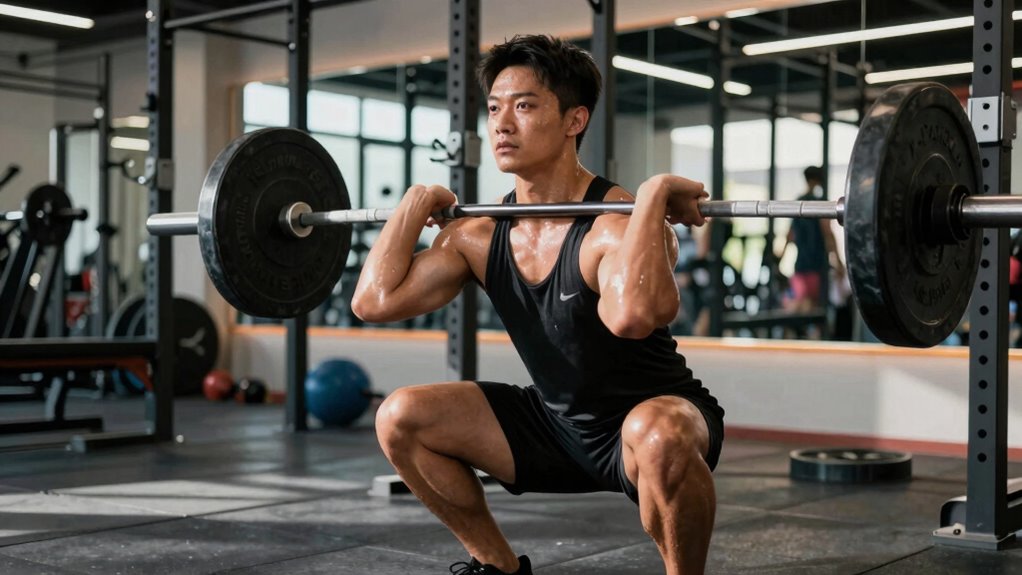

The mind-muscle connection matters most when you’re aiming for muscle growth and strength, as focusing on targeted muscles helps you recruit more fibers and improve activation. It’s less critical for general fitness or endurance training, where effort and consistency matter more than precise focus. To get the best results, consciously direct your attention, visualize muscle engagement, and slow your movements. Want to discover practical tips to strengthen this link? Keep exploring to learn more.
Key Takeaways
- Mind-muscle connection significantly enhances muscle growth and strength, especially during hypertrophy-focused training.
- It is less critical for general fitness or endurance workouts where overall activity is the goal.
- Developing this connection requires consistent mental focus and visualization during each exercise.
- Visualizing muscle engagement can recruit more fibers, improving training efficiency for targeted muscle development.
- For beginners or casual exercisers, focusing less on mind-muscle connection may still yield progress without distraction.

The mind-muscle connection is the powerful awareness of how your muscles work during exercise, helping you target and engage them more effectively. When you focus your attention on specific muscles, you can enhance muscle engagement and improve the quality of your workouts. Visualization techniques play a key role here, allowing you to mentally picture the muscles contracting and stretching as you perform each movement. By imagining your muscles working with each rep, you create a stronger neural link between your brain and your muscles, making your efforts more efficient.
When you consciously direct your focus toward the muscle you’re aiming to work, you activate a deeper level of engagement. This isn’t just about going through the motions; it’s about feeling each contraction and stretch. For example, during a bicep curl, instead of simply lifting the weight, you visualize the bicep muscle tightening and lengthening. This mental imagery helps you recruit more muscle fibers, leading to better hypertrophy and strength gains over time. The key is to slow down the movement, paying close attention to the muscle in action, and actively think about the muscle doing the work.
Using visualization techniques isn’t about just thinking in your head; it’s about creating a sensory experience that enhances muscle engagement. You might imagine the muscle fibers firing like tiny sparks or imagine a wave of tension spreading through the muscle. These mental cues boost your ability to control the movement precisely, which can prevent compensatory patterns that reduce workout effectiveness. When your mind is fully engaged, you’re more likely to stay present during each set, reducing distractions and ensuring maximum muscle activation. Developing muscle awareness can further improve your ability to connect your mind and muscles effectively over time.
However, the importance of the mind-muscle connection varies depending on your goals. If you’re training for general fitness or endurance, it’s less critical. But if you’re aiming for muscle growth or strength, honing this connection can make a noticeable difference. Keep in mind that developing a strong mind-muscle link takes practice. As you become more aware of how your muscles feel and respond, your ability to visualize and engage them improves. Remember, it’s not about perfection but about gradually increasing your focus during each session.

TYZDMY Adjustable Dumbbells Set of 2,Free Weights Dumbbells Set,Adjustable Dumbbell Set,52.5 lbs pair 105 lbs,15 in 1,for Men/Women Gym Equipment for Home Strength Training Equipment
【15 in1 Adjustable Dumbbells】You will receive a pair of 52.5 lb dumbbells, each adjustable in 15 different weights:…
As an affiliate, we earn on qualifying purchases.
As an affiliate, we earn on qualifying purchases.
Frequently Asked Questions
How Can Beginners Improve Their Mind-Muscle Connection?
To improve your mind-muscle connection as a beginner, try visualization techniques to focus on the muscle you’re working. Perform slow contraction exercises, emphasizing control and awareness during each movement. Concentrate on feeling the muscle engage, rather than just moving the weight. Over time, this heightened focus helps you connect better with your muscles, leading to more effective workouts and muscle growth. Practice consistently, and you’ll notice improvements.
Does Mental Focus Replace Proper Lifting Technique?
Mental focus doesn’t substitute proper lifting technique; it complements it. When you concentrate on your form, you’re more likely to execute movements correctly and safely. If you neglect proper lifting technique, mental focus alone can’t prevent injury or ensure effective workouts. So, always prioritize your technique first, then use mental focus to enhance your performance. Combining both will help you lift safely and see better results.
Can Mind-Muscle Connection Prevent Injuries?
Yes, your mind-muscle connection can prevent injuries, especially when you focus on proper form and control. By staying attentive, you avoid muscle fatigue and guarantee ergonomic equipment usage, reducing strain and strain-related injuries. When your mind actively engages during lifts, you maintain better balance and technique, helping you push safely and prevent overexertion. Prioritizing mental focus makes a meaningful difference in injury prevention during workouts.
Is Mind-Muscle Connection More Important for Hypertrophy or Strength?
You should prioritize the mind-muscle connection more for hypertrophy because it enhances muscle activation, leading to better growth. While strength development also benefits from focus, it relies more on workout intensity and lifting heavier weights. By consciously engaging your muscles during exercises, you maximize hypertrophic gains. For strength, though, pushing your limits with heavier loads takes precedence, but a good mind-muscle connection still helps optimize overall performance.
How Long Does It Take to Develop a Strong Mind-Muscle Link?
Developing a strong mind-muscle link typically takes about 4 to 8 weeks, depending on your focus duration and consistency. You’ll improve muscle awareness by consciously concentrating during each workout, which enhances your connection. Keep your focus duration steady—around 20 to 30 seconds per set—and gradually increase it. With regular practice, you’ll notice better control and engagement, making your workouts more effective and your muscle awareness sharper over time.

HOXWC Resistance Bands, Figure 8 Exercise Bands for Back, 8 Shaped Resistance Bands for Arms, Shoulder, Leg Stretching, Physical Therapy, Yoga, Pilates, Home Gym Workout Equipment for Women Men
【Sculpt Your Body Form】Stay consistent with just 15 minutes daily using our figure 8 resistance band! Perform chest…
As an affiliate, we earn on qualifying purchases.
As an affiliate, we earn on qualifying purchases.
Conclusion
So, next time you’re tempted to obsess over every tiny muscle move, remember: sometimes, your body just wants to get the job done without overthinking. Ironically, while the mind-muscle connection can boost your gains, overanalyzing every rep might actually hold you back. Sometimes, letting go and focusing on consistency is what truly matters. After all, in the end, it’s your progress, not your perfect form, that counts. So relax, lift, and trust the process.

Insanity 60 Day Total Body Conditioning Program Deluxe kit,Include14 DVD Workout Exercise Videos,Fitness Guide, Elite nutrition Program And Exercises Calendar
Include14 DVD Workout Exercise Videos,Fitness Guide,Nutrition Plan&Exercises Calendar.
As an affiliate, we earn on qualifying purchases.
As an affiliate, we earn on qualifying purchases.

Golf Swing Trainer Aid, Adjustable Golf Training Aid with 5 Resistance Levels, Ergonomic Golf Grip, Realistic Swing Sound – Perfect for Improving Swing Accuracy, Muscle Strength for All Ages
1.Ideal for Warming Up and Building Swing Tempo:This golf swing training aid with 5 adjustable resistance levels is…
As an affiliate, we earn on qualifying purchases.
As an affiliate, we earn on qualifying purchases.