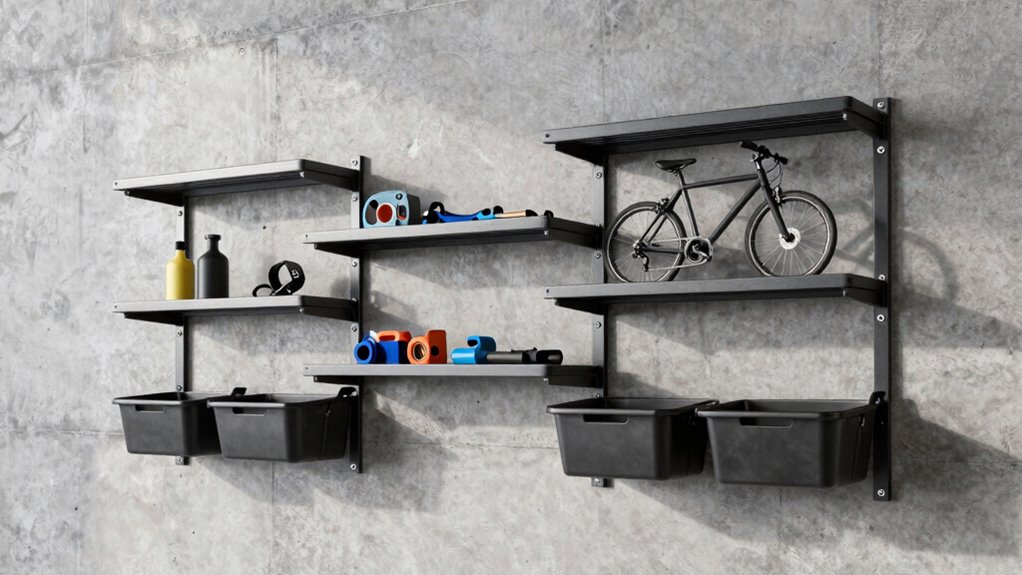
To guarantee your wall-mounted rack is safe, consider your wall’s material and support capacity. Drywall, especially if damaged or thin, may not hold heavy loads without proper anchors or reinforcement. Use a stud finder to locate solid supports and select the right hardware—like toggle bolts or expansion anchors—for your wall type. Properly distribute weight and secure brackets into studs for maximum safety. Keep going to learn essential tips to mount your rack securely and avoid hazards.
Key Takeaways
- Identify your wall material (drywall, brick, concrete) to determine suitable mounting methods and hardware.
- Check wall strength and stability, looking for cracks, sagging, or damage that may compromise support.
- Use appropriate anchors and secure brackets directly into studs or solid surfaces for safety and durability.
- Avoid mounting on damaged or weak walls to prevent rack failure and potential safety hazards.
- Distribute weight evenly, use multiple anchors, and regularly inspect mounted items to ensure ongoing stability.
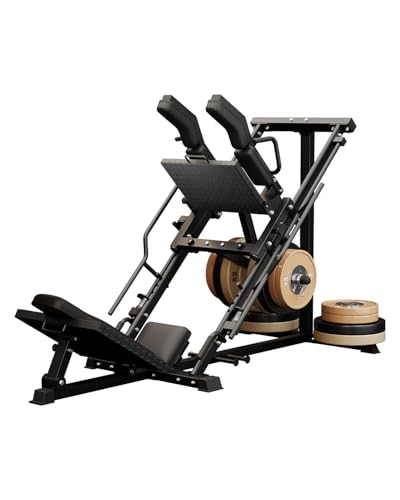
2-in-1 Leg Press & Hack Squat Machine for Home Gym, 1200LB Capacity with 4-Position Safety Stops & Quick-Change Footplate, Professional Strength Training Equipment(Weights Not Included
【Dual-Function Leg Training System】Switch between heavy leg presses and deep hack squats in just 10 seconds with our...
As an affiliate, we earn on qualifying purchases.
How Do Wall Materials Affect the Support of Wall-Mounted Racks?
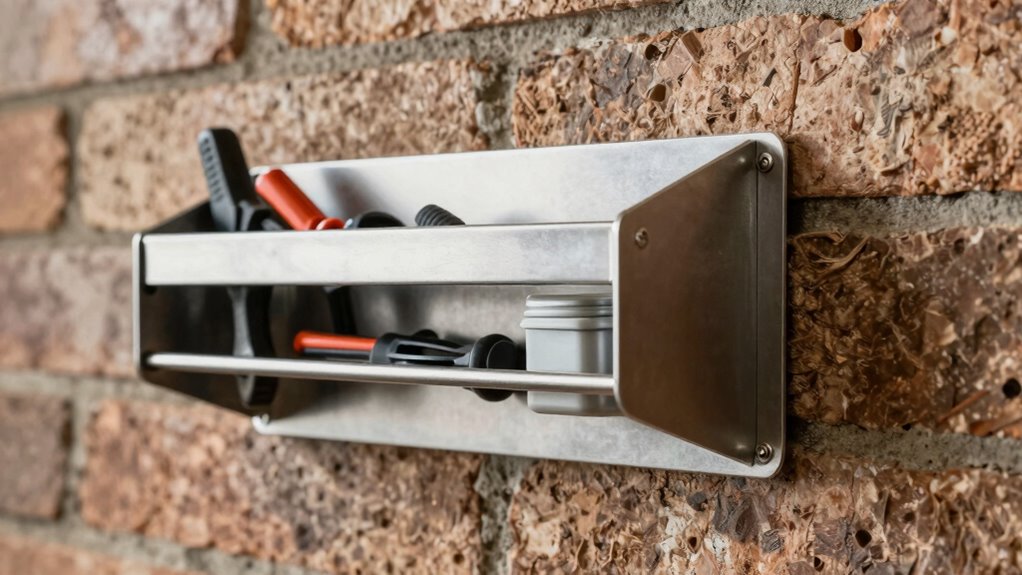
The type of wall material plays a crucial role in determining how well your wall-mounted rack will stay secure. Different wall materials offer varying support strength, which directly impacts the load your rack can safely hold. For example, drywall generally has lower support strength compared to concrete or brick, meaning you’ll need specialized anchors or additional reinforcement. Wooden walls can provide good support strength if properly secured, but they may require different mounting techniques. If your wall material isn’t sturdy enough, your rack could become unstable or even fall, risking damage or injury. Evaluating your wall material beforehand helps you choose the right mounting hardware and ensures your rack remains secure under everyday use. Proper understanding of wall support strength is essential for safety and durability, especially when considering support strength variations among different wall types. Additionally, consulting manufacturer guidelines can offer valuable insights on appropriate mounting methods for each wall type. Recognizing wall support factors can help prevent accidents and prolong the lifespan of your mounted rack. Being aware of load capacity for specific wall materials can further guide you in selecting suitable racks and hardware. Moreover, understanding installation techniques tailored to each material can optimize the safety and longevity of your mounted fixtures.

Mdeam Leg Press Hack Squat Machine,Leg Press Machine with Linear Bearing 45-Degree Hack Squat Machine for Gym Home Lower Body Strength Training for Quads, Hamstring, Glutes, Calves
2-In-1 LOWER BODY TRAINING MACHINE: 45-Degree Leg press hack squat combo provides an awesome lower body exercises by...
As an affiliate, we earn on qualifying purchases.
How Can You Tell If Your Wall Is Strong Enough?
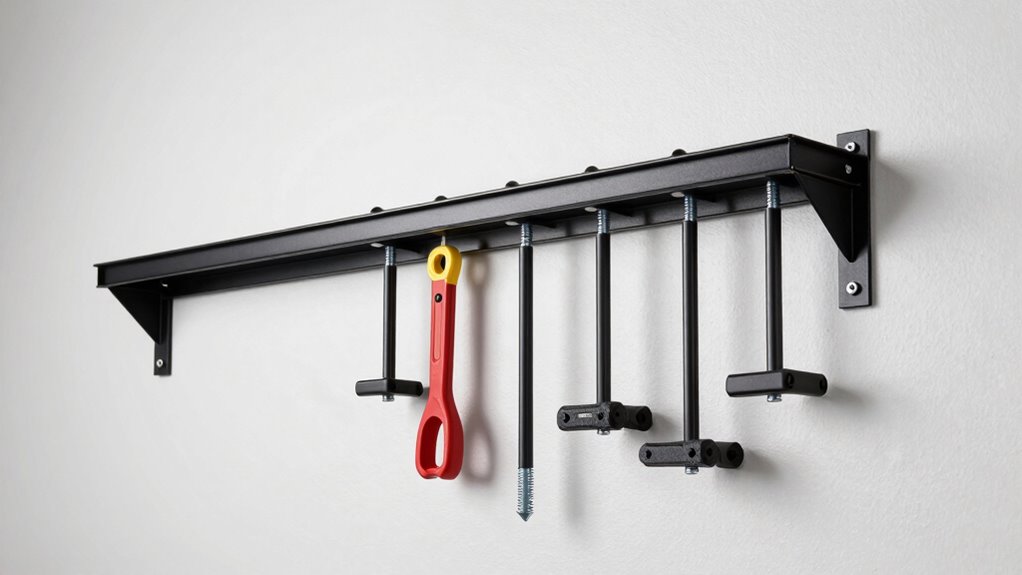
To determine if your wall can support a rack, start by checking the wall material and its strength. Make sure you’re using the right anchors and installing them properly for added stability. If you’re unsure, testing the wall’s firmness and anchor grip can help guarantee it’s ready for mounting. Additionally, understanding your wall’s water system load capacity can prevent overburdening the structure and ensure safety. Examining the wall’s load-bearing capacity can provide further assurance that it can handle the weight of your rack without risk of failure. Considering the wall’s structural integrity can also identify any hidden issues that might compromise stability over time. Conducting a proper assessment of your wall’s condition can help prevent future safety hazards. It’s also wise to review building codes and safety standards to ensure your installation complies with local regulations.
Wall Material Strength
Wondering if your wall can support a mounted rack? First, check your wall type. Plaster walls are usually sturdy but can be brittle, so verify they’re in good condition without cracks. Drywall strength varies; standard drywall may hold light loads, but thicker or reinforced drywall offers better support. Tap gently on the wall—solid sounds indicate strong material, while hollow sounds suggest less support. Look for existing anchors or screws; if they’re secure and not loose, your wall might handle additional weight. Avoid mounting heavy racks on damaged or weak plaster and drywall. If unsure, consult a professional or perform a simple weight test. Remember, knowing your wall material’s strength helps prevent accidents and ensures your mounted rack stays secure. Additionally, understanding your wall’s load-bearing capacity can guide you in choosing the right mounting hardware and weight limits to prevent structural failure. Evaluating the wall’s structural integrity is essential for safety and durability when mounting heavy or valuable items. Conducting a weight capacity assessment can give you extra confidence before installation. Checking the material composition of your wall can also provide insight into its support capabilities.
Proper Anchor Installation
How can you tell if your wall is strong enough to support proper anchor installation? First, determine if you have a stud wall, which provides solid support for heavy racks. Use a stud finder to locate studs behind the drywall; these are ideal for anchoring. If you find studs, you can secure brackets directly into them for maximum safety. If no studs are present, drywall anchors become essential. Choose high-quality drywall anchors rated for the weight you plan to hang. Always follow the manufacturer’s instructions for installation, guaranteeing the anchors are properly embedded into the drywall or into the stud. Proper anchor installation is vital to prevent your rack from falling and causing damage or injury. Additionally, understanding load-bearing capacity of your wall helps ensure safety and stability. When in doubt, consulting a professional guarantees secure, safe mounting. Ensuring your wall’s structural integrity is crucial before proceeding with any installation. Remember that wall strength can vary depending on the materials used and the age of the building, which could affect load capacity. Conducting a visual inspection can also help identify cracks or damage that might compromise the wall’s ability to support weight. Checking for hidden plumbing or wiring is also recommended to avoid accidental damage during installation.

RitFit Leg Press Hack Squat Machine, Professional Adjustable Leg Press Machine for Home Gym with Linear Bearing, Specialty Hack Squat Machine for Full Lower Body Workout with Weight Storage Posts
【Stability & Versatile Workout】This two-in-one leg press and hack squat machine, red model, adopts linear bearings rather than...
As an affiliate, we earn on qualifying purchases.
Signs That Your Wall Might Be Unsuitable for Racks
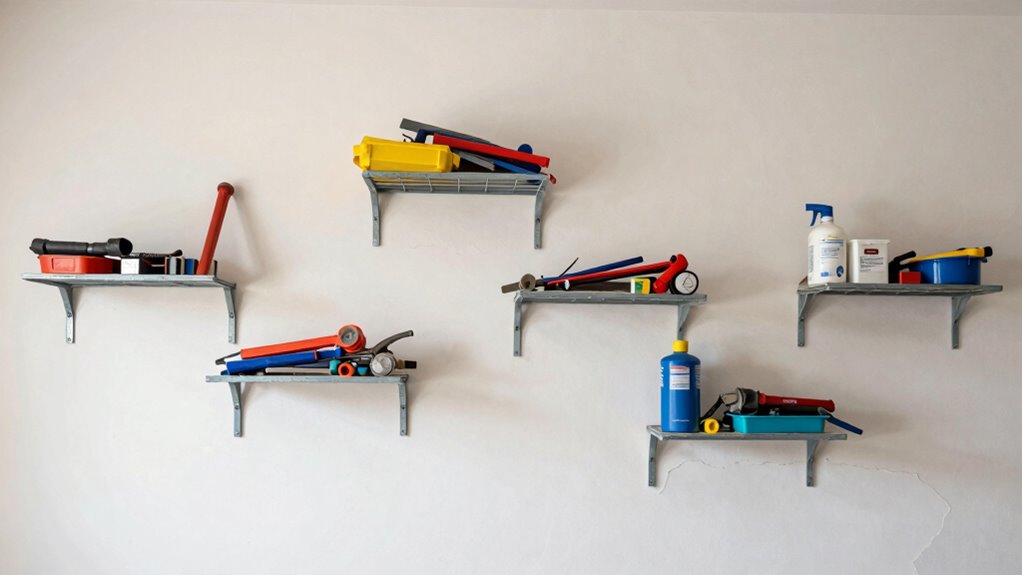
If your wall is made of materials like drywall or plaster, it might not support heavy racks without reinforcement. Look for signs of cracks, holes, or sagging, which can indicate structural issues. Ignoring these signs could lead to damage or safety hazards when mounting your rack. Additionally, evaluating whether the wall can withstand weight-bearing loads is essential to ensure safety and stability. Consulting a professional can help determine the wall’s structural integrity before installation. When considering natural or DIY solutions, assess the construction materials used in your wall to prevent potential failures. Understanding your wall’s load capacity and material strength can help prevent accidents and ensure your firewood rack stays secure.
Wall Material Limitations
Walls made of drywall or plaster often can’t support heavy racks without additional reinforcement. Material considerations play a vital role in determining whether your wall can handle the load. Drywall and plaster tend to have limited wall durability, making them unsuitable for mounting heavy or bulky racks. If your wall feels flimsy or shows signs of cracking, it’s a red flag that the material may not bear the weight safely. In such cases, you might need to reinforce the wall or choose alternative mounting solutions. Always assess the wall’s construction and material strength before installing racks. Ignoring these limitations can lead to safety hazards and potential damage. Proper evaluation ensures your racks are secure and your wall remains intact.
Structural Damage Risks
Visible cracks, sagging, or bulging are clear signs that your wall may not be suitable for mounting racks. These issues indicate compromised wall stability and uneven load distribution, increasing the risk of failure. To assess your wall’s integrity, consider these factors:
- Cracks or bulges suggest weakened structural support. Structural integrity is essential for safe rack installation.
- Sagging sections indicate uneven load distribution or material deterioration.
- Loose or crumbling drywall reduces stability under weight.
- Water damage or mold undermine wall strength and load-bearing capacity.
- Additionally, supportive wall materials such as drywall or plaster may not be designed to bear heavy loads, further emphasizing the importance of proper assessment.
- Regularly inspecting your walls for these warning signs can help prevent potential structural failure before mounting heavy racks.
If any of these signs are present, your wall cannot reliably support racks. Ignoring these risks could lead to damage, injury, or collapse. Always verify your wall’s structural integrity before mounting heavy or multiple racks.

RitFit Leg Press Hack Squat Machine, Professional Adjustable Leg Press Machine for Home Gym with Linear Bearing, Specialty Hack Squat Machine for Full Lower Body Workout with Weight Storage Posts
【Stability & Versatile Workout】This two-in-one leg press and hack squat machine is adapted linear bearings rather than rolling...
As an affiliate, we earn on qualifying purchases.
How to Find Out Your Wall’s Weight Capacity Safely

Determining your wall’s weight capacity is essential before mounting any racks or heavy objects. Start by identifying your wall type—drywall, concrete, or brick—as this affects the anchor types you’ll need. For drywall, check for studs using a stud finder; these provide better support for heavier loads. If your wall requires wall reinforcement, consider installing additional supports or installing behind the drywall to distribute weight evenly. Consult wall specifications or manufacturer guidelines to understand weight limits. When in doubt, opt for more robust anchor types designed for heavy loads, such as toggle bolts or sleeve anchors. Always verify your wall’s capacity before attaching anything heavy to prevent damage or failure. Proper assessment ensures safety and stability for your mounted racks.
Which Wall Anchors and Hardware Are Best for Racks?
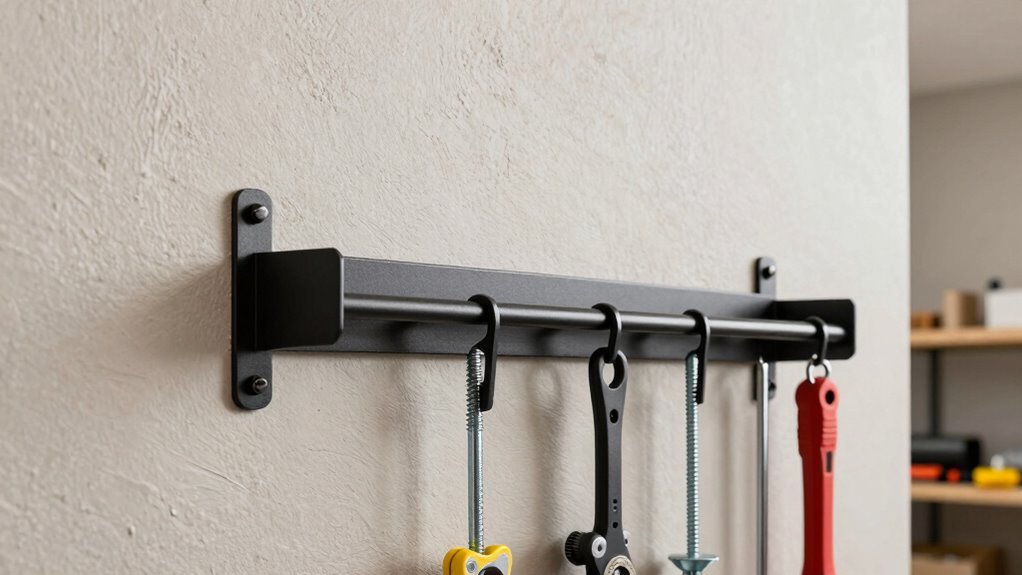
Choosing the right wall anchors and hardware is essential to guarantee your racks stay secure and safe. The best options depend on your wall type and rack weight. For bolt types, consider lag bolts or heavy-duty machine bolts for sturdy support. When it comes to anchor types, select from:
- Plastic anchors for light loads on drywall
- Expansion anchors for concrete or brick walls
- Toggle bolts for medium to heavy loads in drywall
- Sleeve anchors for secure attachment in masonry
Each combination offers specific benefits, so match the bolt and anchor types to your wall material and weight requirements. Proper hardware ensures your wall-mounted rack remains stable and safe over time.
How to Properly Distribute Weight for Heavy Racks
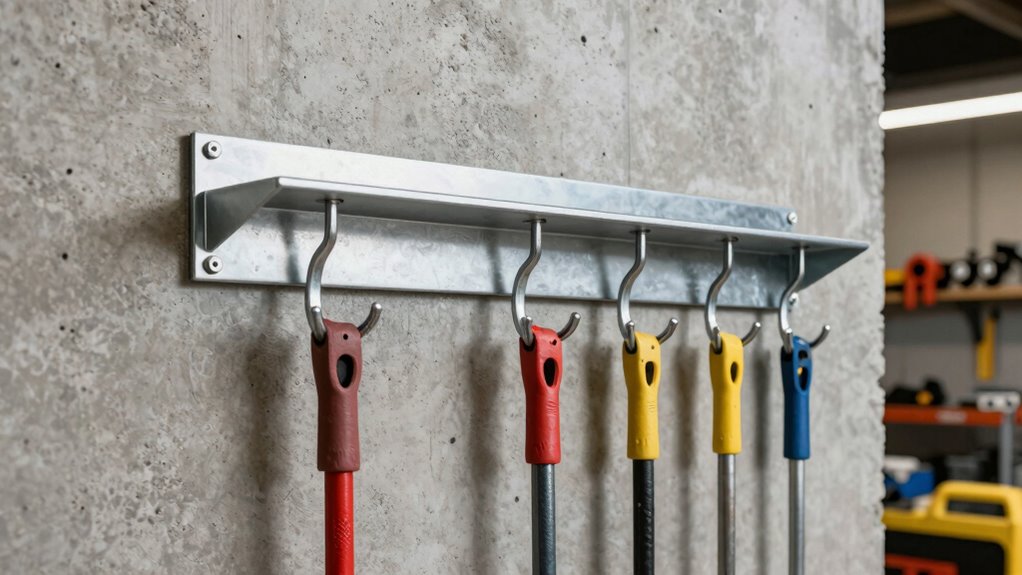
Proper weight distribution is essential to prevent stress on your wall anchors and guarantee your rack stays secure over time. To achieve load balancing, place heavier items toward the center or bottom of the rack, ensuring the weight is evenly spread across all mounting points. Avoid concentrating too much weight on one side, which can cause strain on anchors and compromise stability. Use multiple anchors if needed, matching the load to the wall’s capacity. Regularly check that items are evenly distributed and adjust if necessary. Proper load balancing minimizes the risk of wall damage or rack collapse. By paying attention to weight distribution, you enhance safety and prolong the life of your wall-mounted rack, ensuring it remains secure under heavy loads.
Step-by-Step: Installing Your Wall-Mounted Rack Safely
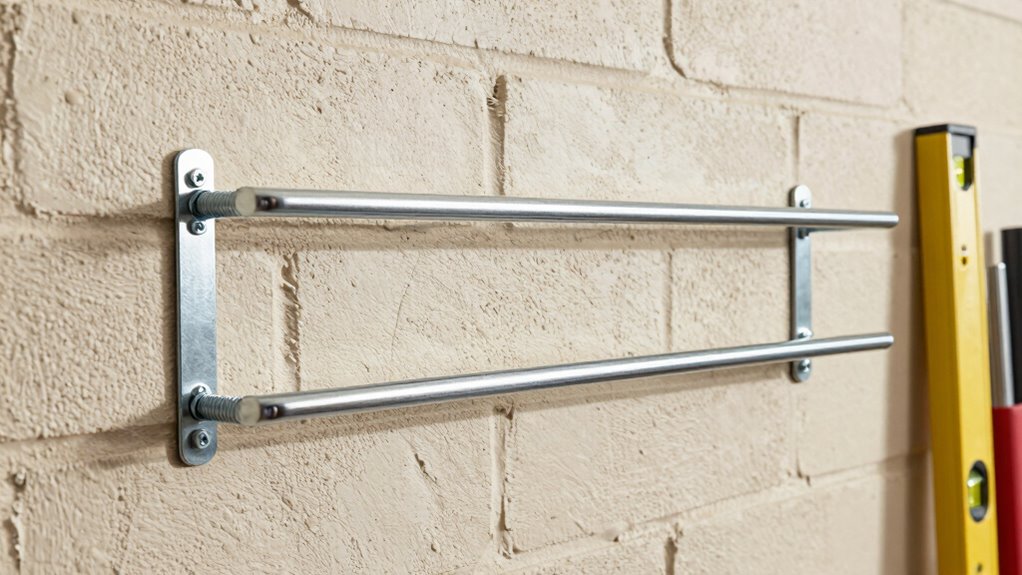
Installing your wall-mounted rack safely starts with gathering the right tools and materials. First, ensure you have a drill, level, stud finder, and appropriate anchors. Next, follow these steps:
Gather tools and find studs for safe, secure wall rack installation.
- Use the stud finder to locate wall studs for secure mounting.
- Mark the desired spot, considering your wall decor and aesthetic appeal.
- Drill pilot holes into the studs at the marked points.
- Attach the mounting brackets firmly, ensuring the rack is level and stable.
This careful process helps prevent damage and guarantees your rack supports weight safely. Proper installation not only maintains the integrity of your wall but also enhances your space’s aesthetic appeal. Take your time during each step; a secure mount ensures your wall decor remains safe and attractive.
Common Mistakes to Avoid When Mounting Wall Racks
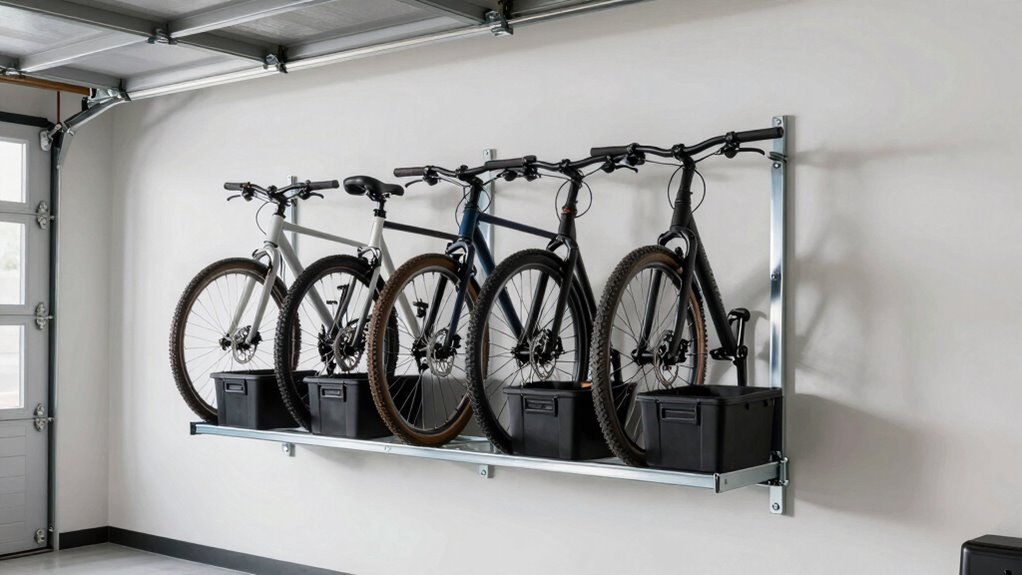
Even with careful steps, mounting a wall rack can go wrong if you overlook common mistakes. One mistake is neglecting proper drilling techniques, which can weaken the wall or damage pipes and wires behind it. Always verify you’re using the right drill bit and anchors for your wall type. Another mistake is ignoring aesthetic considerations; mounting the rack too high or off-center can disrupt the room’s balance. Take time to measure and mark your spots carefully, ensuring the rack aligns with other elements. Failing to double-check the weight capacity and wall strength can also lead to accidents. Avoid rushing through the process—precision and attention to detail in drilling techniques and aesthetic considerations ensure your rack is both safe and visually appealing.
Frequently Asked Questions
What Are the Best Tools Needed for Wall-Mounted Rack Installation?
To install a wall-mounted rack, you’ll need a drill with the right drill bits, wall anchors, and a stud finder to locate sturdy spots. A level tool guarantees your rack hangs straight, preventing wobbling. Use the stud finder to identify secure studs for heavier loads, and drill bits suited for your wall type. These tools make installation safer, easier, and more reliable.
How Do I Maintain the Stability of My Mounted Rack Over Time?
Maintaining your mounted rack’s stability is like tending a garden—regular care keeps it thriving. To do this, check the weight distribution regularly and avoid overloading. Guarantee your wall anchoring remains secure by tightening screws as needed and inspecting for any loosening or damage. If you notice instability, re-anchor or reinforce with additional supports. Consistent maintenance keeps your rack safe and stable over time.
Can I Install Racks on Textured or Uneven Walls?
Yes, you can install racks on textured or uneven walls, but proper surface preparation is crucial. First, identify your wall material to select the right anchors and screws. Then, smooth out the textured surface with a patch or filler if necessary. Use level tools to ensure your rack stays straight and secure. Taking these steps guarantees your rack remains stable, even on challenging surfaces.
What Is the Recommended Weight Limit for Different Rack Sizes?
The recommended weight capacity varies based on rack dimensions; smaller racks typically support up to 50 pounds, while larger ones can hold 200 pounds or more. Always check the manufacturer’s guidelines for your specific rack size, and verify your wall can handle the weight safely. Distribute the load evenly to prevent damage, and consider using appropriate anchors for added security. This approach keeps your setup safe and durable.
How Do Environmental Factors Affect Wall-Mounted Rack Safety?
Environmental factors like corrosion and temperature fluctuations impact your wall-mounted rack safety. Corrosion can weaken mounting hardware over time, making the rack less reliable, especially in humid or salty environments. Temperature changes cause materials to expand and contract, risking cracks or loosening. To guarantee safety, regularly inspect your rack, use corrosion-resistant materials, and install in a controlled environment where temperature and humidity are stable.
Conclusion
Did you know that improper wall mounting can lead to accidents and damage? By understanding your wall’s strength and using the right hardware, you guarantee safety and durability. Remember, over 60% of wall-mounted rack failures are due to incorrect installation. Take your time, follow the steps carefully, and always prioritize safety. With the right knowledge, you can confidently enjoy your new rack without worries—keeping your space both functional and secure.