
If you’re doing heavy lifting or strength training, wrist wraps can provide crucial support and stability, helping to reduce pain and prevent injuries. They’re especially helpful if you experience wrist discomfort or aim to improve your lifting performance. To get the right fit, wraps should be snug but not too tight—avoid cutting off circulation or causing numbness. Want to find out how to choose and use wrist wraps effectively? Keep exploring for essential tips.

Get workout gear delivered free with Prime
- Fast, free delivery on millions of items
- Prime Video, Amazon Music and more included
- Member-only deals all year
Key Takeaways
- Heavy lifters and strength trainers benefit from wrist wraps for added stability and injury prevention.
- Those with wrist discomfort or past injuries should use wraps to support joint stability during lifts.
- Wraps should be snug enough to stabilize the wrist without cutting off circulation or causing numbness.
- Too tight wraps can cause numbness, tingling, and swelling; too loose wraps fail to provide proper support.
- Selecting the right material, length, and tightness ensures effective support and comfort during workouts.
As an affiliate, we earn on qualifying purchases.
What Are Wrist Wraps and How Do They Support Your Wrists?

Wrist wraps are specially designed accessories that provide support and stability to your wrists during heavy lifting or intense workouts. They help reduce wrist pain by limiting unnecessary movement, which can strain your joints. By stabilizing your wrists, these wraps help prevent injuries like sprains or strains that often occur during heavy lifts. When wrapped tightly around your wrists, they create a firm barrier that keeps your wrists in proper alignment, especially during pressing exercises or heavy pulls. This added support allows you to focus more on your form and strength, rather than worrying about wrist instability. Proper use of wrist wraps also leverages injury prevention strategies by encouraging proactive injury prevention and ensuring safer training sessions. Additionally, choosing the right level of tightness is crucial, as too tight can restrict circulation and cause discomfort, while too loose may not provide adequate support. Understanding appropriate tightness levels can help you avoid compromising circulation while still gaining the benefits of support. It’s also important to note that selecting the right wrist wrap material can impact comfort and durability during training. Ultimately, wrist wraps serve as a proactive tool for injury prevention, helping you train harder and longer without risking wrist discomfort or damage.
As an affiliate, we earn on qualifying purchases.
Who Should Use Wrist Wraps During Their Workouts?

Anyone engaging in heavy lifting or intense strength training can benefit from using wrist wraps, especially if you experience wrist discomfort or instability during workouts. If you’ve had a wrist injury or want to prevent one, wrist wraps provide extra support to reduce strain. They’re particularly useful if you train frequently or lift heavy weights, as repeated stress increases injury risk. Athletes involved in powerlifting, Olympic lifting, or heavy bench presses often rely on wrist wraps to maintain proper form and avoid overstressing the joints. Proper support and technique are also essential in preventing injuries and ensuring safe lifting practices. Using wrist wraps correctly can also help maintain joint stability during heavy lifts, reducing the likelihood of injury. Incorporating proper technique along with wrist support can further enhance safety and performance. Additionally, choosing the correct tightness level ensures optimal support without compromising circulation or mobility. Selecting the right level of tension can also help prevent cutting off circulation, which could lead to numbness or discomfort.
As an affiliate, we earn on qualifying purchases.
How Tight Should Wrist Wraps Be for Maximum Support?

To get the most benefit from wrist wraps, you need to find the right level of tightness that provides support without restricting movement. The key is achieving wrist wrap compression that stabilizes your wrist without cutting off circulation or causing discomfort. The ideal tightness offers enough support to prevent wrist strain during heavy lifts but still allows natural movement and flexibility. If your wraps are too loose, they won’t provide adequate support, risking injury. On the other hand, if they’re too tight, you might experience numbness or tingling. Adjust the wraps so they feel snug but not constrictive. Remember, the goal is to enhance stability and protect your wrist while maintaining comfort and mobility. Fine-tune the tightness based on your activity and personal preference. Ensuring proper wrist support can help prevent injuries and improve lifting performance. Additionally, understanding the appropriate tightness can make a significant difference in your overall safety during workouts. Proper tension levels are essential for maximizing the benefits of wrist wraps and avoiding potential drawbacks. Achieving the right tension also involves considering individual comfort to prevent discomfort during extended use. Incorporating sound science into your approach can further optimize your results and safety.
As an affiliate, we earn on qualifying purchases.
How to Tell if Your Wrist Wraps Are Too Tight or Too Loose?

Knowing how to tell if your wrist wraps are too tight or too loose is essential for effective support and safety. Poorly fitted wraps can hinder wrist compression or restrict blood flow. To check, consider these signs:
Properly fitted wrist wraps provide support without restricting circulation or causing discomfort.
- You feel numbness or tingling—that’s a sign they’re too tight, cutting off circulation.
- The wrap material feels excessively tight or causes pain during movement.
- Your wrist looks swollen or discolored after wrapping.
- The wraps slip or feel loose during lifts, indicating they aren’t providing enough support.
- The tension of the wrap affects the overall compression and image quality, so proper adjustment is key for optimal performance.
- Monitoring how your wrist responds during activity can help you determine if the fit is appropriate.
- Ensuring the wraps are properly fitted can prevent injury and improve your workout efficiency.
- Proper fitting also considers the material elasticity, which influences both comfort and support level.
Adjust the tension accordingly. Proper wrist compression ensures stability without obstructing blood flow. Remember, the right fit feels snug but comfortable, and the wrap material should conform to your wrist without creating pressure points.
Tips for Picking the Right Wrist Wraps and Achieving the Perfect Fit
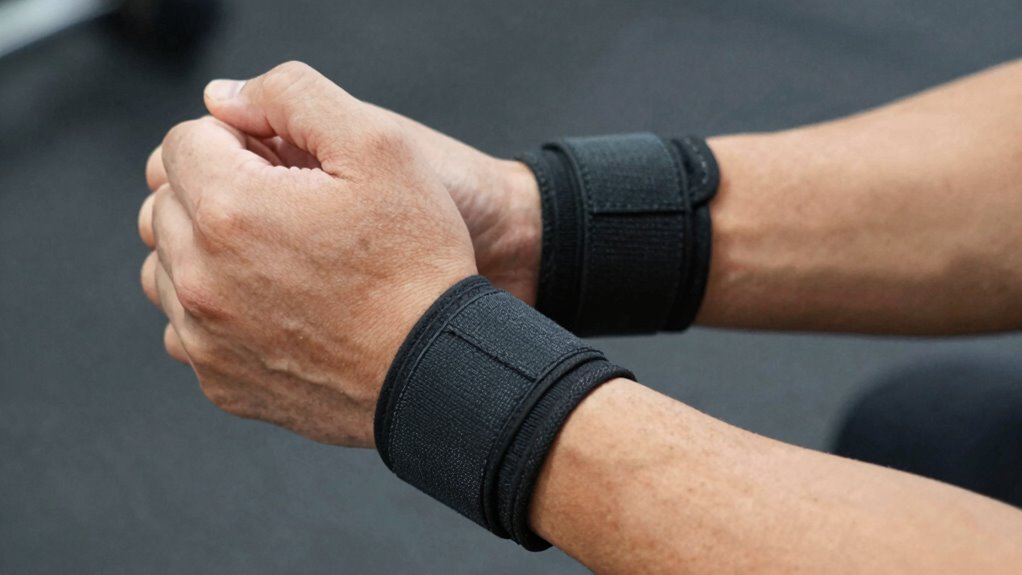
Choosing the right wrist wraps starts with understanding your specific needs and activity level. Consider wrist wrap materials—neoprene offers support and compression, while fabric styles provide flexibility and breathability. Think about wrist wrap styles, such as traditional wraps, figure-eight designs, or Velcro closures, to find the best fit for your workout routine. Confirm the wraps are long enough to secure snugly without restricting circulation. When trying them on, look for a balance: tight enough to support your wrists but not so tight that they cut off circulation or cause discomfort. Remember, the perfect fit enhances stability without sacrificing comfort. Additionally, paying attention to material selection can help you choose more effective and adaptable support options. By matching the materials and styles to your activity and personal preference, you’ll maximize support and minimize injury risk.
Frequently Asked Questions
Can Wrist Wraps Cause Long-Term Wrist Injuries?
Wrist wraps won’t cause long-term injuries if you use them correctly, but improper use can lead to wrist strain and joint instability. If you wrap them too tightly, you risk restricting blood flow and weakening your wrist muscles over time. Always make sure your wraps support your wrist without cutting off circulation, and loosen them during rest. Proper application protects your joints and maintains long-term wrist health.
Are Wrist Wraps Suitable for Beginners or Only Advanced Lifters?
Wrist wraps are suitable for beginners, especially when you’re seeking support and lifting confidence. You might worry they’re only for advanced lifters, but they help stabilize your wrists during heavy lifts and prevent injury. Using wrist wraps doesn’t mean you lack strength; it’s about building proper technique and confidence. Start with light wraps, focus on form, and gradually increase support as you progress. They’re a helpful tool for all experience levels.
How Often Should I Replace My Wrist Wraps?
You should replace your wrist wraps when they show signs of wear, like fraying, loss of elasticity, or reduced support. Regular wrist wrap maintenance is key to ensuring peak performance and safety. Wrap replacement frequency varies, but generally, every 6 to 12 months depending on usage intensity and condition. If you notice decreased support or discomfort during lifts, it’s time to get new wraps. Keep an eye on their condition for the best results.
Are There Specific Wrist Wraps for Different Sports?
You’ll find that specific wrist wraps for different sports provide targeted wrist support, enhancing safety and performance. For example, weightlifting wraps are thicker and more rigid, while tennis or basketball wraps offer flexibility for quick movements. Coincidentally, choosing sport-specific gear guarantees your wrists stay protected during intense activities. Always pick the right fit and support level to prevent injury and maximize your performance, no matter what sport you play.
Can Wrist Wraps Improve Lifting Performance or Just Prevent Injury?
Wrist wraps can definitely improve lifting performance by providing extra stability and support, especially during heavy lifts. They help you maintain proper wrist alignment, reducing strain and fatigue. While their primary purpose is injury prevention, using wrist wraps wisely can enhance your performance by allowing you to lift more comfortably and confidently. Just be careful not to rely on them too much, and make sure they’re snug but not painfully tight.
Conclusion
Choosing the right wrist wraps is like finding the perfect key to your training lock—too tight and you risk injury, too loose and you lose support. Trust your instincts and pay attention to how they feel during lifts. Remember, a well-fitted wrap isn’t just about comfort; it’s about empowering your performance without sacrificing safety. When you strike that balance, you’ll release your true strength—because the right fit isn’t just a detail, it’s the foundation of progress.
Halloween Picks
halloween
As an affiliate, we earn on qualifying purchases.