TL;DR

Get workout gear delivered free with Prime
- Fast, free delivery on millions of items
- Prime Video, Amazon Music and more included
- Member-only deals all year
Fit&Well published a 10-minute resistance-band routine from personal trainer Anneli Marinovich, featuring pull-aparts, glute bridges and bird dogs. The routine is presented as a way to support strength and movement, not as a proven treatment or guarantee against lower-back pain; people with back pain should consult a health professional before starting.
Fit&Well has published a 10-minute resistance-band workout from personal trainer and menopause coach Anneli Marinovich, featuring pull-aparts, banded glute bridges and bird dogs. Marinovich says the routine is intended to strengthen the muscles supporting the trunk and help people move with less stiffness, but it is not presented as a guaranteed way to prevent or treat back pain; the report advises consulting a health professional before trying new exercises if back pain is present.
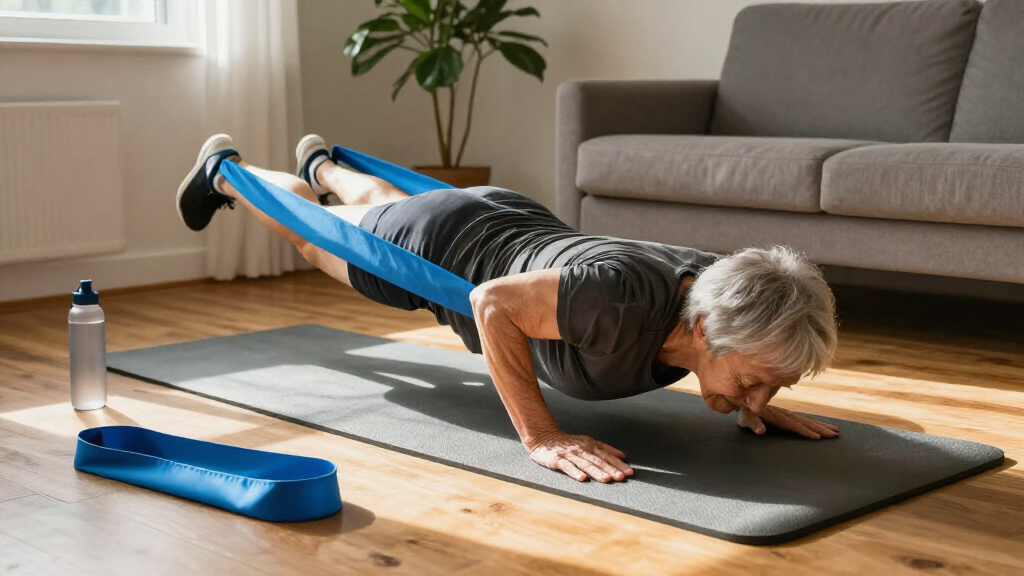
The routine calls for a long loop resistance band and, ideally, a short loop band. A long band can be doubled if a short one is unavailable, according to the report. Marinovich recommends completing three rounds, with 45 seconds of rest between rounds. The source describes it as a 10-minute workout.
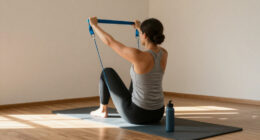
For the pull-apart, stand holding the long band at chest height with arms relatively straight. Pull the hands apart by drawing the shoulder blades together, pause, then return slowly; the prescribed amount is 10 repetitions. Marinovich says the movement counters a forward-slouched posture, though the report does not provide research establishing that it prevents pain.
For the glute bridge, lie on your back with knees bent and a short band above the knees. Engage the core, press through the heels to lift the hips until the body forms a line from shoulders to knees, gently push the knees outward, hold for two seconds and lower with control. Do 10 repetitions. The bird dog starts on hands and knees: extend one arm forward and the opposite leg back while keeping the spine level, pause for two seconds and return. Alternate sides for five repetitions per side.
A Short Routine for Everyday Strength
The exercises focus on the back, glutes and trunk stabilisers, rather than abdominal appearance. That emphasis may make the routine relevant to readers seeking practical strength work that can be done with relatively simple equipment. Marinovich frames the movements around mobility and maintaining independence, including tasks such as standing up from a chair.
But the report offers an individual trainer’s routine, not evidence that these specific exercises prevent age-related back pain. Lower-back discomfort has different causes, and a movement that suits one person may not suit another. The useful takeaway is narrower: strength exercise may be an option when recommended by a clinician, with professional advice particularly relevant for people already experiencing pain.
Products Worth Considering

Withings BPM Connect Wi-Fi and Bluetooth Blood Pressure Monitor

Garmin Forerunner 165 GPS Running Smartwatch, 43 mm, Whitestone

Withings Sleep Under-Mattress Sleep Tracking Pad
As an affiliate, we earn on qualifying purchases.
The Trainer’s Posterior-Focused Approach
Fit&Well introduces the workout against the backdrop of lower-back pain becoming more common with age and potentially affecting quality of life. It identifies Marinovich as a personal trainer, menopause coach and host of “Mind and Muscle Beyond 40”. Her approach, described in the report as “posterior armour,” prioritises the back, glutes and deep stabilisers that support posture and movement.
The source includes setup and repetition instructions for each exercise, but it does not cite a clinical trial, medical guideline or independent evaluation of the complete routine. Marinovich’s explanations about posture, spinal support and balance are attributed trainer statements, rather than findings independently verified in the article.
“It moves away from aesthetic-driven abdominal work and focuses on the ‘posterior armour’— the back, glutes and deep stabilisers that keep you standing tall and moving safely.”
— Anneli Marinovich
Evidence and Individual Suitability
The source does not identify clinical evidence testing this exact workout, quantify any change in pain, or report outcomes for people who followed it. It also does not state when the report was published. Marinovich’s descriptions of pain relief, posture and fall prevention should be read as her explanations of the exercises, not as confirmed results for all readers.
People’s symptoms and ability to exercise vary. The report does not give modifications for injuries or other health conditions, nor does it define when a particular movement should be stopped. Anyone with back pain should seek advice from a doctor or physical therapist before beginning, as the source recommends; new or worsening symptoms warrant professional attention.
Check With a Clinician First
Fit&Well presents the routine as a set of exercises readers can try when a doctor or physical therapist recommends strength training. The next step for someone considering it is to ask a qualified health professional whether these movements and the proposed volume are appropriate for their situation. The report gives no scheduled follow-up study or further milestone, so whether the routine reduces discomfort for any individual remains something to assess with professional guidance.
Key Questions
What are the three resistance-band exercises?
The routine includes band pull-aparts, banded glute bridges and bird dogs. The bird dog uses body weight rather than a band in the instructions provided.
How many rounds does the workout recommend?
Marinovich’s routine calls for three rounds, with 45 seconds of rest between rounds. It specifies 10 pull-aparts, 10 glute bridges and five bird dogs per side in each round.
Does this routine prevent or treat lower-back pain?
The report does not establish that it prevents or treats pain. It presents the workout as an approach to supporting strength and movement, and attributes claims about its benefits to Marinovich.
Should I exercise if I already have back pain?
The Fit&Well report advises consulting a health professional before trying new exercises if you have back pain. A clinician can advise whether these movements are suitable for you.
Source: fitandwell.com