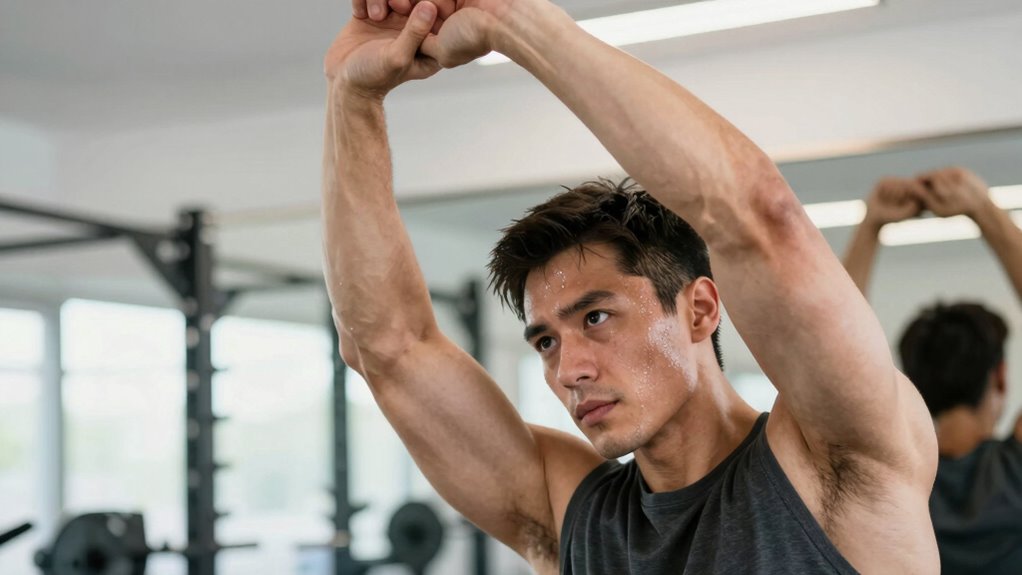

Stretching after lifting can boost recovery and improve flexibility, but it’s most beneficial when your muscles are warm and relaxed. Focus on static stretches post-workout to help ease muscle tightness and reduce soreness. Avoid stretching cold muscles or overstretching before your session, as it may cause injury or weaken your muscles temporarily. If you want to know the best timing and types of stretches to prevent injuries while maximizing benefits, there’s more to discover.

Get workout gear delivered free with Prime
- Fast, free delivery on millions of items
- Prime Video, Amazon Music and more included
- Member-only deals all year
Key Takeaways
- Stretching after lifting promotes muscle relaxation, flexibility, and recovery, reducing soreness and stiffness.
- Static stretching post-workout is most effective when muscles are warm, typically after a proper cool-down.
- Avoid static stretching immediately after lifting if muscles are cold or fatigued to prevent injury or microtears.
- Dynamic stretching before lifting prepares muscles, but static stretches are generally unnecessary beforehand and may weaken muscles temporarily.
- Stretching during injury or pain without guidance can worsen conditions; focus on gentle movements or rest instead.
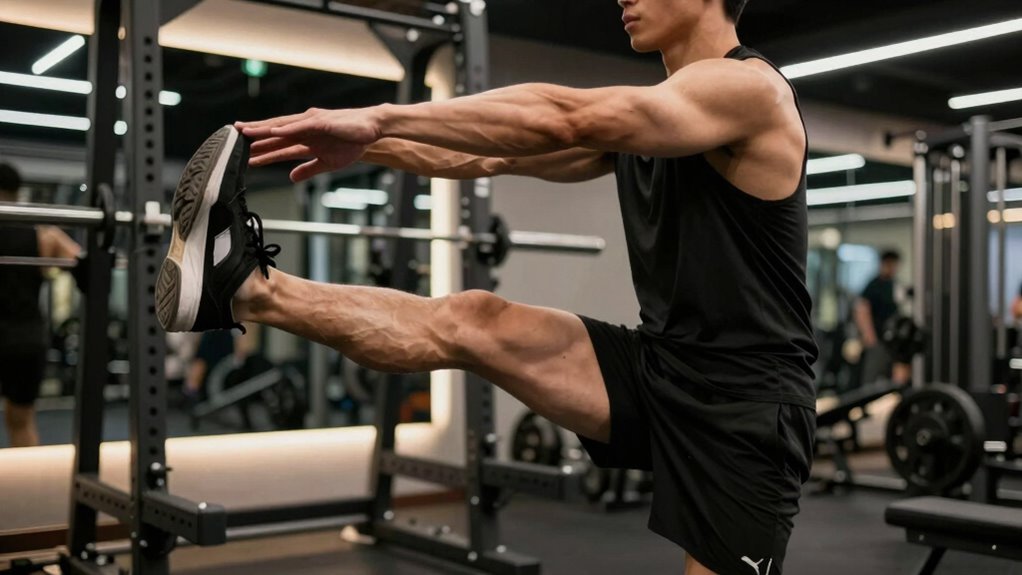
After lifting weights, stretching is a critical step that helps your muscles recover and reduces soreness. Many people overlook this part of their workout, but it plays an essential role in preventing injuries and improving flexibility. Before diving into static stretches, it’s important to consider your warm-up routines. A proper warm-up increases blood flow, raises your muscle temperature, and prepares your body for the demands of lifting. Incorporate light cardio like brisk walking, cycling, or jumping jacks for about 5-10 minutes. Using stretching equipment such as resistance bands or foam rollers during your warm-up can enhance your flexibility and loosen tight muscles, making subsequent stretching more effective.
Once your muscles are warm, you can start targeting specific muscle groups with dynamic stretches. These active movements, like leg swings or arm circles, mimic the motions you’ll perform during your workout. They help improve range of motion and activate the muscles, reducing the likelihood of strains. Dynamic stretching is especially beneficial before lifting because it primes your muscles without overstretching them, which static stretching can sometimes cause if done prematurely.
Dynamic stretches like leg swings and arm circles activate muscles and improve range of motion before lifting.
After your workout, however, the role of stretching shifts. This is when static stretching—holding a stretch for 20-30 seconds—can be most beneficial. It helps relax muscles, improve flexibility, and promote recovery. Stretching at this stage can also reduce muscle tightness and soreness, making it easier to move comfortably the next day. While some experts argue static stretching might temporarily weaken muscles if done excessively before lifting, post-exercise stretching is generally safe and effective.
However, it’s important to know when stretching might be pointless. If you’re feeling extremely fatigued, stretching may not yield significant benefits and could lead to overstretching or injury. Similarly, stretching cold muscles without proper warm-up can cause microtears or strains. In those cases, focusing on gentle movements or waiting until your muscles are warm is smarter. Also, if you’re dealing with an injury or specific muscle pain, stretching might worsen the problem unless guided by a healthcare professional.
As an affiliate, we earn on qualifying purchases.
Frequently Asked Questions
Is Static Stretching Better Than Dynamic Stretching Post-Lift?
Static stretching is generally better after lifting because it promotes flexibility benefits and helps relax muscles, reducing injury risk. Dynamic stretching, better suited before lifts, warms up muscles and prepares your body for activity. Post-lift, static stretches improve flexibility and prevent injuries by elongating muscles. Incorporate static stretching into your cool-down routine to maximize injury prevention and flexibility benefits, making your recovery more effective and safer.
How Long Should I Hold Stretches After Lifting?
You should hold stretches for about 15 to 30 seconds after lifting to optimize benefits without risking overstretching. Focus on stretching 2 to 3 times per muscle group, maintaining proper stretch duration for each. Consistent stretching frequency helps improve flexibility over time, but avoid excessive duration or frequency, which can cause injury or decrease muscle performance. Keep your stretches gentle and steady for best results.
Can Stretching Prevent Muscle Soreness?
Stretching alone won’t turn you into a soreness-proof superhero, but it can seriously boost your muscle recovery and injury prevention. When you stretch properly after lifting, you help your muscles relax and bounce back faster, reducing soreness that feels like a monster truck ran over your legs. While it’s not a magic fix, incorporating stretching into your routine can dramatically lessen muscle pain and keep injuries at bay.
Should Beginners Focus on Stretching After Lifting?
As a beginner, you should definitely focus on stretching after lifting, especially as part of your warm-up routines. Stretching helps prevent injuries by improving flexibility and reducing muscle tightness. It’s important to listen to your body and avoid overstretching. Incorporate gentle stretches post-workout to enhance recovery, but don’t rely solely on stretching—combine it with proper warm-up routines and good technique for the best injury prevention results.
Are There Specific Stretches for Different Muscle Groups?
Yes, there are specific stretches for different muscle groups, because each calls for its own muscle activation and flexibility routines. Don’t just do generic stretches and hope for the best—target your quads with lunges, hamstrings with toe touches, and shoulders with arm circles. Ironically, neglecting tailored stretches might limit your gains more than skipping them altogether. So, treat each muscle group to the right stretch and watch your progress improve.
As an affiliate, we earn on qualifying purchases.
Conclusion
So, next time you finish lifting, ask yourself: are you stretching to truly benefit your recovery or just going through the motions? While gentle stretching can help some people feel looser and more relaxed, it’s not a magic fix for everyone. Listen to your body—if it feels tight and needs relief, stretch thoughtfully. Otherwise, maybe save your energy for other recovery methods. After all, isn’t your time and effort better spent on what truly helps your progress?
As an affiliate, we earn on qualifying purchases.
As an affiliate, we earn on qualifying purchases.
Halloween Picks
halloween
As an affiliate, we earn on qualifying purchases.