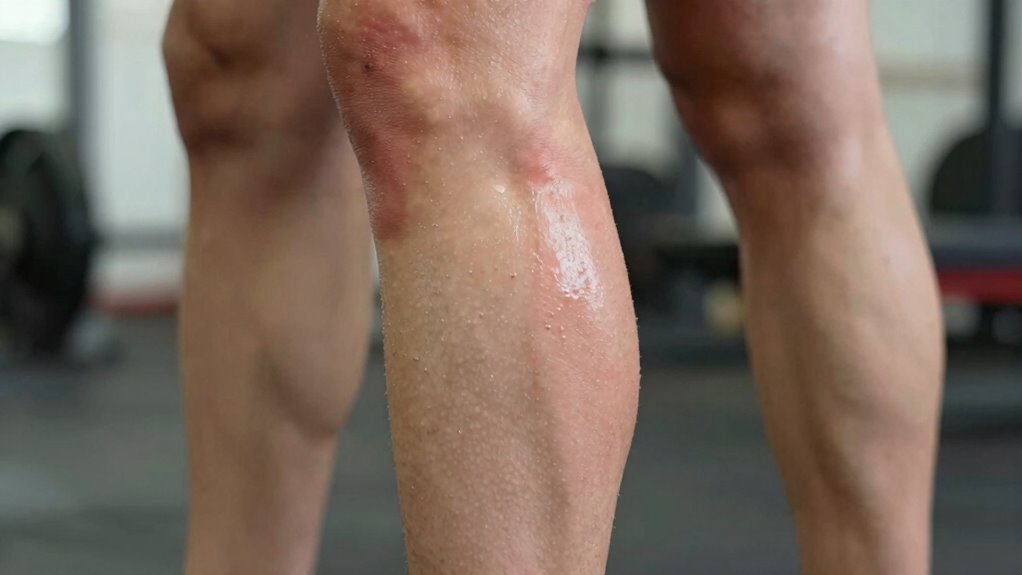

Normal training soreness usually starts 12-24 hours after exercise and peaks between 24-72 hours. You’ll feel a dull, achy sensation deep within your muscles, often tender and stiff during movement or stretching. This soreness tends to be symmetrical and improves with gentle activity, hydration, and stretching. As your muscles adapt, the soreness will decrease or change in feel. Keep exploring to learn how to tell normal soreness apart from signs of injury.

Get workout gear delivered free with Prime
- Fast, free delivery on millions of items
- Prime Video, Amazon Music and more included
- Member-only deals all year
Key Takeaways
- Normal soreness begins 12-24 hours after exercise, peaks around 24-72 hours, and feels like a dull, deep ache.
- It is usually symmetrical, affecting both sides, and improves with gentle movement, stretching, and hydration.
- Causes include muscle fatigue, microscopic tears, and metabolic waste buildup from pushing beyond usual limits.
- Typical soreness feels tender and stiff but does not involve sharp or localized pain.
- As muscles adapt, soreness tends to lessen or change in character, signaling proper recovery and progress.

Understanding training soreness patterns can help you optimize your workout routine and prevent injury. When you push your body through new or intense exercises, you might notice soreness that lingers for a day or two afterward. This delayed onset soreness is normal and usually signals your muscles are adapting to new stress. It’s important to recognize what “normal” soreness feels like so you don’t mistake it for injury or overtraining. Typically, delayed onset muscle soreness begins around 12 to 24 hours after exercise and peaks between 24 to 72 hours. You might feel a dull, achy sensation deep within the muscle, rather than sharp pain. This type of soreness is often associated with muscle fatigue, which occurs when your muscles are temporarily exhausted from sustained activity. As you continue training, your muscles become more resilient, and the soreness tends to lessen or change in character. Recognizing **training soreness patterns** can also inform your recovery strategies and workout adjustments. Muscle fatigue plays a significant role in how soreness develops. When you push your muscles beyond their usual limits, the accumulation of metabolic waste products, microscopic muscle tears, and inflammation contribute to that familiar soreness. You’ll notice that the sore muscles feel stiff and tender, especially when you try to move or stretch them. This stiffness is a sign that your muscles are recovering and adapting, not necessarily a warning sign to stop training altogether. However, if soreness persists beyond a few days or worsens, it could indicate excessive strain or injury, and you should rest or seek medical advice. Understanding the difference between normal training soreness and injury-related pain is essential. Normal soreness tends to improve with gentle movement, stretching, and proper hydration. It’s also usually symmetrical, affecting both sides of your body in a similar way, especially if you performed bilateral exercises. Remember, some muscle fatigue is inevitable, but it’s a sign that your muscles are working hard and getting stronger. To manage soreness effectively, incorporate rest days, vary your workouts, and gradually increase intensity. Active recovery, like light walking or swimming, can promote blood flow and speed up recovery.
As an affiliate, we earn on qualifying purchases.
Frequently Asked Questions
How Long Should Training Soreness Last?
Training soreness from delayed onset muscle fatigue usually lasts 24 to 72 hours. You might feel tightness, tenderness, or aching as your muscles recover. If soreness persists beyond this, it could indicate overtraining or injury. To manage it, rest, hydrate, and gently stretch. Remember, muscle fatigue is normal after intense workouts, but listening to your body helps prevent setbacks and promotes healthy recovery.
Can Soreness Indicate a Workout Was Too Intense?
Yes, soreness can indicate your workout was too intense. Muscle fatigue from delayed onset muscle soreness (DOMS) often signals you’re pushing too hard, especially if the pain is sharp or lasts several days. While some soreness is normal, excessive or prolonged pain may mean you’re overtraining or risking injury. Listen to your body, and if soreness feels extreme, consider easing up to allow proper recovery.
What Are Signs of Abnormal or Injury-Related Soreness?
If you experience abnormal soreness, watch for signs like intense muscle tears or nerve pain that persist beyond usual recovery times. Sharp, stabbing pains or weakness could indicate injury rather than normal muscle fatigue. If soreness worsens or doesn’t improve with rest, it might mean you’ve hurt yourself. Stop training and consult a healthcare professional to prevent further damage and ensure proper recovery.
Does Soreness Differ Between Beginners and Advanced Athletes?
Soreness hits differently depending on your experience level; beginners often feel it intensely, while advanced athletes experience it more subtly. You can manage this through progression strategies, gradually increasing intensity to avoid injury. Nutrition also impacts soreness, helping your muscles recover faster. Remember, your body’s response evolves with training, so listen closely and adjust accordingly—what’s normal for you now might change as you improve.
How Can I Reduce Post-Workout Soreness Effectively?
To reduce post-workout soreness effectively, focus on nutritional strategies like consuming protein and anti-inflammatory foods to support recovery. Incorporate stretching routines after your workout to improve flexibility and relieve muscle tension. Stay hydrated, get enough sleep, and consider active recovery like light walking or swimming. These steps work together to minimize soreness, speed up healing, and help you bounce back faster for your next session.
post workout muscle soreness relief
As an affiliate, we earn on qualifying purchases.
As an affiliate, we earn on qualifying purchases.
Conclusion
Understanding your soreness patterns helps you distinguish between normal recovery and potential overtraining. Remember, about 70% of beginners experience soreness lasting up to 72 hours, which is typical. If you notice soreness lingering beyond that or worsening, it might be a sign to modify your intensity or rest more. Paying attention to these patterns ensures you stay safe and motivated, making your fitness journey sustainable and effective. Embrace the process, and soreness will become a helpful guide rather than a setback.
stretching bands for muscle flexibility
As an affiliate, we earn on qualifying purchases.
As an affiliate, we earn on qualifying purchases.
As an affiliate, we earn on qualifying purchases.
Halloween Picks
halloween
As an affiliate, we earn on qualifying purchases.