
TL;DR

Get workout gear delivered free with Prime
- Fast, free delivery on millions of items
- Prime Video, Amazon Music and more included
- Member-only deals all year
A personal trainer featured by Fit&Well recommends three simple exercises for older adults who want to work on balance and stability while walking: march and hold, tandem stance, and heel-toe taps. The report suggests practicing two or three times a week and using a sturdy chair or surface for support.
A personal trainer featured in a Fit&Well report recommends three no-equipment exercises for older adults seeking to work on the balance and stability used in walking. The routine—march and hold, tandem stance, and heel-toe taps—can be done beside a sturdy chair or other solid support, according to the report.
The trainer says walking is an exercise they recommend to personal-training clients of all ages, while older adults may benefit from adding drills that challenge balance and stability. The report presents the exercises as ways to practice movements involved in everyday walking, such as stepping and adjusting to uneven surfaces. It does not provide research findings or measured outcomes for the routine.
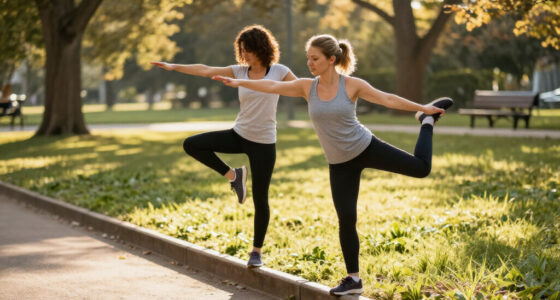
For the march and hold, stand with feet hip-width apart and support nearby. Shift weight onto one foot, raise the other knee toward hip height, pause, then lower it and switch sides. For the tandem stance, place one foot directly in front of the other, with the front heel touching the back toes, and hold while keeping the torso upright. The report suggests adding a gentle arm swing to make the stance more challenging, or widening the feet to make it easier.
For heel-toe taps, stand on one leg with the knee slightly bent while tapping the other heel in front and toes behind. The report gives a target of 30 to 60 seconds on each side for the drills. It advises starting with two or three sessions a week and building toward practice every other day. A chair or solid surface can provide support during the movements.
Practicing Balance During Walking
The recommendations focus on control and balance, rather than walking distance or speed. Those skills are relevant to ordinary tasks such as using stairs, stepping off a curb, or moving through crowded spaces. The exercises offer a short routine that requires no dedicated equipment, which may make it easier for readers to try them at home.
The report’s practical value is its description of how to perform and adjust each movement. It frames them as exercises that may support walking-related skills; it does not establish that they prevent falls, improve mobility for every person, or replace individualized advice. Readers who have health concerns or difficulty balancing may need guidance suited to their circumstances.
Why the Routine Targets Stability
The trainer’s explanation, as reported by Fit&Well, is that walking ability can be affected by balance and stability as well as stamina, particularly with age. The three drills address different parts of that challenge: raising a knee while standing, holding a narrow stance, and moving one foot while the other supports the body.
The report recommends keeping a sturdy support within reach and adjusting the difficulty to match comfort. It offers no equipment list beyond a chair or solid surface and does not set out a formal progression plan beyond practicing more often over time. No publication date or additional reporting on the trainer’s credentials is included in the supplied source material.
“Start by repeating them two or three times a week and build up to practicing every other day.”
— Fit&Well, on the suggested schedule
Evidence and Individual Suitability
The supplied report does not cite studies, quantify changes in balance or walking ability, or say how long someone should follow the routine before evaluating progress. It is also unclear whether the exercises were tested as a program or whether the suggested schedule applies to people with particular health conditions or mobility limitations.
The advice is attributed to a personal trainer, but the supplied material does not identify the trainer or provide further details about their qualifications. The report also does not establish that the routine is appropriate for everyone. Readers who feel unsteady or have concerns about exercising may wish to seek individualized guidance before attempting balance drills.
How Readers Can Apply the Advice
The next step described in the report is to begin with two or three practice sessions per week, using a stable chair or surface for support, and increase frequency gradually if the movements feel manageable. Readers can make tandem stance easier by widening their feet and can make the march more challenging by holding the raised knee longer or reducing contact with the support, as described by Fit&Well.
No follow-up study, trainer interview, or additional milestone is specified in the supplied material. Any claims about the routine’s effectiveness for a particular person would require further evidence or individualized assessment.
Key Questions
Which three exercises does the trainer recommend?
The report lists the march and hold, tandem stance balance, and heel-toe tap.
How often does the report suggest doing them?
It suggests beginning with two or three sessions a week and building toward every-other-day practice. The report does not describe this schedule as a clinical prescription.
Is equipment needed?
No special equipment is specified. The report recommends keeping a sturdy chair or solid surface nearby for support.
Does the report prove the exercises prevent falls?
No. The supplied report describes the trainer’s recommendations but does not provide study results or evidence that the routine prevents falls.
Source: rss
Fall Picks
fall essentials
As an affiliate, we earn on qualifying purchases.