
TL;DR

Get workout gear delivered free with Prime
- Fast, free delivery on millions of items
- Prime Video, Amazon Music and more included
- Member-only deals all year
Fit&Well’s report describes four stretches that physical therapist Dr. Margaret Tsai recommends after a hike or longer walk: calf, cat-cow, figure-four and hamstring stretches. Tsai advises easing into each movement without pain, and says people with injuries or concerns should consult a doctor before trying them.
Fit&Well has outlined four post-walk stretches recommended by physical therapist Dr. Margaret Tsai of Sutter Health, who says the movements target muscles used during walking and may help ease tension and joint stiffness after a hike or longer session. The guidance covers the calves, back, hips and hamstrings, and emphasizes gentle movement rather than stretching through pain.
The four movements are a standing calf stretch, cat-cow, a lying figure-four stretch and a standing hamstring stretch. Tsai says they address muscle groups used during walking, including the core, back, hips and glutes, hamstrings and calves. The report notes that a short stroll is less likely to cause stiffness than a longer bout of walking, which can put strain on the legs and hips.
For static stretches, Tsai recommends holding a position for 10 to 30 seconds. She says older adults may benefit from holding for 30 to 60 seconds. Cat-cow is a moving sequence rather than a static hold, and the report suggests doing it for about one minute, coordinating the movement with breathing.
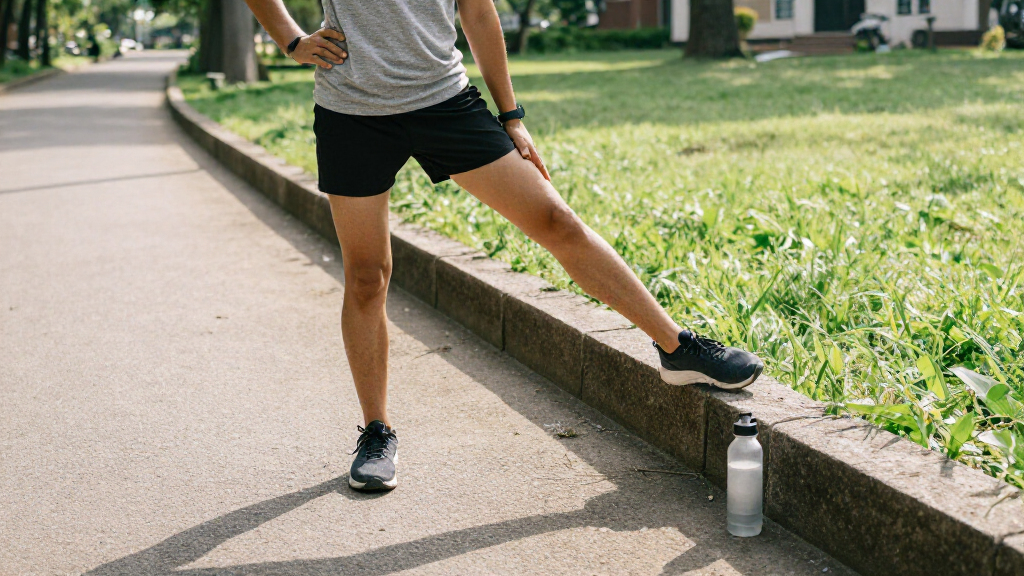
For the calf stretch, stand facing a wall, place the toes of one foot against it with the heel down, and lean forward only until a comfortable stretch is felt. In cat-cow, move slowly between gently rounding and arching the back on hands and knees. The figure-four is performed lying on the back, crossing one ankle above the opposite knee and drawing the supporting leg toward the chest. For the hamstring stretch, extend one foot ahead with its heel on the floor, bend the other knee and hinge the hips back. Repeat stretches on both sides where applicable.
A Gentle Routine After Longer Walks
Walking uses several muscle groups, and longer sessions may leave some people feeling stiff or sore. The reported routine gives readers a short set of movements focused on the calves, hamstrings, hips and back after walking. It is presented as general exercise guidance, not as a treatment or a guarantee that stiffness will be prevented.
The advice also makes intensity adjustable: a person can change how far they lean or whether they lift a leg, and stop at a comfortable degree of tension. That matters because stretching should not cause pain. People with injuries, balance concerns or other reservations may need individualized advice rather than attempting every position as shown.
Products Worth Considering

Bowflex SelectTech 840 Adjustable Kettlebell

Oral-B iO Series 3 Rechargeable Electric Toothbrush for Adults, Black, 3 Modes, 2 Brush Heads and Travel Case

Hyperice Hypervolt 3 Pro Percussion Massage Gun with Heated Head and Carry Case
As an affiliate, we earn on qualifying purchases.
How the Four Moves Are Done
Tsai advises keeping the back in a neutral position for all the stretches except cat-cow. In the calf stretch, moving the heel closer to the wall increases intensity; if placing the toes against the wall is already enough, there is no need to lean farther. During the figure-four, people who feel a strong stretch before drawing the leg toward the chest can remain in the starting position.
For cat-cow, Tsai recommends exhaling while rounding the back into the cat position and inhaling while arching into cow. The standing hamstring stretch can be done beside a wall or chair for support if balance is an issue. The report says the stretch can be intensified by hinging farther at the hips or placing the front foot on a low raised surface, but readers should only do so if it remains comfortable.
The report suggests beginning with stretching two to three times a week and gradually building toward daily practice. It does not provide research findings or measurements showing how much the routine changes stiffness or mobility, so its recommendations should be understood as practical professional guidance rather than a quantified outcome.
“These stretches target the major muscle groups that are utilized during walking, specifically the core, back, hip/glutes, hamstrings, and calves.”
— Dr. Margaret Tsai, physical therapist with Sutter Health
Limits of the Stretching Advice
The source material does not report a study testing these four stretches or provide evidence that they prevent stiffness, preserve mobility or reduce soreness for everyone. Tsai’s statements are professional recommendations; the expected effects and ideal hold times may vary among individuals. The report also does not specify a publication date.
It is not clear whether the routine is appropriate for people with particular medical conditions, recent injuries or significant pain. Fit&Well’s report advises anyone with an injury or reservations to check with a doctor before doing the movements. It also cautions readers to stop short of pain and to use a stable support for the standing hamstring stretch if balance is a concern.
Start Slowly and Adjust
Readers who choose to try the routine can begin with two or three sessions per week, move gradually and build toward daily stretching if it remains comfortable. The report recommends holding static stretches for 10 to 30 seconds, with longer 30-to-60-second holds suggested for older adults, while doing cat-cow for about one minute.
Use a wall or chair for balance when needed, reduce the range of motion if a stretch feels too intense, and do not continue through pain. People with injuries or concerns should seek advice from a doctor before starting; the source provides no further follow-up or timeline for evaluating the routine’s effects.
Key Questions
Which four stretches does the report recommend after walking?
The routine includes a standing calf stretch, cat-cow, a lying figure-four stretch and a standing hamstring stretch.
How long should each stretch be held?
Tsai recommends 10 to 30 seconds for static stretches. She says older adults may benefit from 30 to 60 seconds. Cat-cow is a moving sequence, and the report suggests doing it for about one minute.
How often does the report suggest stretching?
It suggests starting with two to three times a week and gradually increasing to daily practice if the movements remain comfortable.
Should I stretch if I feel pain or have an injury?
Tsai advises easing into the movements only until there is comfortable tension, never pain. The report says people with injuries or reservations should check with a doctor before trying the stretches.
Source: fitandwell.com