TL;DR

Get workout gear delivered free with Prime
- Fast, free delivery on millions of items
- Prime Video, Amazon Music and more included
- Member-only deals all year
Fit&Well published a yoga teacher’s five-pose flow, designed to take about two minutes, for people seeking a brief movement and breathing break during a stressful day. The teacher says the sequence may help users slow down and notice their bodies; the source does not provide research showing that this specific routine reduces stress or regulates the nervous system.
Fit&Well has published a five-pose yoga flow that a yoga teacher says she gives to clients as a brief way to pause during a stressful day. The sequence is designed to take about two minutes and pairs gentle movement with three to five breaths in each pose; the report presents it as the teacher’s guidance, not as a clinically tested stress treatment.
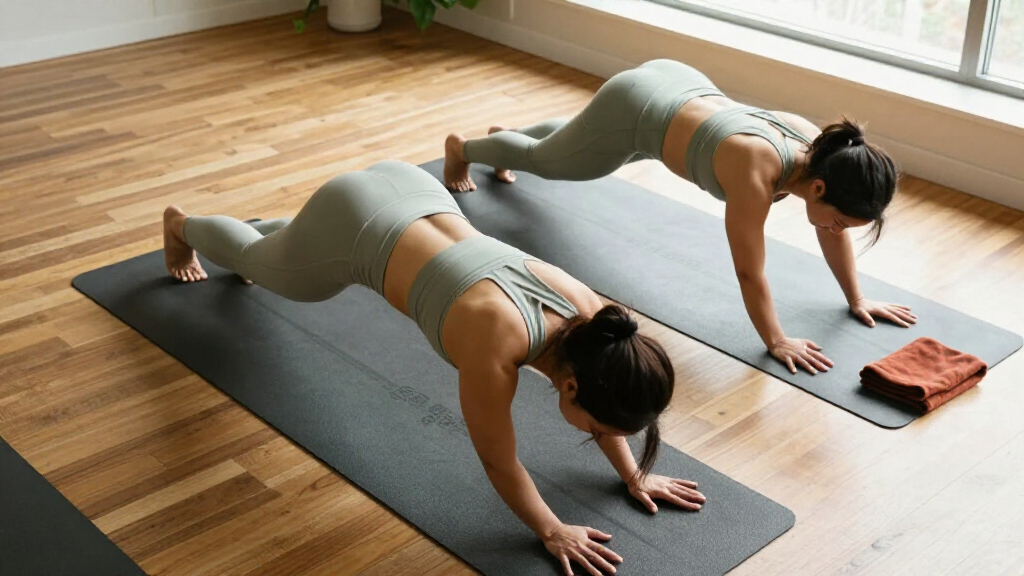
The routine moves through cat-cow, downward-facing dog, eight-point salute, cobra and child’s pose. In the accompanying instructions, practitioners start on hands and knees, arching and rounding the back with their breath. They then lift their hips into downward-facing dog, with bent knees allowed for comfort, before moving through a brief plank and lowering knees, chest and chin toward the floor.
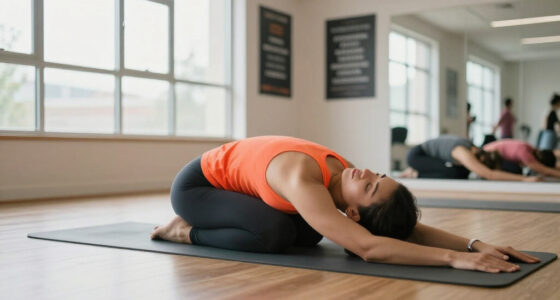
For cobra, the practitioner lies face down, presses the palms into the floor and lifts the chest while keeping the pelvis grounded. The sequence ends in child’s pose, with the forehead resting on the floor or hands and the arms either extended or placed alongside the body. The teacher recommends taking three to five breaths per pose and paying attention to the body and the exhalation.
The teacher describes the practice as deliberately slow. People who are accustomed to faster yoga may find it challenging to move at this pace, the report says. The instructions suggest noticing points of contact with the floor and attending to each movement rather than treating the flow as a workout to complete quickly.
A Short Pause Built Around Breath
The flow offers readers a brief, structured movement break that can be done without equipment. Its focus is less on strenuous exercise than on moving slowly, breathing and observing physical sensations. That may make it a practical option for someone looking for a short pause during a busy day, though whether it helps a particular person feel less stressed will vary.
The distinction between a wellness suggestion and demonstrated health benefit matters. The Fit&Well article reports the teacher’s rationale that movement and slower breathing can support a shift toward a rest-and-recovery state. It does not cite evidence testing this exact five-pose sequence, establish how reliably it changes stress levels, or compare it with other approaches. Readers should treat the claimed benefit as the instructor’s perspective rather than a guaranteed result.
As an affiliate, we earn on qualifying purchases.
How the Teacher Frames the Practice
The source identifies the instructor as a yoga therapy teacher who encourages clients to use gentle movement, breath and attention to how they feel during stressful periods. She argues that trying to reason through stress may not be enough for everyone and says physical movement and slower breathing can help people access what she calls the parasympathetic, or rest-and-recovery, state.
The sequence’s timing is approximate: the instructions assign three to five breaths to each of five poses, but do not specify a breathing rate or set duration for each breath. The report’s “two-minute” description is therefore best understood as a short-flow label, rather than a precise time guaranteed for every practitioner. No research study, clinical outcome data or comparison group is provided in the source material.
““It’s nearly impossible to regulate your nervous system with mental reasoning alone.””
— The yoga teacher, as quoted in Fit&Well
As an affiliate, we earn on qualifying purchases.
Evidence and Timing Remain Unspecified
The source does not say when the article was published, provide evidence that the sequence lowers stress, or explain how its effects were assessed. It also does not define a standardized two-minute pace; the total time will depend on how slowly someone moves and how long they take for each breath. The teacher’s statements about nervous-system regulation are her rationale for the practice, not confirmed outcomes for all users.
The instructions offer a bent-knee option in downward-facing dog and a modification to lower the knees first during the eight-point salute. They do not discuss every possible mobility limitation or health condition. Anyone for whom these poses cause pain or feel unsafe should stop or adapt the sequence; people with pre-existing conditions or concerns about exercise can seek advice from a qualified health professional.
As an affiliate, we earn on qualifying purchases.
Readers Can Try or Adapt the Flow
Fit&Well’s report gives readers the steps to try the sequence at their own pace, with three to five breaths per pose and attention to comfort. It does not announce a follow-up study, trial or additional guidance from the instructor. Any claim about whether the practice changes an individual’s stress levels would require further evidence; for now, the article offers it as a short personal wellness routine rather than a verified intervention.
As an affiliate, we earn on qualifying purchases.
Key Questions
What poses are included in the two-minute flow?
The sequence consists of cat-cow, downward-facing dog, eight-point salute, cobra and child’s pose, in that order.
How long should I spend in each pose?
The teacher recommends three to five breaths in each pose. The total time may vary, so two minutes is an approximate description rather than a set duration for everyone.
Is the flow proven to reduce stress?
The source does not provide research testing this particular routine or establish that it reduces stress. The benefit is described as the teacher’s rationale and recommendation, not a guaranteed result.
Can I modify the movements?
The instructions say to keep the knees bent in downward-facing dog if that is more comfortable and to lower the knees first during the eight-point salute if needed. Stop or adapt any movement that causes pain, and ask a qualified health professional for guidance if you have a pre-existing condition or concerns about exercising.
Source: rss
Halloween Picks
halloween
As an affiliate, we earn on qualifying purchases.