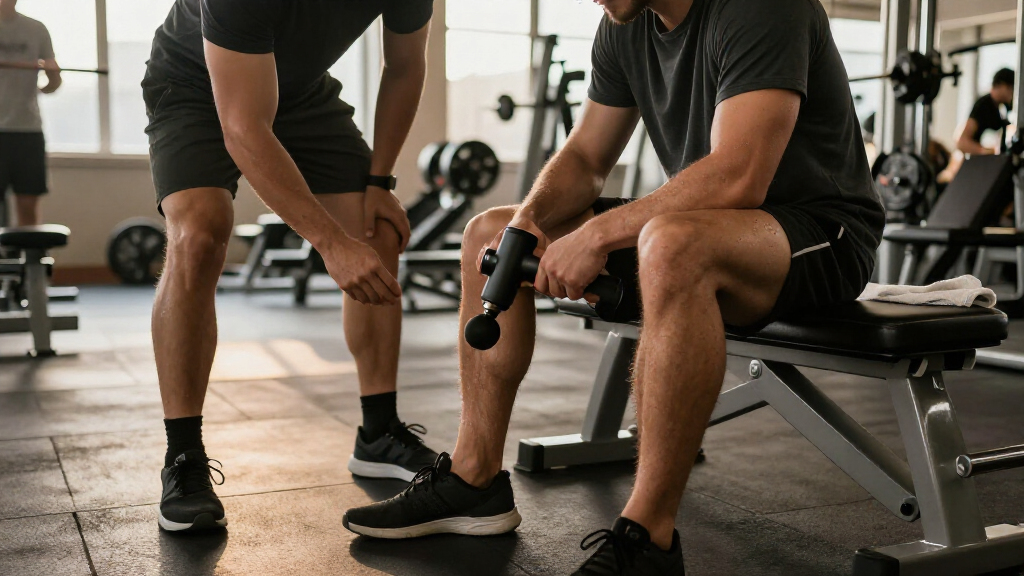
For athletes choosing among massage guns, I’d start with the Opove M3 Pro 2 as my best overall pick for a focused deep-tissue routine, while the Theragun Mini 3rd Generation stands out for portability and the RENPHO Active Thermacool models for heat-and-cold options. The lineup ranges from compact tools and straightforward three-speed designs to models with many speed settings, attachments, or guided app features. More settings and heads can add flexibility, but they can also make a device harder to choose and carry. Heat, cold, and app guidance may suit particular routines, though they are not necessary for every athlete. Read on for the full breakdown and a guide to matching a massage gun to your training habits.

Get workout gear delivered free with Prime
- Fast, free delivery on millions of items
- Prime Video, Amazon Music and more included
- Member-only deals all year
Complete the kit


Key Takeaways
The lineup splits between focused, simpler controls—such as the Theragun Relief—and models offering numerous speeds or massage heads; extra settings matter most when you have a clear use for them.
Portability changes the best choice: the Theragun Mini 3rd Generation is the distinct pick for carrying in a training bag, while larger deep-tissue styles suit athletes who plan to use a device mainly at home.
Heat and cold are specialist features, not a substitute for a good fit and manageable handling; the RENPHO Active Thermacool options are the pair to compare if temperature control is a priority.
Several models overlap closely, including two TOLOCO entries with the same 10-head description and two Theragun Relief color versions, so buyers should focus on the differences that affect their routine rather than the count of listings.
App guidance separates the RENPHO Active+ from the more direct tools, while options such as the BOB AND BRAD C2 and Mebak 3 offer alternatives for buyers who prefer a conventional handheld format.
| TOLOCO Percussion Massage Gun with 10 Massage Heads |  | Best for Attachment Variety | Product type: Cordless percussion massage gun | Penetration depth: 12 mm | Maximum speed: 3,200 rpm | VIEW LATEST PRICE | See Our Full Breakdown |
| TOLOCO Deep Tissue Massage Gun with 10 Massage Heads |  | Best for Quiet, Adjustable Sessions | Speed levels: 7 | Speed range: 2,200–3,300 rpm | Massage heads: 10 | VIEW LATEST PRICE | See Our Full Breakdown |
| Handheld Percussion Massage Gun with 30 Speed Levels and 9 Massage Heads |  | Best for Fine-Grained Speed Control | Type: Handheld percussion massage gun | Speed levels: 30 | Massage heads: 9 | VIEW LATEST PRICE | See Our Full Breakdown |
| RENPHO Active Thermacool Deep Tissue Massage Gun with Heat and Cold |  | Best for Heat-and-Cold Recovery | Heat temperature range: 99°F–113°F | Cold temperature range: 47°F–61°F | Speed levels: 5 | VIEW LATEST PRICE | See Our Full Breakdown |
| Opove M3 Pro 2 Deep Tissue Massage Gun, Black |  | Best for Higher Listed Stall Force | Amplitude: 12 mm | Maximum stall force: 70 lbs | Speed settings: 5 | VIEW LATEST PRICE | See Our Full Breakdown |
| Therabody Theragun Relief Massage Gun, 3-Speed, Navy | 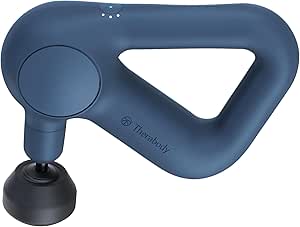 | Best for Gentle Daily Recovery | Speed settings: 3 | Controls: One-button control | Attachments: Dampener, Standard Ball, Thumb | VIEW LATEST PRICE | See Our Full Breakdown |
| RENPHO Active Thermacool 2 Massage Gun with Heat and Cold Control |  | Best for Heat-and-Cold Recovery | Display: VA display showing speed levels and battery status | Heat settings: 4 levels, up to 113°F (45°C) | Cold settings: 4 levels, down to 46°F (8°C) | VIEW LATEST PRICE | See Our Full Breakdown |
| Therabody Theragun Mini 3rd Generation Massage Gun, Black |  | Best Compact Travel Pick | Generation: 3rd | Battery life: Up to 180 minutes | Charging: USB-C | VIEW LATEST PRICE | See Our Full Breakdown |
| Mebak 3 Deep Tissue Massage Gun |  | Best for Adjustable Deep-Tissue Sessions | Stall force: 53 lb | Amplitude: 12 mm | Speed levels: 5 | VIEW LATEST PRICE | See Our Full Breakdown |
| Elefor Deep Tissue Percussion Massage Gun with 8 Massage Heads and 20 Speeds, Matte Black |  | Best for Fine Speed Adjustment | Massage heads: 8 | Speed settings: 20 | Strike rate: 1,200–3,200 strikes per minute | VIEW LATEST PRICE | See Our Full Breakdown |
| Therabody Theragun Relief Massage Gun, 3-Speed, Black |  | Best for Sensitive Muscles | Speed settings: 3 | Control: One-button | Attachments: Dampener, Standard Ball, Thumb | VIEW LATEST PRICE | See Our Full Breakdown |
| AERLANG Massage Gun with Heated Head |  | Best for Heat and Intensity Variety | Massage heads: 6 | Speed settings: 20 | Motor speed range: 1400–3200 rpm | VIEW LATEST PRICE | See Our Full Breakdown |
| TOLOCO Percussion Massage Gun with 10 Massage Heads |  | Best for Attachment Variety | Type: Cordless percussion massage gun | Massage heads: 10 detachable heads | Penetration depth: 12 mm | VIEW LATEST PRICE | See Our Full Breakdown |
| RENPHO Active+ App-Controlled Massage Gun with Guided Courses |  | Best for Guided Recovery | Motor: Brushless | Force: 45 lbs | Amplitude: 10 mm | VIEW LATEST PRICE | See Our Full Breakdown |
| BOB AND BRAD C2 Deep Tissue Massage Gun |  | Best for Portable Training Bags | Speed settings: 5 (2000–3200 RPM) | Massage heads: 5 | Stall force: Over 45 lbs | VIEW LATEST PRICE | See Our Full Breakdown |
| massage guns for athlete | Massage heads | Speed settings |
|---|---|---|
| TOLOCO Percussion Massage Gun | 10 removable heads | — |
| TOLOCO Deep Tissue Massage Gun | 10 | — |
| Handheld Percussion Massage Gu | 9 | — |
| RENPHO Active Thermacool Deep | 5 | — |
| Opove M3 Pro 2 Deep Tissue Mas | — | 5 |
| Therabody Theragun Relief Mass | — | 3 |
| RENPHO Active Thermacool 2 Mas | — | — |
| Therabody Theragun Mini 3rd Ge | — | 3 |
| Mebak 3 Deep Tissue Massage Gu | 7 | — |
| Elefor Deep Tissue Percussion | 8 | 20 |
| Therabody Theragun Relief Mass | — | 3 |
| AERLANG Massage Gun with Heate | 6 | 20 |
| TOLOCO Percussion Massage Gun | 10 detachable heads | — |
| RENPHO Active+ App-Controlled | — | 5 (1800–2800 RPM) |
| BOB AND BRAD C2 Deep Tissue Ma | 5 | 5 (2000–3200 RPM) |
More Details on Our Top Picks
TOLOCO Percussion Massage Gun with 10 Massage Heads
For athletes who want to switch between broad muscle work and more targeted spots, the 10 removable heads give this TOLOCO more options than the five-head RENPHO Active Thermacool. Its 12 mm penetration depth and speeds up to 3,200 rpm provide a useful range for post-training massage, while the touch screen makes speed changes and battery checks easy to see. The cordless design and stated noise level of 40–50 dB also suit a gym bag or home recovery routine. The tradeoff is that attachment variety does not come with a stated stall-force figure, so athletes seeking a specific measure of resistance may prefer the Opove M3 Pro 2, which lists up to 70 lbs. Battery life can reach six hours, but depends on speed, and a charging plug is not included.
Pros:- Ten removable heads support different muscle areas and massage styles.
- 12 mm penetration depth and speeds up to 3,200 rpm offer a range of settings for recovery sessions.
- Touch screen shows battery status and supports speed adjustment.
- Cordless design and stated 40–50 dB noise level suit home or gym use.
Cons:- Charging plug is not included, so USB charging requires a compatible power source.
- Battery life varies with the selected speed.
- No stall-force rating is provided for comparison with the Opove M3 Pro 2.
Best for: Athletes who want a wide choice of massage heads for working across large muscle groups and more targeted areas.
Not ideal for: Athletes who need a listed stall-force rating or expect a wall charging plug to come in the box.
- Product type:Cordless percussion massage gun
- Penetration depth:12 mm
- Maximum speed:3,200 rpm
- Massage heads:10 removable heads
- Battery life:Up to 6 hours, depending on speed
- Charging:USB cable; charging plug not included
- Noise level:40–50 dB
- Controls:LED touch screen with battery display
Our verdict“Choose this TOLOCO if you value attachment variety and visible controls more than a published stall-force figure or included charging plug.”
TOLOCO Deep Tissue Massage Gun with 10 Massage Heads
The second TOLOCO earns a distinct place for athletes who want several intensity choices without a particularly loud motor: it offers seven speeds from 2,200 to 3,300 rpm and a stated noise level below 40 dB. Its LED display reports speed, battery, and massage pressure, adding feedback that the first TOLOCO’s screen does not list. Ten heads match that model’s attachment count, so choosing between them comes down less to variety and more to the controls and operating details. The non-slip handle should help maintain a secure grip during a session, but the product data gives neither battery runtime nor charging time. By contrast, the first TOLOCO states up to six hours of use, making it the clearer choice for athletes planning longer stretches away from a charger.
Pros:- Seven speed settings span 2,200–3,300 rpm.
- Ten massage heads support work on several body areas.
- LED display shows speed, remaining battery, and massage pressure.
- Non-slip handle and stated noise level below 40 dB support controlled sessions.
Cons:- Battery runtime and charging time are not specified.
- Product dimensions and weight are not provided.
- Unlike the first TOLOCO, it does not state a maximum battery life.
Best for: Athletes who want a quieter-feeling massage gun with several speed choices and on-screen pressure feedback.
Not ideal for: Athletes who need to plan sessions around a known battery runtime, or who require documented size and weight before packing gear.
- Speed levels:7
- Speed range:2,200–3,300 rpm
- Massage heads:10
- Noise level:Less than 40 dB
- Display:LED; shows speed, remaining battery, and massage pressure
- Handle:Non-slip
- Charging:USB
Our verdict“Pick this TOLOCO for quiet operation and pressure feedback, but choose the first TOLOCO if a stated battery runtime matters more.”
Handheld Percussion Massage Gun with 30 Speed Levels and 9 Massage Heads
Where both TOLOCO models use a small set of speed choices, this handheld gun offers 30 levels, giving athletes more steps for adjusting intensity between warm-up and recovery. That unusually fine control is its clearest distinction; the nine heads are close to the TOLOCO options’ ten, rather than a major reduction in coverage. An ergonomic handle designed for either hand may also help when reaching less accessible areas, and the display tracks speed and battery percentage. The stated 4–6-hour runtime makes it easier to plan than the second TOLOCO, whose runtime is not specified, though it falls short of the first TOLOCO’s stated maximum of six hours at the upper end. Charging method, charging time, weight, and dimensions are not supplied, so travel planning is less straightforward.
Pros:- Thirty speed levels allow more incremental intensity adjustments than either TOLOCO model’s described speed ranges.
- Nine massage heads provide options for different muscle areas.
- Ergonomic handle is designed for either hand and hard-to-reach areas.
- Battery display and stated 4–6-hour runtime help track remaining use.
Cons:- Charging method and charging time are not specified.
- Weight and dimensions are not provided.
- Stated battery life tops out at six hours, rather than exceeding the first TOLOCO’s stated maximum.
Best for: Athletes who prefer small intensity adjustments and want a battery percentage display during recovery sessions.
Not ideal for: Travel-focused athletes who need confirmed dimensions, device weight, or charging details before packing.
- Type:Handheld percussion massage gun
- Speed levels:30
- Massage heads:9
- Battery capacity:2500 mAh
- Battery life:4–6 hours
- Display:Shows speed level and battery percentage
- Handle:Ergonomic, suitable for either hand
- Motor:Described as whisper-quiet
Our verdict“Choose this model if fine-grained speed selection matters more than having published charging and size details.”
RENPHO Active Thermacool Deep Tissue Massage Gun with Heat and Cold
This RENPHO stands apart from the standard percussion options by pairing massage with heat and cold settings. Athletes can select heat from 99°F to 113°F or cooling from 47°F to 61°F, while five speeds cover 1,800–3,200 rpm. That temperature feature is the main reason to choose it over the Opove M3 Pro 2, which instead emphasizes up to 70 lbs of stall force and a longer stated battery range. RENPHO lists a 45 lb stall force, five interchangeable heads, and a brushless motor, but its 10-minute auto-off means sessions stop automatically rather than running continuously. USB-C fast charging is specified at 2.5 hours, though the charger is not included. Athletes who want temperature options should find the tradeoff more relevant than those focused on sustained, forceful percussion.
Pros:- Heat and cold settings add temperature options not listed for the other products here.
- Five speeds cover 1,800–3,200 rpm.
- Five interchangeable heads support different massage areas.
- USB-C fast charging is specified at 2.5 hours, with an automatic shutoff timer.
Cons:- The 10-minute auto-off limits each session before the gun stops.
- Charger is not included.
- Listed stall force is 45 lbs, lower than the Opove M3 Pro 2’s stated maximum of 70 lbs.
Best for: Athletes who want temperature-based recovery options alongside percussion and can work within timed sessions.
Not ideal for: Athletes who prioritize higher listed stall force, uninterrupted sessions, or a supplied charger.
- Heat temperature range:99°F–113°F
- Cold temperature range:47°F–61°F
- Speed levels:5
- Speed range:1,800–3,200 rpm
- Stall force:45 lbs
- Massage heads:5
- Charging:15W PD USB-C fast charging; charger not included
- Charging time:2.5 hours
- Auto-off timer:10 minutes
Our verdict“Choose this RENPHO for heat-and-cold options, not if your main priority is higher listed stall force or longer uninterrupted sessions.”
Opove M3 Pro 2 Deep Tissue Massage Gun, Black
The Opove M3 Pro 2 is the most force-focused pick in this group on paper, with up to 70 lbs of stall force and a 12 mm amplitude. That makes it a more direct fit for athletes who want firm percussion than the RENPHO Active Thermacool, whose listed stall force is 45 lbs and whose standout feature is heat and cold. Five speeds reach 2,500 rpm, so the Opove gives up the broader speed range of either TOLOCO while emphasizing resistance instead. Its sound-absorbing, drop-resistant shell and included carrying case favor regular transport, and the stated 4–8-hour battery life is longer at its upper end than the first TOLOCO’s figure. The product data does not specify charging time or battery capacity, and its maximum speed is lower than the TOLOCO models’ stated peaks.
Pros:- Up to 70 lbs of stated stall force and 12 mm amplitude suit buyers prioritizing firm percussion.
- Five speed settings reach a maximum of 2,500 rpm.
- Sound-absorbing, drop-resistant shell is suited to regular transport.
- Carrying case is included, and stated battery life is 4–8 hours.
Cons:- Maximum speed is lower than the stated peaks of both TOLOCO models.
- Charging time and battery capacity are not specified.
- It does not offer the heat-and-cold settings found on the RENPHO Active Thermacool.
Best for: Athletes who want a massage gun with a high stated stall-force figure, a protective shell, and a carrying case.
Not ideal for: Athletes who want heat or cold functions, a higher maximum speed, or detailed charging specifications.
- Amplitude:12 mm
- Maximum stall force:70 lbs
- Speed settings:5
- Maximum speed:2,500 rpm
- Battery life:4–8 hours
- Shell:Sound-absorbing and drop-resistant
- Included accessory:Carrying case
- Color:Black
Our verdict“Choose the Opove if listed stall force and a travel-ready case matter more than temperature features or a higher maximum speed.”
Therabody Theragun Relief Massage Gun, 3-Speed, Navy
The Theragun Relief suits athletes who want a milder option for everyday tension rather than forceful, deep percussion. Its three attachments cover broad muscle areas, sensitive spots, and lower-back trigger points, while the triangle grip makes hard-to-reach areas easier to handle solo. Compared with the Mebak 3, which offers higher stated stall force and five speed levels for more forceful sessions, this Theragun prioritizes approachable comfort and simple one-button operation. The quiet motor is useful for a short recovery routine at home without adding much noise. The tradeoff is clear: athletes seeking firm pressure after demanding training may find its gentler massage less satisfying, and the supplied details do not specify battery life or speed ranges. I’d choose it for regular, lower-intensity upkeep, not maximum percussion.
Pros:- Gentler percussion is suited to frequent comfort-focused sessions
- Three attachments address sensitive muscles, general tension, and lower-back trigger points
- Triangle grip helps users reach more areas without assistance
- Quiet motor supports a less distracting massage
Cons:- Gentler output may not satisfy athletes who want intense percussion
- Only three speeds are specified, with no finer speed adjustment described
- Battery life and charging details are not provided
Best for: Athletes who prefer gentle daily muscle relief, need to reach their own back, and value simple controls and quiet operation
Not ideal for: Athletes seeking forceful deep-tissue percussion or detailed control over speed and session settings
- Speed settings:3
- Controls:One-button control
- Attachments:Dampener, Standard Ball, Thumb
- Grip:Patented triangle grip
- Motor:Whisper-quiet
- Device status:FDA-registered medical device
- Color:Navy
Our verdict“Choose the Theragun Relief for quiet, gentle daily recovery; pick the Mebak 3 instead if you want higher stated stall force and more speed levels.”
RENPHO Active Thermacool 2 Massage Gun with Heat and Cold Control
The RENPHO Active Thermacool 2 is the lineup’s clearest choice for athletes who want temperature control alongside percussion. Four heat settings reach 113°F, and four cold settings go down to 46°F, letting users choose a warming or cooling sensation around a massage session. Its display shows speed and battery status, while the brushless motor reaches 3,200 RPM with up to 45 pounds of stall force. That gives it more measurable output detail than the Theragun Relief, which is designed around gentler daily comfort and does not list comparable force figures. The tradeoff is that the temperature limits are moderate, and the 10-minute auto-off can cut short a longer routine. I’d favor this model for athletes who will regularly use its temperature functions, not buyers seeking a basic, uncomplicated percussion gun.
Pros:- Four heat and four cold levels add temperature options to percussion
- VA display shows speed settings and battery status
- Brushless motor reaches up to 3,200 RPM and 45 pounds of stall force
- Cordless 2,500 mAh battery and auto-off support convenient use
Cons:- Heat tops out at 113°F and cold reaches only 46°F
- 10-minute auto-off may interrupt longer massage routines
- Its added temperature controls may be unnecessary for athletes seeking a simple percussion-only device
Best for: Athletes who want adjustable heat and cold sensations, visible battery information, and a cordless tool for home or gym use
Not ideal for: Athletes who need uninterrupted sessions longer than 10 minutes or expect very high heat and very low cooling temperatures
- Display:VA display showing speed levels and battery status
- Heat settings:4 levels, up to 113°F (45°C)
- Cold settings:4 levels, down to 46°F (8°C)
- Maximum speed:3,200 RPM
- Amplitude:10 mm
- Maximum stall force:45 lb
- Noise level:40 dB
- Battery capacity:2,500 mAh
- Safety feature:10-minute auto-off
Our verdict“Pick the Thermacool 2 if heat and cold controls are part of your recovery routine, but choose a simpler gun if you want percussion without extra settings.”
Therabody Theragun Mini 3rd Generation Massage Gun, Black
For athletes who want percussion in a travel-friendly form, the Theragun Mini 3rd Generation brings three attachments, three speeds, and USB-C charging in a compact design. Its stated battery life of up to 180 minutes helps make it a practical bag companion, while the travel lock and TSA-compliant design support taking it on trips. Bluetooth connectivity adds guided routines and personalized recommendations through the Therabody app, a more coached approach than the Elefor, which instead emphasizes 20 speed settings and eight heads. That contrast makes the Mini easier to pack but less adjustable on the device itself. The app is needed for personalized routines, and the three speed options may feel limiting to athletes who want finer control. I’d choose it for portability and guided use, not as a substitute for a more configurable training-room gun.
Pros:- Compact design with travel lock and TSA-compliant status
- Up to 180 minutes of battery life and USB-C charging
- Three attachments support different massage needs
- Bluetooth app access provides guided routines and personalized recommendations
Cons:- Only three speed settings are specified
- Personalized routines require the Therabody app
- Compact format prioritizes portability over the broader adjustment range offered by the Elefor
Best for: Traveling athletes and gym-goers who want a compact massage gun with guided app routines and USB-C charging
Not ideal for: Athletes who prioritize many speed settings, a larger selection of attachments, or app-free customization
- Generation:3rd
- Battery life:Up to 180 minutes
- Charging:USB-C
- Speed settings:3
- Attachments:Dampener, Standard Ball, Thumb
- Connectivity:Bluetooth
- Controls:One-button control with LED indicators
- Travel features:Travel lock; TSA compliant
Our verdict“Choose the Theragun Mini for portable recovery and app guidance; choose the Elefor if more speed and attachment options matter more than compactness.”
Mebak 3 Deep Tissue Massage Gun
The Mebak 3 is the most force-focused choice in this batch, with a stated 53 pounds of stall force, 12 mm amplitude, and five speeds spanning 950–3,000 RPM. Those figures give athletes more guidance about pressure and range than the Theragun Relief provides, making this a better fit for users who want to tune sessions across muscle groups. Seven heads and an LED pressure indicator add variety and visual feedback, while its 1.68-pound weight keeps the device manageable between home, office, and gym. Compared with the Elefor, it has fewer heads and speed settings, but offers specified stall force, amplitude, and weight—useful details for choosing a more targeted tool. The plastic body and missing power adapter are real compromises, and the carrying case raises packed weight to 3.08 pounds.
Pros:- 53-pound stall force and 12 mm amplitude suit athletes seeking firmer percussion
- Five speeds and seven heads allow varied session setups
- LED pressure indicator gives visual feedback while applying force
- 1.68-pound device weight and carrying case support portability
Cons:- Power adapter is not included; a 5V/2A adapter is recommended
- Plastic body may feel less substantial than other materials
- Carrying case increases packed weight to 3.08 pounds
Best for: Athletes who want defined deep-tissue specifications, several attachment choices, and pressure feedback for varied muscle groups
Not ideal for: Buyers who want a premium-feeling metal body, a power adapter included, or the broadest speed selection
- Stall force:53 lb
- Amplitude:12 mm
- Speed levels:5
- Speed range:950–3,000 RPM
- Massage heads:7
- Operating noise:39–50 dB
- Weight:1.68 lb
- Weight with carrying case:3.08 lb
- Power adapter:Not included; 5V/2A adapter recommended
Our verdict“Choose the Mebak 3 for a more force-focused, clearly specified session; choose the gentler Theragun Relief if comfort matters more than pressure.”
Elefor Deep Tissue Percussion Massage Gun with 8 Massage Heads and 20 Speeds, Matte Black
The Elefor stands out for athletes who want many on-device adjustment steps: its 20 speed settings span 1,200–3,200 strikes per minute, paired with eight interchangeable heads. That combination gives users more ways to vary a session than the five speeds and seven heads on the Mebak 3. A touch LCD and included carrying case make its controls and storage straightforward for home, gym, or travel use. The tradeoff is that the available description leaves out battery life, charging details, dimensions, and weight, so it is harder to judge how well it will fit a training bag or how often it needs charging. Unlike the Mebak, it also provides no stated stall force or amplitude figures. I’d select it for breadth of settings, while athletes who need clearer performance specifications should compare those details before choosing.
Pros:- 20 speed settings offer finer adjustment than the Mebak 3’s five levels
- Eight interchangeable heads provide multiple contact options
- Touch LCD gives a direct interface for adjusting settings
- Carrying case supports storage and transport
Cons:- Battery life and charging details are not provided
- Dimensions and weight are not specified, making portability harder to judge
- Stall force and amplitude are not listed, limiting performance comparisons with the Mebak 3
Best for: Athletes who want many speed steps and massage-head options for adjusting percussion across different muscle groups
Not ideal for: Athletes who need documented stall force, amplitude, battery life, or device weight before buying
- Massage heads:8
- Speed settings:20
- Strike rate:1,200–3,200 strikes per minute
- Display:Touch LCD screen
- Motor:High-power, ultra-quiet
- Included accessories:Carrying case
- Color:Matte black
Our verdict“Pick the Elefor if a wide speed range and eight heads are your priorities, but choose the Mebak 3 if you want stated force, amplitude, and weight figures.”
Therabody Theragun Relief Massage Gun, 3-Speed, Black
The Theragun Relief is the gentlest match here for athletes who want a simple post-training massage without chasing high intensity. Its three speeds, quiet motor, and one-button control keep sessions straightforward, while the dampener, standard ball, and thumb attachments offer distinct options for tender muscles, general tension, and more focused areas. The triangle grip can make hard-to-reach spots easier to handle independently. Compared with the BOB AND BRAD C2, this Theragun is aimed at comfort rather than a stronger, more forceful massage; that makes it a better fit for sensitivity, but a weaker choice for athletes seeking firm pressure on dense, heavily worked muscles. Its limited speed range is the main tradeoff, so athletes who want many intensity steps should look to the AERLANG instead.
Pros:- Gentle percussive massage suits tender muscles.
- Three attachments address different massage needs.
- Triangle grip helps reach varied body areas independently.
- Quiet motor and one-button operation keep sessions simple.
Cons:- Gentler output may not satisfy athletes seeking intense pressure.
- Three speeds offer less intensity adjustment than the AERLANG’s 20 settings.
Best for: Athletes with tender or sensitive muscles who want quiet, uncomplicated self-massage and an easier grip for reaching their back.
Not ideal for: Athletes seeking a forceful deep-tissue feel or fine-grained intensity control; its three-speed design is deliberately gentle.
- Speed settings:3
- Control:One-button
- Attachments:Dampener, Standard Ball, Thumb
- Grip:Patented triangle grip
- Motor:Whisper-quiet
- Color:Black
- Device status:FDA-registered medical device
Our verdict“Choose the Theragun Relief for approachable, gentle recovery work, not for the strongest massage in this group.”
AERLANG Massage Gun with Heated Head
The AERLANG stands apart from the conventional percussion models in this group by combining a heated massage head with 20 speed settings. Three temperature levels, a separate heat switch, and six interchangeable heads give athletes room to tailor a session, while the LCD reports applied pressure in real time. That range is broader than the Theragun Relief, which favors a gentler, simpler setup, and the heat function adds an option neither the TOLOCO nor the BOB AND BRAD C2 lists. The tradeoff is a more involved setup: the gun body and heating head need separate initial charging, with the stated first charge taking about six hours for the body and two for the head. Athletes who want a quick grab-and-go tool may prefer the C2’s simpler charging approach.
Pros:- Heated head offers three temperature settings and a separate on/off switch.
- Twenty speed settings allow more adjustment than the Theragun Relief’s three.
- Six massage heads cover multiple muscle areas.
- LCD, quiet motor, and included carrying case support convenient use.
Cons:- Gun body and heating head require separate initial charging.
- Recommended initial charging takes about six hours for the body and two hours for the head.
Best for: Athletes who want adjustable percussion and a heated head for varied recovery sessions at home or while traveling.
Not ideal for: Athletes who prioritize minimal setup or need to use a massage gun soon after opening; its body and heated attachment charge separately.
- Massage heads:6
- Speed settings:20
- Motor speed range:1400–3200 rpm
- Heated head:3 temperature settings; up to 131°F
- Display:LCD showing applied pressure in real time
- Carrying case:Included
- Recommended initial charging:Approximately 6 hours for the massage gun body and 2 hours for the heating head
Our verdict“Pick the AERLANG if heat and a wide choice of speeds matter more than a fast, simple setup.”
TOLOCO Percussion Massage Gun with 10 Massage Heads
With 10 detachable heads, this TOLOCO gives athletes the broadest attachment selection among these five picks. That can help those who like to change contact points across muscle groups, while its 12 mm penetration, speeds up to 3,200 rpm, and multiple levels provide a conventional percussion setup without heat or app-dependent routines. Compared with the AERLANG, it trades heated treatment and an LCD pressure readout for more heads; compared with the BOB AND BRAD C2, it offers twice as many attachments but does not list stall force. Its stated 40–50 dB noise range and cordless design suit home or travel use, and runtime can reach six hours depending on speed. One practical limitation: the USB cable is included, but the charging plug is not, so buyers may need to supply a compatible one.
Pros:- Ten detachable heads offer more attachment choices than the C2’s five.
- 12 mm penetration and speeds up to 3,200 rpm support adjustable percussion.
- Specified noise level of 40–50 dB.
- Cordless operation and battery display are useful for portable sessions.
Cons:- Charging plug is not included.
- Battery runtime varies with the selected speed.
- No stall-force figure is provided in the product data.
Best for: Athletes who want a large selection of interchangeable contact heads and a cordless massage gun for varied muscle areas.
Not ideal for: Athletes who want a complete charging setup in the box or need a clearly specified stall-force figure when choosing a stronger massage tool.
- Type:Cordless percussion massage gun
- Massage heads:10 detachable heads
- Penetration depth:12 mm
- Maximum speed:3,200 rpm
- Noise level:40–50 dB
- Battery runtime:Up to 6 hours, depending on speed
- Charging:USB charging cable included; charging plug not included
- Display:LED touch screen with battery display
Our verdict“Choose this TOLOCO for attachment variety and cordless flexibility if supplying your own charging plug is acceptable.”
RENPHO Active+ App-Controlled Massage Gun with Guided Courses
The RENPHO Active+ is the most instruction-led option here: its app offers video-guided courses for targeting muscle groups and planning session times. That can suit athletes who want help structuring recovery rather than choosing an attachment and working without prompts. The brushless motor is specified at 45 lbs of force with 10 mm amplitude, and five speeds plus five attachments offer a more focused selection than the TOLOCO’s 10 heads. It also charges fully in a stated 1.5 hours over USB-C, a useful advantage over the AERLANG and its lengthy recommended initial charging. The compromises are reliance on the companion app for its signature guided feature and battery life of up to three hours. Athletes who prefer a self-contained tool may find the BOB AND BRAD C2 more straightforward.
Pros:- App offers video-guided courses for muscle targeting and session planning.
- 45 lbs of force and 10 mm amplitude are specified in the product data.
- Five speeds and five attachments cover different recovery needs.
- 18 W USB-C charging reaches a full charge in 1.5 hours.
Cons:- Access to guided courses requires the companion app.
- Battery life is up to three hours per charge.
- Five attachments offer fewer choices than the TOLOCO’s 10.
Best for: Athletes who want guided, video-based routines to help target muscle groups and plan massage sessions.
Not ideal for: Athletes who avoid companion apps or need longer stated battery life than the Active+’s up-to-three-hour runtime.
- Motor:Brushless
- Force:45 lbs
- Amplitude:10 mm
- Speed settings:5 (1800–2800 RPM)
- Massage attachments:5
- Charging:18 W USB-C fast charging
- Full charge time:1.5 hours
- Battery life:Up to 3 hours
- Connectivity and display:Bluetooth and app-connected; LED screen shows selected speed and battery percentage
Our verdict“Pick the RENPHO Active+ if guided routines matter more to you than app-free operation or a larger attachment set.”
BOB AND BRAD C2 Deep Tissue Massage Gun
The C2 makes the most sense for athletes who want a compact-feeling, clearly specified tool to keep in a training bag: it weighs 1.5 lbs, includes a carrying case, and charges by USB-C PD in about 1.5–2 hours. Its five speeds cover 2,000–3,200 rpm, and the stated stall force of over 45 lbs points to a more force-oriented design than the gentle Theragun Relief. The silicone grip is intended to reduce hand vibration, while five heads cover common warmup and recovery uses. Compared with the TOLOCO, the C2 has fewer attachments but includes its charging method and lists stall force. The main limitation is its automatic 10-minute shutoff; athletes wanting longer uninterrupted sessions will need to restart it. It also requires recharging between uses, so it is not a substitute for tracking battery status.
Pros:- At 1.5 lbs, it is lighter than a full-size massage gun.
- Stall force is specified at over 45 lbs.
- USB-C PD fast charging takes about 1.5–2 hours.
- Silicone grip, carrying case, and noise as low as 40 dB suit portable use.
Cons:- Automatic shutoff ends each session after 10 minutes.
- Requires recharging between uses.
- Five massage heads provide fewer choices than the TOLOCO’s 10.
Best for: Athletes who want a lightweight massage gun with a carrying case, USB-C PD charging, and specified stall force for training-bag use.
Not ideal for: Athletes who want more than five attachment choices or uninterrupted sessions beyond the automatic 10-minute shutoff.
- Speed settings:5 (2000–3200 RPM)
- Massage heads:5
- Stall force:Over 45 lbs
- Weight:1.5 lbs (0.68 kg)
- Motor and material:Brushless motor; ABS with silicone grip
- Charging:15 W USB Type-C PD fast charging
- Full charge time:1.5–2 hours
- Noise level:As low as 40 dB
- Auto shutoff:10 minutes
Our verdict“Choose the C2 for a lightweight, case-ready training-bag companion if its 10-minute shutoff fits your session routine.”

How We Picked
I ranked these massage guns for athletic use by weighing how well their stated formats support different training routines: focused muscle work, portability, straightforward operation, and options for tailoring a session. I also considered practical factors that can shape regular use, including the range of controls or attachments, whether the design adds temperature or app features, and how specialized the device appears. A feature only helped a product’s position when it offered a clear benefit for a particular buyer.
The ordering reflects those tradeoffs rather than treating every extra speed or massage head as an advantage. The Opove M3 Pro 2 takes the lead as a balanced deep-tissue choice; the Theragun Mini earns a distinct place for portability, and the RENPHO Thermacool models serve buyers seeking heat-and-cold control. Simpler designs remain relevant for athletes who want less setup, while duplicate color listings and near-overlapping descriptions do not receive separate advantages without a meaningful difference. I have not treated product claims as a substitute for clinical advice or hands-on performance evidence.
Factors to Consider When Choosing Massage Guns For Athletes
The right massage gun depends less on having the most settings than on whether it fits your training schedule, preferred handling, and recovery habits. I’d use these factors to narrow the field before choosing a model.
Match the Device to Your Routine
Start with where and when you expect to use the device: at home after training, at the gym, or while traveling between events. A full-size handheld model may feel more practical for a planned session, while a compact option is easier to carry but may offer fewer handling choices. Think about whether you will target one or two areas or want to move across several muscle groups. A common mistake is buying for a hypothetical routine rather than the one you actually follow. If portability means you will use it more consistently, it can matter more than a longer feature list.
Choose Control You Will Actually Use
More speed levels can provide finer adjustment, but a large number of settings does not automatically make a massage gun easier to use. Athletes who want a quick, repeatable session may prefer a small set of clear controls. If you share the device with someone whose preferences differ, broader adjustment can be more useful. Consider whether the controls are easy to understand while holding the device and whether changing settings interrupts your routine. Avoid paying attention to the number alone; look for a control range that matches how deliberately you want to tune each session.
Treat Attachments as a Fit Question
Massage heads are useful when their shapes correspond to the areas you plan to address, not simply because a box contains many of them. Before choosing, think about whether you need different contact styles or would rather keep setup simple. A large set can offer options but also means more pieces to store and keep track of. Athletes who train in shared spaces may value fewer loose parts, while someone with varied routines may welcome extra choices. The common mistake is assuming more attachments equal better results for every body or every session.
Decide Whether Heat, Cold, or an App Adds Real Value
Temperature features and guided courses make the most sense when they address a preference you already have. Heat-and-cold controls distinguish the RENPHO Thermacool models, while app guidance gives the RENPHO Active+ a different role. These additions may make a routine feel more structured, but they also add decisions beyond basic percussion. If you prefer to pick a setting and begin, a simpler model may be a better match. Do not treat temperature or app features as a replacement for advice from a qualified clinician when pain or injury is involved.
Prioritize Handling and Reach
A device can have appealing features and still be awkward for the way you need to hold it. Think about whether you will use it on areas that are easy to reach or need to position it around your back and shoulders. Grip, weight, and balance affect how comfortably you can guide the tool, especially during a longer session. Compact products can help with carrying, though smaller dimensions do not guarantee easier reach. When possible, compare the shape and handling information before choosing rather than assuming that a higher feature count will compensate for a poor fit.
Set a Practical Standard for Recovery Tools
A massage gun is one part of a training routine, not a fix for every ache or a replacement for rest, mobility work, or medical care. Choose features that support a consistent, comfortable routine instead of chasing the most intense setting. Athletes returning from injury or dealing with persistent pain should seek professional guidance before using percussion on the affected area. For ordinary post-training use, clear controls and a form factor you will keep nearby can be more useful than specialized extras. This approach helps keep the purchase tied to everyday use rather than promises about results.
Frequently Asked Questions
Which type of massage gun makes the most sense for carrying to training?
I would prioritize a compact design if the device needs to live in a gym or travel bag, which makes the Theragun Mini 3rd Generation the clearest fit in this lineup. A portable model can be more useful than a larger one if convenience affects whether you bring it along. Before choosing, check the product’s dimensions and what comes with it, since the device is only part of the space you need to carry. If most sessions happen at home, portability may deserve less weight than handling or your preferred controls.
Should I choose a massage gun with many speed settings?
Choose a wider speed range when you expect to adjust the feel between sessions or share the device with people who prefer different settings. More levels can offer finer control, but they may not change your routine if you tend to use the same setting each time. A simple model can reduce setup and make it easier to start a short session. I would compare control clarity alongside the number of levels and avoid treating a higher count as proof of stronger or more effective treatment.
Are heat-and-cold features worth choosing for athletic recovery?
They are worth a closer look if temperature control is a feature you specifically want in your routine; the RENPHO Active Thermacool models are the relevant options here. They are less compelling if your priority is a straightforward percussion tool or carrying a compact device. Temperature features should not be confused with treatment for an injury or persistent pain. If you are unsure whether heat or cold is suitable for your situation, ask a qualified health professional rather than relying on the device alone.
Do more massage heads mean a better massage gun for athletes?
No; attachment count matters only when the included shapes suit the areas and contact styles you plan to use. More pieces can create useful flexibility, but they also add storage and make selection less direct. If you prefer a quick routine, a smaller, more manageable set may be easier to live with. Compare head options by their intended use and the type of session you want, not by the total number listed.
Can a massage gun replace care for a sports injury?
No. A percussion device may be part of a personal recovery routine, but it should not be treated as a diagnosis or a substitute for professional care. Avoid using one on an injured or painful area without guidance from a qualified clinician, particularly when symptoms persist or worsen. Choose a model based on comfort and usability for ordinary training routines, not claims that it can resolve an injury. If pain is affecting your sport or daily movement, seek medical advice.
Conclusion
For most athletes seeking a balanced deep-tissue tool, I’d start with the Opove M3 Pro 2 as my best overall pick. The lineup does not identify a clear price-based best value, so I’d compare the TOLOCO Percussion Massage Gun and Elefor by the controls and attachments you will actually use rather than assume one is the value winner. For a premium-leaning option with guided support, the RENPHO Active+ App-Controlled Massage Gun is the specialist choice; athletes who want temperature control should compare the Thermacool models instead. Beginners who prefer a direct routine can look at the Theragun Relief and its three-speed format. For a specific need, choose the Theragun Mini for portability, or a RENPHO Thermacool model for heat-and-cold features. Pick the one that suits your routine, not the one with the longest feature list.