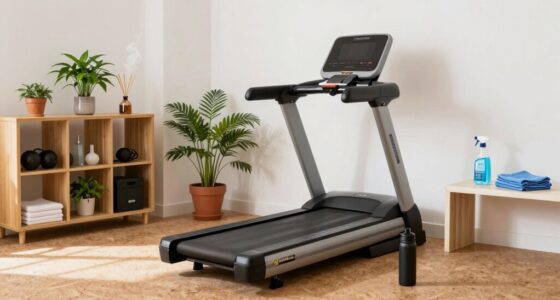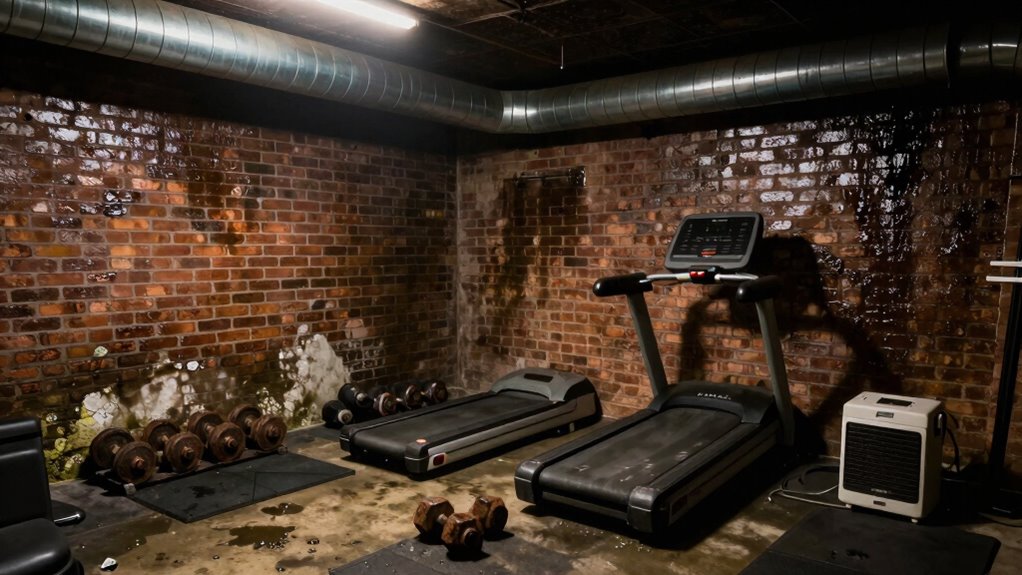

In your basement gym, controlling humidity is key to preventing rust and damage to your equipment. Excess moisture can cause mold, dampness, and musty smells, while proper ventilation and the right dehumidifiers keep the air dry and fresh. Regularly inspecting for signs like mold or rust helps catch issues early. For a safe, comfortable workout space, mastering humidity and airflow basics is essential—stay with us to explore effective strategies to keep your gym in top shape.

Get workout gear delivered free with Prime
- Fast, free delivery on millions of items
- Prime Video, Amazon Music and more included
- Member-only deals all year
Key Takeaways
- Maintain humidity levels below 60% using dehumidifiers and proper ventilation to prevent rust and mold growth.
- Ensure effective air circulation with fans and open vents to reduce dampness and improve indoor air quality.
- Use moisture barriers and seal cracks to prevent outside moisture from seeping into the basement gym.
- Regularly inspect for signs of mold, dampness, and rust; address issues promptly to avoid long-term damage.
- Properly size and maintain ventilation systems and dehumidifiers for optimal moisture control and equipment preservation.
As an affiliate, we earn on qualifying purchases.
Why Humidity Matters in Your Basement Gym
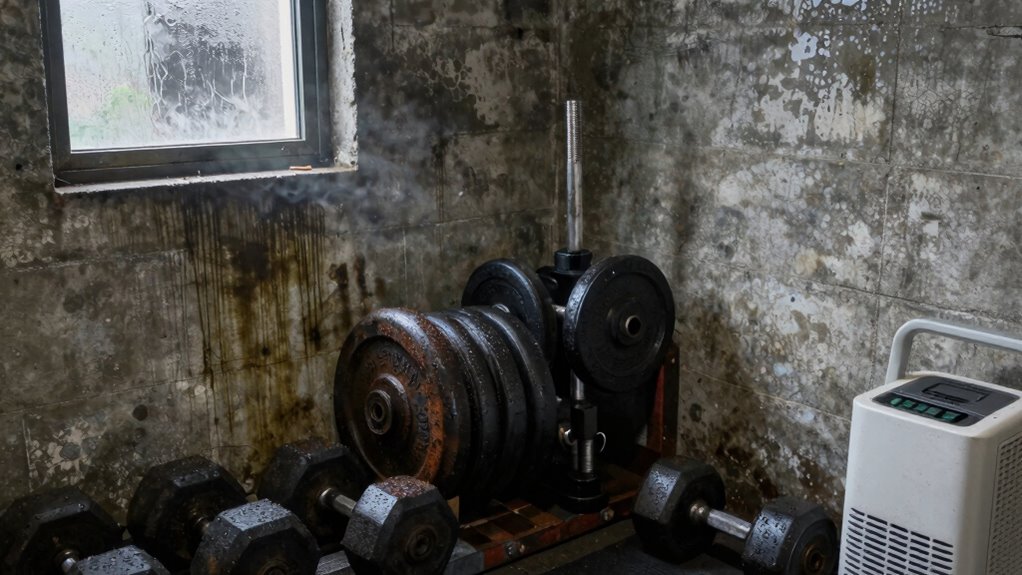
Humidity levels play an essential role in creating a comfortable and effective workout environment in your basement gym. Proper basement insulation helps regulate temperature, but without moisture barriers, excess humidity can seep in and cause problems. Moisture barriers are crucial because they prevent moisture from penetrating your walls and floors, reducing the risk of mold and dampness. If humidity remains high, it can make your space uncomfortably stuffy and lead to a musty smell. Maintaining ideal humidity levels ensures your equipment stays in good shape and your workout remains enjoyable. Additionally, ventilation strategies help circulate fresh air and control moisture buildup. Proper ventilation is vital for moisture control, preventing excessive humidity from accumulating in your space. Installing dehumidifiers can further help regulate humidity levels and protect your equipment from rust and corrosion. Investing in humidity monitoring devices allows you to keep an eye on moisture levels in real time, ensuring optimal conditions. Before setting up your gym, invest in quality basement insulation and moisture barriers to keep humidity in check and create a healthier, more comfortable exercise environment. Proper humidity management is essential for long-term equipment durability and workout comfort.
As an affiliate, we earn on qualifying purchases.
How Humidity Can Damage Your Equipment
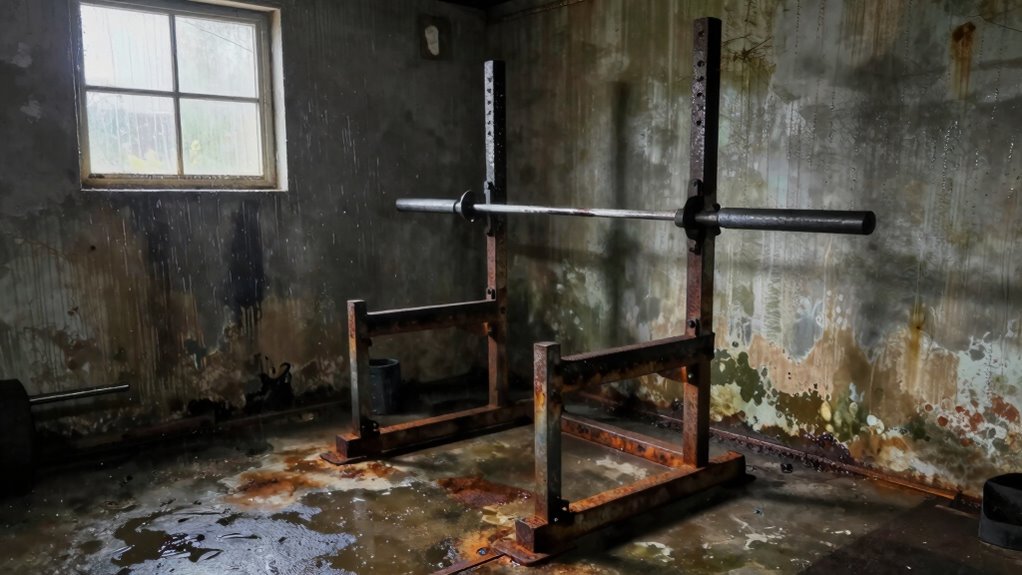
Excess moisture in your basement gym can quickly lead to damage of your workout equipment. Rust can develop on metal parts of weights, benches, and cardio machines, weakening their structure and functionality. Wooden components, like flooring or shelving, may warp or rot when exposed to persistent humidity. Proper fan placement is vital—you want fans positioned to circulate air effectively and reduce moisture build-up. Additionally, moisture barriers, such as vapor barriers on the floor or walls, help prevent dampness from seeping in and damaging your gear. Using dehumidifiers can further help regulate humidity levels and protect your equipment from deterioration. Understanding air circulation is essential because it impacts how effectively moisture is removed from the environment. Proper ventilation systems ensure that stale, humid air is replaced with dry air, further reducing the risk of damage. Incorporating humidity control measures can significantly enhance your gym’s durability and help prevent long-term damage. Adequate ventilation is also crucial for removing indoor pollutants and maintaining a healthy workout environment. Without these measures, humidity can accelerate deterioration, making your investment in equipment less durable and safe. Taking proactive steps to control humidity protects your equipment and ensures your gym remains a functional, long-lasting space.
moisture barrier for basement walls
As an affiliate, we earn on qualifying purchases.
As an affiliate, we earn on qualifying purchases.
Signs That Your Basement Is Overly Humid
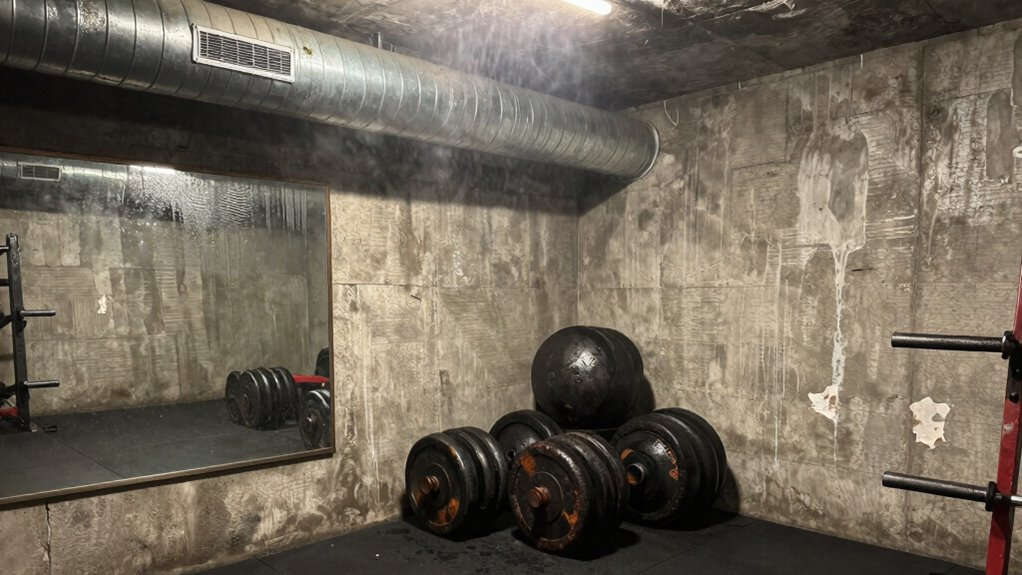
If your basement smells musty even after cleaning, it’s a sign of excessive humidity. You might also notice mold growing on walls or equipment, which indicates persistent moisture. Additionally, if the space feels damp all the time, it’s time to address the humidity levels before it causes more damage. Installing proper ventilation systems can help improve airflow and reduce excess moisture in the space. Using a dehumidifier can also be effective in maintaining optimal humidity levels and preventing mold growth. Ensuring proper air circulation is crucial for creating a healthy, mold-resistant environment in your basement. Incorporating humidity control techniques can further help maintain a balanced environment and protect your belongings. Remember that maintaining proper ventilation not only reduces humidity but also improves overall air quality.
Musty Odors Linger
Have you noticed a persistent musty smell lingering in your basement? This is a clear sign that your space’s humidity levels might be too high. Poor air circulation traps moisture, creating an environment where odors thrive. To combat this, guarantee proper ventilation and odor control methods, like using fans or dehumidifiers. Monitoring indoor air quality can help you maintain a healthy environment and prevent humidity-related issues. Being aware of humidity control strategies is essential for long-term basement health. Additionally, ensuring your space adheres to Victorian steampunk roleplay etiquette principles can add an unusual, thematic touch to your environment. Understanding the underlying cause helps prevent further issues. Here’s a quick comparison:
| Effect of Humidity | Solution |
|---|---|
| Lingering musty odors | Improve air circulation |
| Increased rust and mold | Use dehumidifiers and ventilation |
| Discomfort during workouts | Enhance ventilation for fresh air |
Proper sound vibrations are also utilized in some advanced humidity control techniques, which can contribute to a healthier environment. Incorporating humidity sensors can provide real-time data to optimize your dehumidification efforts and maintain a dry, fresh basement environment. Addressing these issues keeps your basement fresh, dry, and ready for your home gym.
Visible Mold Growth
Visible mold growth is a clear sign that your basement is overly humid. When you see mold, it indicates excess moisture that promotes mold prevention issues. Visible mold typically appears as dark spots or fuzzy patches on walls, ceilings, or floors. If ignored, it can spread quickly and compromise your gym equipment and health. To address this, improve ventilation and reduce humidity levels. Clean affected areas with mold-killing solutions and fix leaks immediately. Keep an eye out for any new patches of visible mold, as they signal ongoing moisture problems. Regular inspections help catch mold early and prevent larger infestations. Taking prompt action not only preserves your basement environment but also safeguards your workout space from mold-related damage. Additionally, monitoring air circulation is essential for maintaining proper humidity levels in your gym. Ensuring proper humidity control can help prevent mold growth before it starts.
Persistent Dampness
Persistent dampness in your basement often signals that humidity levels are too high, creating an environment ripe for mold growth and structural issues. You might notice water stains, a musty smell, or peeling paint, all signs of excessive basement moisture. This dampness can lead to warped flooring and weakened walls if left unchecked. To address this, focus on humidity control by improving ventilation, sealing leaks, and using dehumidifiers. Regularly monitor humidity levels with a hygrometer to ensure they stay below 60%. Additionally, installing proper ventilation systems can significantly improve airflow and reduce moisture buildup. Ensuring proper air circulation is essential in preventing excess humidity and maintaining a dry basement environment. Installing effective drainage solutions can also help prevent water intrusion from outside sources. Incorporating humidity barriers during construction or renovation can further help in controlling moisture levels. Taking these steps helps reduce basement moisture, preventing long-term damage and creating a healthier workout environment. Recognizing persistent dampness early allows you to act swiftly, as moisture management is crucial for maintaining a dry, safe, and comfortable space for your home gym.
As an affiliate, we earn on qualifying purchases.
Simple Ways to Reduce Basement Humidity
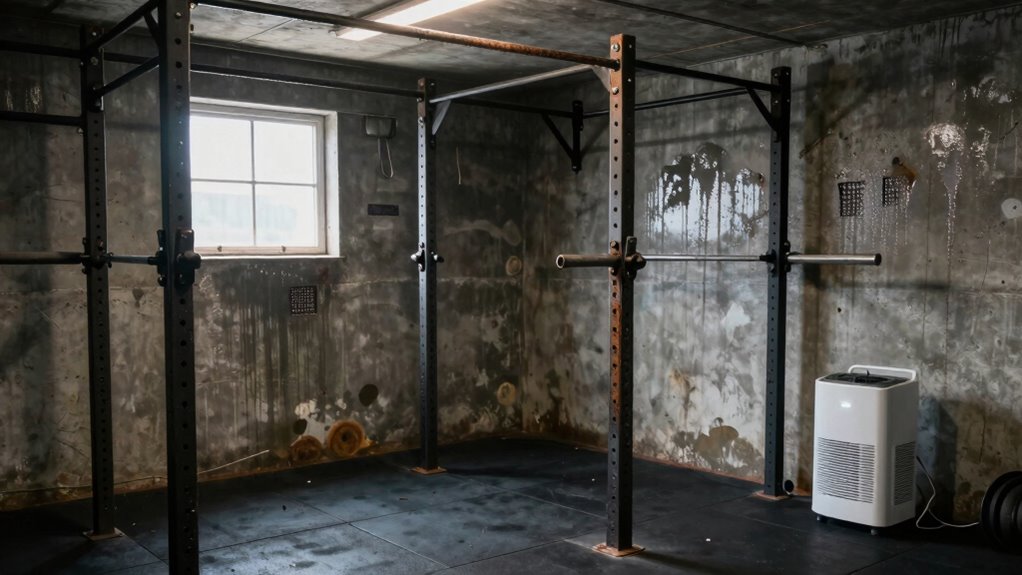
To keep your basement comfortable and dry, start by using a dehumidifier regularly to remove excess moisture. Improving ventilation helps circulate air and reduces humidity levels, while sealing cracks prevents outside moisture from seeping in. Together, these simple steps make a big difference in maintaining a low-humidity environment.
Use Dehumidifiers Regularly
Using dehumidifiers regularly is one of the most effective ways to keep basement humidity levels in check. To guarantee they work efficiently, perform regular dehumidifier maintenance, such as cleaning filters and checking for clogs. Proper maintenance helps prevent mold growth and reduces rust on gym equipment. Aim to maintain ideal humidity levels between 30% and 50%, which inhibits mold and bacteria while protecting your equipment. Set your dehumidifier to run consistently or use a humidistat to keep the humidity steady. Remember, a well-maintained dehumidifier not only improves air quality but also extends its lifespan. Incorporating this simple step into your routine makes your basement gym more comfortable, safe, and free from excess moisture and rust.
Improve Ventilation Effectively
Improving ventilation is a straightforward way to reduce moisture buildup in your basement gym. Enhancing airflow circulation prevents humid air from stagnating, which helps control moisture levels. You can boost natural ventilation by opening windows and doors regularly, especially during dry days, to let fresh air in and humid air out. Installing vents or exhaust fans also promotes better airflow, reducing humidity and preventing rust on equipment. Make sure these ventilation pathways are unobstructed to maximize their effectiveness. Using ceiling or wall-mounted vents encourages consistent air exchange without needing constant manual effort. By prioritizing natural ventilation and ensuring good airflow circulation, you create a healthier, less humid environment that protects your equipment and enhances your workout space.
Seal Basement Cracks
Did you know that sealing cracks in your basement can considerably cut down on humidity levels? Cracks in walls and floors allow moisture to seep in, increasing humidity and risking rust on gym equipment. To prevent this, you should seal cracks using appropriate patching materials or sealants designed for basement walls. This simple step helps waterproof walls, stopping water from entering and reducing overall moisture. Be sure to inspect your basement regularly for new or widening cracks, especially after heavy rains or temperature fluctuations. Waterproofing your basement walls not only keeps humidity in check but also protects your home’s foundation. Taking these measures creates a drier, more comfortable environment for your home gym and prolongs the life of your equipment.
Choosing the Best Dehumidifier and Ventilation System
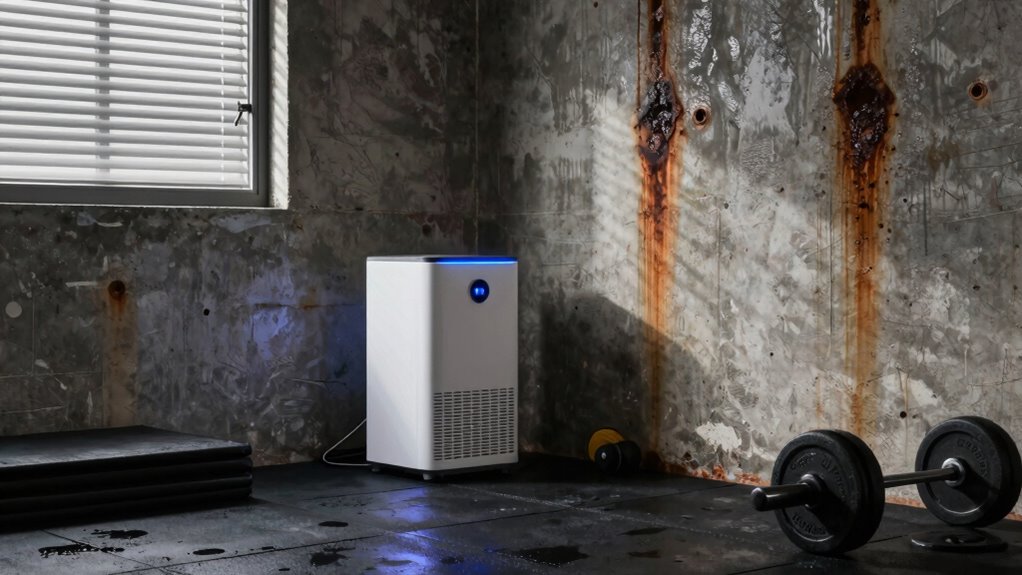
Are you unsure how to select the right dehumidifier and ventilation system for your basement gym? First, consider the dehumidifier capacity; larger spaces need higher capacity units to effectively control humidity. For ventilation, explore the main types: exhaust fans, air exchangers, and HRVs. Each offers different benefits depending on your needs and budget. Here’s a quick comparison:
| Dehumidifier Capacity | Ventilation System Types |
|---|---|
| 30-50 pints/day | Exhaust fans |
| 50-70 pints/day | Air exchangers |
| 70+ pints/day | Heat Recovery Ventilators (HRVs) |
Choose a dehumidifier with enough capacity to handle your space, and select a ventilation system suited to your basement’s airflow and humidity levels for ideal outcomes.
Common Mistakes When Ventilating Your Basement
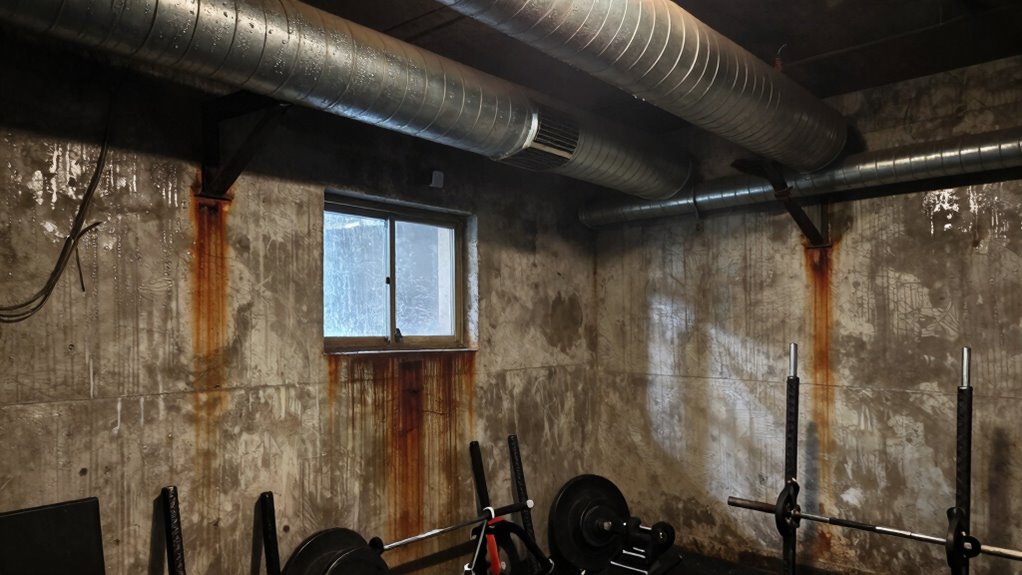
One common mistake when ventilating your basement is neglecting to balance air exchange with humidity control, which can lead to persistent dampness or stale air. Many people fall for ventilation misconceptions, thinking more airflow always improves air quality. In reality, excessive ventilation without proper humidity management can dry out your space or introduce outdoor pollutants. Airflow misunderstandings often cause you to open windows or run fans constantly, but if you don’t consider moisture levels, you may worsen humidity issues instead of resolving them. Proper ventilation requires a strategic approach, combining airflow with humidity control. Ignoring these factors can create a cycle of dampness or stale air, undermining your efforts to maintain a comfortable, healthy basement gym.
Troubleshooting Moisture and Ventilation Problems
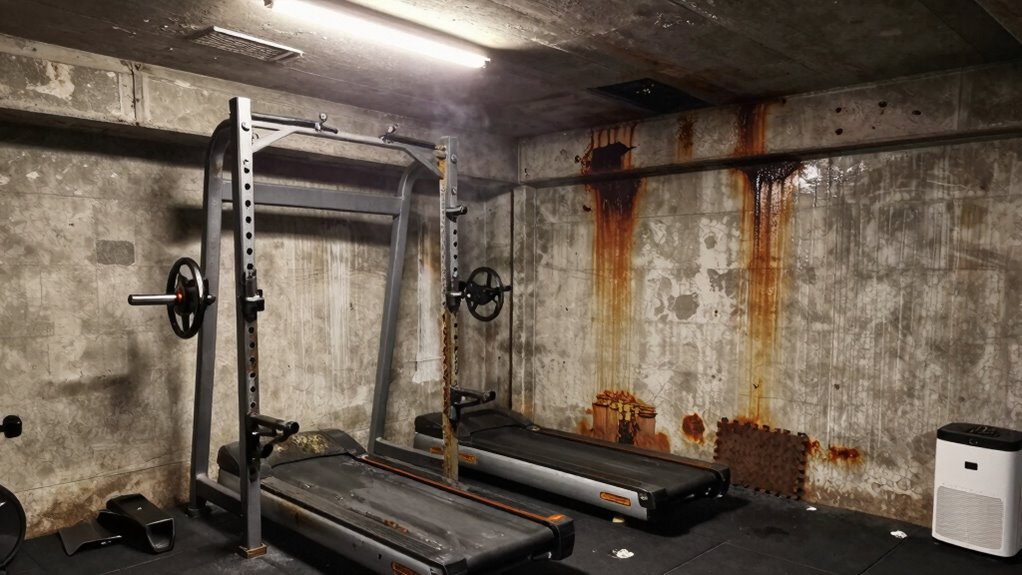
When moisture and ventilation issues persist in your basement gym, it’s vital to identify the root causes quickly. Start by checking if moisture barriers are properly installed along walls and floors to prevent groundwater seepage. If humidity remains high, make sure your ventilation fans are functioning effectively and are appropriately sized for the space. Sometimes, fans may need cleaning or replacement to improve airflow. Also, verify that vents aren’t blocked and that doors or windows are open during workouts to promote air circulation. Use a hygrometer to monitor humidity levels and adjust your ventilation setup accordingly. Addressing these issues promptly will help reduce excess moisture, prevent rust, and maintain a comfortable, healthy environment in your basement gym.
Maintaining a Dry, Healthy Basement Gym Environment

Maintaining a dry, healthy basement gym environment requires ongoing effort and attention to detail. Proper basement insulation helps regulate temperature and prevents moisture buildup. To keep humidity levels in check, place a dehumidifier strategically—near vents or damp corners—to efficiently remove excess moisture. Ascertain your gym equipment is well-ventilated and avoid clutter that traps humidity. Regularly inspect your basement for leaks or condensation. Keep windows sealed and utilize exhaust fans during workouts. Use moisture-absorbing products or silica gel packs in storage areas. Consider installing vapor barriers behind insulation to further reduce dampness. By consistently monitoring humidity and optimizing dehumidifier placement, you create a safer, rust-free space that’s comfortable for your workouts.
Frequently Asked Questions
How Often Should I Check Humidity Levels in My Basement Gym?
You should check your basement gym’s humidity levels weekly to guarantee ideal conditions. Use a hygrometer for accurate readings, and make sure it’s properly calibrated regularly. Monitoring humidity fluctuation helps you catch issues early, preventing rust and mold. If you notice significant changes, adjust your ventilation or dehumidifier settings accordingly. Consistent checks keep your workout space comfortable and protect your equipment from moisture damage.
Can Dehumidifiers Cause Noise Issues During Workouts?
Yes, dehumidifiers can cause noise issues during workouts—ironic, right? While they help with humidity, their constant hum might compete with your playlist. To minimize workout noise, perform regular dehumidifier maintenance, like cleaning filters and checking for loose parts. Consider placing it on a rubber mat or further from your workout space. This way, you keep the air dry without sacrificing your focus or peace during exercise.
Are There Eco-Friendly Ventilation Options for Basement Gyms?
Yes, you can choose eco-friendly fans and green ventilation options for your basement gym. Look for energy-efficient, low-noise eco-friendly fans that reduce your carbon footprint while improving airflow. These green ventilation solutions help manage humidity and prevent rust without harming the environment. Installing a smart ventilation system allows you to control airflow effectively, ensuring a fresh, healthy workout space while staying eco-conscious and reducing energy costs.
How Do I Prevent Mold Growth in Damp Basement Corners?
To prevent mold growth in damp basement corners, start by applying mold-resistant paints to walls and ceilings. Install moisture barriers on floors and walls to reduce dampness. Improve ventilation by using exhaust fans or dehumidifiers to keep humidity levels low. Regularly check for leaks or condensation, and promptly address any moisture issues. These steps help create an inhospitable environment for mold, keeping your gym safe and healthy.
What Are the Best Materials to Resist Rust in Humid Environments?
To resist rust in humid environments, opt for corrosion-proof metals like stainless steel, aluminum, or galvanized steel. Use rust-resistant coatings such as powder coatings or specialized paints to provide an extra barrier. Regularly clean and dry your equipment, and consider applying a protective sealant to prevent moisture buildup. These measures help keep your gym gear durable and rust-free, even in high-humidity basement conditions.
Conclusion
Keeping your basement gym dry is essential for protecting your equipment and ensuring a healthy workout space. By managing humidity with the right dehumidifier and proper ventilation, you’ll prevent rust and mold from taking hold. Don’t forget, even in a world of modern gadgets, good airflow remains your best ally—think of it as your trusty knight guarding your gym’s kingdom. Stay vigilant, and your basement will remain a safe haven for your fitness journey.
Fall Picks
fall essentials
As an affiliate, we earn on qualifying purchases.