TL;DR
Adjustable dumbbells combine several weight settings into a compact pair, which can save floor space and cover many home workouts. Before buying, compare the weight range and increments with your exercises, try to understand the adjustment process, measure the full footprint, and check the handling and safety instructions.
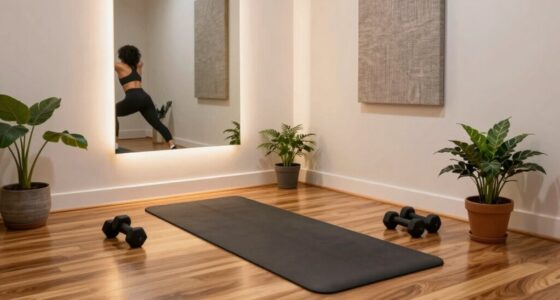
A full rack of dumbbells looks impressive until you need to walk around it in a bedroom-sized gym. Adjustable dumbbells for a home gym offer another option: one pair can take the place of several fixed weights, leaving more floor for your bench, mat, or actual workout.

Get workout gear delivered free with Prime
- Fast, free delivery on millions of items
- Prime Video, Amazon Music and more included
- Member-only deals all year
This blog article covers what adjustable dumbbells do well, where they can feel awkward, and which details deserve a closer look before you buy. You’ll learn how to match multiple weight settings to your exercises, compare adjustment styles, measure the real storage footprint, and check safety basics.
Think of a selector dumbbell like a small toolkit: useful because it keeps several tools close, but only if the pieces you need are easy to reach. Your best choice depends on your space, the lifts you do, and how often you change weights.
Measure the dumbbells and any stand; advertised compactness doesn’t show the full storage footprint.
Compare individual weight increments with the lifts you do, not just the maximum load.
Choose an adjustment mechanism that fits how often you change weights during a workout.
Check handle feel, overall length, and exercise clearance for movements that matter to you.
Confirm the selected load is locked before lifting, and follow the maker’s care and drop instructions.
Save floor space without giving up workout variety
Adjustable dumbbells for a home gym can replace multiple pairs of fixed weights with one pair that changes resistance, freeing up storage for other equipment. Most models use a dial, selector pin, or plates and collars to set the load. That space saving matters most when equipment has to share a room: reclaiming a few square feet can keep a workout path clear and make it easier to leave the bench or mat set up.
For example, you might use lighter weights for shoulder raises, then reach for a heavier setting for rows. With fixed dumbbells, that session could mean several pairs scattered around a small room. With adjustables, you keep the weights in one designated spot and change settings as your plan requires. The tradeoff is that the change takes time, so the same compact setup may feel less convenient during a fast circuit than during sets where you finish one exercise before moving on.
Space savings depend on the product’s actual dimensions, though. Some adjustable dumbbells are long even at lighter settings, and a cradle or stand takes up extra room. Measure the dumbbells and any included stand; compare that footprint with the rack or storage area you would otherwise need. Also allow room to lift them out and return them without twisting around furniture. A set that fits on the floor but is awkward to pick up can make the room feel less usable, not more.
Key point: A compact set saves space only if its full length and storage base fit where you plan to use it.
Weight capacity also affects the kind of training you can do. A pair that suits curls may not offer enough resistance for your lunges or heavier rows. If you buy only for the exercises you do today, you may outgrow the set and end up buying more equipment; buying a much heavier set can cost more and may have larger increments that make lighter movements harder to progress. Check which movements you want to train, and weigh room for progress against price and day-to-day handling.
Products Worth Considering

Levoit Vital 100S-P Air Purifier with Washable Pre-Filter

Hyperice Hypervolt 3 Percussion Massage Gun with Heated Head and Carry Case

Therabody Theragun Relief Massage Gun, 3-Speed, Navy
As an affiliate, we earn on qualifying purchases.
Match weight settings to the lifts you actually do
Weight range and increments tell you whether one pair can support your training now and as you get stronger. The range is the lightest and heaviest setting; the increments are the jumps between them. Range sets the boundaries of what you can lift, while increments determine how smoothly you can move between those boundaries. Small jumps can help you progress gradually, especially on upper-body movements where a large increase may feel like a big step.
Imagine you use a pair for curls and shoulder presses. If the available settings jump from one load to a much heavier one, your curls might progress comfortably while your presses stall at the next step. That gap can force you to repeat a weight longer than you want, change your rep range, or use a different exercise to keep training. A different model with more settings could make the increase feel manageable, though finer increments may increase cost or limit the maximum load within a given budget. The right balance depends on your exercises and current strength.
Use this quick check before you compare products:
- List your exercises: Include both lighter moves, such as raises, and heavier moves, such as lunges. This reveals whether one set needs to cover very different loads.
- Check starting and top weights: Confirm each dumbbell can be set light enough for controlled work and heavy enough for the movements you plan to train. A maximum that exceeds your needs adds little value if the starting setting is already too heavy.
- Review every jump: Look at the setting chart, not just the advertised maximum. Ask whether each increase suits your training, especially on exercises where a small load increase changes how many controlled reps you can complete.
- Leave room to progress: Choose a range that can support future gains if that fits your budget and available space. Consider whether the added capacity is worth any extra bulk, cost, or larger weight jumps.
When adjustable dumbbells combine a suitable range with useful increments, one pair can serve more of your workout and make gradual progression easier to plan. If the weight jumps skip the loads you need, a wide headline range won’t fix the mismatch.
Pick an adjustment style you’ll enjoy using
The adjustment mechanism determines how you change the load between exercises, so test the process rather than judging by the product photos. Dial and selector-pin models are generally quick to change; plate-loaded designs can be simpler but take longer because you remove and replace plates. Some models also require the dumbbell to sit in a stand or cradle while you adjust it. That detail affects more than convenience: if the weight cannot be changed away from its base, you need a place for the cradle and a clear routine for returning the dumbbell to it.
Picture a circuit with rows, curls, and presses. If you move between different loads every few minutes, a fast selector may keep the session flowing and reduce the temptation to skip a weight change. But speed is useful only if the selector is easy to operate and you can confirm it has engaged correctly. If you mostly complete all your sets for one lift before changing the weight, plate loading may feel like a fair trade for a simpler setup. Neither approach is automatically best; the workout determines what feels convenient.
Before buying, find out whether you can adjust both dumbbells independently and whether adjustment requires their stand. Independent adjustment can matter when an exercise uses different loads on each side or when two people share a pair. A two-person household should think about this too. If you and a training partner use different working weights, repeated changes can interrupt a workout even when each adjustment is quick; storing the weight chart nearby or agreeing on turns may make sharing easier.
- Dials and selector pins: Often quick, but check the maker’s instructions and how securely the selected plates lock. A selector that is fast but hard to inspect can undermine the time saved, so confirm what a correctly engaged setting looks and feels like.
- Plate-and-collar systems: Can be straightforward to understand, though changing loads may take more time. The slower process can be a benefit if it encourages deliberate setup, but it may become frustrating in workouts with frequent weight changes.
- Stands or cradles: May make storage and adjustment easier, but add cost and take up floor space. If the model requires one, treat it as part of the equipment’s footprint and setup rather than an optional accessory.
Newer models may add digital displays or app connections. Treat those as optional features: they don’t replace comfortable handling, clear settings, or a lock you can verify before lifting. Consider whether the feature solves a real problem in your routine; otherwise, it adds complexity without changing how well the dumbbell fits your exercises.
Check the grip, balance, and movements before you commit
Adjustable dumbbells handle many standard lifts, but their shape and balance may differ from fixed weights. Check the handle diameter, knurling, length, and how securely the plates sit; those details affect how the dumbbell feels in your hand. Handle texture can help you maintain a secure grip, while a wider or longer body can change where the load sits relative to your wrist. Some selectorized models stay relatively long even on light settings, which can make close-grip work or movements near the floor feel awkward.
For a simple example, a longer dumbbell may feel fine during a standing curl but bump the floor during a renegade row. A bulky shape might also feel unfamiliar when you bring the weights into position for a press. That matters because discomfort or limited clearance can change your range of motion and make you avoid an exercise you intended to train. If you care about a specific exercise, look for a demonstration or dimensions that show the dumbbell in use, not just a polished product shot.
Try to match the tool to your routine. Adjustable dumbbells often work well for controlled presses, rows, curls, raises, and lunges. The best fit depends on the model’s length and shape, so a general list of supported exercises cannot promise that every movement will feel comfortable for you. Think about how the dumbbell travels during each lift: close to your legs, near the floor, or into position beside your shoulders. Those paths reveal clearance problems that a simple weight-range comparison misses.
- Grip: Look for handle details that suit your hands and feel secure during controlled reps. A grip that feels slippery or crowded can become more noticeable as you fatigue, so consider the exercises and rep lengths you typically do.
- Balance: Consider whether the plates sit evenly at both lighter and heavier settings. Changes in plate arrangement can affect how the dumbbell feels as you turn your wrist or stabilize it; try to assess the settings you will use most.
- Exercise clearance: Check floor and body clearance for close-grip movements and exercises where the dumbbells pass near your legs. If the dumbbell contacts the floor or your body, you may have to alter your movement, which can make a technically comfortable lift harder to repeat.
- Comfort changing positions: See how the model is lifted from its cradle and set down between sets. A heavy or awkward pickup can be a bigger everyday issue than a small difference in storage dimensions.
For a home lifter who mainly does presses, curls, and rows, a compact pair may suit the plan well. Someone who trains close to the floor should pay closer attention to length and shape before deciding. If you cannot try the dumbbells in person, compare dimensions with equipment you already own and check the return policy in case the real feel does not match the product photos.
Compare the full cost with the space you gain
The price of a pair is only one part of its value: compare the full cost with what it replaces and how often you’ll change weights. Include a stand if you need one, shipping, replacement parts, and the warranty terms. A set that replaces several fixed pairs may be worthwhile when every square foot matters, while a lower-cost plate-loaded pair may suit a slower-paced routine. The useful comparison is not simply cost per pound; it is whether the set lets you train as planned, fits the room, and avoids purchases you would otherwise make.
Take a small apartment setup as an example. If a rack of fixed dumbbells would crowd the path to a closet, the money you spend on adjustable weights also buys back usable floor. In a garage gym with plenty of room and several people changing loads constantly, fixed weights might offer a simpler experience despite needing more storage. This illustrates the central tradeoff: adjustables can exchange some speed and familiarity for a smaller footprint, and how valuable that exchange is depends on the room and workout.
Check the maker’s policy on wear, maintenance, and replacement parts. Selectorized designs have components that need care, and warranty coverage varies by model. A warranty is most useful when it covers the parts most likely to affect continued use and when replacements are actually available; read the exclusions rather than comparing warranty length alone. Availability and specifications can change, so confirm the current price, dimensions, weight settings, warranty, and return policy with the manufacturer or retailer before ordering.
Use these key points for a useful comparison:
- Upfront cost: Include the dumbbells and any required stand. Add delivery or other charges so a cheaper listed price does not hide a higher total.
- Storage: Measure the pair, base, and room to pick them up safely. A stand can make daily use easier, but its floor area may reduce the space you hoped to gain.
- Replacement needs: Check whether parts are available and what the warranty covers. If a damaged selector cannot be serviced, low purchase cost may not mean good long-term value.
- Training habits: Frequent weight changes make speed more valuable; a single-weight exercise block may not. Think about how often you change settings across an ordinary week, not just the quickest possible workout.
One pair may fit into a compact storage area, but a saving in floor space does not make a poor fit a good buy. Consider the full everyday trade: space, comfort, price, and the loads your workouts require. The best value is the setup you will use consistently without compromising the exercises or storage your home needs.
Use selector dumbbells safely and keep them in good shape
Adjustable dumbbells are safest when you follow the manufacturer’s instructions, confirm the load is fully selected and locked, and set them down as directed. Don’t adjust a dumbbell while holding it, and don’t assume every model can handle a drop. Many selectorized models contain precision parts that may be damaged by rough handling. Damage may not always be obvious, so a lock that feels or sounds different is a reason to stop and check the maker’s guidance.
Before your first set, make the selection while the dumbbell rests in its designated position. Check that the plates are seated and the lock is secure, then lift with control. If a workout partner swaps the setting, have them repeat the same check before the next set. The check matters because a selector may appear set even if a plate has not seated as intended; a quick pause is easier than discovering a loose plate mid-rep.
Care can be simple. Store the dumbbells in their cradle or designated location, keep selector parts clean as directed, and inspect the plates and locking mechanism regularly. Regular checks help catch wear before it interferes with selection or lifting, while following the maker’s cleaning instructions avoids introducing products or methods that could affect the mechanism. If something looks damaged or doesn’t lock correctly, stop using that dumbbell and follow the maker’s guidance rather than trying to force the selector.
Safety check: Confirm the selected weight and lock before each lift, and follow the product’s instructions for storage, care, and dropping.
Those habits matter most in a shared home gym, where another person may have changed the setting or returned the dumbbell differently. Treat the lock check like checking a seatbelt: a short routine that helps you start the lift with confidence. Keep the routine consistent for every user, since familiarity with the equipment does not guarantee that the previous setting was returned correctly.
Frequently Asked Questions
Are adjustable dumbbells worth it for a home gym?
They can be a good fit when you have limited storage or want several weights without a rack of fixed pairs. Compare the cost, adjustment process, dimensions, and exercises you plan to do. Fixed dumbbells may be more convenient if you change weights constantly or have plenty of room.
What weight range should I choose?
Start with your planned exercises and the weights you can use with good control, then check whether the set leaves room to progress. A pair that suits curls may feel too light for lunges. Review the full setting chart, since the size of each jump can matter as much as the maximum load.
Are adjustable dumbbells safe to use?
They can be used safely when you select the weight correctly, confirm the lock, and follow the manufacturer’s instructions. Don’t change the setting while holding the dumbbell, and don’t drop a model unless the maker says it is designed for that. Stop using a set if a plate or selector appears damaged.
Can I use adjustable dumbbells for every exercise?
They suit many controlled lifts, including presses, rows, curls, raises, and lunges. Long or bulky models can feel awkward during close-grip work or floor exercises such as renegade rows. Check the dumbbell’s dimensions against the movements you care about.
Do I need a stand for adjustable dumbbells?
It depends on the model: some require a cradle for adjustments, while others can be changed without one. A stand can make storage and handling easier, but it adds cost and takes up floor space. Include it when measuring the footprint and comparing prices.
How can I tell whether a pair will fit my workout space?
Check the manufacturer’s dimensions for both dumbbells and the stand, then measure the spot where you’ll store and pick them up. Think about clearance during your lifts, too. A pair can fit under a bench yet still feel too long to use comfortably on the floor.
Conclusion
Choose a pair by matching its weight settings, adjustment style, dimensions, and handling to the workouts you actually do. Confirm the current specs and safety instructions before you buy, then measure the space where the dumbbells will live.
The right pair should make room for your training and feel ready when you are. A tidy corner, a clear floor, and a weight that suits your next set: that’s a home gym working for you.