
This guide shows beginners how to choose a weighted jump rope, adjust it to their height, and use it for a controlled cardio workout. You will finish with a repeatable interval session, technique checks, and a simple way to progress without increasing impact too quickly. Allow about 20-30 minutes for rope setup, warm-up, and your first session.

Get workout gear delivered free with Prime
- Fast, free delivery on millions of items
- Prime Video, Amazon Music and more included
- Member-only deals all year

Redify Weighted Jump Rope (1 lb) with Tangle-Free Ball Bearings
- ✔ Brand: Redify
- ✔ Listed weight: 1 lb
- ✔ Rope length: 10 feet; adjustable

HPYGN Weighted Jump Rope for Adults
- ✔ Brand: HPYGN
- ✔ Available weights: 2.8 lb, 3.8 lb, and 5 lb
- ✔ Length: 9.2 feet

LIFEEZY Adjustable Weighted Speed Jump Rope
- ✔ Brand: LIFEEZY
- ✔ Model: JR444
- ✔ Weight: 0.21 kg
Difficulty: Beginner | Time: 20-30 minutes for setup and a first workout
What You’ll Need
Tools & Materials:
- Weighted jump rope with adjustable length, if possible
- Supportive athletic shoes
- Timer or interval timer app
- Clear, level, nonslip floor space
- Water and a towel
Knowledge:
- Basic ability to walk briskly or perform low-impact exercise
- Ability to stop and rest if pain, dizziness, or unusual shortness of breath occurs
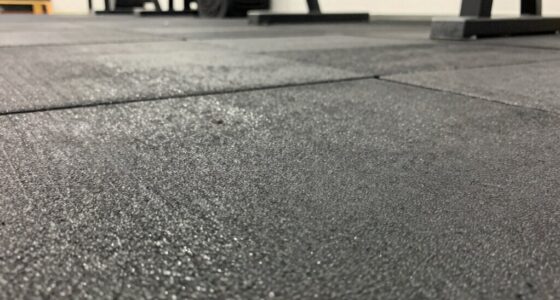
Choose a rope weight you can turn smoothly without straining your shoulders, wrists, or grip. Weighted ropes vary widely: some have heavier handles, while others have a weighted cable. Start with a light or moderate option rather than assuming a heavier rope gives a better workout. If you have a heart, joint, balance, or other medical condition, or have been inactive for a long time, ask a healthcare professional whether jumping exercise is appropriate. Use a surface with some give, such as a rubber exercise floor, and avoid concrete when possible.
Redify Weighted Jump Rope (1 lb) with Tangle-Free Ball Bearings
Redify earns our top position because it makes the broadest case for everyday cardio: it includes both a 9mm braided cotton rope and a 9mm solid PVC rope, giving us two different rope feels to work with. That versatility matters more than simply adding weight. A buyer can start with the style that feels easier to control, then switch as workout preferences or skill develop. Its listed 1-pound weight offers noticeable resistance without approaching the listed loads of the HPYGN versions.The double ball bearings are intended to support smooth rotation, while aluminum handles with silicone grips provide a secure-feeling hold during faster efforts. Redify is also adjustable and listed at ten feet, which helps it fit a range of users, though adjustment is still a setup step. Compared with LIFEEZY, it provides two rope materials but is less clearly oriented toward speed-focused steel-cable work. Compared with HPYGN, it is the more approachable choice for continuous cardio rather than high-resistance conditioning.There are limits. The product description notes that the PVC rope takes a particular combination of speed and strength to use effectively, so switching ropes does not automatically make the workout easier. And while one pound can add feedback, it may not satisfy someone seeking a rope for heavy strength-focused sessions. We’d choose Redify when variety and adaptable cardio matter more than maximum resistance.
Pros:
- Includes braided cotton and solid PVC rope options.
- Double ball bearings are designed for smooth rotation.
- Adjustable ten-foot rope accommodates different user heights.
- Aluminum handles have silicone grips.
Cons:
- The PVC rope may take practice to coordinate at an effective pace.
- Its 1-pound weight may be too light for heavy resistance training.
- Choosing between two rope styles adds a small learning curve.
Best for: Cardio users who want two rope materials, adjustable length, and moderate resistance for varied workouts.
Not ideal for: People seeking very heavy resistance or anyone who wants a single, simple rope with no need to choose between rope styles.
Bottom line: Redify is our strongest all-around pick for cardio because its dual-rope setup offers more workout flexibility than LIFEEZY, without the steep resistance of HPYGN.
“Redify is our strongest all-around pick for cardio because its dual-rope setup offers more workout flexibility than LIFEEZY, without the steep resistance of HPYGN.”
HPYGN Weighted Jump Rope for Adults
HPYGN is the outlier in this lineup: its listed options of 2.8, 3.8, and 5 pounds put it in a different resistance category from Redify’s 1-pound setup and LIFEEZY’s 0.21 kg rope. That makes it the most compelling choice for people who specifically want a more demanding, strength-oriented skipping session. The added load can make every rotation feel more deliberate, but it can also make the rope harder to accelerate and sustain for longer cardio intervals.Its 9.2-foot synthetic-fiber rope is paired with anti-slip handles, and a portable bag supports storage or transport. Those practical details make it a reasonable home or travel option, although the supplied information does not specify the same bearing system or two-rope flexibility found on Redify. Compared with LIFEEZY’s lighter coated steel cable, HPYGN prioritizes resistance over speed. Compared with Redify, it offers heavier listed versions but not the same choice of rope materials.We would be cautious about starting at the heaviest listed option. The description itself warns that the rope may challenge beginners, and the available weight selection should be checked carefully before purchase. Promotional calorie-burning and weight-loss claims are not a sound reason to choose it; the real differentiator is its stated resistance. HPYGN makes the most sense when heavier effort is the point, not when the priority is an easy-to-maintain cardio rhythm.
Pros:
- Available in listed weights from 2.8 to 5 pounds.
- Wear-resistant synthetic-fiber rope is designed for durability.
- Anti-slip handles support a secure grip.
- Portable bag is included for carrying or storage.
Cons:
- The heavier options may be difficult for beginners to control.
- Greater resistance can make sustained, fast cardio less practical.
- The supplied description does not identify a bearing system or adjustable length.
Best for: Experienced users who want a notably heavier rope for short, demanding conditioning sets and value a carry bag.
Not ideal for: Beginners, users focused on quick continuous skipping, or anyone who prefers modest resistance and easy pace changes.
Bottom line: HPYGN is the specialized pick for users who want much more resistance than Redify or LIFEEZY provide, but it is the least suitable choice for beginner-friendly, steady cardio.
“HPYGN is the specialized pick for users who want much more resistance than Redify or LIFEEZY provide, but it is the least suitable choice for beginner-friendly, steady cardio.”
LIFEEZY Adjustable Weighted Speed Jump Rope
LIFEEZY takes the lighter, quicker approach. Its 0.21 kg steel cable with a wear-resistant PU coating is a better match for speed-oriented intervals than HPYGN’s much heavier listed versions. Double ball bearings are intended to help the cable rotate smoothly, and the aluminum handles use synthetic rubber grips. For a buyer who wants a weighted rope but still prioritizes a brisk cadence, this design offers a more relevant balance than a heavy resistance-first rope.Its practical advantage is the screw-free self-locking length adjustment, paired with a ten-foot cable. That can simplify fitting compared with a rope that requires a more involved adjustment process, though the supplied details note that the cable may still need to be set to the user’s height. Compared with Redify, LIFEEZY uses one cable rather than offering cotton and PVC alternatives; in return, its steel construction and speed-rope format give it a clearer role for fast cardio and boxing-style work.The tradeoff is that there is only one steel cable included. Buyers who want to change rope feel without purchasing another option may prefer Redify’s dual-rope kit. Also, “weighted” here does not mean anything close to HPYGN’s listed 2.8-to-5-pound options, so those seeking substantial resistance should look elsewhere. We rank LIFEEZY behind Redify because it is more specialized, but its adjustable fit and lighter cable make it a strong match for users who value pace over load.
Pros:
- Steel cable has a wear-resistant PU coating.
- Screw-free self-locking system supports length adjustment.
- Double ball bearings are designed for smooth rotation.
- Aluminum handles have synthetic rubber grips.
Cons:
- Only one steel cable is included.
- The cable may need adjustment to suit the user’s height.
- Its listed weight is much lower than HPYGN’s heavy options.
Best for: Users seeking a lighter weighted rope for faster cardio intervals, boxing drills, or home workouts, with a simple length-adjustment system.
Not ideal for: Buyers who want multiple rope styles in one set or substantially heavier resistance for strength-focused skipping.
Bottom line: LIFEEZY is the better fit than HPYGN for quicker cardio and easier pacing, while Redify is more versatile if you want two rope styles.
“LIFEEZY is the better fit than HPYGN for quicker cardio and easier pacing, while Redify is more versatile if you want two rope styles.”
As an Amazon Associate we earn from qualifying purchases.
Before You Start
Clear an area where the rope can pass overhead and under your feet without hitting furniture, people, or pets. Check the rope for fraying, loose fasteners, or damaged handles before each session. Jumping rope is a high-impact activity; begin with short intervals and stop if you feel sharp pain, chest discomfort, faintness, or unusual breathing difficulty. Keep jumps low and land quietly. The workout below uses timed work and rest intervals, so adjust the work period downward if you cannot maintain relaxed control.
Step-by-Step Instructions
Step 1: Choose a manageable rope weight
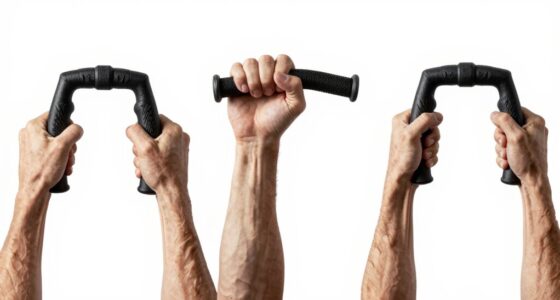
Select an adjustable weighted rope that you can turn smoothly through several slow practice rotations. If you are new to weighted ropes, choose a light or moderate model; favor weight concentrated in the handles over a heavy cable if the cable’s momentum strains your shoulders. Check the manufacturer’s instructions for weight and speed guidance. Avoid using a very heavy rope as a shortcut to harder cardio.
Tip: A weighted rope should make each turn feel deliberate, not force you to swing from the shoulders or grip the handles tightly.
Check: You can turn the rope slowly for 20-30 seconds with relaxed hands, shoulders down, and no pain or loss of control.
Step 2: Set the rope length
Stand on the middle of the rope with both feet and pull the handles upward along your sides. Set the handle ends to reach roughly your lower chest or armpit area, depending on the rope design and your technique. Shorten or lengthen the rope with its adjustment system, following the manufacturer’s instructions, and secure the fasteners. Test a few slow turns and make small adjustments if the rope repeatedly catches your feet or hits the floor far in front of you.
Tip: Do not cut excess cable until you have tested the adjusted length in a workout. Some ropes require a specific amount of extra cable for safe locking.
Check: The rope clears your head and feet with a small margin while you keep your elbows close to your sides.
Step 3: Prepare your space and body
Put on supportive shoes and choose a level, nonslip surface with room around you. Warm up for five minutes: walk briskly in place, move your ankles and shoulders, and perform gentle calf raises. Hold the handles loosely, check that the rope and connectors are secure, and place your timer where you can see or hear it without reaching during a set.
Tip: Avoid a thick carpet that catches the rope, slippery flooring, and hard concrete when a more forgiving surface is available.
Check: Your space is clear, the rope moves freely, and your body feels warm without fatigue before the first interval.
Step 4: Practice the turning motion without jumping
Stand tall with your feet close together, elbows bent and near your ribs, and hands slightly forward of your hips. Turn the rope using small wrist circles instead of wide arm swings. Complete 10-15 slow turns without jumping, then pause to check your grip and shoulder tension. Slow down or shorten the practice if the rope is difficult to control.
Tip: Keep your gaze forward and jaw relaxed. Looking down at your feet often changes posture and makes timing harder.
Check: The rope travels in a steady loop, and your upper arms stay mostly still instead of sweeping outward.
Step 5: Start with low, quiet jumps
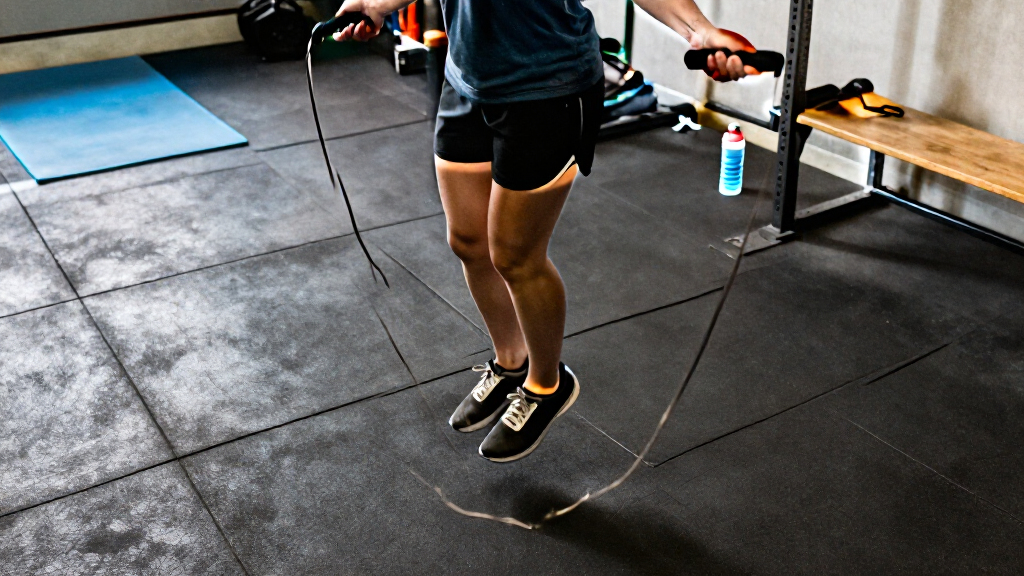
Turn the rope and make small two-foot hops, lifting only enough for the rope to pass underneath. Land softly on the balls of your feet with your knees slightly relaxed, then let your heels lower naturally. Keep your torso upright and use a comfortable rhythm. Complete 10-20 jumps, stop, and recover before repeating. If the rope catches, reset calmly rather than speeding up to force it through.
Tip: If continuous jumping feels too difficult, practice one rope turn followed by a pause, or alternate brief rope turns with marching in place.
Check: You can complete a short set without loud, stiff landings, shoulder strain, or repeated uncontrolled rope swings.
Step 6: Complete a beginner cardio interval session
Set a timer for six rounds of 20 seconds of easy jumping followed by 40 seconds of rest or gentle marching. Jump at a pace that lets you maintain clean turns and quiet landings. Rest longer if your breathing does not settle enough for another controlled round. Finish with two to three minutes of easy walking and gentle calf and ankle movement.
Tip: Use the rest periods. They are part of the workout, not a test of willpower. Stop the session if discomfort changes your movement or you feel unwell.
Check: You complete the planned rounds at a controlled effort and recover during the rests without pain or concerning symptoms.
Step 7: Record the session and plan the next one
Write down the rope weight, rope length setting, number of rounds completed, and how difficult the session felt. Leave at least a day between early sessions so your calves, feet, and ankles can recover. Repeat the same workout until the timing and landings feel comfortable. Then add one or two rounds, or lengthen each work interval by five seconds; change only one part at a time.
Tip: Do not increase rope weight and workout duration at the same time. A heavier rope can raise arm and shoulder demand even when jump time stays the same.
Check: You have a clear record of the session and a conservative next target based on how your body recovered.
Common Mistakes to Avoid
- Starting with a rope that is too heavy or jumping continuously for too long. — Use a manageable weight and short timed intervals. Increase either the work time or number of rounds gradually, not both at once.
- Swinging the rope with large shoulder and arm movements. — Keep elbows close to your sides, loosen your grip, and make small wrist circles. Slow down if you lose control.
- Jumping high or landing heavily. — Use the smallest hop that clears the rope and aim for quiet, springy landings. Reduce the interval or switch to low-impact practice if your form breaks down.
- Ignoring rope length or surface problems when the rope catches. — Recheck the adjustment and practice on a clear, level surface. Make small length changes and test before cutting any excess cable.
Troubleshooting
Problem: The rope keeps catching under your feet.
Solution: Pause and check that the rope is centered, its length gives enough clearance, and the floor is not catching it. Turn more slowly, keep your elbows in, and practice a few rotations without jumping before trying again.
Problem: Your shoulders or forearms tire before your breathing does.
Solution: Stop the set and rest. Check whether the rope is too heavy, your grip is too tight, or your arms are making wide circles. Use a lighter rope or shorter intervals and turn from the wrists with relaxed shoulders.
Problem: Your calves, feet, or shins become sore.
Solution: End the session rather than jumping through pain. Review the surface, shoes, jump height, and total work time. Allow recovery; restart with shorter intervals and a lower total volume only when ordinary walking is comfortable. Seek medical advice for persistent, worsening, or sharp pain.
Problem: You feel dizzy, unusually short of breath, or have chest discomfort.
Solution: Stop immediately and sit or lie down in a safe place. Do not resume that workout. Seek urgent medical help for chest pain, fainting, severe breathing difficulty, or symptoms that do not quickly settle.
What Success Looks Like
A successful first workout is not defined by speed or exhaustion. You have a correctly secured rope that clears your head and feet, controlled wrist-led turns, low and quiet landings, and completed intervals with recovery breaks. You finish without sharp pain or concerning symptoms, can walk normally afterward, and have recorded a sensible next session. If form deteriorates, stopping early counts as the safer choice.
Next Steps
Repeat the beginner session two or three times per week on nonconsecutive days, provided you recover comfortably. Add a small amount of work only after the current session feels controlled on more than one occasion. Keep at least one easy or rest day between early jump-rope workouts, and use walking or other low-impact cardio on alternate days if desired. Recheck the rope, adjustment locks, and floor space before each use. If pain keeps returning despite reducing volume and checking technique, pause jumping and consult a qualified healthcare professional.
Frequently Asked Questions
How heavy should a weighted jump rope be for cardio?
Choose a weight that lets you turn the rope smoothly without straining your hands, shoulders, or forearms. Beginners should start light or moderate and follow the product’s instructions. A heavier rope is not automatically better for cardio; control and repeatable technique matter more.
How long should a beginner jump with a weighted rope?
Start with short intervals such as 20 seconds of easy jumping followed by 40 seconds of rest, for four to six rounds. Reduce the jumping time or add rest if your form or breathing does not recover. Build gradually across sessions rather than trying to jump continuously at the start.
Can I use a weighted jump rope every day?
Daily jumping is usually unnecessary for beginners and may leave too little recovery time for the feet, calves, and ankles. Begin with two or three nonconsecutive sessions per week. Increase frequency only if you recover well and can keep your technique controlled.
Should the rope have weighted handles or a weighted cable?
Either design can work for cardio. Heavier handles add load to the hands and arms, while a weighted cable may create more turning momentum. Pick a design you can control comfortably and check the maker’s guidance; avoid starting with a weight that makes your shoulders tense or your timing erratic.
What should I do if I cannot jump continuously?
Use intervals with walking or marching during recovery, or practice rope turns without jumping. You can also do a single hop per turn and pause to reset. Keep sessions short until timing and landing feel comfortable; do not force continuous jumping through pain or loss of control.