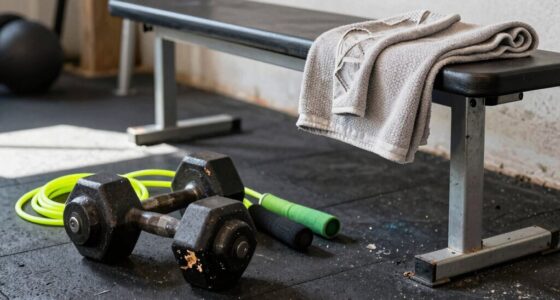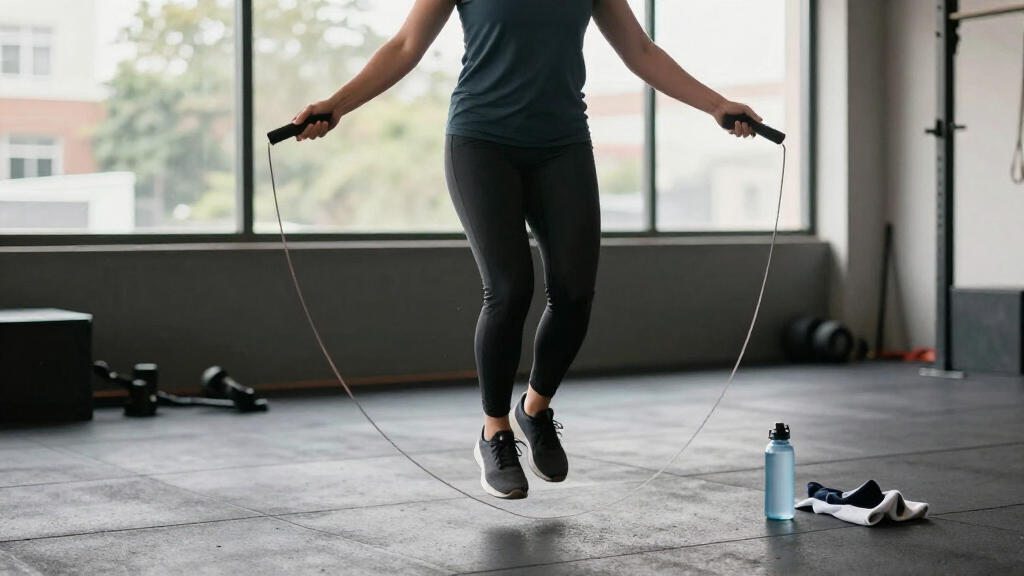

Choosing a weighted jump rope for cardio is less about finding the heaviest rope you can handle and more about deciding what you want the rope to add to your workout. A heavier model increases the effort needed to turn it, making each minute more demanding on the arms and shoulders as well as the legs. A lighter weighted model keeps the basic rhythm and cardio benefits of skipping while adding a smaller strength and feedback component.

Get workout gear delivered free with Prime
- Fast, free delivery on millions of items
- Prime Video, Amazon Music and more included
- Member-only deals all year

Redify Weighted Jump Rope (1 lb) with Tangle-Free Ball Bearings
- ✔ Weight: 1 lb
- ✔ Rope length: 10 feet; adjustable
- ✔ Rope materials: 9 mm braided cotton and 9 mm solid PVC

HPYGN Weighted Jump Rope for Adults
- ✔ Available weights: 2.8 lb, 3.8 lb, and 5 lb
- ✔ Length: 9.2 feet
- ✔ Rope material: Polymer synthetic fiber

Weighted Jump Rope for Fitness, 1.5 lb or 2.8 lb
- ✔ Weight options: 1.5 lb and 2.8 lb
- ✔ Rope material: Polymer synthetic fibers
- ✔ Handle material: Polyolefin heat-shrinkable material
That difference matters for workout length, technique, and how quickly fatigue sets in. Heavier ropes tend to suit experienced skippers who want short, challenging intervals; lighter ropes make more sense for beginners, longer sessions, and people who value speed or footwork. Neither weight automatically produces better cardio, and a rope that disrupts your form can make a workout less useful. The best choice is the one whose resistance lets you keep a steady, controlled rhythm.
At a Glance
| Criteria | Heavier weighted jump rope | Lighter weighted jump rope | Winner |
|---|---|---|---|
| Resistance and workout intensity | More resistance per turn; better suited to demanding intervals | Adds some resistance without as much effort per turn | A |
| Cardio pace and session length | Usually favors shorter, slower rounds | Easier to sustain for longer cardio sessions | B |
| Learning curve and technique | Clearer rope feedback, but mistakes can feel more punishing | Generally easier to control while learning basic rhythm | B |
| Arm and shoulder fatigue | Higher fatigue, especially during longer sessions | Less demanding on the upper body | B |
| Skill and speed work | Less suited to fast footwork and rapid turns | Better for building cadence and practicing footwork | B |
| Versatility and progression | Strong fit for strength-biased sessions; may be limiting for speed work | More adaptable to general cardio and skill practice | B |
| Value | Worth paying extra only if added resistance is a real training goal | Often the better value for beginners and all-purpose use | Depends |
Redify Weighted Jump Rope (1 lb) with Tangle-Free Ball Bearings
Redify takes the top spot because it offers the clearest path to adjusting the feel of a cardio workout without committing to a very heavy rope. Its 1 lb design is paired with a 9 mm braided cotton rope and a 9 mm solid PVC rope, so users can switch rope styles as they refine their pace or vary sessions. That flexibility distinguishes it from HPYGN, whose listed weights are much heavier, and from the generic 1.5 lb/2.8 lb model, which offers weight choices but no second rope style in the supplied details.For cardio, the double ball bearings are a meaningful inclusion: smooth rotation can help maintain a consistent rhythm, while an adjustable length makes it easier to fit the rope to the user. Aluminum handles with silicone grips add a secure-feeling contact point for repeated turns. Together, these features make Redify the most balanced choice for buyers who want resistance but do not want their rope choice to dictate a very slow, strength-dominant session.There are limits. A 1 lb rope may not satisfy someone specifically looking for the pronounced resistance of HPYGN’s heavier options. The PVC rope also asks for coordination between speed and strength, so switching rope types is not automatically a beginner-friendly upgrade. We would choose Redify for variety and cardio control, not as a substitute for a very heavy conditioning rope.
Pros:
- Two rope styles let users vary the workout feel without buying a second listed model.
- Adjustable length supports a more personalized fit.
- Double ball bearings are specified for smoother, tangle-resistant rotation.
- Aluminum handles with silicone grips combine a firm handle structure with a grippy surface.
Cons:
- At 1 lb, it may feel too light for users who want a heavy strength-focused rope.
- The PVC rope can require practice to balance turning speed and resistance.
- The dual-rope design offers more setup choice than buyers seeking a simple, one-rope option may need.
Best for: Cardio-focused users who want an adjustable 1 lb rope and the option to switch between cotton and PVC for different session feels.
Not ideal for: Buyers seeking very heavy resistance, or beginners who want the simplest possible rope and may find the PVC rope’s speed-and-strength demands frustrating.
Bottom line: We recommend Redify as the strongest all-around cardio choice because it combines moderate weight, adjustability, and two distinct rope styles.
“We recommend Redify as the strongest all-around cardio choice because it combines moderate weight, adjustability, and two distinct rope styles.”
HPYGN Weighted Jump Rope for Adults
HPYGN is the clear specialist in this group: its listed 2.8 lb, 3.8 lb, and 5 lb options give buyers a much heavier resistance range than Redify’s 1 lb rope or the third model’s 1.5 lb and 2.8 lb choices. That makes it the one to consider when cardio is part of a more demanding conditioning routine and the user already has the coordination and strength to turn a heavy rope repeatedly. It is not our default recommendation for someone learning to jump or trying to build a quick, continuous cadence.The rope is described as durable synthetic fiber, with anti-slip handles and a portable bag for storage or travel. Its 9.2-foot length is specified, which is useful when comparing fit, although the provided listing does not say it is adjustable. Compared with Redify, HPYGN gives up the latter’s dual-rope flexibility and stated bearing system in exchange for substantially heavier weight choices. Compared with the generic fitness rope, it offers more listed weight steps, including options that go well beyond a moderate cardio load.That range is also the main caution. The product description says it supports strength and cardio, but choosing the heaviest version just because it sounds more intense could make steady cardio harder to sustain. We would start by considering the lightest listed option if choosing this model, and only move toward heavier versions if the user can preserve safe, controlled turns. The listing also includes broad calorie-burning and weight-loss claims that we do not use to judge its value. Its case rests on resistance choice and portability, not promised results.
Pros:
- Several listed weights offer more resistance choices than the other models.
- Synthetic fiber rope is described as durable and wear-resistant.
- Anti-slip handles support a secure hold during repeated turns.
- A portable bag is included for carrying or storing the rope.
Cons:
- The heavier options may be difficult for beginners and can make fast cardio cadence harder to sustain.
- The 9.2-foot length is listed without an adjustment feature in the supplied details.
- Bearing construction is not specified, making rotation performance harder to compare with Redify.
Best for: Experienced adult users who specifically want a heavy rope and value several substantial weight choices for controlled conditioning sessions.
Not ideal for: New jump-rope users, buyers prioritizing fast cadence, or anyone who needs confirmed adjustable length and detailed bearing information.
Bottom line: HPYGN is our pick for experienced users who want heavier resistance options, but most cardio beginners should look first at Redify’s lighter, more adaptable setup.
“HPYGN is our pick for experienced users who want heavier resistance options, but most cardio beginners should look first at Redify’s lighter, more adaptable setup.”
Weighted Jump Rope for Fitness, 1.5 lb or 2.8 lb
This generic fitness rope fills the middle ground between Redify’s lighter 1 lb setup and HPYGN’s heavier range. Buyers can choose 1.5 lb or 2.8 lb, a useful distinction if they want more resistance than Redify provides but are not necessarily shopping for HPYGN’s 3.8 lb or 5 lb options. It is a simpler proposition than Redify: one synthetic-fiber rope design is described, with an included protective sleeve rather than an interchangeable rope system.The anti-slip ergonomic handles and protective sleeve give the model a practical focus. The sleeve may help protect the rope during storage or use, while the handles are intended to support a secure grip. The description positions it for home, gym, or travel use, but the supplied specifications do not state rope length, adjustability, or bearing construction. That leaves more unanswered fit and rotation questions than we have for Redify, whose adjustable 10-foot length and double ball bearings are explicitly listed.We rank it third not because the stated weight choices are unhelpful, but because the product information is thinner for buyers comparing cardio usability. Its 1.5 lb option may be a reasonable middle-weight direction for someone who finds 1 lb too light yet wants to avoid HPYGN’s heaviest selections. Still, a weighted rope can challenge newcomers, and this listing’s claim of tenfold workout efficiency is not substantiated by the supplied details. Choose it for the simple weight range and sleeve; skip it if exact fit or smooth rotation is a priority.
Pros:
- Two weight options, 1.5 lb and 2.8 lb, offer a middle ground between Redify and HPYGN’s heaviest versions.
- Protective sleeve is included.
- Ergonomic, anti-slip handles are designed for a secure grip.
- Synthetic-fiber construction is described as durable.
Cons:
- Rope length and adjustability are not provided in the supplied specifications.
- Bearing or rotation details are not specified.
- The 2.8 lb version may be demanding for beginners, while the product’s efficiency claim is unsupported by the details provided.
Best for: Users who want a choice between moderate and heavier resistance and value a protective sleeve for storage or general use.
Not ideal for: Buyers who need a stated adjustable length, documented bearing system, or a beginner-focused rope with detailed fit guidance.
Bottom line: This is a reasonable middle-weight alternative with a useful protective sleeve, but Redify is the safer comparison-led choice when fit and rotation details matter.
“This is a reasonable middle-weight alternative with a useful protective sleeve, but Redify is the safer comparison-led choice when fit and rotation details matter.”
As an Amazon Associate we earn from qualifying purchases.
Key Differences
The main distinction is resistance, not whether one rope is capable of providing cardio. Both can support a cardiovascular workout when used at an appropriate pace. A heavier rope requires more effort from the arms and shoulders to keep moving, so it can make a short interval feel harder even when the skipping cadence is modest. That is useful when added resistance is the point, but it does not mean the heavier option is automatically a better calorie-burning tool or a better fit for every workout.
A lighter weighted rope gives up some of that resistance in exchange for easier rhythm, longer rounds, and more room to work on footwork. That makes it the safer default for most people shopping for one rope to use regularly. Choose the heavier option if you already skip confidently and want resistance-led intervals. Choose the lighter option if you are learning, prioritizing steady cardio, or expect to practice faster turns and skills. In either case, the rope should let you maintain controlled technique rather than force you into strained, sloppy repetitions.
Detailed Comparison
Resistance and workout intensity (Heavier weighted jump rope wins — major)
Heavier rope wins for added resistance, by a major margin. Its greater mass demands more effort each time you turn it, particularly from the wrists, forearms, and shoulders. This can raise the muscular challenge of a short cardio interval without requiring a fast cadence. The tradeoff is that upper-body fatigue may arrive before you have completed the cardio work you wanted. A lighter weighted rope adds less resistance but still gives more feedback than a very light speed rope. For general cardio, that modest load is often enough; for resistance-focused intervals, the heavier model is the more direct choice.
Cardio pace and session length (Lighter weighted jump rope wins — moderate)
Lighter rope wins for sustained cardio, by a moderate margin. It is easier to keep turning at a consistent rhythm without the shoulders tiring as quickly, so longer rounds and repeat intervals are more practical for many users. A heavier rope can still raise your effort, but users may need to slow down or rest sooner. That can work well for deliberately short, hard sets, yet it is a drawback if your goal is steady skipping over a longer session. The best cardio workout remains one you can perform at a repeatable pace with sound form.
Learning curve and technique (Lighter weighted jump rope wins — moderate)
Lighter rope wins, by a moderate margin. Beginners benefit from being able to practice timing, small jumps, and consistent wrist movement without managing as much resistance. A heavier rope can provide more noticeable feedback about where the rope is, which some experienced users like, but a missed turn may feel more jarring and repeated errors can tire the arms quickly. Neither rope fixes poor sizing or technique. If you are new to skipping, begin with a manageable weight and build consistency before adding substantial resistance.
Arm and shoulder fatigue (Lighter weighted jump rope wins — major)
Lighter rope wins, by a major margin for longer workouts. Turning a heavier rope takes more upper-body effort, so fatigue can accumulate in the forearms and shoulders even when the legs and breathing feel ready to continue. That is useful only when you specifically want the extra muscular demand. A lighter weighted rope lets many users keep the arms more relaxed and devote more of the session to repeated cardio intervals. If you have a history of shoulder or wrist discomfort, do not assume a heavier rope is a harmless way to make exercise harder; choose a tolerable load and stop if pain develops.
Skill and speed work (Lighter weighted jump rope wins — moderate)
Lighter rope wins, by a moderate margin. Faster turns, cadence changes, and footwork practice are easier when the rope is not pulling as heavily through each rotation. A heavier model can help an experienced skipper focus on controlled, deliberate turns, but it is less suited to rapid sequences or speed-oriented drills. If coordination and skill are central to your training, the lighter option leaves more room to progress without the rope itself becoming the main limitation.
Versatility and progression (Lighter weighted jump rope wins — moderate)
Lighter rope wins for general-purpose use, by a minor-to-moderate margin. It can serve for warm-ups, steady cardio, and basic technique work, so it fits more kinds of sessions. The heavier rope has a narrower but legitimate role in resistance-led intervals and deliberate strength emphasis. Some models offer adjustable or removable weights; if you are considering one, check what components actually change and whether the handles or cable carry the weight. Do not assume a product labeled adjustable can cover every training style. For a first rope, versatility generally favors the lighter choice.
Value (moderate difference)
There is no universal winner; value depends on the training goal. Pay more for a heavier model only if its extra resistance is a feature you will use regularly and the build, adjustment, and comfort justify the cost. For someone who wants ordinary cardio or is still learning, a lighter weighted rope is usually better value because it is easier to use across more workouts. A premium price by itself does not make a rope more effective. Check that it fits your height, adjusts securely, and has comfortable handles before paying extra for added weight or features.
Heavier weighted jump rope: Pros and Cons
Pros:
- Adds substantial resistance to each turn
- Makes short intervals feel more demanding
- Provides pronounced feedback for controlled rotations
Cons:
- Can fatigue the arms and shoulders before the cardio session is complete
- Less practical for fast cadence and extended rounds
- May be frustrating for beginners or anyone still developing consistent timing
Lighter weighted jump rope: Pros and Cons
Pros:
- Easier to sustain a steady rhythm for longer cardio rounds
- More approachable for learning basic technique
- Better suited to cadence changes and footwork practice
- Usually more versatile as a first weighted rope
Cons:
- Provides less resistance and upper-body challenge
- May not satisfy experienced users seeking demanding resistance intervals
- Can feel too light for users who rely on strong rope feedback
Who Should Choose What
Choose Heavier weighted jump rope if:
- You already skip comfortably and want short, resistance-focused intervals.
- You specifically want more effort from your arms and shoulders as part of the workout.
- You prefer slower, deliberate rounds over speed practice and long continuous sessions.
Choose Lighter weighted jump rope if:
- You are new to jump rope or still building consistent timing.
- Your priority is repeatable cardio sessions, longer intervals, or improved cadence.
- You want one rope for general conditioning, warm-ups, and basic footwork.
Skip both if: Skip weighted ropes for now if you cannot maintain comfortable, controlled skipping with a standard rope, or if the added load aggravates wrist, elbow, or shoulder symptoms. Build technique with an appropriate rope first and seek qualified advice for persistent pain.
Value for Money
Paying more for a heavier weighted rope is worthwhile only when the additional resistance matches a clear training purpose. If you already have reliable technique and plan to use short, demanding intervals, the extra load can add a distinct challenge that a lighter rope cannot replicate as directly. Check the rope’s weight, adjustment system, handle comfort, and intended use rather than treating a higher price as proof of better performance.
For most first-time buyers and people seeking everyday cardio, the lighter weighted rope is the stronger value. It is easier to practice with and supports a wider range of paces and session lengths. If both options cost about the same, choose by the workout you expect to do: resistance and short sets favor heavier; rhythm and sustained cardio favor lighter. Do not pay extra for weight you are unlikely to use.
Final Verdict
For most people buying a weighted jump rope for cardio, choose the lighter model. It is easier to learn with, less likely to have upper-body fatigue cut a session short, and better suited to sustained rhythm and varied footwork. The heavier rope is the better pick for an experienced skipper who deliberately wants more resistance and is comfortable trading speed and workout length for a harder turn.
The deciding factor is whether resistance itself is a goal. If it is, the heavier rope earns its place; if your aim is simply to improve cardio or get a versatile first rope, the lighter option is the more practical purchase. Do not choose the heaviest rope available by default: select a weight that lets you keep good form throughout the intervals you actually plan to do.
Frequently Asked Questions
Is a heavier jump rope better for cardio?
Not automatically. A heavier rope makes each turn more demanding, but it can also limit cadence and shorten your session through arm and shoulder fatigue. It suits short resistance-focused intervals; a lighter rope is often better for steady cardio.
Should beginners use a weighted jump rope?
Beginners can use a light weighted rope if they can keep comfortable control, but a heavier model is usually a poor starting point. First build timing, relaxed wrist movement, and consistent low jumps; add resistance only if your technique stays sound.
Does a weighted jump rope burn more calories?
A heavier rope makes turning more demanding, but weight alone does not establish how many calories a session burns. Pace, duration, effort, and individual factors all matter. Choose a rope that lets you perform repeatable workouts rather than relying on extra weight as a calorie shortcut.
How heavy should a weighted jump rope be for cardio?
There is no single suitable weight for everyone. Start with a manageable rope that you can turn smoothly for your planned intervals. If your shoulders or forearms fatigue before your cardio effort builds, choose a lighter option; experienced users can add weight when they want more resistance.
Halloween Picks
halloween
As an affiliate, we earn on qualifying purchases.