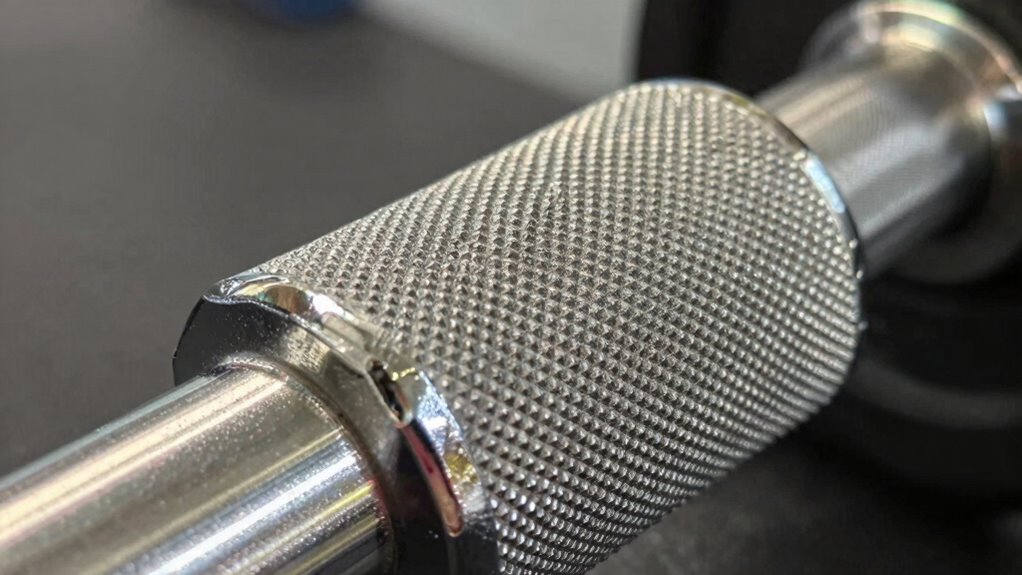
Barbell knurling is the textured pattern on a barbell’s grip area that helps you hold securely and safely during lifts. It’s created by machining processes, pressing or rolling patterns onto durable steel surfaces. Different patterns offer various grip levels, from coarse for powerlifting to fine for lighter reps. Good knurling reduces slipping and enhances safety, performance, and confidence. Keep following along to discover how to choose and care for the right knurling for your lifting needs.
Key Takeaways
- Barbell knurling is a textured pattern engraved on the grip area to enhance hold and control during lifts.
- Different knurling patterns, like crosshatch or fine diamond, provide varying grip levels for safety and performance.
- Proper knurling reduces slipping, improves safety, and allows for heavier lifts with better confidence and efficiency.
- Knurling is created through machining processes that press or roll patterns onto durable steel surfaces.
- Regular maintenance and customization ensure optimal grip, longevity, and suitability for specific training needs.

Lifepro Hip Thrust Machine – Adjustable Glutes Workout Equipment for Home – GluteBlast Foldable Booty Builder, Sissy Squat Machine, Thrust Glute Bench, Home Gym Glute Workout
TRANSFORM YOUR GLUTES – Lifepro GluteBlast Hip Thrust allows you to sculpt, tone, and strengthen your glutes with...
As an affiliate, we earn on qualifying purchases.
What Is Barbell Knurling and How Is It Made?
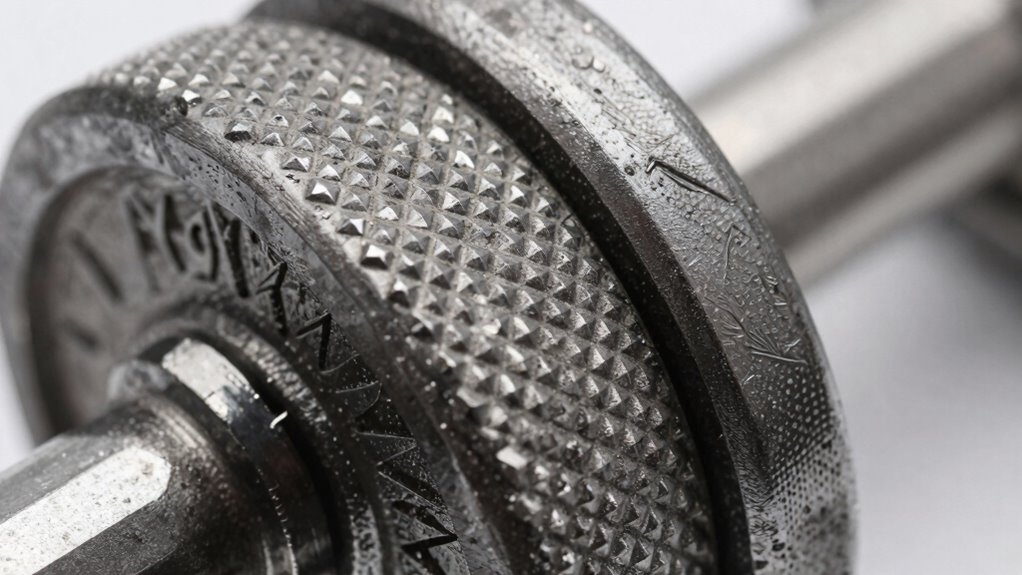
Barbell knurling is the textured pattern engraved onto the metal surface of a barbell’s grip area, designed to improve your hold during lifts. The material of the barbell plays a key role in the manufacturing process, typically made from steel or stainless steel for durability. During production, the bar undergoes a machining process where a knurling tool presses or rolls the pattern onto the surface, creating the textured grip. This process guarantees the pattern is evenly distributed and secure. Manufacturers often customize the depth and pattern based on the intended use, whether for powerlifting or Olympic lifts. The combination of high-quality barbell material and precise manufacturing techniques results in a secure grip, helping you lift safely and confidently. Material selection is crucial for ensuring the longevity and performance of the knurling.
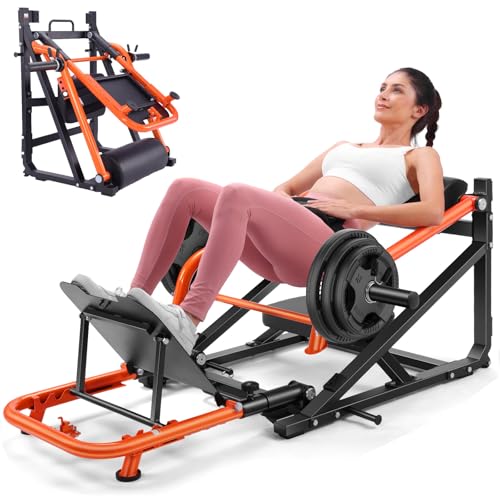
ANCHEER Hip Thrust Machine, 800LBS Capacity Glute Bridge Trainer, Home Gym Booty Sprout Machine with Weight Holder & Adjustable Footboard, Heavy Duty Butt Muscle Building and Shaping for Men & Women
【PROFESSIONAL HIP THRUST MACHINE - Build Perfect Glutes Fast】Transform your glutes, hamstrings, and core with this heavy-duty hip...
As an affiliate, we earn on qualifying purchases.
What Are the Different Types of Knurling Patterns and When to Use Them

There are several knurling patterns to contemplate, each suited for different needs. The classic crosshatch provides a strong grip, while fine diamond textures offer a less aggressive feel. Coarse knurling options deliver maximum grip for heavy lifts or intense workouts. For applications requiring enhanced security or durability, top product roundups often highlight the best choices for specific uses.
Classic Crosshatch Pattern
The classic crosshatch pattern is a popular knurling style known for its distinctive diamond-shaped grip. This pattern enhances barbell aesthetics by providing a bold, textured look that’s both functional and visually appealing. It’s created through a manufacturing process that presses a diamond-patterned roller into the steel, resulting in deep, consistent grooves. This makes it ideal for heavy lifts, offering excellent grip and control. The crosshatch design distributes pressure evenly across the bar, reducing slipping during intense workouts. Its durability ensures the pattern maintains its integrity over time, even with frequent use. Whether you’re a serious lifter or a casual gym-goer, the classic crosshatch pattern delivers reliable performance with a timeless, rugged appearance.
Fine Diamond Texture
If you prefer a more refined grip that balances control with comfort, the fine diamond texture offers an excellent option. Its delicate pattern provides a subtle textural contrast that enhances your grip without overwhelming your hands. This knurling style adds a sleek, aesthetic appeal to your barbell, making it look polished and professional. Imagine running your fingers over:
- Small, crisp diamond shapes that feel smooth yet secure
- A consistent pattern that offers a gentle, reliable grip
- An understated texture that complements modern or minimalist gym equipment
- A surface that minimizes hand discomfort during extended lifts
- The contrast ratio of the knurling design influences both its visual appeal and functional grip performance
This pattern is ideal when you want a balance between grip security and a clean, stylish look. The fine diamond texture is perfect for athletes prioritizing comfort without sacrificing performance.
Coarse Knurling Options
Coarse knurling patterns feature larger, more aggressive ridges that substantially enhance grip security, making them ideal for heavy lifting or high-intensity workouts. They provide a textured grip that prevents slipping during intense repetitions, ensuring safety and confidence. These knurling options also add to the aesthetic appeal of your barbell, giving it a rugged and durable look. When choosing coarse knurling, consider your lifting style and comfort preferences. Heavier lifters often prefer these patterns for maximum grip, while some may find them too aggressive for frequent use. Here’s a quick overview:
| Pattern Type | Grip Feel | Ideal Use |
|---|---|---|
| Coarse Knurling | Aggressive, textured | Heavy lifts, power training |
| Medium Knurling | Balanced grip | Versatile workouts |
| Fine Knurling | Subtle, comfortable | Light, high-rep exercises |
Additionally, understanding the knurling patterns helps ensure you select the right grip for your specific training needs.
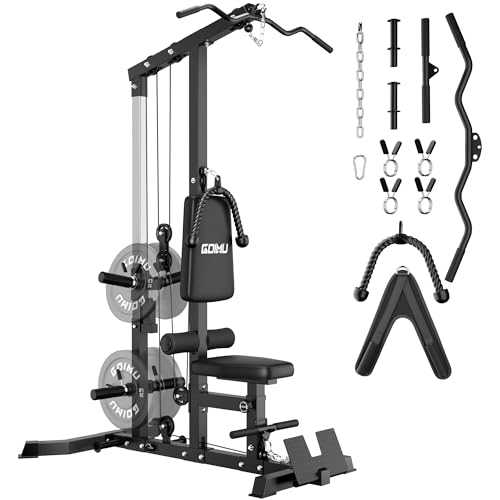
GOIMU LS01 LAT Pulldown Machine, LAT Row Cable Machine with AB Crunch, LAT Tower with Cable Row Attachment, 3 in 1 Pulley Stations for Home Gym(Black)
【3-IN-1 Pulley Stations】: GOIMU LS01 unleash your full-body potential! Master 3 core training modes: Dominate lat pulldowns &...
As an affiliate, we earn on qualifying purchases.
Why Does Knurling Matter for Grip, Safety, and Performance?
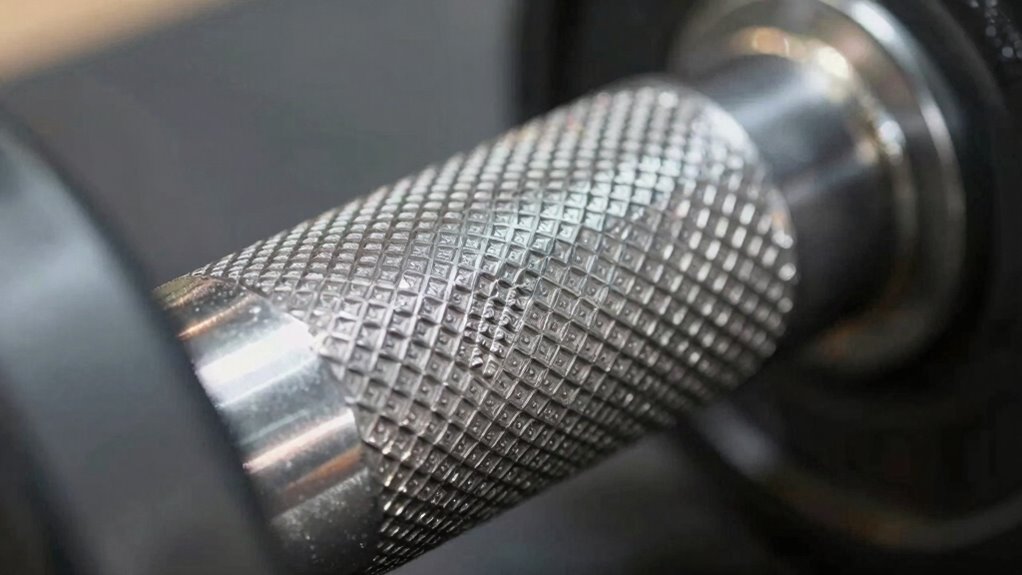
Knurling plays a vital role in giving you better grip control during lifts, helping you stay secure and confident. It also reduces the risk of injuries caused by slipping or losing control of the bar. Ultimately, the right knurling can boost your lifting performance and keep you safer in the gym. Additionally, choosing the correct knurling pattern and depth can contribute to effective home soundproofing, ensuring that your equipment remains secure and stable during intense workouts.
Enhanced Grip Control
Enhanced grip control is essential because it directly influences your safety and performance during lifts. When your grip is secure, you’re less likely to slip, drop weights, or lose control. Good knurling provides better friction, helping you maintain a strong grip even when your hands sweat or your grip strength wanes. It also reduces hand fatigue by allowing you to lift heavier with less effort, decreasing the strain on your muscles. Imagine:
- Your hands gripping firmly without slipping
- Less energy wasted fighting the bar
- Improved confidence during heavy lifts
- Reduced discomfort from constant grip adjustments
All these factors keep you focused on your form and power, ensuring you perform at your best while minimizing risks. Proper knurling enhances your grip control, supporting safer, more effective workouts. Additionally, choosing the right battery inverter generator capacity can ensure your equipment performs reliably during training sessions.
Injury Prevention Benefits
Because a secure grip is essential for safe lifting, proper knurling plays a critical role in preventing injuries. When your grip slips, you risk dropping the barbell or losing control, which can cause serious harm. Quality knurling enhances barbell safety by reducing the chance of slips or sudden shifts during lifts. This improved grip stability minimizes strain on your muscles and joints, lowering injury risk. Additionally, well-designed knurling provides consistent contact points, helping you maintain proper form and control throughout each lift. By ensuring a firm hold, knurling helps you lift confidently and safely, decreasing the likelihood of accidents or overexertion. Proper knurling also supports Free Floating design principles, which aim to improve overall safety and performance. Ultimately, investing in the right knurling supports injury prevention and promotes safer, more effective workouts.
Improved Lifting Performance
A secure grip not only prevents injuries but also directly boosts your lifting performance. When your grip is solid, you can lift heavier and maintain control throughout each movement. Proper knurling enhances barbell grip ergonomics, giving you the traction needed for maximum performance. Think about how knurling installation techniques ensure consistent, effective grip zones on your barbell. Visualize your hands firmly gripping the bar, preventing slips during heavy lifts. With well-placed knurling, you’ll experience:
- Increased confidence in your lifts
- Better control during explosive movements
- Reduced energy loss from slipping
- Enhanced safety during intense sessions
These factors combine to improve your overall lifting efficiency, helping you push past plateaus and achieve your goals more effectively. Additionally, using proper storage and backup gear ensures your equipment remains in top condition, preventing setbacks caused by damage or loss.

BootySprout Hip Thrust Machine for High Resistance Glute Training - Home Gym Workout - Comes with 45, 90, and 135 Lbs of Resistance - Black
HIP THRUSTER WORKOUT: The glutes are one of the largest muscle groups in your body and require heavy...
As an affiliate, we earn on qualifying purchases.
How to Choose the Best Knurling Pattern for Your Lifting Goals
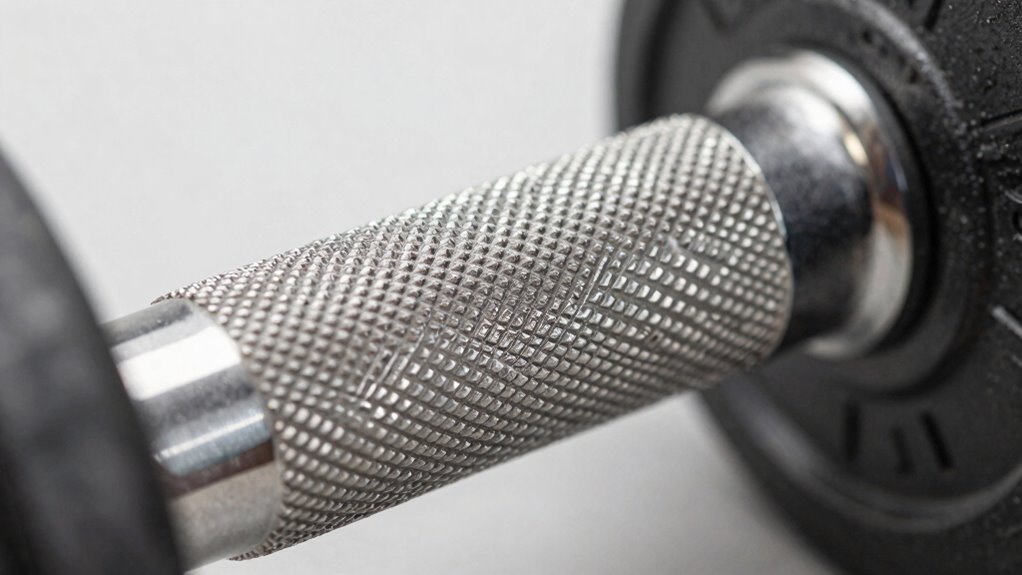
Choosing the right knurling pattern depends on your lifting goals and personal preferences. If you prioritize grip security for heavy lifts, opt for aggressive knurling with prominent textures. For a cleaner look and smoother feel, choose a pattern with subtler knurling, enhancing knurling aesthetics. Consider barbell customization options, as different patterns can influence how comfortable and secure your grip feels during various lifts. Your goals, whether powerlifting or Olympic weightlifting, will guide your choice—heavier lifts benefit from more aggressive patterns, while lighter or high-rep workouts may suit milder knurling. Ultimately, selecting a pattern that aligns with your style and training needs guarantees you get the best performance and comfort from your equipment. Being aware of ethical choices in your equipment selection can also help ensure you support sustainable and responsible manufacturing practices.
What Features of Knurling Are Found on Popular Barbells?
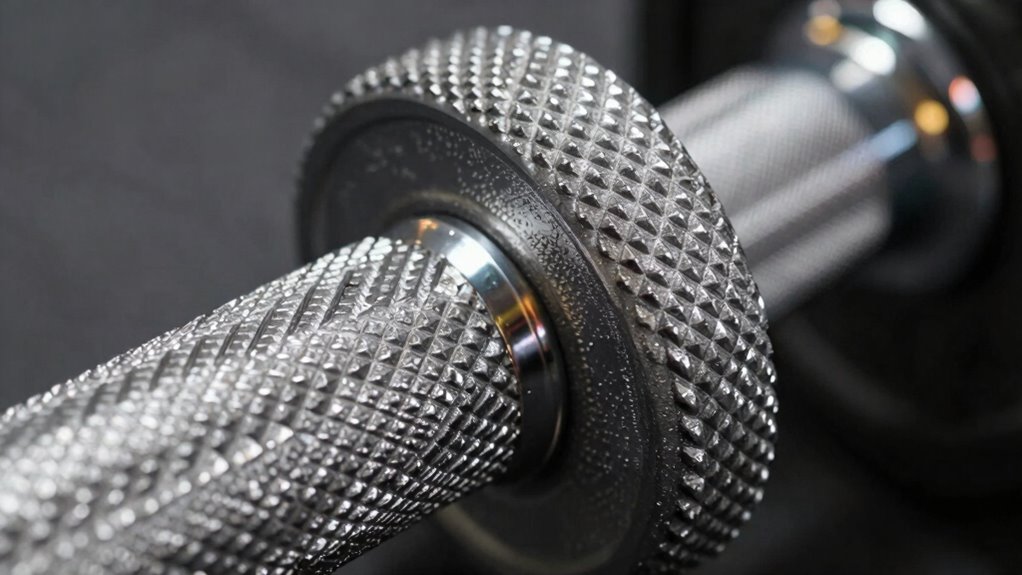
Popular barbells feature a variety of knurling designs that cater to different lifting styles and preferences. The knurling patterns vary in sharpness, depth, and width to optimize grip and comfort. Common features include aggressive, diamond-shaped knurling for heavy lifts and softer, more subtle patterns for general training. The barbell knurling aesthetics also differ, with some bars showcasing clean, polished lines, while others have a rugged, textured look. Knurling material options, such as stainless steel or zinc-coated surfaces, influence durability and grip feel. You’ll often find knurling that extends from mild to deeply engraved, depending on the bar’s purpose. These features ensure you get both functional grip and appealing design, tailored to your specific lifting needs.
How to Maintain and Care for Your Barbell’s Knurling Over Time
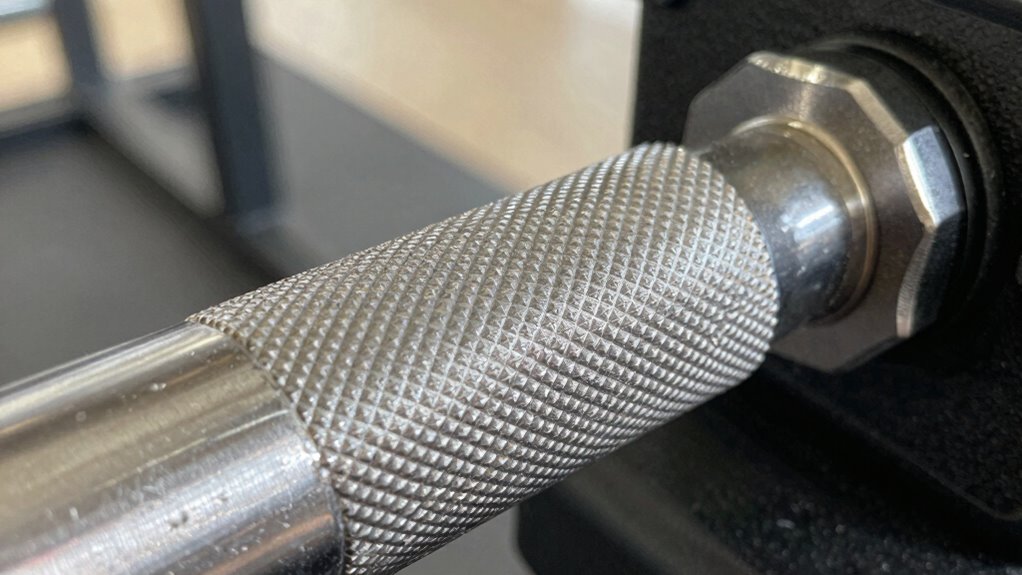
Maintaining your barbell’s knurling is essential to guarantee it continues providing a secure grip during lifts, especially as dirt, sweat, and debris can accumulate over time. Regular grip maintenance involves cleaning the knurling with a wire brush or a rag to remove buildup that can degrade grip quality. You can also use mild soap and water for thorough cleaning, ensuring you dry it completely afterward to prevent rust. Applying a light coat of oil periodically helps preserve the knurling’s texture and prevents corrosion, which contributes to knurling longevity. Avoid harsh chemicals or abrasive tools that could damage the pattern. Consistent care maintains ideal grip, prolongs the life of your barbell, and keeps your lifts safe and effective over time. Additionally, understanding the pressure washers and cleaning techniques can help you maintain your equipment more efficiently.
Frequently Asked Questions
How Does Knurling Affect Barbell Weight and Balance?
Knurling doesn’t substantially affect the barbell weight, but it impacts balance distribution and grip. You’ll notice that knurling provides better control, especially during lifts, helping you maintain proper form. It guarantees your hands stay in the right position, preventing slips. While the added texture doesn’t change the weight, it optimizes your grip, making your lifts safer and more efficient by improving overall balance and stability.
Can Different Knurling Patterns Impact Lifting Technique?
Think of knurling patterns as the brushstrokes of a sculptor shaping your lift. Yes, different patterns can impact your technique by influencing grip security and positioning. Knurling aesthetics add visual appeal, but it’s grip customization that truly matters for your performance. If your knurling is aggressive, it might encourage a safer, more controlled lift, while smoother patterns could lead to slippage, affecting your form and efficiency.
Is Knurling More Important for Beginners or Advanced Lifters?
Knurling is more important for beginners because it directly affects your grip comfort and confidence during lifts. A good knurl provides better traction, helping you maintain control and stay safe, especially when you’re still developing your technique. Advanced lifters might prefer specific patterns for aesthetic appeal or subtle grip adjustments, but overall, proper knurling is essential for anyone building strength and ensuring safety in their training.
What Materials Influence the Durability of Knurling?
The durability of knurling mainly depends on the material used, especially its surface hardness. Harder materials like hardened steel resist material wear better, maintaining their grip over time. Softer metals tend to wear down faster, reducing grip effectiveness. When choosing a barbell, look for high-quality steel with a high surface hardness to guarantee your knurling stays sharp and durable, even with frequent use.
Are There Ergonomic Benefits to Specific Knurling Styles?
You’ll feel like a superhero with the right knurling style, as it offers epic ergonomic benefits! Certain styles provide a better hand grip, making lifts feel smoother and safer. They also boost comfort, so your hands don’t become battlegrounds after a heavy session. Choosing the right knurling can transform your workout experience, giving you maximum control, reducing slips, and making every lift feel like a victory—your hands will thank you!
Conclusion
Understanding barbell knurling helps you choose the right grip for safety and performance. While some worry it might damage their hands, proper technique and quality knurling actually improve control and reduce slips, making your lifts safer. So, don’t overlook this detail—investing in the right knurling pattern can boost your confidence and results. With proper care, your barbell’s knurling will stay effective, supporting your progress without causing unnecessary discomfort.