TL;DR

Get workout gear delivered free with Prime
- Fast, free delivery on millions of items
- Prime Video, Amazon Music and more included
- Member-only deals all year
Fit&Well has published a 20-minute speed-walking routine from NASM-certified trainer Nelly Flaque: four minutes easy, 12 minutes alternating one-minute fast intervals with two-minute recovery walks, then four minutes easy. Flaque advises starting conservatively, using a talk test to set effort and checking with a doctor before faster intervals if you have heart, joint or balance issues.
Fit&Well has published a 20-minute speed-walking plan featuring short faster intervals, easy recovery walks and guidance from NASM-certified personal trainer Nelly Flaque. The routine offers readers a structured way to add intensity to an ordinary walk, while the source advises beginners to start conservatively and people with certain health or mobility concerns to consult a doctor first.
The workout totals 20 minutes: begin with a four-minute easy walk, then spend 12 minutes alternating one minute of fast walking with two minutes at an easy pace, completing four rounds. Finish with a four-minute easy walk. Flaque suggests doing the session three times a week on non-consecutive days at first, with ordinary, easier walks between workout days.
Flaque recommends using a talk test to gauge effort. During recovery periods, walkers should be able to hold a full conversation; during faster intervals, they should manage only a few words at a time. She places the easy sections around four out of 10 in effort and the fast sections around seven or eight out of 10, while advising people to pace themselves so they can complete all four rounds.
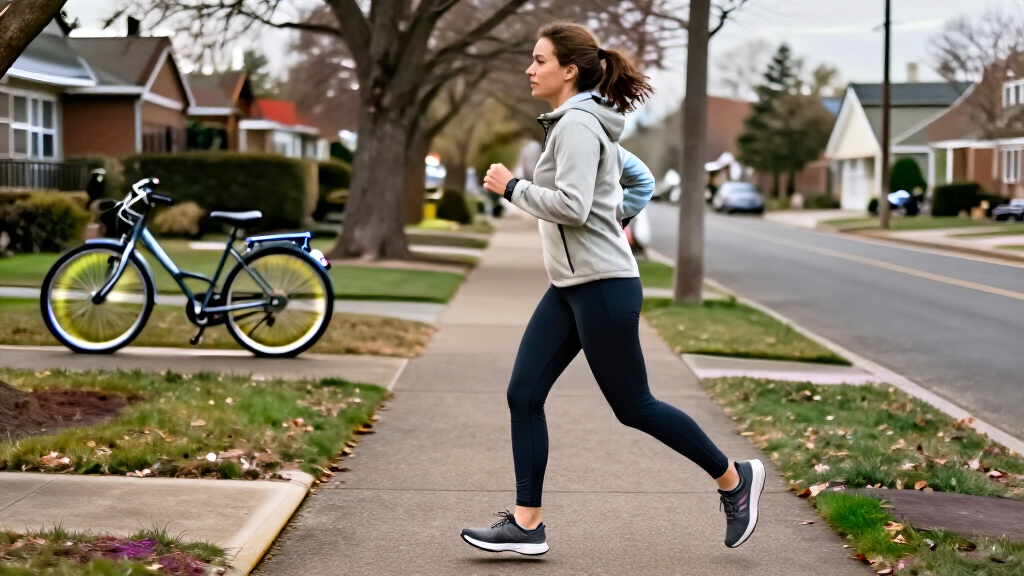
For technique, Flaque advises bending the elbows to about 90 degrees and swinging the arms forward and back, taking quicker rather than longer steps, and keeping the shoulders relaxed and gaze ahead. The report also recommends supportive shoes and water. A calf and hip-flexor stretch is an optional finish after the cool-down.
A Structured Way to Increase Walking Effort
The plan turns a familiar activity into a more structured session without requiring a gym or specialist equipment. Its short work intervals and walking recoveries give readers a simple format to follow and a way to adjust effort based on how they feel, rather than aiming for a fixed speed that may not suit everyone.
Fit&Well cites research published in the British Journal of Sports Medicine involving 64,743 people. The report says faster stepping pace was associated with lower risk of death, including among people taking fewer than 5,000 steps a day. That is an association, not proof that walking faster causes a reduction in risk, and the source does not provide further study details or a numerical estimate of the association.
For readers who already walk regularly, the interval format offers one option for varying pace. For beginners, the trainer’s advice to start conservatively and retain easy walking days signals that the routine is a suggested workout, not a requirement or a substitute for individualized medical advice.
As an affiliate, we earn on qualifying purchases.
How the Routine Is Structured
The routine is divided into a four-minute warm-up, 12 minutes of intervals and a four-minute cool-down. The warm-up is intended to ease into faster movement; Flaque cautions against skipping it, saying calves and shins may be uncomfortable when people speed up without preparation. The easy finish brings the session back to a lower pace.
Flaque recommends changing only one part of the workout once it feels comfortable. Options listed in the report include reducing recovery walks from two minutes to one, extending fast intervals from one minute to two, or adding rounds over time toward a 30-minute session. Walking up a gentle hill during faster intervals is another suggested progression. The report does not set a fixed timetable for making these changes.
As an affiliate, we earn on qualifying purchases.
What the Report Does Not Establish
The source presents the workout as beginner-friendly, but does not report a clinical test of this specific 20-minute routine or establish that it will produce the same results for every person. It also does not give a target speed, heart-rate range or a detailed progression schedule; effort is guided by perceived exertion and the talk test.
The cited study is described as finding an association between faster stepping pace and lower death risk. The source does not provide enough study detail to determine how the association was measured, what other factors were considered or whether the findings apply equally to different groups. The evidence described should not be read as showing that faster walking itself prevents death.
As an affiliate, we earn on qualifying purchases.
How Walkers Can Build Gradually
Readers following the plan can begin with the suggested three non-consecutive sessions a week, keeping other walks easy, and judge each faster interval by whether the effort remains challenging but manageable. Flaque’s proposed next step is to change one variable at a time once the existing session feels comfortable, rather than increasing speed, duration and rounds all at once.
People with heart, joint or balance issues should seek medical guidance before adding faster intervals, as the report advises. It does not announce a follow-up study or a formal program schedule, so further progression is left to the individual and, where relevant, their health professional.
supportive walking shoes for beginners
As an affiliate, we earn on qualifying purchases.
As an affiliate, we earn on qualifying purchases.
Key Questions
How long is the speed-walking workout?
The plan takes 20 minutes: four minutes walking easily, 12 minutes of intervals and four minutes of easy walking to cool down.
How are the walking intervals timed?
Alternate one minute at a faster pace with two minutes of slower recovery walking. Repeat the pattern for four rounds.
How often does the trainer suggest doing it?
Flaque suggests starting with three sessions a week on non-consecutive days, with regular easy walks on the days between.
How can I tell whether I am walking fast enough?
According to Flaque’s talk test, you should be able to speak in full sentences during easy recovery periods, but manage only a few words during the faster intervals. The source does not specify a required walking speed.
Who should check with a doctor before trying the plan?
Flaque advises people with heart, joint or balance issues to consult their doctor before adding faster intervals. The report also recommends supportive shoes, water and starting conservatively.
Source: rss
Halloween Picks
halloween
As an affiliate, we earn on qualifying purchases.