TL;DR

Get workout gear delivered free with Prime
- Fast, free delivery on millions of items
- Prime Video, Amazon Music and more included
- Member-only deals all year
Fit&Well reports that beginners can use a low aerobic step for a short home workout built around step-ups, side steps and marching. Certified personal trainer Nelly Flaque recommends starting at about four inches, moving with control and taking longer rests when needed; the routine is not a substitute for individualized medical or training advice.
Fit&Well has published a beginner step-aerobics routine for home use, outlining how to exercise with a low platform, body weight and short work intervals. Certified personal trainer Nelly Flaque, quoted in the report, recommends starting at about four inches and prioritizing balance and controlled movement over speed or height.
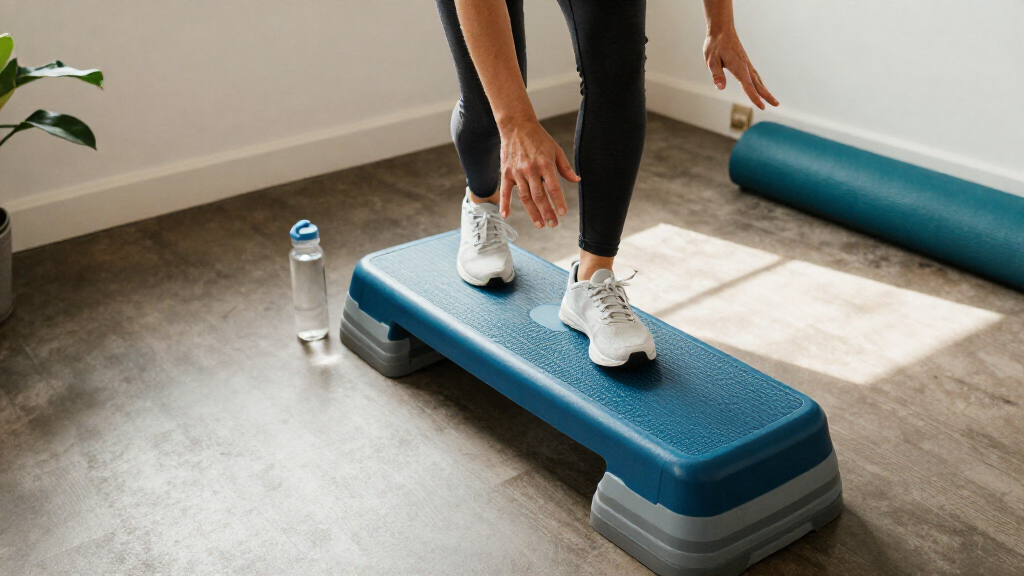
The suggested session takes just under 15 minutes, according to Fit&Well, and uses a sturdy aerobic step on a flat, nonslip surface. The report advises wearing supportive athletic shoes and setting an adjustable platform to its lowest height at first. A platform should be wide enough for the whole foot and have a stable, textured surface.
The workout starts with one minute of marching and one minute of side steps to warm up. Its main circuit alternates step-ups, side step-ups, floor marching and side steps. Most movements last one minute, with step-ups sometimes split into 30 seconds per leading side; the plan calls for 15-second rests between exercises, while allowing longer breaks when needed.
To finish, the routine moves into a slow one-minute march and stretches for the calves, quadriceps and hamstrings. Flaque says the cool-down should let breathing return gradually toward normal rather than stopping abruptly. For people who find the platform difficult, she suggests replacing platform movements with marching or choosing a lower height.
A Low-Equipment Workout Option
Step aerobics offers a way to combine repeated lower-body movements with cardiovascular activity without adding weights. The report describes step-ups as a body-weight exercise that works the legs and glutes, while the repeated movement can raise the heart rate. Flaque says stepping upward can mimic some of the physical challenge of moving uphill and can raise the heart rate more than walking on flat ground; that is her explanation, not a reported measurement from a workout trial.
The practical value for beginners is the routine’s adjustable pace and height. A low platform, brief intervals and optional rest make it possible to reduce the challenge without abandoning the session. Still, the report does not provide clinical evidence that this particular routine produces a specified strength or fitness outcome, and it does not claim that step aerobics suits everyone.
Products Worth Considering

LEVOIT Air Purifier for Home, Pets, Bedroom, Smart WiFi

Bowflex SelectTech 840 Adjustable Kettlebell

Levoit Vital 100S-P Air Purifier for Home and Pets
As an affiliate, we earn on qualifying purchases.
How the Routine Is Scaled
Fit&Well presents the workout as a home option using an aerobic step, rather than a gym-based program or a weighted strength plan. Flaque advises choosing a height at which a person can step up and down without losing balance, leaning too far forward or pushing excessively with the trailing leg. She recommends around four inches for newcomers, then considering a higher setting only after the movement feels controlled.
The source also says an aerobic step can be used for basic step-ups or a short cardio session. The workout instructions emphasize switching the lead foot on alternating step-ups and side step-ups, and keeping floor-based movements available as a lower-intensity alternative. No equipment brand, price, training schedule or progression timeline is specified.
““It’s perfectly fine to pause, catch your breath, and start again when you’re ready.””
— Nelly Flaque, as quoted by Fit&Well
Limits of the Published Guidance
The source gives a suggested routine and trainer guidance, but does not report independent testing or measured outcomes for the workout. It does not quantify calorie use, strength gains, injury risk or cardiovascular improvements, and it does not specify how often a beginner should repeat the session. The report’s discussion of heart rate is attributed to Flaque and is not accompanied by data or a comparison protocol.
The supplied report text ends during its advice on adapting the workout, so any further modifications it may have included are not available here. People with injuries, balance concerns or health conditions should seek guidance from a qualified health professional before starting or changing an exercise program; stop if an exercise causes pain, dizziness or unusual shortness of breath.
Progress Only With Control
For someone trying the routine, the next step described in the report is to begin on the platform’s lowest stable setting, use the warm-up, and take longer rests if necessary. If step-ups disrupt balance or form, the routine can be scaled back to floor marching or side steps. Flaque advises increasing platform height only once stepping up and down feels controlled. The source gives no fixed timetable for progression, so it does not support a specific schedule for raising the step or increasing workout frequency.
Key Questions
What equipment does the beginner routine require?
It calls for a sturdy aerobic step placed on a flat, nonslip surface, plus supportive athletic shoes. Fit&Well recommends a platform wide enough for the whole foot and a stable, textured top.
How high should a beginner set the step?
Flaque recommends starting at about four inches, or lower if needed. The key test is whether you can step up and down without losing balance, leaning too far forward or pushing excessively off the floor.
How long is the workout?
Fit&Well says the full session should take just under 15 minutes, including warm-up, the main circuit and cool-down. Rest longer than the listed 15 seconds whenever you need to catch your breath.
Can beginners exercise without stepping onto the platform?
Yes. The report says beginners or people having a low-energy day can replace platform movements with marching in place or use a lower step height. Keep the movements comfortable and stop if you feel pain or unwell.
Source: fitandwell.com