

Your heart rate zones show how hard you’re working during exercise, from easy recovery to intense effort. At 50-60% of your max, you burn fat and recover faster. Moving into 60-70% improves your heart health and endurance, while 70-80% boosts calorie burn and stamina. Varying these zones makes your workouts more effective and keeps things interesting. Keep exploring, and you’ll discover how to use these zones to get the best results for your goals.

Get workout gear delivered free with Prime
- Fast, free delivery on millions of items
- Prime Video, Amazon Music and more included
- Member-only deals all year
Key Takeaways
- Heart rate zones show different effort levels during exercise, helping you target specific fitness goals.
- Lower zones focus on fat burning and recovery, while higher zones boost stamina and calorie burn.
- Monitoring your heart rate ensures you stay in the right zone for maximum effectiveness.
- Varying workout intensity by switching zones keeps exercise interesting and improves overall fitness.
- Knowing your zones allows you to personalize workouts for weight loss, endurance, or health benefits.
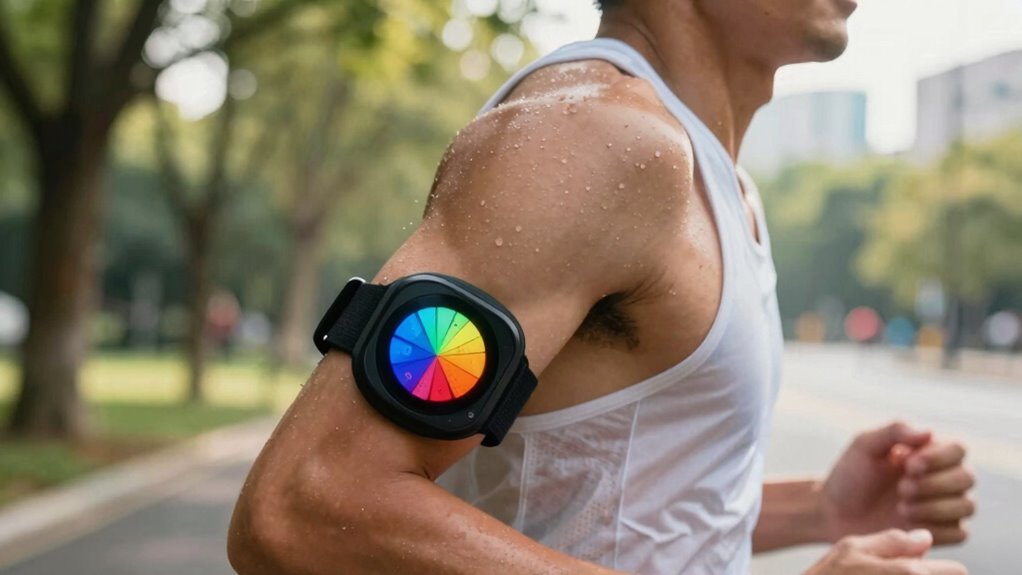
Have you ever wondered how to maximize your workout effectiveness? It all comes down to understanding your heart rate zones and how they influence your training strategies. By paying attention to your heart rate, you can tailor your workouts to meet specific goals, whether that’s burning fat, building endurance, or increasing your overall fitness. The key is to find the right balance of workout intensity, which varies depending on your objectives.
Your first step is to determine your maximum heart rate, which is roughly 220 minus your age. Once you know that, you can identify the different heart rate zones. These zones categorize your effort levels and help you target your training more precisely. For example, working in the lower zones—around 50-60% of max heart rate—encourages fat burning and is ideal for recovery or warm-up sessions. As you increase your workout intensity to 60-70%, you enter a moderate zone that improves cardiovascular health and boosts endurance. Pushing further into 70-80% of your max heart rate elevates your workout into a vigorous zone, increasing calorie burn and building stamina.
Start by calculating your max heart rate—then target zones from 50% to 80% for optimal fat burn, endurance, and stamina.
To maximize training strategies, it’s essential to vary your heart rate zones during your workout. Alternating between different intensities not only keeps your routine interesting, but also enhances your overall fitness. For instance, incorporating intervals—short bursts of high-intensity effort followed by recovery periods—can improve your cardiovascular capacity and accelerate fat loss. This approach ensures you’re challenging yourself without overexerting, optimizing workout intensity for maximum benefit.
Another effective strategy is to listen to your body while monitoring your heart rate. Using a heart rate monitor or smartwatch allows you to stay within your target zones. This real-time feedback helps you adjust your pace on the fly, ensuring you don’t go too hard or too easy. It also prevents burnout and overtraining, keeping your workouts sustainable and safe. Additionally, understanding your heart rate zones can help you develop a more personalized and effective workout plan aligned with your fitness level and goals.
Ultimately, understanding your heart rate zones empowers you to refine your training strategies. Whether your goal is weight loss, endurance, or overall health, targeting specific zones makes your efforts more efficient. By intentionally controlling your workout intensity, you can achieve better results faster and enjoy your exercise sessions more. Remember, consistency and smart planning are what turn these zones into lasting progress. So, next time you hit the gym or go for a run, keep your heart rate in mind—your body will thank you.
As an affiliate, we earn on qualifying purchases.
Frequently Asked Questions
How Can I Accurately Measure My Heart Rate Zones at Home?
You can accurately measure your heart rate zones at home using wearable devices like fitness trackers or heart rate monitors, which provide real-time data. Alternatively, try manual monitoring by checking your pulse on your wrist or neck for 15 seconds and multiplying by four. For better accuracy, do this during different exercise intensities. Combining both methods helps you better understand and stay within your target heart rate zones.
What Are the Best Activities for Each Heart Rate Zone?
Think of heart rate zones like different chapters in your workout story. For high zones, try intense interval training—sprints or uphill runs—pushing your limits. Moderate zones suit steady-state cardio, like cycling or brisk walking. For recovery workouts, opt for easy swimming or gentle yoga, helping your body recover. Mixing these activities guarantees you challenge yourself while giving your body time to rest and rebuild.
How Long Should I Stay in Each Zone During Workouts?
You should aim to stay in each heart rate zone for specific training durations. Generally, spend about 20-30 minutes in your aerobic zone for endurance, while interval sessions might involve shorter bouts of 1-5 minutes. Remember to include recovery time between intense efforts to prevent overtraining. Adjust your training duration based on your fitness level and goals, ensuring you balance exertion with adequate recovery to maximize results.
Can Heart Rate Zones Help Improve Athletic Performance?
Yes, heart rate zones can definitely help improve your athletic performance. By training in specific zones, you target different training benefits like endurance, speed, and recovery. This also helps with fatigue management, preventing overtraining and burnout. Consistently using heart rate zones allows you to optimize workouts, track progress, and push your limits safely, ultimately enhancing your overall performance and helping you reach your athletic goals more effectively.
Are Heart Rate Zones Suitable for Beginners or Those With Health Issues?
Heart rate zones can be suitable for beginners and those with health issues if you prioritize safety considerations. Start with beginner-friendly approaches, such as low-intensity workouts, and gradually increase intensity as your fitness improves. Always listen to your body, and consult a healthcare professional if you have health concerns. Using heart rate zones thoughtfully helps you train effectively while minimizing risks, making your fitness journey safer and more manageable.
fitness tracker with heart rate zones
As an affiliate, we earn on qualifying purchases.
As an affiliate, we earn on qualifying purchases.
Conclusion
Think of your heart rate zones as different gears on a bike. When you’re in the lower zones, you’re cruising smoothly, conserving energy. Push into higher zones, and you’re climbing a steep hill—challenging but rewarding. Knowing these zones helps you ride smarter, making every workout a journey tailored to your goals. So, gear up, find your pace, and enjoy the ride—your heart’s the engine powering every step of your fitness adventure.
As an affiliate, we earn on qualifying purchases.
As an affiliate, we earn on qualifying purchases.
Halloween Picks
halloween
As an affiliate, we earn on qualifying purchases.