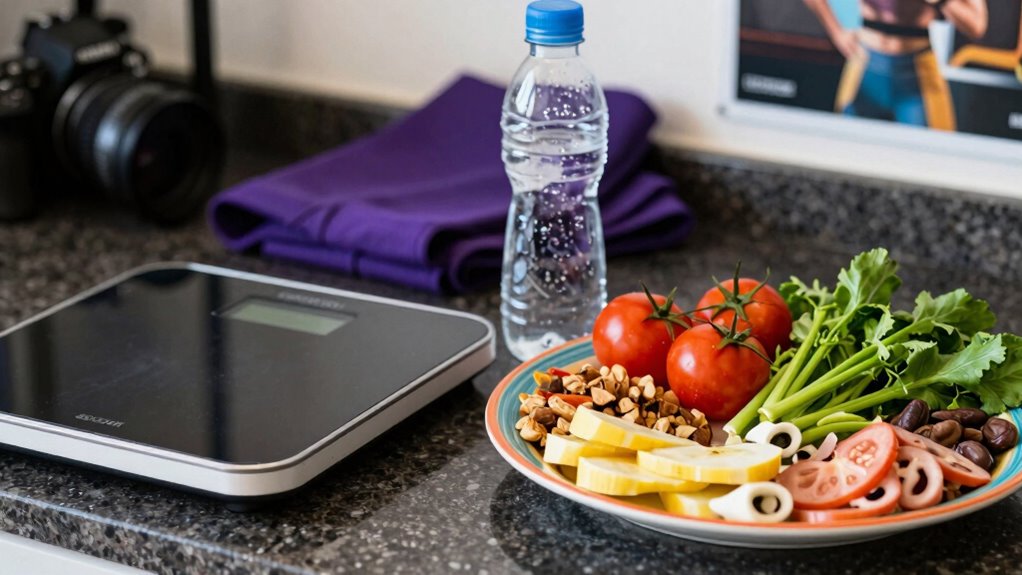

Fat loss plateaus happen when your body adapts to your diet and exercise routine, slowing down your metabolism and conserving energy. As you create a caloric deficit, your body responds by lowering your resting metabolic rate, making further fat loss harder. To break through, consider adjusting your calorie intake, increasing physical activity, especially resistance or high-intensity training, and taking strategic diet breaks. Keep in mind, understanding these changes will help you stay on track—continue to explore for more tips.

Get workout gear delivered free — and shop member deals
- Fast, free delivery on millions of items
- Access to Prime Big Deal Days deals on October 6–7
- Prime Video, Amazon Music and more included
Key Takeaways
- The body adapts to caloric deficits by lowering metabolic rate, making fat loss less effective over time.
- Prolonged calorie restriction triggers energy-saving processes, leading to a plateau.
- Incorporating refeeding, diet breaks, and increased activity can reset metabolism and break plateaus.
- Regularly reassessing calorie needs and tracking progress helps identify when adjustments are necessary.
- Resistance training and strategic flexibility are essential to sustain fat loss and overcome metabolic adaptations.

Hitting a fat loss plateau can be frustrating, especially when it feels like your progress has come to a standstill despite consistent effort. You’ve been sticking to your workout routine and watching your calorie intake, yet the scale refuses to budge. This common hurdle often happens because your body adapts to the changes you’ve made, a process known as metabolic adaptation. When you create a caloric deficit—burning more calories than you consume—your body initially responds by shedding fat. But over time, it begins to conserve energy, slowing down your metabolism to compensate for the reduced intake. This adaptive response can make it seem like your efforts aren’t paying off, even though you’re still in a calorie deficit.
Understanding this process is vital because it highlights why progress stalls. Your body perceives prolonged calorie restriction as a threat to its survival, activating mechanisms to preserve energy stores. This means your resting metabolic rate—the calories your body burns at rest—decreases, and your overall energy expenditure drops. As a result, the calorie deficit that once led to fat loss becomes less effective. In some cases, you might even start to regain weight if your intake remains unchanged while your metabolism slows. Recognizing that metabolic adaptation is a natural response helps you avoid feeling discouraged or blaming your efforts. Additionally, integrating smart fitness technology such as wearable devices can help monitor your activity levels and metabolic responses more accurately.
Metabolic adaptation decreases your resting rate, making fat loss progress stall despite consistent effort.
To counteract this plateau, you need to adjust your strategy. One effective approach is to occasionally increase your calorie intake slightly, a tactic known as “refeeding” or “diet breaks.” This can help reset your metabolic rate and reduce the body’s perception of prolonged caloric restriction. Alternatively, focusing on increasing your activity levels, particularly through resistance training, can boost your metabolic rate and preserve muscle mass, which is metabolically active tissue. Incorporating more high-intensity interval training (HIIT) can also elevate calorie burn both during and after workouts.
Another key adjustment is reassessing your calorie intake and tracking accuracy. As you lose weight, your caloric needs decrease, so your initial calorie deficit may no longer be sufficient. Regularly recalculating your maintenance calories and adjusting your intake guarantees you stay in a meaningful deficit. Remember, patience is essential. Your body needs time to adapt and respond to these changes, and a strategic, flexible approach will help you push past the plateau. With persistence and smart adjustments, you can restart your fat loss journey and achieve your goals.
resistance training equipment for fat loss
As an affiliate, we earn on qualifying purchases.
As an affiliate, we earn on qualifying purchases.
Frequently Asked Questions
How Long Does a Typical Fat Loss Plateau Last?
A typical fat loss plateau lasts about 2 to 6 weeks, but it varies based on your body’s metabolic adaptation and hormonal shifts. During this time, your metabolism slows down, making further weight loss harder. To break through, you might need to adjust your calorie intake, change your workout routine, or incorporate rest periods. Stay patient and consistent, as these plateaus are a normal part of the fat loss process.
Can Stress Impact Fat Loss Progress?
Imagine you’re trying to lose weight, but stress spikes, making you crave comfort foods. Stress definitely impacts fat loss progress by disrupting hormonal balance, especially increasing cortisol levels. This hormone promotes fat storage, hindering your efforts. To keep progressing, prioritize stress management techniques like meditation or exercise, which help restore hormonal balance. You’ll find it easier to stick to your plan and see results when stress is under control.
Should I Increase Cardio During a Plateau?
Yes, increasing cardio can help break a plateau. Try boosting your cardio intensity or adding variety to your workouts to challenge your body differently. Mixing up your routine with different types of cardio, like interval training or longer sessions, keeps your body guessing and can reignite fat loss. Remember, consistency is key, so adjust gradually and listen to how your body responds to avoid overtraining.
What Role Does Sleep Play in Breaking a Plateau?
Getting enough quality sleep is vital, as studies show poor sleep can reduce fat loss by up to 55%. Sleep quality directly affects your recovery strategies, hormone balance, and metabolism. When you sleep well, your body recovers faster, hormones like cortisol and leptin stay balanced, and your energy levels improve—making it easier to push through a plateau. Prioritize consistent sleep routines to facilitate your fat loss potential.
Are Supplements Effective for Overcoming Plateaus?
Supplements can help, but don’t rely solely on fat loss supplements or fall for supplement myths. They might boost your efforts slightly, but real results come from consistent diet and exercise. Some fat loss supplements claim quick fixes, but their effectiveness varies. Focus on balanced nutrition and training first, and consider supplements as a small addition. Always consult a professional before trying new supplements to avoid ineffective or harmful choices.
high-intensity interval training (HIIT) workout gear
As an affiliate, we earn on qualifying purchases.
As an affiliate, we earn on qualifying purchases.
Conclusion
Remember, hitting a fat loss plateau is like running into a wall while biking—you just need to adjust your pace or change direction. When I faced my own plateau, I switched up my workouts and tracked my calories more carefully, and suddenly progress resumed. It’s normal to hit bumps, but with patience and small tweaks, you can keep moving forward. Just stay flexible and trust the process—you’re stronger than any plateau!
As an affiliate, we earn on qualifying purchases.
As an affiliate, we earn on qualifying purchases.
Fall Picks
fall essentials
As an affiliate, we earn on qualifying purchases.