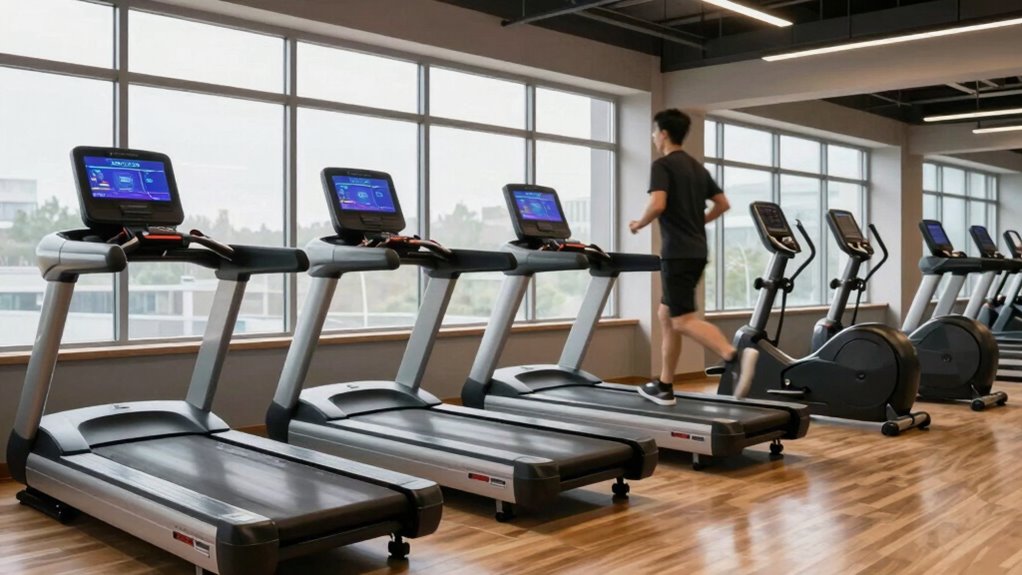

To create a simple weekly zone training template with cardio machines, start by calculating your maximum heart rate (220 minus your age) and define your zones as percentages. Use different machines like treadmills, ellipticals, or bikes to vary intensity, alternating high and low efforts. Monitor your heart rate in real-time to stay within desired zones, adjusting as you improve. If you keep these tips in mind, you’ll maximize your results and avoid overtraining.

Get workout gear delivered free — and shop member deals
- Fast, free delivery on millions of items
- Access to Prime Big Deal Days deals on October 6–7
- Prime Video, Amazon Music and more included
Key Takeaways
- Calculate your maximum heart rate (220 minus age) to determine target zones for cardio machines.
- Structure weekly workouts with alternating high (80-90%) and low (50-60%) heart rate zones for effective interval training.
- Use wearable devices or machine sensors to monitor real-time heart rate and stay within intended zones.
- Incorporate varied machine types (treadmill, elliptical, bike) to prevent boredom and promote balanced training.
- Reassess and adjust heart rate zones periodically based on fitness progress for optimal results.
heart rate monitor for cardio workouts
As an affiliate, we earn on qualifying purchases.
As an affiliate, we earn on qualifying purchases.
What Are Heart Rate Zones and How Do You Calculate Yours?
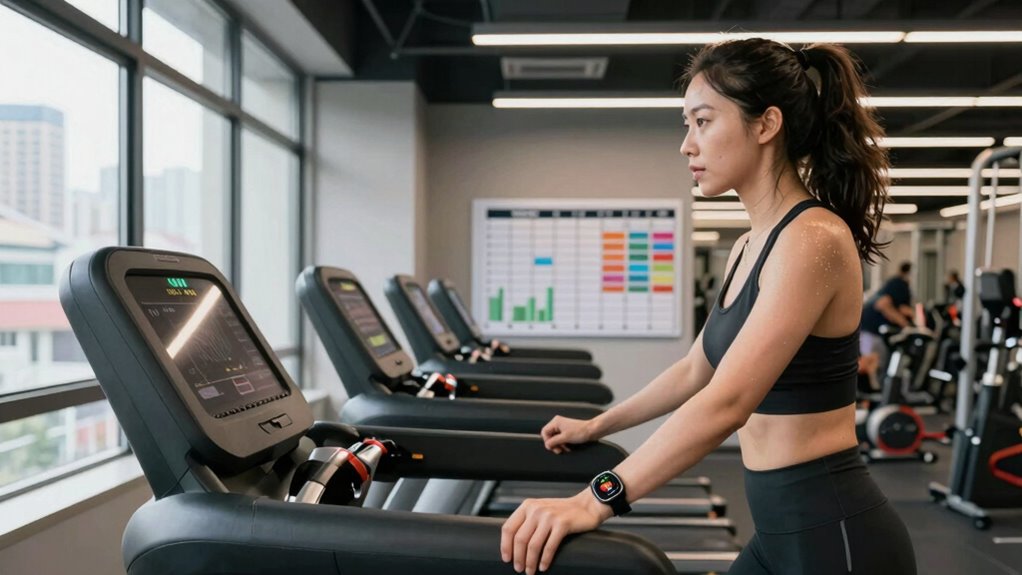
Understanding your heart rate zones is essential for optimizing your cardio workouts. To determine these zones, you start with a heart rate calculation based on your age. The most common method is subtracting your age from 220 to find your maximum heart rate. From there, you can identify different zones—such as moderate and high-intensity—by calculating percentages of that maximum. Knowing your heart rate zones helps you target specific training benefits, whether it’s burning fat, building endurance, or improving cardiovascular health. Heart rate calculation is crucial for establishing effective workout intensities. Zone training benefits include working out at the right intensity to maximize results without overexertion. By accurately calculating your heart rate zones, you gain better control over your exercise intensity, making your cardio sessions more effective and aligned with your fitness goals. Monitoring your heart rate during workouts also helps ensure you stay within safe health ranges for your age and fitness level.
treadmill with heart rate sensors
As an affiliate, we earn on qualifying purchases.
As an affiliate, we earn on qualifying purchases.
Why Is Zone Training Effective for Your Cardio Goals?

Zone training is effective for your cardio goals because it allows you to tailor your workouts to specific intensity levels that maximize results. By targeting different heart rate zones, you can optimize your interval training sessions, alternating between higher and lower intensities for better endurance and performance. This approach keeps your workouts efficient and focused, helping you burn fat more effectively during the lower zones, which are ideal for fat burning. When you stay within your designated zones, you avoid overtraining and reduce the risk of injury. The structured nature of zone training ensures you’re working at the right intensity to meet your goals, whether that’s improving stamina, burning fat, or increasing overall fitness. It’s a smart way to get the most out of your cardio sessions. Additionally, incorporating emerging trends into your routine can enhance your training effectiveness and keep your workouts engaging. For example, using recycled materials in fitness equipment can make your workout environment more eco-friendly while still supporting your fitness objectives. Staying informed about training innovations can help you adapt your routine for ongoing progress and motivation. Moreover, understanding the significance of heart rate zones can help you fine-tune your efforts for optimal results. Recognizing the impact of personalized training can further customize your workouts for better outcomes.
elliptical trainer with real-time heart rate display
As an affiliate, we earn on qualifying purchases.
As an affiliate, we earn on qualifying purchases.
How to Set Up Your Cardio Machines for Zone Training
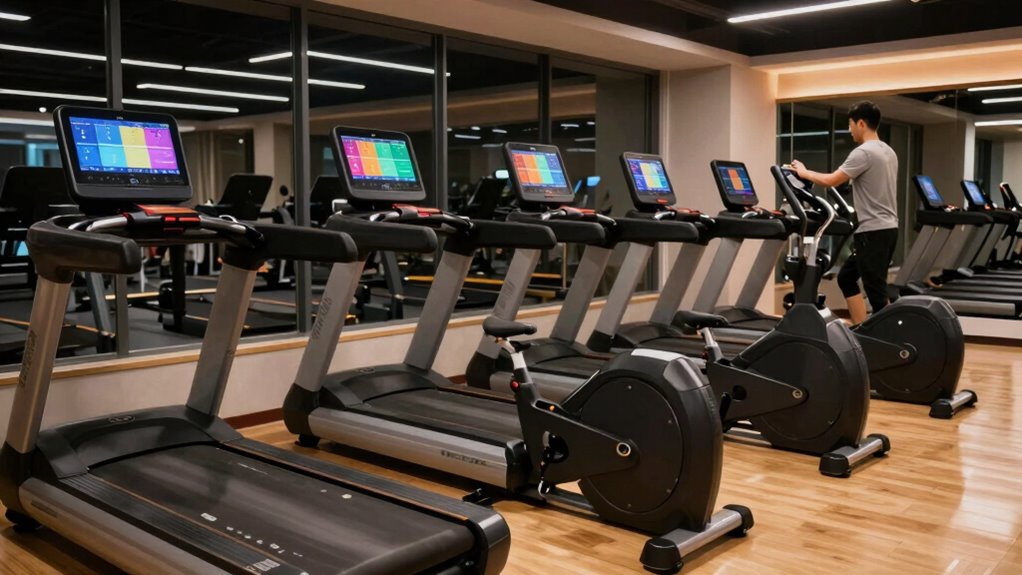
To effectively set up your cardio machine for zone training, start by accurately measuring your maximum heart rate, which typically involves subtracting your age from 220. This helps you establish your target heart rate zones. Next, perform a heart rate calibration on the machine, ensuring it reads your heart rate accurately, often using built-in sensors or chest straps. Adjust the machine settings to match your calculated heart rate zones, usually by setting specific intensity levels or target heart rate ranges. Proper calibration and settings are essential for precise zone training, preventing under- or overexertion. Additionally, understanding heart rate zones can help you tailor your workouts more effectively. Regularly updating your smart thermostat settings can also contribute to maintaining a comfortable home environment during your training sessions. Keeping track of your progress through workout logs can further enhance your training efficacy. To optimize your training, consider incorporating recovery periods to allow your body to rest and adapt between intense sessions. Once your machine is correctly calibrated, you can confidently engage in workouts that stay within your designated heart rate zones, maximizing your training effectiveness and safety.
bike trainer with heart rate tracking
As an affiliate, we earn on qualifying purchases.
As an affiliate, we earn on qualifying purchases.
How to Monitor Your Heart Rate During Workouts
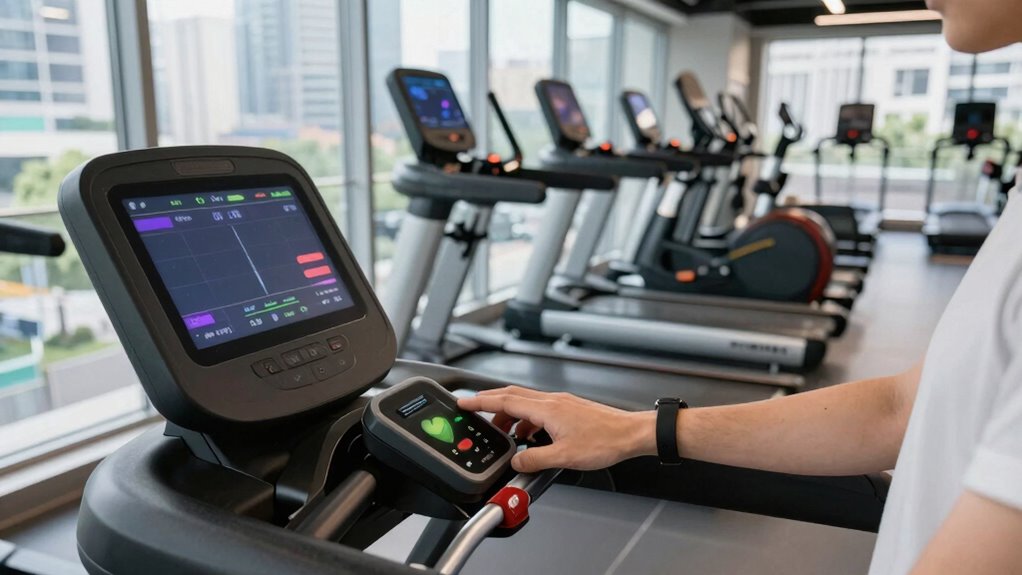
Once your cardio machine is set up and calibrated properly, keeping track of your heart rate throughout your workout becomes straightforward. Using heart rate sensors or wearable devices, you can monitor your intensity in real-time. Wearable devices like chest straps or wrist monitors sync easily with your equipment, providing instant feedback. This real-time monitoring helps you stay within your target heart rate zones, optimizing your workout. Check your device periodically to adjust your effort if needed. Additionally, understanding Gold IRA Markets can help inform your investment decisions outside of exercise routines. Monitoring your heart rate zones ensures that you are exercising at an intensity that aligns with your fitness goals and helps prevent overexertion. Regularly updating your knowledge about glycolic acid products can also contribute to maintaining healthy skin as part of your overall wellness routine. Incorporating heart rate training strategies can further enhance the effectiveness of your workouts and support your fitness progress. Being aware of cardio equipment safety tips can also prevent injuries and improve your workout experience.
Your Weekly Zone Training Plan for Treadmills, Ellipticals, and Bikes
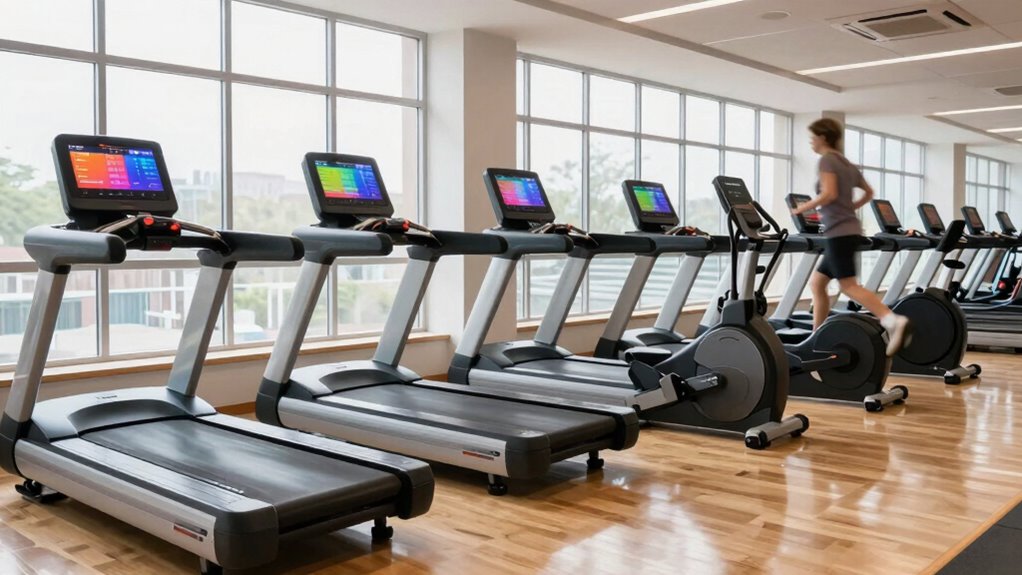
Creating a weekly zone training plan for your treadmill, elliptical, and bike workouts helps you stay consistent and focused on your fitness goals. Incorporate interval training to boost endurance and calorie burn by alternating between high and low-intensity efforts within each session. Mix up your routine with cross training, using different machines to target various muscle groups and prevent boredom. For example, dedicate two days to treadmill intervals, alternating between steady-state and sprints in your target heart rate zones. Include a day on the elliptical for low-impact cross training, and a bike session for active recovery. Keep your workouts varied but structured, ensuring you hit your desired heart rate zones while maximizing the benefits of interval training and preventing plateaus. To optimize your training, consider battery capacity and how it relates to your workout equipment, especially if you’re using machines powered by battery inverter generators. Additionally, monitoring equipment power efficiency can help you manage energy consumption during your workouts more effectively. Incorporating training zone targets into your plan can further enhance your progress and help you stay motivated.
Tips to Stay in the Right Heart Rate Zone and Maximize Results

Maintaining the correct heart rate zone is essential for maximizing your workout’s effectiveness and achieving your fitness goals. To stay within that zone, focus on these strategies:
- Incorporate interval training by alternating high-intensity efforts with recovery periods, keeping your heart rate fluctuating but within target levels.
- Use a heart rate monitor to track your effort in real-time, making adjustments as needed during your session.
- Pay attention to your body’s signals during recovery periods—allow enough rest to maintain your heart rate in the desired zone without overcooling, which can diminish training benefits. Monitoring your training intensity can help optimize your workout.
- Ensure your equipment and environment meet power safety standards, such as using weatherproof tool storage and reliable extension cords, to create a safe workout space and prevent interruptions.
- Regularly check your heart rate zones to adjust your workout intensity appropriately and stay aligned with your fitness objectives.
Adjusting Your Zone Training Plan as You Progress

As you improve, you’ll need to make progressive intensity adjustments to keep challenging yourself. Monitoring your fitness gains helps you see when it’s time to reassess your heart rate zones. Regularly updating your plan guarantees your workouts stay effective and aligned with your evolving goals. Incorporating social engagement, such as group classes or workout partners, can also boost motivation and enjoyment during your training. Additionally, understanding and following essential safety tips for portable oil radiators can help prevent accidents and ensure safe use of all your equipment. Staying informed about gear maintenance and safety can further enhance your cycling experience and protect your investment. Being aware of natural pool maintenance methods can also contribute to a healthier backyard environment. Regularly inspecting your equipment and keeping up with preventive maintenance ensures longevity and safety in your fitness routine.
Progressive Intensity Adjustments
Since your fitness improves, it’s important to modify your zone training intensity accordingly to continue challenging your body and making progress. One effective way is to alter your interval training by increasing the interval intensity gradually. This helps prevent plateaus and keeps your workouts effective.
Consider these steps:
- Increase interval intensity by adding a few extra minutes of higher zone effort during each session.
- Shorten recovery periods to push your endurance and boost overall intensity.
- Incorporate more challenging interval structures, such as adding sprint intervals or hill simulations, to elevate your cardio machine workout.
Adjusting these elements ensures your training remains progressive, promoting continuous adaptation and fitness gains.
Monitoring Your Fitness Gains
Tracking your progress is essential for ensuring your zone training remains effective as your fitness improves. Regular fitness tracking helps you see how your body responds to your workouts and whether you’re meeting your goals. By monitoring key metrics like duration, intensity, and heart rate zones, you can identify if your current plan continues to challenge you or if adjustments are needed. Staying consistent with your workout routine makes it easier to notice improvements over time, such as increased stamina or faster recovery. As you gain fitness, you might find it helpful to slowly increase workout duration or intensity within your zones. This ongoing monitoring keeps your training purposeful, ensuring you stay motivated and see steady gains toward your fitness goals.
Reassessing Heart Rate Zones
When your fitness level improves, it’s important to reassess your heart rate zones to keep your training effective. As you progress, your target exercise intensity shifts, requiring adjustments to your zones. To do this effectively:
- Measure your current maximum heart rate through a fitness assessment or a controlled test.
- Calculate new zones based on this maximum, ensuring your moderate and high-intensity ranges match your evolving fitness.
- Monitor how your body responds during workouts, noting improvements in endurance or recovery, which indicate your zones are appropriately calibrated.
Reassessing your heart rate keeps your training challenging yet safe, ensuring you’re working within the ideal range for your goals. Regular adjustments help you maintain steady progress and prevent plateaus.
Common Questions About Cardio Zone Training
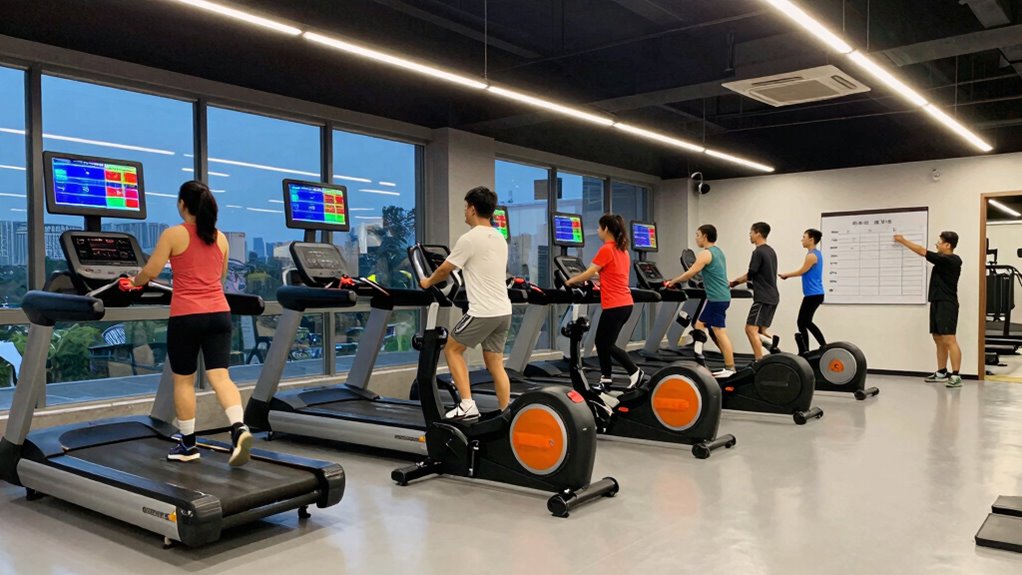
Are you curious about how to get the most out of your cardio zone training? Many ask whether interval training boosts results or if recovery periods are necessary. The key is balancing effort with rest to optimize your workout. During high-intensity intervals, push yourself into the target zone, then slow down during recovery periods to catch your breath. This approach improves endurance and fat burning. Here’s a quick overview:
| Question | Answer | Tips |
|---|---|---|
| How long should intervals last? | 30 seconds to 2 minutes each | Adjust based on fitness level |
| How often should I include recovery? | After each interval or set | To prevent burnout |
| Is interval training effective? | Yes, it enhances cardio capacity and fat loss | Incorporate 2-3 times weekly |
| How do recovery periods help? | They allow muscles to recover, boosting performance | Keep them active but slow |
| Can I do too many intervals? | Yes, overtraining can lead to fatigue | Listen to your body |
Frequently Asked Questions
Can Beginners Safely Start Zone Training Without Prior Experience?
Yes, beginners can safely start zone training if you monitor your heart rate carefully and progress gradually. Use a heart rate monitor to stay in the appropriate zone, avoiding overexertion. Focus on steady training progression, increasing intensity or duration slowly over time. This approach helps you build endurance safely, reduces injury risk, and guarantees you enjoy the benefits of zone training without overwhelming your body.
How Often Should I Adjust My Heart Rate Zones?
You should adjust your heart rate zones as you progress in your training. Regular heart rate monitoring helps you identify when your fitness improves, allowing you to modify your zones accordingly. Typically, every 4 to 6 weeks, reassess your maximum heart rate and adjust your zones to ensure effective training progression. This approach keeps your workouts challenging yet safe, optimizing your gains over time.
Is Zone Training Suitable for Weight Loss or Muscle Gain?
Think of zone training as a versatile tool in your fitness toolbox. It’s great for weight loss because it maximizes calorie burn through varied workout intensity, keeping your metabolism revved. However, for muscle gain, it’s less targeted since building muscle relies more on resistance training. Use zone training to complement your routine, but focus on strength exercises for muscle growth and cardio zones for shedding pounds effectively.
What Are Common Mistakes to Avoid During Zone Training?
You should avoid common mistakes like improper intensity calibration, which can lead to overtraining or undertraining. Make sure your equipment is accurate, as faulty readings can skew your workout zones. Don’t guess your effort level—use a heart rate monitor or calibration tools to stay in the correct zone. Also, avoid ignoring your body’s signals; pushing too hard or too easy can hinder progress and increase injury risk.
How Does Hydration Affect Zone Training Effectiveness?
Hydration levels directly impact your zone training effectiveness. When you’re well-hydrated, your electrolyte balance stays stable, helping your muscles perform ideally and preventing fatigue. Dehydration can lead to decreased stamina and impaired recovery, making it harder to maintain your target heart rate zones. To maximize results, drink water consistently before, during, and after your workout, ensuring your hydration levels support sustained effort and proper electrolyte balance.
Conclusion
Diving into dedicated zone training can dramatically deliver your desired results. By balancing boundaries, boosting benefits, and blending your workouts, you’ll build better endurance and burn more efficiently. Stay steady, set smart goals, and stay in the zone to see serious strides. Remember, consistent commitment combined with clever calibration creates consistent change. Embrace the effort, enjoy the journey, and elevate your exercise experience with effective, enjoyable zone training!
Halloween Picks
halloween
As an affiliate, we earn on qualifying purchases.