TL;DR

Get workout gear delivered free with Prime
- Fast, free delivery on millions of items
- Prime Video, Amazon Music and more included
- Member-only deals all year
A Fit&Well report describes lifted heels during squats as potentially linked to limited ankle dorsiflexion, but says hip mobility or strength may also play a role. It recommends three scaled squat variations: suspension-trainer squats, slow sit-to-stands and heel-elevated deep-squat holds. The report offers exercise guidance, not a diagnosis or evidence that the routine will resolve every cause.
A Fit&Well report outlines three modified squat exercises for people whose heels lift during a squat, while cautioning that the issue may involve more than tight calves or limited ankle movement. The guidance points to hip mobility and strength as possible factors and suggests progressing gradually, but it does not establish a diagnosis or guarantee that the exercises will correct the problem for every person.
The report says lifting heels is often associated with limited ankle dorsiflexion—the movement that lets the shin travel forward over the foot. Calf tightness or restrictions around the ankle may limit that motion during a squat. The writer also says that for some people, particularly those with weak or tight hips, heels rising could act as a protective response. That explanation is presented as the report’s assessment, not as a confirmed cause in every case.
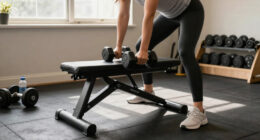
The suggested exercises are a suspension-trainer squat, a slow sit-to-stand from a sturdy chair, and a deep squat hold with the heels supported on thin plates or wedges. The report says suspension straps can provide support while a person practices lowering into a squat; the chair variation slows the movement to build control; and heel support allows practice in a deeper position before gradually reducing the height.
Fit&Well advises focusing on technique and exploring a comfortable range before prioritizing repetitions. Once the movements feel familiar, it suggests three sets of each exercise, working for one minute and resting for one minute. That is the report’s proposed routine, rather than a universal prescription. People should stop if an exercise causes pain and seek qualified guidance if they have an injury, a health condition or uncertainty about what is driving the movement.
Building Squat Range With Support
The advice matters because a visible movement pattern can have more than one possible explanation. If someone assumes lifted heels always mean tight calves, focusing only on calf or ankle stretches may not address other limitations. Fit&Well’s report instead presents hip strength and mobility as possible contributors for some people and offers supported variations to practice the movement with less demand on balance or depth.
The exercises also show a way to scale the squat rather than forcing a person into a position they cannot control. Suspension support, a chair and a small heel lift each change the task. The report frames improvement as gradual practice over several weeks, but provides no study results or measurements showing how often the routine works. Readers should treat the options as general exercise guidance, not individualized assessment.
Products Worth Considering

Levoit Vital 100S-P Air Purifier with Washable Pre-Filter

Garmin Forerunner 55 GPS Running Smartwatch, Black

Coway Mighty AP-1512HH(W) Air Purifier, White
As an affiliate, we earn on qualifying purchases.
Why Squat Heels May Rise
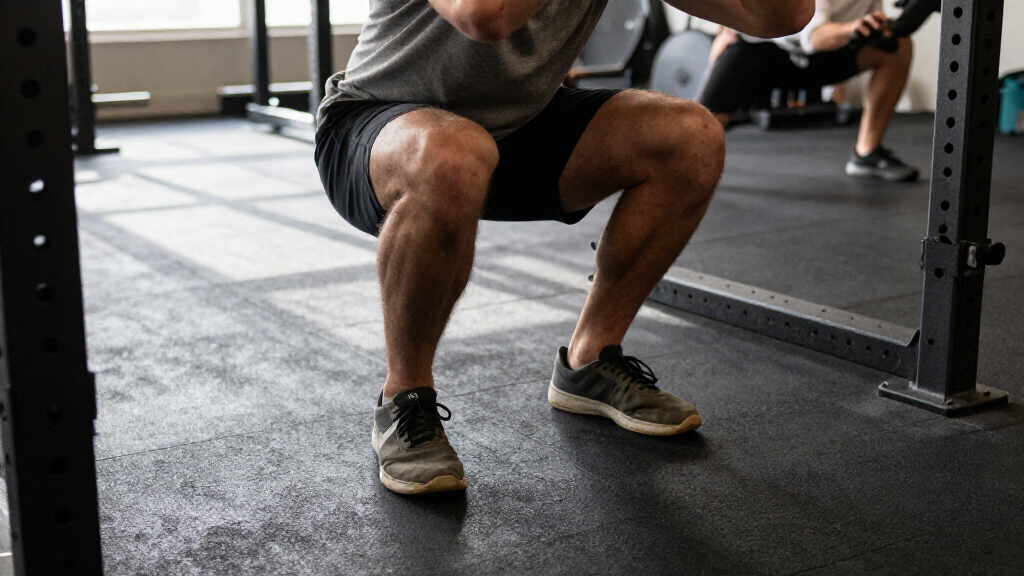
In a squat, the ankles need to bend as the knees move forward and the hips lower. The Fit&Well report describes restricted ankle dorsiflexion as a common explanation for heels coming off the floor, with calf or ankle tightness among the possible constraints. It also notes that a person’s squat position can be influenced by the hips, rather than the ankles alone.
The report’s author says the problem affected them when they began strength training and that they had seen it among clients with different ages and abilities. That is personal experience, not a clinical study or a finding that establishes how prevalent the issue is. The source material does not cite research comparing the three exercises or assessing their outcomes.
What the Guidance Cannot Establish
The report does not determine what causes any particular reader’s heels to lift. It gives possible explanations—including ankle restriction and hip weakness or tightness—but does not offer a diagnostic test or explain how to distinguish among them. It also does not establish that lifted heels are always a protective mechanism.
The supplied material provides no publication date, research citations, participant data or measured results for the exercises. It is unclear how quickly an individual might progress, whether the routine is appropriate for people with pain or injury, or how much heel lift is suitable in a given squat. Anyone with persistent pain, a recent injury or a medical condition should consult a qualified health professional before changing their training.
Progress Gradually and Recheck Form
The next step in the report’s suggested approach is to practice the variations at a manageable depth and focus on controlled movement rather than chasing repetitions. As confidence and strength improve, users can reduce reliance on suspension straps, slow the sit-to-stand descent until they can lightly tap the chair, and lower the heel support over time.
The report suggests building toward three one-minute sets of each movement, with one minute of rest, once technique feels secure. It does not set a specific timetable or define a test for readiness to move on. Progress should depend on comfort and control; pain or worsening symptoms warrant stopping and seeking professional advice.
Key Questions
What can make heels lift during a squat?
The Fit&Well report identifies limited ankle dorsiflexion, potentially related to calf or ankle tightness, as one possible reason. It also says hip mobility or strength may contribute for some people. The report does not identify the cause for an individual reader.
Which three exercises does the report recommend?
It describes suspension-trainer squats, slow sit-to-stands from a sturdy chair, and deep squat holds with the heels supported on plates or wedges. These are presented as scaled practice options.
Should I stretch my calves if my heels rise?
Calf or ankle tightness may be one factor, according to the report, but it says stretching alone may not help when hip limitations are involved. The source does not give an individualized recommendation; persistent difficulty or discomfort may merit assessment by a qualified professional.
How often should I do the exercises?
The report says to begin by practicing each variation and exploring range gradually. Once technique feels secure, it suggests three one-minute sets per exercise, resting one minute between sets. This is the report’s routine, not a program shown in the supplied material to suit everyone.
Source: fitandwell.com