TL;DR

Get workout gear delivered free with Prime
- Fast, free delivery on millions of items
- Prime Video, Amazon Music and more included
- Member-only deals all year
Certified Pilates instructor Marina Enright says a common beginner mistake is choosing advanced exercise variations before learning the fundamentals. She recommends prioritizing controlled movement, coordinating breath with exercise and using modifications; the source report does not provide research measuring how common the mistake is or its injury risk.
A Fit&Well report on beginner Pilates warns that attempting advanced variations before learning the basics can encourage poor movement patterns, according to certified instructor Marina Enright. Her advice is to focus on controlled movement, breathing and suitable modifications rather than trying to copy demanding exercises seen on social media.
Enright, founder of Amare Pilates, identifies moving to harder exercises too soon as a mistake she sees among beginners. People who lack the strength or control for a variation may use other muscle groups to complete it, she says, potentially adding tension around the neck, shoulders or lower back. The report presents this as an instructor’s guidance, not as a finding from a clinical study.
Her first recommendation is to value movement quality over repetition count. Rather than rushing through an exercise or choosing its hardest form, beginners can slow down and pay attention to alignment and the muscles they are trying to engage. Enright says controlled repetitions with proper alignment are more beneficial than moving quickly through a larger number.
She also advises keeping breath connected to movement, whether practicing at home or in a class. Enright says this coordination can support core engagement, control and body awareness. Her third pointer is to use easier options when offered: modifications let beginners learn the mechanics of a movement and build strength before progressing. For people pursuing a particular goal or recovering from an injury, she recommends guidance from a certified instructor who can tailor modifications and correct alignment.
Build Control Before Adding Difficulty
The advice matters because Pilates exercises can look deceptively accessible in short social-media clips. A viewer may see a polished advanced movement without seeing the training or coaching that helped the demonstrator perform it. Trying to reproduce the most demanding version straight away can shift attention from how the movement is performed to whether it can be completed at all.
Enright’s recommendations offer a practical way to begin: choose a variation that can be performed with control, move deliberately, and keep breathing rather than holding the breath to get through a repetition. If form breaks down, using an easier option is not failure; it is a way to practice the underlying movement. The report does not establish that these steps prevent injury, but it relays Enright’s warning that compensating with other muscles may create unnecessary tension and reinforce poor patterns.
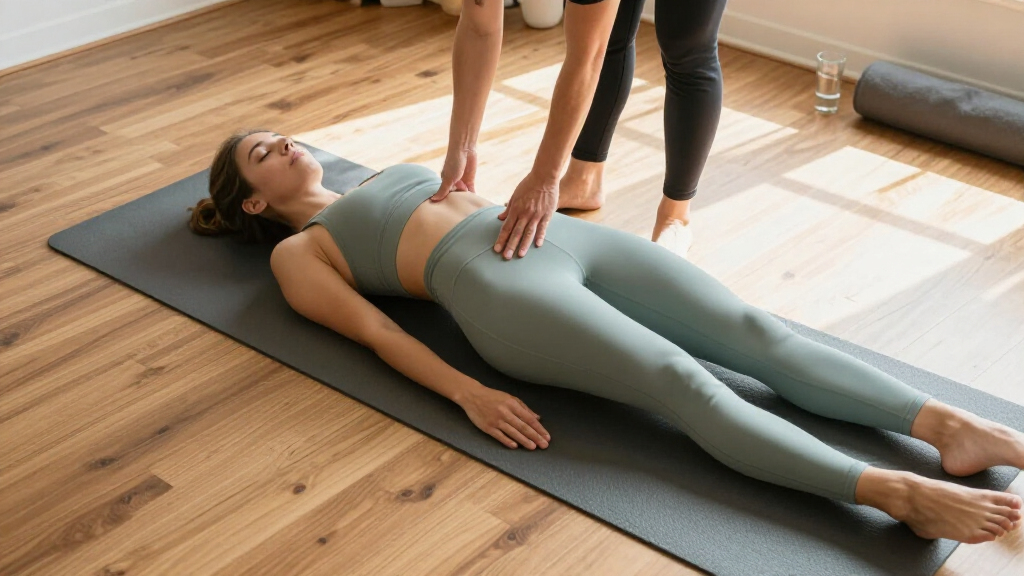
That distinction is useful for people following online workouts without an instructor watching their technique. A video cannot assess an individual’s alignment or adjust an exercise in real time. Anyone with an injury, pain, or a specific physical goal may benefit from personalized instruction; the report does not give individualized medical advice.
Pilates reformer machine for beginners
As an affiliate, we earn on qualifying purchases.
As an affiliate, we earn on qualifying purchases.
The Fit&Well report frames its advice around the contrast between social-platform Pilates videos and the level of control some exercises require. It says that impressive-looking moves can tempt beginners to imitate them at home, even when they have not established the necessary foundation. The report does not identify a particular viral trend, class, or newly released study; its central development is Enright’s practical guidance for new practitioners.
The three pointers in the report are connected: start with manageable variations, focus on alignment and controlled repetitions, and coordinate breathing with movement. Progression is not ruled out. Instead, Enright’s position is that learning the fundamentals first can make it easier to build toward more demanding exercises without rushing past the skills they require.
As an affiliate, we earn on qualifying purchases.
What the Report Does Not Establish
The supplied report does not include a publication date, original research, injury statistics, or evidence showing how often beginners make this mistake. Its description of the issue as common reflects Enright’s experience as an instructor, rather than a measured estimate across Pilates participants. The report also does not specify how quickly a beginner should progress or provide a universal test for choosing the right variation.
It is also unclear from the report how much supervision an individual needs: that depends on their experience, goals and physical circumstances. Enright recommends a certified instructor for people working toward a specific goal or recovering from injury, but the article excerpt does not set out clinical guidance or address particular diagnoses. Readers with pain or health concerns should seek appropriate professional advice rather than rely on a general exercise article.
Pilates core strength training equipment
As an affiliate, we earn on qualifying purchases.
As an affiliate, we earn on qualifying purchases.
A Gradual Path Into Pilates
For a beginner following the report’s advice, the next step is to choose a basic, manageable exercise and practice it slowly, paying attention to alignment, breathing and whether the movement remains controlled. If an instructor offers a modification, Enright’s guidance is to use it as a learning option rather than treating the more advanced version as the goal for that session.
Progress can come as strength and control develop, but the report gives no fixed timetable or progression plan. People seeking individualized feedback—especially those returning after an injury—can consult a certified Pilates instructor about appropriate variations. The source material does not announce a formal program or a follow-up study; its takeaway is a set of practical pointers for beginners starting or adjusting their practice.
Pilates beginner modification guide
As an affiliate, we earn on qualifying purchases.
As an affiliate, we earn on qualifying purchases.
Key Questions
What beginner Pilates mistake does the report describe?
Instructor Marina Enright says beginners may choose advanced exercise variations before establishing a foundation in the basic movements and control they require.
Should beginners avoid every challenging Pilates exercise?
No. Enright’s advice is to build toward harder variations after learning the fundamentals. The report does not provide a set timetable; beginners can focus on whether they can perform a movement with control and suitable alignment.
Are Pilates modifications a sign of weakness?
Enright says they are not. She describes modifications as a way to learn movement fundamentals and build strength, and encourages beginners to use easier options when appropriate.
Why does breathing matter during Pilates?
Enright says coordinating breath with movement can support core engagement, control and body awareness. She advises paying attention to breathing throughout practice, including in more advanced exercises.
When should someone work with a Pilates instructor?
Enright recommends a certified instructor for people pursuing a specific goal or recovering from injury, because an instructor can provide alignment feedback and personalized modifications. The report does not replace medical advice for pain or health conditions.
Source: rss
Halloween Picks
halloween
As an affiliate, we earn on qualifying purchases.