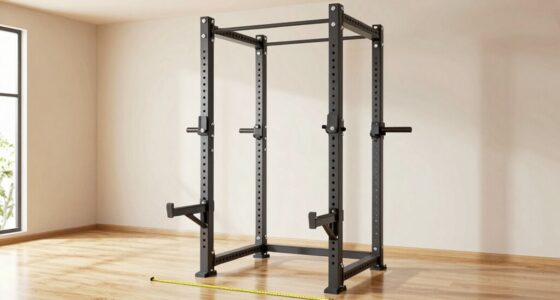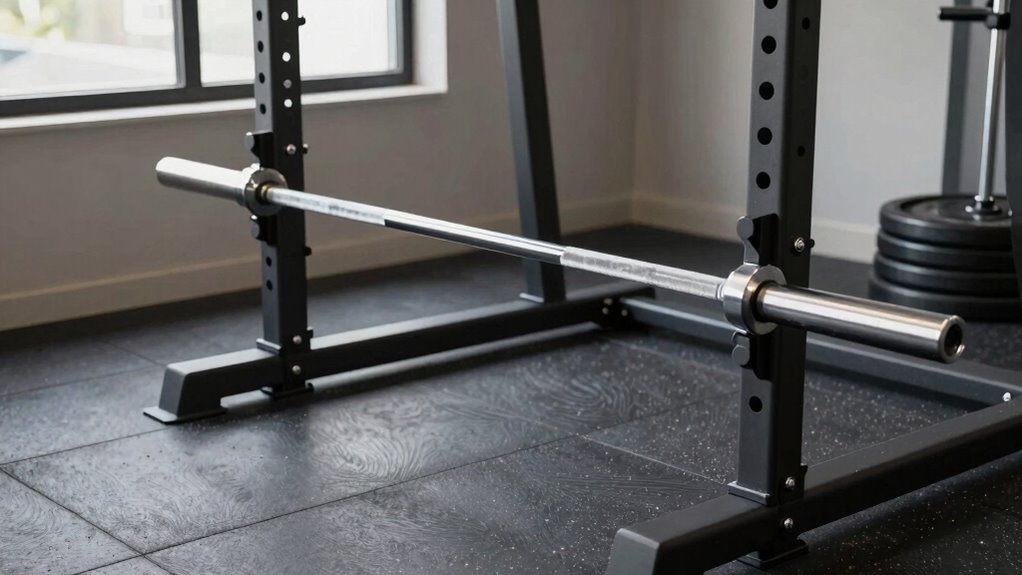
To find a barbell that fits your space and rack, consider your workout area size and the types of lifts you perform. Standard 7-foot bars are versatile for most gyms but may be too long if space is limited. Shorter specialty bars, around 4 to 6 feet, work better for tight spaces and target specific exercises. Choosing the right length improves safety and efficiency. Keep exploring to discover how to pick the perfect barbell for your setup.
Open a free Amazon Business account
Business pricing, bulk buying and tax-exempt orders.
As an affiliate, we earn on qualifying purchases.
Key Takeaways
- Measure your available workout space to determine if a standard 7-foot barbell or a shorter specialty bar is appropriate.
- Consider your rack or platform size; larger racks fit standard bars, while compact racks benefit from shorter options.
- Match your training goals with barbell length: traditional lifts suit standard bars, while specialty bars optimize limited space and specific exercises.
- Shorter bars (4-6 feet) are ideal for small gyms or home setups with space constraints.
- Selecting the right barbell length enhances safety, technique, and overall workout efficiency within your available space.
Have you ever wondered how the length of a barbell can impact your lifting experience? It’s a vital factor that often gets overlooked when setting up your gym space. When considering a barbell, you’ll encounter different options, primarily categorized by barbell length comparison, which helps you decide what’s best for your needs. Generally, there are standard barbells and specialty bars, each with distinct lengths that serve different purposes.
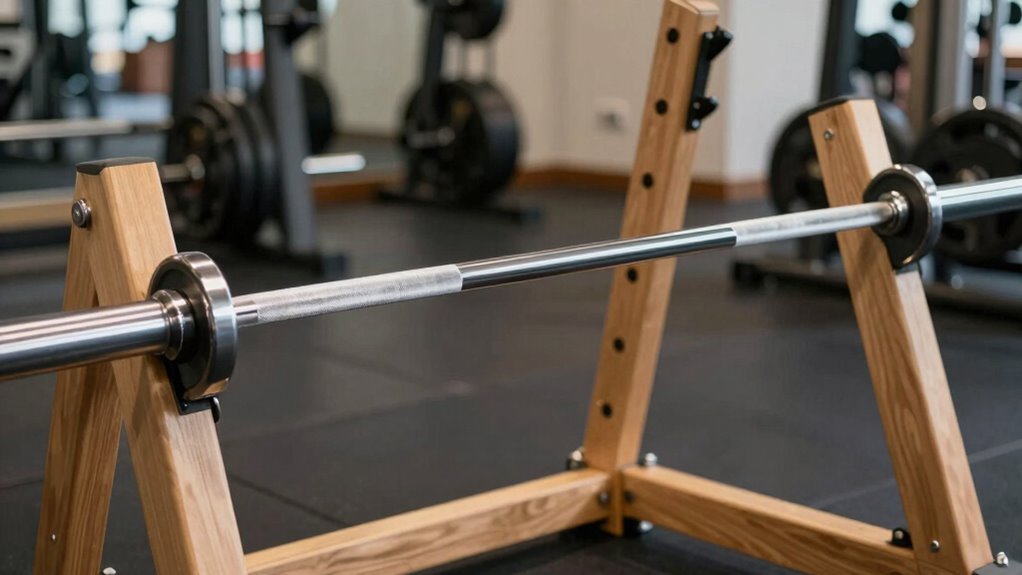
Standard barbells typically measure around 7 feet (about 2.2 meters), making them the go-to choice for most commercial gyms and home setups. They’re versatile and fit most racks and lifting platforms comfortably. Because of their universal length, they’re easier to accommodate in a variety of spaces, whether you’re working in a small home gym or a larger commercial gym. Their length strikes a good balance, providing enough space for heavy lifts like squats or deadlifts without feeling unwieldy. When doing a barbell length comparison, standard bars are often seen as the most practical option for everyday lifting, offering a reliable, familiar feel.
On the other hand, specialty barbells come in various lengths tailored for specific exercises or training needs. These bars can be shorter, such as those used for curl bars or trap bars, measuring around 4 to 6 feet, or longer for certain niche lifts. Shorter specialty bars are perfect if your space is limited or if you’re targeting specific muscle groups without having to move around a longer bar. They also tend to be more maneuverable, making them ideal for exercises like bicep curls or close-grip presses. Conversely, some specialty bars are longer but still fall short of the standard 7-foot length, designed to fit particular racks or accommodate certain lifts.
When choosing between standard versus specialty bars, consider your available space and your training goals. If you have a spacious setup and focus on traditional lifts, a standard 7-foot bar is likely your best bet. But if your space is tight or you want specialized options, a shorter or differently designed specialty bar might suit you better. Remember, the right barbell length doesn’t just depend on your gym size; it also influences your lifting technique, safety, and comfort. Understanding your space constraints** and how they relate to barbell length comparison can help you select the ideal barbell that fits seamlessly into your workout routine** and space constraints, making every lift more effective and enjoyable.
As an affiliate, we earn on qualifying purchases.
Frequently Asked Questions
How Do I Measure My Space for a New Barbell?
To gauge your space for a new barbell, start by using a measuring tape to determine the available room where you plan to workout. Consider the length of the barbell plus extra space for safe movement and rack clearance. Incorporate space planning to ensure there’s enough room for exercise, safety, and storage. Measure both width and height, accounting for any nearby equipment or walls, so your new barbell fits comfortably.
What Is the Standard Length of a Powerlifting Barbell?
A standard powerlifting barbell measures about 7 feet long. Imagine you’re setting up a home gym; knowing this helps you choose the right storage solutions, like wall mounts or racks that accommodate the bar’s length. For example, if your space is limited, selecting a shorter or adjustable barbell might be smarter. Always measure your area first to guarantee your barbell fits comfortably and safely.
Can I Customize a Barbell to Fit My Rack?
Yes, you can customize a barbell to fit your rack. Start by choosing a barbell material that’s durable and suited for your training, like steel or stainless steel. Next, consider the grip diameter; a smaller diameter may fit better if you have smaller hands or prefer a different grip. Many manufacturers offer customization options, so you can tailor the barbell’s length, material, and grip to match your space and needs.
How Does Barbell Length Affect Lifting Safety?
Think a longer barbell’s just more room to swing? Think again! A longer barbell affects your lifting safety by increasing leverage and risk of imbalance. The barbell material and grip diameter also matter—slick or thin grips can cause slips, especially on longer bars. So, choose a length that matches your space, and prioritize safety over spectacle—because no one wants to see you turn a workout into a circus act.
Are Longer Barbells Better for Certain Exercises?
Longer barbells are better for exercises like deadlifts and squats because they provide more room for your grip, enhancing stability and control. They also distribute weight more evenly, reducing stress on the barbell and improving durability. If you’re performing heavy lifts or need a wider grip, a longer barbell can help you maintain proper form and safety, making your workouts more effective and secure.
As an affiliate, we earn on qualifying purchases.
Conclusion
Think of your barbell like a key to your fitness kingdom. Choosing the right length is like finding the perfect key that fits your space and rack perfectly. When it’s just right, everything opens smoothly—your workouts become easier and more effective. So, measure carefully, consider your space, and pick the right size. With the perfect barbell, you’ll unleash your full potential and keep your fitness journey running seamlessly.
As an affiliate, we earn on qualifying purchases.
As an affiliate, we earn on qualifying purchases.
Fall Picks
fall essentials
As an affiliate, we earn on qualifying purchases.