
Building a home gym means balancing space, budget, and training goals, and the right home workout equipment depends heavily on which of those constraints bites hardest. For most people, the Adjustable Dumbbell Set is the best overall pick — a single pair replaces a whole rack of weights and covers nearly every strength movement. If floor space is the limiting factor, the Walking Pad Treadmill adds cardio without taking over a room, while budget buyers get outsized value from the simple Jump Rope with Ball Bearings. The main tradeoff in this category is versatility versus footprint and price: compact gear like ab rollers and push-up boards costs little but covers fewer movements, while bigger investments like dumbbell sets and treadmills demand more room and money up front. Keep reading for the full breakdown of all 12 picks, including who each one suits and who should skip it.

Get workout gear delivered free with Prime
- Fast, free delivery on millions of items
- Prime Video, Amazon Music and more included
- Member-only deals all year
Complete the kit


Key Takeaways
- Adjustable equipment dominated the top of the ranking — the Adjustable Dumbbell Set and the folding weight bench deliver the most exercises per dollar and per square foot, which is why they lead the list.
- The cheapest items (jump rope, ab roller) earned their spots on pure value density, not versatility — they do one or two things extremely well but can’t anchor a full program.
- Two push-up boards appear in this lineup, and they are not interchangeable: the Full Metal board suits heavier users and serious strength work, while the MQRW board trades load capacity for portability and included accessories.
- Cardio was the hardest category to cover cheaply — the Walking Pad Treadmill was the only cardio machine that justified its price and footprint, which is why no other cardio product made sense here.
- Duplicated categories revealed a clear price-tier pattern: the 3-in-1 Twister Arm Trainer (22–440 lbs) outclasses the 30–120 lbs version for progressive strength, but the lighter model makes sense as a low-cost starter tool.
| NICEPEOPLE Adjustable Weight Bench for Home Gym |  | Best Strength Training Foundation | Weight Capacity: 660 lbs | Backrest Angles: 8 positions | Backrest Length: 29.3 inches | VIEW LATEST PRICE | See Our Full Breakdown |
| Vinsguir Ab Roller Wheel with Knee Pad |  | Best Budget Core Tool | VIEW LATEST PRICE | See Our Full Breakdown | |||
| Twister Arm Trainer, 3-in-1 Hydraulic Power Chest Workout Equipment |  | Best Compact All-in-One | VIEW LATEST PRICE | See Our Full Breakdown | |||
| Jump Rope with Ball Bearings, Adjustable Steel Cable |  | Best for Cardio on a Budget | VIEW LATEST PRICE | See Our Full Breakdown | |||
| Full Metal Push Up Board with Heavy Duty Stainless Steel Handles |  | Best for Upper Body Volume | VIEW LATEST PRICE | See Our Full Breakdown | |||
| Ayombo Pilates Bar Kit with Resistance Bands |  | Best Compact Full-Body Starter | Resistance Bands: 30lb and 40lb pairs (up to 70lb combined) | Assembly: 3-section adjustable | Material: Welded solid iron connectors, foam padded grips | VIEW LATEST PRICE | See Our Full Breakdown |
| Walking Pad Treadmill for Home – Folding Compact & Portable Electric Walk Pad with Handle Bar |  | Best for Small-Space Cardio | Speed Modes: Walking 0.6–1.2 MPH, Jogging 1.9–2.5 MPH, Running 3.1–4 MPH | Max Weight: 264 lbs | Motor Power: 440 watts | VIEW LATEST PRICE | See Our Full Breakdown |
| Adjustable Dumbbell Set with Multiple Functions – 20/35/45/55/70/90 lbs |  | Best Versatile Strength Pick | Weight Options: 20/35/45/55/70/90 lbs | Material: High-density iron sand, PE coating | Lock System: Red and black double-lock nuts | VIEW LATEST PRICE | See Our Full Breakdown |
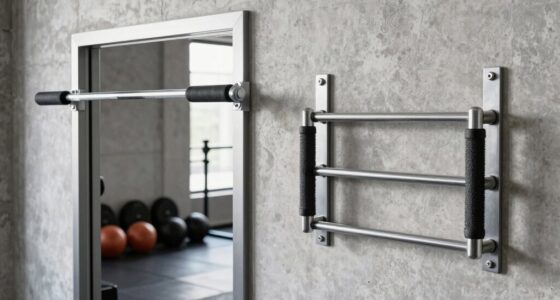
| Ally Peaks Pull Up Bar for Doorway, Heavy Duty Steel, Max 440 lbs |  | Best Budget Upper-Body Builder | Material: 1.7mm thickened refined heavy steel | Max Weight Capacity: 440 lbs | Handle Material: High fiber foam | VIEW LATEST PRICE | See Our Full Breakdown |
| Twister Arm Trainer, 30-120 lbs Adjustable Chest Workout Equipment |  | Best Targeted Arm Trainer | Resistance Levels: 30/60/90/120 lbs | Spring Workout Bars: 4 | Handles: 2 | VIEW LATEST PRICE | See Our Full Breakdown |
| MQRW Push Up Board – Portable Full Body Workout Equipment with Accessories | 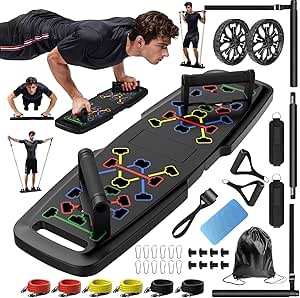 | Best All-in-One Starter Kit | Brand: MQRW | Model Number: ZAQ-852 | Included Components: Push-up board, resistance bands, ab roller wheel, ankle straps, door anchor, foldable bars | VIEW LATEST PRICE | See Our Full Breakdown |
| CAP Rubber Coated Dumbbell Weight Set with Vertical Rack |  | Best Traditional Strength Pick | Brand: CAP | Set Weight Options: 100 lb, 150 lb, 210 lb | Dumbbell Weights: 5, 10, 15, 20, 25 lb pairs | VIEW LATEST PRICE | See Our Full Breakdown |
More Details on Our Top Picks
NICEPEOPLE Adjustable Weight Bench for Home Gym
Every serious home gym starts with a bench, and this option stands out for its 8 backrest angles, which turn a single piece of equipment into incline, flat, decline, and seated workstations. Compared with the Adjustable Dumbbell Set also in this roundup, the bench is what unlocks full dumbbell routines — presses, rows, flyes, and core work — rather than just standing exercises. The 660 lb capacity is generous for the price and the fold-flat design slips under a bed or into a closet. The tradeoff: it does nothing on its own. Unlike the Vinsguir Ab Roller or the Jump Rope, which deliver workouts out of the box, this bench requires you to already own or plan to buy weights.
Pros:- 8 backrest angles cover press, core, and seated movements
- 660 lb capacity handles heavy dumbbell work safely
- Folds to roughly 31 x 16 inches for under-bed storage
- Sturdy steel frame with non-slip padding
Cons:- Useless as a standalone product — requires separate weights
- Assembly instructions take patience to follow
Best for: Lifters building a progressive strength setup around dumbbells who have the floor space for a bench
Not ideal for: Buyers wanting a standalone workout tool — without weights, this bench offers little on its own
- Weight Capacity:660 lbs
- Backrest Angles:8 positions
- Backrest Length:29.3 inches
- Folded Size:30.7 x 16.3 x 9.25 inches
- Frame Material:Alloy steel
- Padding:Leather, non-slip
- Adjustability:8-angle backrest, leveling foot caps
Our verdict“Buy this if dumbbell training is the core of your home routine and you need one bench that does everything.”
Vinsguir Ab Roller Wheel with Knee Pad
At a fraction of the cost of the NICEPEOPLE bench, this ab roller delivers one of the hardest core workouts available in any home gym category. The dual-wheel design is the key differentiator here: compared with the ab wheel function on the Twister Arm Trainer 3-in-1, this dedicated roller is simpler to set up and more stable under fatigue. The included knee pad matters more than it sounds — without it, rollout workouts on hard floors become genuinely painful. The honest tradeoff is scope: this trains the core and little else, and the 3.2-inch wheel diameter makes full rollouts tough for beginners to control.
Pros:- Dual-wheel layout adds stability during rollouts
- Knee pad included for floor comfort
- 440 lb capacity rating for safety
- Small enough to toss in a bag for travel
Cons:- Trains core only — no upper or lower body coverage
- Requires several feet of clear floor space
- Small wheel height raises difficulty for novices
Best for: Buyers on a tight budget who want an intense core workout for under $25
Not ideal for: Beginners with weak cores — full rollouts on a small wheel can strain the lower back
Our verdict“The cheapest serious core trainer in the lineup — buy it if you already handle planks easily and want the next challenge.”
Twister Arm Trainer, 3-in-1 Hydraulic Power Chest Workout Equipment
This is the space-saver’s answer to the Adjustable Dumbbell Set: hydraulic resistance from 22 to 440 lbs, plus a detachable ab wheel and resistance band hooks, all in one unit that stores in a drawer. The wide resistance range is what sets it apart from the 30-120 lbs Twister Arm Trainer elsewhere in this roundup — lighter for rehab-level work, heavier for serious chest presses. Compared with the Vinsguir Ab Roller, its ab function is more of a bonus than a match for a dedicated roller. Be aware that hydraulic resistance feels different from iron: the adjustment dial lacks the precision of plate changes, and the motion isn’t identical to free weights.
Pros:- Huge 22-440 lb adjustable resistance range
- Converts to ab wheel and resistance band station
- Titanium steel build with 2-year warranty
- Stores in far less space than dumbbells
Cons:- Resistance dial adjustments are less precise than plates
- Multi-part setup may confuse first-time users
- No stated maximum user weight rating
Best for: Apartment dwellers who want chest, arm, and core training from one stowable device
Not ideal for: Lifters chasing barbell-style progressive overload — hydraulic resistance can’t replicate free-weight mechanics
Our verdict“A smart pick if one drawer-sized device needs to replace an entire rack of equipment.”
Jump Rope with Ball Bearings, Adjustable Steel Cable
While most of this roundup builds strength, this rope covers the conditioning gap for the price of a coffee. The ball-bearing handles are the feature that matters — they keep the cable spinning smoothly at speed without the tangling that plagues cheap ropes, which makes interval training actually tolerable. Compared with the Walking Pad Treadmill in this guide, the rope costs a tiny fraction, burns comparable calories per minute, and weighs nothing to store. The adjustable steel cable fits users of different heights in one household. The tradeoffs are real, though: it needs ceiling clearance and forgiving joints, and beginners will trip constantly for the first few sessions.
Pros:- Ball bearings deliver smooth, tangle-free speed work
- Adjustable cable fits multiple users
- Foam handles resist sweat and slipping
- Pocketable and effectively free relative to other options
Cons:- High-impact motion stresses joints
- Requires adequate ceiling height and floor space
- Needs initial length adjustment before first use
Best for: Anyone adding cheap, portable cardio conditioning alongside strength gear
Not ideal for: People with knee or ankle issues, or low-ceiling apartments — jumping is high-impact and space-hungry
Our verdict“The best cardio value in this lineup — grab it unless impact is a problem for your joints.”
Full Metal Push Up Board with Heavy Duty Stainless Steel Handles
Push-ups remain the most underrated home exercise, and this board makes them measurably better by using handle positions to target chest, shoulders, and triceps deliberately instead of guessing. The full metal build and 660 lb rating put it in a different durability class from the plastic MQRW Push Up Board also featured in this guide — it won’t crack under heavy users or aggressive tempo work. Compared with the Ally Peaks Pull-Up Bar, it covers the pressing side of upper-body training rather than pulling, making them natural complements. The tradeoff: it’s heavier than plastic boards, less travel-friendly, and the fixed handle heights offer no decline or elevation options.
Pros:- 660 lb capacity suits heavy users and weighted push-ups
- Metal construction outlasts plastic boards
- Position markers guide muscle targeting
- Folds flat for storage
Cons:- Metal build makes it heavier and less portable than plastic rivals
- No angle or height adjustability
- Push-ups only — no pulling or lower body work
Best for: Strength trainers who do high push-up volume and want gear that never wears out
Not ideal for: Frequent travelers or anyone wanting adjustable angles — it’s heavy with fixed handle positions
Our verdict“The last push-up board you’d need to buy — ideal if durability matters more than portability.”
Ayombo Pilates Bar Kit with Resistance Bands
This kit earns its spot by replacing an entire rack of gym gear with one bar and two band pairs. Compared with the Adjustable Dumbbell Set, the Ayombo trades raw loading capacity for portability — it slips into a carry bag and works in a living room corner, while dumbbells demand a dedicated floor area. The stacked 30lb and 40lb bands reach 70lb of combined resistance, enough for squats, rows, presses, and core work without overwhelming a newcomer. The welded iron connectors and foam grips feel more durable than typical budget band kits.
The tradeoff is the ceiling: stronger lifters will outgrow the resistance within months, and the three-section assembly can be fiddly the first time. This pick makes the most sense for someone starting strength training at home, not for anyone chasing progressive overload long-term.
Pros:- Up to 70lb of combined resistance from stackable bands
- Stores in a carry bag and works in any room
- Covers arms, legs, hips, and core in one system
- Welded iron connectors feel sturdier than cheap band kits
Cons:- Resistance ceiling is low for experienced users
- Three-section bar assembly is awkward at first
Best for: Beginners and renters who want full-body resistance training in a tiny footprint
Not ideal for: Intermediate-to-advanced lifters who will outgrow 70lb of resistance quickly
- Resistance Bands:30lb and 40lb pairs (up to 70lb combined)
- Assembly:3-section adjustable
- Material:Welded solid iron connectors, foam padded grips
- Included Components:Carry bag, door anchor, instruction manual, Pilates bar, resistance bands
- Brand:Ayombo
Our verdict“Buy this if you want a no-commitment, full-body starter kit that fits under a bed — skip it if you already lift seriously.”
Walking Pad Treadmill for Home – Folding Compact & Portable Electric Walk Pad with Handle Bar
Where most entries here build strength, this walking pad covers the cardio gap — and does it in an apartment-friendly footprint. The 10.5cm folded profile slides under a sofa, something no other product in this roundup can claim, and the quiet 440-watt motor makes it viable during calls or in shared living spaces. Compared with the Jump Rope with Ball Bearings, it’s a far bigger investment, but it delivers low-impact steady-state cardio that’s gentler on knees and workable while watching TV.
The compromises are real: 4 MPH tops out at a brisk walk or light jog, so runners training for pace should look elsewhere. The 264lb weight limit also excludes heavier users, and the handle must be removed for under-furniture storage. This model is better suited to desk-workers adding daily steps than anyone chasing serious running workouts.
Pros:- Folds to 10.5cm thick for under-bed or under-sofa storage
- Quiet enough for office or apartment use
- Three speed modes from strolling to light jogging
- Remote control and detachable phone holder add convenience
Cons:- Maximum speed of 4 MPH rules out real running
- Removing the handle bar for flat storage takes effort
Best for: Remote workers and apartment dwellers who want to stack walking steps onto a busy day
Not ideal for: Runners who need speeds above 4 MPH or users over 264 lbs
- Speed Modes:Walking 0.6–1.2 MPH, Jogging 1.9–2.5 MPH, Running 3.1–4 MPH
- Max Weight:264 lbs
- Motor Power:440 watts
- Dimensions (Folded):104 x 48.7 x 10.5 cm
- Running Area:90 x 38 cm
- Frequency:50-60 Hz
Our verdict“Choose this if your fitness gap is daily movement rather than intensity — it’s a walking machine, not a treadmill substitute.”
Adjustable Dumbbell Set with Multiple Functions – 20/35/45/55/70/90 lbs
This is the most complete strength solution in the lineup — one set converts into dumbbells, a barbell, kettlebells, push-up stands, and plates, up to a 90lb configuration. Against the CAP Rubber Coated Dumbbell Set, it sacrifices the convenience of grab-and-go fixed pairs but wins decisively on space, storing in under 2 ft². The red-and-black dual-lock nuts address the classic fear with adjustable sets: a plate working loose mid-rep.
That versatility carries costs. Reconfiguring between dumbbell, barbell, and kettlebell modes takes minutes, which disrupts circuit-style training, and swapping plates between sets kills workout flow compared to a dial-based adjustable dumbbell. Beginners may also find the heaviest plate configurations awkward. This pick makes the most sense for lifters who train deliberately, with rest between sets, and want a full gym’s worth of equipment in one box.
Pros:- Five equipment types in one purchase, up to 90 lbs
- Dual-lock nuts keep plates secure during lifts
- Stores in under 2 square feet
- Weight options scale from beginner to advanced
Cons:- Mode conversion between exercises is slow and disruptive
- Heaviest configurations are unwieldy for newer lifters
Best for: Strength trainers who want barbell, dumbbell, and kettlebell work from a single compact set
Not ideal for: Circuit and HIIT lifters who need instant weight changes between exercises
- Weight Options:20/35/45/55/70/90 lbs
- Material:High-density iron sand, PE coating
- Lock System:Red and black double-lock nuts
- Barbell Length:Adjustable, with 25mm foam padding
- Storage Space:Under 2 ft²
- Suitable For:Men and women
Our verdict“The best value-per-exercise purchase here if you accept slower transitions — treat it as a home gym in a box, not a quick-access dumbbell rack.”
Ally Peaks Pull Up Bar for Doorway, Heavy Duty Steel, Max 440 lbs
For pure value-per-dollar, nothing here matches a pull-up bar. The 440lb capacity on 1.7mm thickened steel outperforms what the price suggests, and the multi-grip handles unlock pull-ups, chin-ups, and hangs — movement patterns no other product in this roundup covers. Compared with the Full Metal Push Up Board, which costs more and only trains pressing patterns, the Ally Peaks delivers pulling work, the missing half of most home setups.
The leverage-based, screw-free mounting is genuinely convenient but depends on your doorway: it fits 24″ to 32″ frames only, and unusual molding or shallow frames (under 4.7″ depth) can rule it out entirely. Proper seating in the frame matters for safety — a rushed install is a real risk. This option stands out for renters and budget builders; measure your door before ordering.
Pros:- 440 lb capacity from thickened steel construction
- Multi-grip handles enable varied back and arm work
- No-screw leverage install leaves doorframes undamaged
- Silicone pads prevent marks and scuffs
Cons:- Strict doorway width and depth compatibility limits
- Safety depends entirely on correct installation each time
Best for: Budget-focused buyers and renters who want serious pulling exercises without drilling holes
Not ideal for: Households with doorways outside 24″–32″ wide or non-standard frame depths
- Material:1.7mm thickened refined heavy steel
- Max Weight Capacity:440 lbs
- Handle Material:High fiber foam
- Compatibility:Doorways 24″ to 32″ wide, depth 4.7″–8.27″
- Protection:Double silicone door frame protection
- Installation:No screws, leverage-based, easy to mount and remove
Our verdict“Measure your doorway first — if it fits, this is the cheapest way to add the pulling movements most home gyms completely lack.”
Twister Arm Trainer, 30-120 lbs Adjustable Chest Workout Equipment
This spring-based twister occupies a narrow but useful niche: isolation work for biceps, triceps, shoulders, chest, and forearms with resistance scaled from 30 to 120lbs. Compared with the 3-in-1 Hydraulic Power Twister elsewhere in this roundup, it’s simpler and cheaper but gives up the hydraulic adjustability and bundled accessories — a fair trade if arm training is your only goal. The elastic leather spring covers add a safety layer that bare spring twisters skip.
Its limitations shape who should buy it. The minimum user height of 5’7″ excludes a large share of buyers outright, and it does nothing for legs, back, or core — unlike the Ayombo Pilates Bar Kit, which covers the whole body for similar money. Setup instructions also demand careful reading. This model is better suited to warming up, rehab work, or supplementing a fuller home gym than serving as anyone’s primary equipment.
Pros:- Four resistance levels from 30 to 120 lbs
- Targets five upper-body muscle groups
- Small enough for office or travel use
- Safety-wrapped springs with leather covers
Cons:- 5’7″ height requirement excludes shorter users
- Upper-body only — no core or leg value
Best for: Taller users wanting a portable arm and chest tool for warm-ups, rehab, or accessory work
Not ideal for: Anyone under 5’7″ or buyers seeking full-body coverage from one piece
- Resistance Levels:30/60/90/120 lbs
- Spring Workout Bars:4
- Handles:2
- Material:Elastic leather cover on springs
- Adjustment Function:Two-stage
- Suitable Height:Above 5’7″
Our verdict“A worthwhile supplement if you’re tall and arm-focused; everyone else gets more utility from a full-body option like the Pilates bar kit.”
MQRW Push Up Board – Portable Full Body Workout Equipment with Accessories
Most entries in this roundup do one job well, but the MQRW Push Up Board tries to replace an entire home gym in a single folding package. Alongside the color-coded push-up board, you get resistance bands, an ab roller, ankle straps, a door anchor, and foldable bars — enough variety to train chest, back, legs, and core without buying anything separately.
Compared with the Ayombo Pilates Bar Kit, this set covers more muscle groups and adds a structured training guide via its color zones, which helps beginners who don’t know where to place their hands. Compared with the standalone Vinsguir Ab Roller, the included roller here is more basic, so dedicated core enthusiasts may still prefer the dedicated unit.
The tradeoff is honest: resistance caps out quickly for stronger lifters, and the plastic board flexes under heavy loads where the Full Metal Push Up Board feels rock solid. For a first home setup under a modest budget, though, the variety per dollar is hard to beat.
Pros:- Combines push-up board, bands, ab roller, ankle straps, and door anchor in one affordable package
- Color-coded zones guide hand placement for targeted muscle work
- Folds flat and travels easily — genuinely apartment and hotel friendly
- Replaces several single-purpose purchases for a first-time home gym
Cons:- Board flexes and feels less stable than metal push-up boards under heavier users
- Resistance levels are too low for advanced strength training
- Multiple components mean more assembly and some reported durability issues over time
Best for: Beginners and casual exercisers who want a full-body starter kit for a small space without buying multiple separate pieces
Not ideal for: Intermediate-to-advanced lifters — the resistance bands and board stability max out well below what progressive strength training demands
- Brand:MQRW
- Model Number:ZAQ-852
- Included Components:Push-up board, resistance bands, ab roller wheel, ankle straps, door anchor, foldable bars
- Design:Foldable, portable full-body system
- Muscle Targeting:Color-coded board zones
- Best Sellers Rank:#2 in Home Gym Systems
Our verdict“Buy this if you’re starting from zero and want maximum exercise variety in one compact box; skip it if you already outgrow band-based resistance.”
CAP Rubber Coated Dumbbell Weight Set with Vertical Rack
After a roundup full of bands, boards, and folding gadgets, the CAP Rubber Coated Dumbbell Set is a reminder of why free weights never went out of style. The rubber-coated hex dumbbells protect floors, dampen noise, and resist chipping, while the knurled steel handles give a grip that plastic-and-band systems simply can’t match.
Unlike the Adjustable Dumbbell Set elsewhere in this guide, these fixed dumbbells let you jump straight between weights with zero dialing or mechanism wear — the classic trade of convenience for floor space. The vertical rack keeps the footprint surprisingly tight for a five-pair set, though it’s still a commitment compared with a foldable board.
The ceiling is real: 25-pound tops mean strong lifters will outgrow it for pressing and pulling work, and once loaded, the rack isn’t moving anywhere without effort. For steady progressive training at home, it’s the dependable backbone a gadget-based setup can’t provide.
Pros:- Rubber coating protects floors, reduces clanging noise, and resists chipping
- Vertical rack keeps five pairs organized in a compact footprint
- Knurled steel handles offer a secure, sweat-proof grip
- Fixed weights are instantly grabbable — no adjustment mechanism to fiddle with
Cons:- 25 lb maximum per dumbbell limits progression for stronger lifters
- Full set plus rack is heavy and awkward to relocate once set up
Best for: Lifters who want durable, ready-to-grab fixed dumbbells for consistent strength training in a garage or dedicated home gym corner
Not ideal for: Small apartments with no fixed workout corner, or advanced lifters who need weights beyond 25 pounds per dumbbell
- Brand:CAP
- Set Weight Options:100 lb, 150 lb, 210 lb
- Dumbbell Weights:5, 10, 15, 20, 25 lb pairs
- Material:Rubber-coated hex steel
- Handles:Knurled steel
- Rack:Space-saving vertical dumbbell rack included
Our verdict“This is the pick for buyers who value simple, long-lasting free weights over gadgets — as long as 25-pound dumbbells cover your strength range.”
How We Picked
My ranking logic starts with one question: how many real training goals can this single product serve? Equipment that covers strength, endurance, or mobility across multiple muscle groups ranked higher than single-purpose gear, because home gym buyers rarely have the budget or space to buy narrowly specialized tools. From there, I weighed build quality and load capacity — anything rated under 300 lbs of user or weight capacity lost points, since flimsy gear becomes a safety issue under progressive loading. Space efficiency mattered next: folding designs, doorway mounts, and compact footprints earned an edge because most home setups share space with living areas.
Finally, I compared price against long-term value rather than sticker price alone. A $30 ab roller that gets used weekly beats a $400 machine that gathers dust, but cheap gear that needs replacing within a year loses to mid-range options built to last. Where two products occupied the same category — the two Twister Arm Trainers and two push-up boards — I ranked them against each other directly and assigned distinct roles so the lineup never repeats itself. The result is an ordered list where every position reflects a tradeoff, not just a price sort.
Factors to Consider When Choosing Home Workout Equipment
Before buying any single piece of home workout equipment, it helps to understand the patterns that separate smart purchases from expensive clothes racks. These are the factors that shaped my ranking, explained in more depth than any single review allows.Buy in Order of Training Priority, Not Price
The most common mistake I see is buying the cheapest gear first and the foundational gear never. A jump rope or ab roller costs almost nothing, but if your actual goal is building strength, those purchases delay the one that matters — a loadable weight set and a bench. My advice is to write down your top two fitness goals, then fund the equipment that serves those goals before anything else. Cardio-focused buyers should put a treadmill or walking pad first; strength-focused buyers should fund dumbbells and a bench before accessories. This is why the Adjustable Dumbbell Set and weight bench sit at the top of the ranking — they’re the foundation everything else supplements. Accessories bought before the foundation tend to go unused, no matter how good they are.
Weight Capacity Is a Safety Spec, Not a Marketing Number
Load ratings tell you two things: whether the equipment will survive your training, and whether it can grow with you. A bench rated at 660 lbs accommodates a heavy user plus loaded dumbbells for decades of progress, while lighter-rated gear may need replacing once you outgrow it. This applies to more than benches — push-up board capacity, pull-up bar ratings, and even resistance band attachments all determine the ceiling of your training. Buyers planning to gain strength over years should treat capacity as a long-term investment metric, not a current-need checkbox. The cheapest version of a product category almost always cuts corners here first. If two similar items differ mainly in load rating, the higher-rated one usually justifies the premium for anyone beyond beginner level.
Measure Your Space Honestly — Including Storage Space
Equipment that lives in a corner gathering dust was usually a spatial mismatch from day one. Before buying, measure not just the footprint during use but where the item will live between workouts — a folding bench still needs closet or wall space, and a walking pad needs a clear path to slide under a bed or sofa. Doorway pull-up bars solve this well by using space that’s otherwise empty, which is part of why they rank above bulkier alternatives for apartment dwellers. Multi-function gear like the 3-in-1 Twister Arm Trainer earns its footprint by replacing three separate tools. The rule of thumb: if you can’t picture exactly where it will be stored, don’t buy it. Most abandoned home gym equipment wasn’t bad equipment — it was badly sized for the room.
Adjustability Determines Whether You’ll Still Use It in a Year
Fixed-resistance and fixed-angle equipment has a built-in expiration date: the day it becomes too easy. Adjustable dumbbells, hydraulic arm trainers with wide resistance ranges, and multi-angle benches all stay relevant because they scale with your progress. This is a core reason the 22–440 lb Twister out-ranked its 30–120 lb sibling — the range difference is the difference between a years-long tool and a months-long one. Buyers should also think about household sharing: adjustable equipment lets two people of different strength levels use the same purchase. The tradeoff is that adjustable gear costs more upfront and has more moving parts that can wear. But paying once for scalable resistance beats repurchasing fixed gear three times as you progress.
Know When to Pay More — and When Cheap Is Correct
Not every purchase deserves the premium tier, and overspending on simple tools is its own mistake. Items with no moving parts under load — jump ropes, ab rollers, doorway bars — are commodity products where a well-reviewed budget version performs nearly identically to expensive ones. Pay up instead where mechanical complexity and safety intersect: adjustable dumbbells with reliable locking mechanisms, treadmills with decent motors, and benches with stable hinge systems. The failure mode matters too — a fraying jump rope costs $12 to replace, but a failing dumbbell locking collar or a folding bench hinge is an injury risk. My guidance: spend where failure is dangerous, save where failure is merely annoying. That principle drove several of the price-tier calls in this lineup.
Cardio at Home: Footprint Usually Decides
Home cardio is where buyers most often overbuy. Full-size treadmills, ellipticals, and rowing machines dominate a room and often cost more than an entire strength setup. For most home users, a folding walking pad paired with outdoor walking or running covers cardio needs at a fraction of the footprint, which is why the walking pad is the only machine I’d put in a 12-item essentials list. The honest question is whether you’ll walk or run indoors in bad weather enough to justify machine cost — many buyers won’t. Low-cost cardio alternatives like jump ropes deliver serious conditioning for under $20 but demand joint tolerance and coordination. Choose cardio equipment based on how you’ll actually use it on low-motivation days, not on your best-case training plan.
Frequently Asked Questions
Should I buy adjustable dumbbells or a fixed dumbbell set like the CAP Rubber Coated set?
These two products suit genuinely different buyers, and the choice hinges on space versus durability. Adjustable dumbbells replace an entire rack in the footprint of a single pair, making them the clear pick for apartments and shared rooms — but their locking mechanisms are the weak point, and cheaper sets can feel clunky during fast transitions between exercises. The CAP fixed set with its vertical rack is more durable, faster to use mid-workout, and better for households where multiple people train at once, but it demands permanent floor space and costs scale up sharply at heavier weights. If your heaviest working weight is under 50 lbs per hand and space is tight, go adjustable. If you have a dedicated gym corner and value bulletproof simplicity, fixed wins. Neither is wrong; they just solve different problems.
Is a walking pad enough for real fitness, or do I need a full treadmill?
For most home users, a walking pad is enough — with honest caveats. Walking at incline-free speeds burns fewer calories per minute than running, so weight-loss goals require longer sessions or dietary coordination. A full treadmill with a bigger motor, higher speed range, and incline supports running and hill work, but it costs two to three times more and consumes a permanent chunk of your living space. The walking pad’s advantage is friction removal: it slides under a desk or bed, so using it daily requires zero setup, and consistency beats intensity for long-term results. If you’re a committed runner training for races, a walking pad will frustrate you. If your goal is general health, daily movement, and staying active during work-from-home days, save the money and the square footage.
Do I actually need a weight bench, or can I train effectively without one?
You can train without a bench, but you’ll leave a surprising amount of progress on the table. Floor-based pressing limits range of motion on chest and shoulder work, and many dumbbell row, fly, and supported curl variations simply require a bench to perform safely. The 8-angle adjustable bench in this lineup extends that further — incline pressing and seated shoulder work need backrest angles a flat surface can’t provide. That said, beginners in their first 8–12 weeks can build a solid foundation with bodyweight movements, resistance bands, and floor presses before investing. The bench makes the most sense once you own adjustable dumbbells, since the two unlock each other’s full potential. If budget forces a choice, buy the dumbbells first and the bench second.
Are budget items like the ab roller and jump rope too basic to matter?
Basic equipment is not the same as ineffective equipment — the distinction is role. An ab roller is one of the hardest core tools ever made, and a ball-bearing jump rope delivers genuine conditioning that machines costing twenty times more can’t replicate for coordination and intensity. What these items can’t do is carry a full program: neither builds progressive lower-body strength or replaces a pulling movement. The pattern that emerged across this comparison is that cheap single-purpose tools are excellent supplements but poor foundations. Someone who owns only a jump rope and ab roller will plateau within months. Someone who owns dumbbells and a bench plus those two items has a complete setup. Buy them, but buy them after the foundation, not instead of it.
The doorway pull-up bar is rated at 440 lbs — is it safe for heavy users?
A high load rating is a good signal, but doorway safety depends as much on your door frame as the bar itself. The bar’s rating assumes a solidly built frame — hollow or poorly anchored trim can fail well before the bar does, so inspect the frame and test with partial weight first. Properly installed lever-style bars that brace against the door frame on both sides are among the safest budget options for heavier users, and 440 lbs leaves generous margin for most people plus a weighted vest or backpack. The real advantage is what it unlocks: pull-ups, hanging knee raises, and band-assisted rows cover the entire upper back, which dumbbells alone address awkwardly. For anyone over 250 lbs, I’d still recommend mounting screws or a wall-mounted alternative for permanent setups. The doorway bar is the best low-commitment entry point, not the final word in heavy-duty training.
Conclusion
After comparing all twelve options, the right choice comes down to who you are as a buyer. For best overall, the Adjustable Dumbbell Set stands alone — no other single purchase covers as many muscle groups, scales as far, and fits in as little space. The NICEPELE Adjustable Weight Bench pairs with it perfectly and takes the best-premium slot for buyers building a complete setup that lasts a decade. For best value, the jump rope and Vinsguir ab roller deliver more fitness per dollar than anything else on this list — ideal as supplements or as a starting point on a tight budget. Beginners should look at the Twister 30–120 lbs Arm Trainer or the MQRW portable push-up board: both are approachable, low-cost, and forgiving while you build the habit before committing to bigger purchases. For specific needs: apartment dwellers and cardio-focused buyers get the Walking Pad Treadmill, strength-focused users with a doorframe get the Ally Peaks Pull-Up Bar, and anyone wanting maximum versatility in one machine should weigh the 3-in-1 Twister (22–440 lbs). Whatever your priority, buy the foundation first, measure your space honestly, and let your actual training goals — not the flashiest product — make the final call.
Halloween Picks
halloween
As an affiliate, we earn on qualifying purchases.