Barbell tensile strength numbers show how much pulling force the barbell’s material can handle before breaking, which directly impacts its durability and safety. Higher numbers mean the bar can resist more force, making it suitable for heavy lifting and repeated use. These ratings reflect the quality of the steel and manufacturing processes. If you want to understand what these numbers really mean for your safety and performance, keep exploring.
Prime for Young Adults — start your free trial
Fast free delivery, streaming and member deals for eligible 18–24 year olds.
As an affiliate, we earn on qualifying purchases.
Key Takeaways
- Tensile strength numbers indicate the maximum force the barbell’s material can withstand before breaking.
- Higher values mean stronger steel, capable of handling heavier loads and repeated stress.
- These numbers are measured using standardized testing methods like ASTM or ISO, ensuring accuracy.
- They reflect material quality, manufacturing processes, and overall construction durability.
- Understanding these ratings helps assess the safety, suitability, and longevity of a barbell for your training needs.
heavy duty Olympic barbell with high tensile strength
As an affiliate, we earn on qualifying purchases.
As an affiliate, we earn on qualifying purchases.
What Is Barbell Tensile Strength and Why Is It Important?
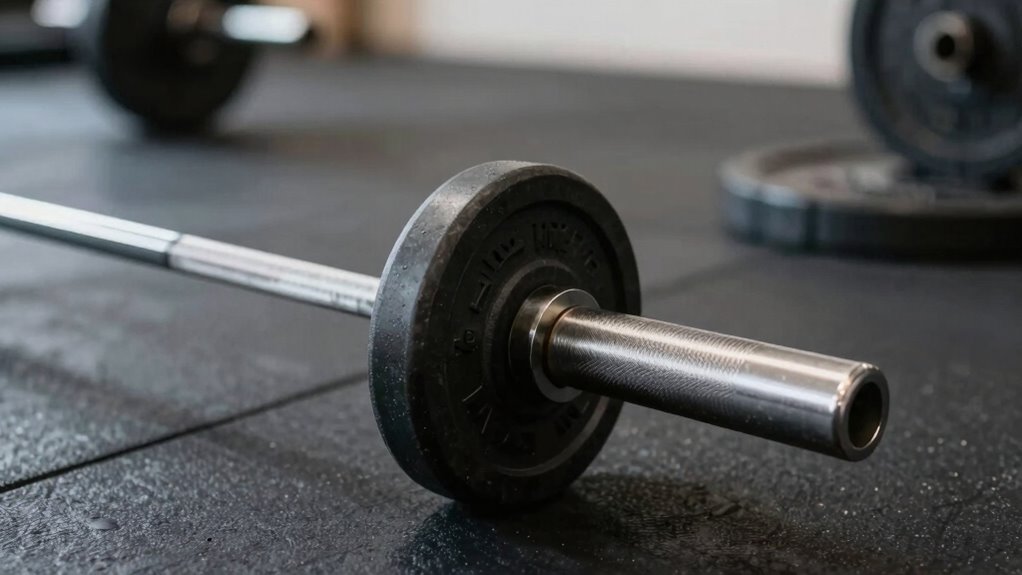
Understanding barbell tensile strength is essential because it determines how much force the barbell can withstand before breaking. Tensile testing reveals this strength by applying force until the material reaches its limit. This process helps you understand the material properties that influence durability, such as ductility, elasticity, and yield strength. Knowing a barbell’s tensile strength ensures you select equipment that can handle heavy loads without failure. It also highlights the importance of quality manufacturing and material selection. When you grasp these factors, you can better evaluate the safety and longevity of your gear. Additionally, spec verification can help ensure that the materials used meet safety standards and performance claims. Ultimately, understanding tensile strength empowers you to make informed decisions, ensuring your workouts are safe and your equipment performs at its best under stress.
barbell tensile strength testing equipment
As an affiliate, we earn on qualifying purchases.
As an affiliate, we earn on qualifying purchases.
How Is Barbell Tensile Strength Tested and Measured?
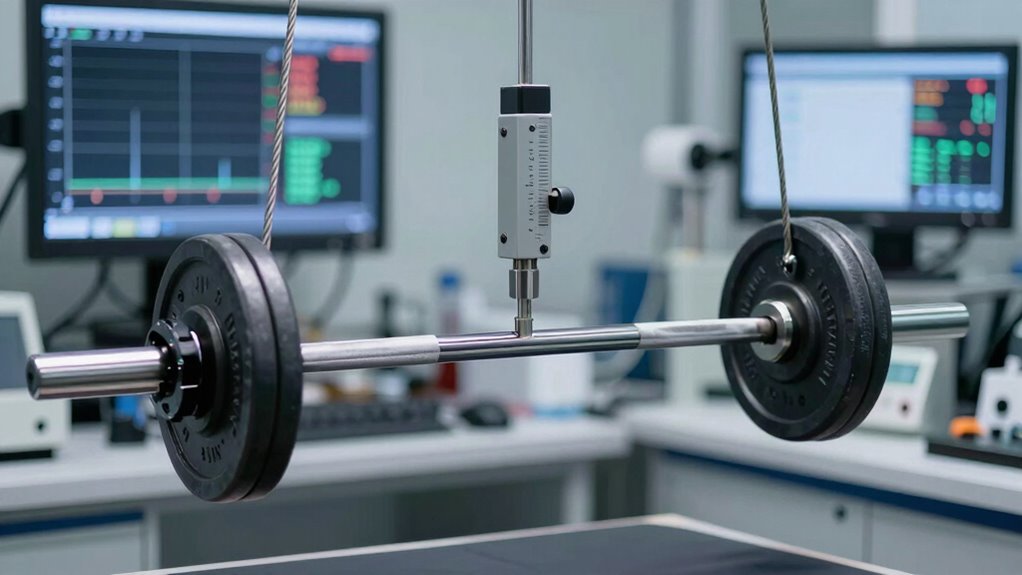
To understand how barbell tensile strength is tested, you need to make certain the testing procedures involved. These procedures follow specific measurement standards to ensure accuracy and consistency. Let’s explore the methods used and the standards that define them. Product roundups provide insights into reliable gear, including testing methods for equipment like barbells.
Testing Procedures Explained
Testing the tensile strength of a barbell involves applying controlled force until the material fails, revealing its maximum load-bearing capacity. During this process, you examine the material composition to understand how different elements contribute to strength. Testing equipment, such as universal testing machines, applies consistent tension to the barbell sample. You secure the specimen in grips and gradually increase the force while monitoring the stress and strain. This setup ensures precise measurement of how much force the material can withstand before breaking. The data collected allows manufacturers and testers to determine the barbell’s tensile strength accurately. By controlling variables like testing speed and environmental conditions, you guarantee reliable results that reflect the true performance of the barbell under tensile stress. Understanding material properties is essential in interpreting these test results and predicting how the barbell will perform in real-world applications.
Measurement Standards Used
Measuring the tensile strength of a barbell relies on established standards that guarantee consistency and accuracy across tests. Testing standards specify how to evaluate material composition, ensuring that tests reflect real-world performance. These standards outline the methods for applying force, the type of equipment used, and the test environment. For example, ASTM and ISO standards provide detailed protocols for tensile testing, ensuring results are comparable regardless of location. Material composition, such as steel grade and treatment, directly influences tensile strength and must be accurately documented. By adhering to these testing standards, manufacturers and testers can reliably assess a barbell’s tensile strength, helping you make informed decisions about safety and quality. This consistency is essential for establishing trust in the measurements you rely on. Additionally, utilizing proper measurement tools ensures that the data collected is precise and reproducible, further reinforcing the reliability of the test results.
durable steel barbells for powerlifting
As an affiliate, we earn on qualifying purchases.
As an affiliate, we earn on qualifying purchases.
What Do Tensile Strength Ratings Mean on Barbell Labels?
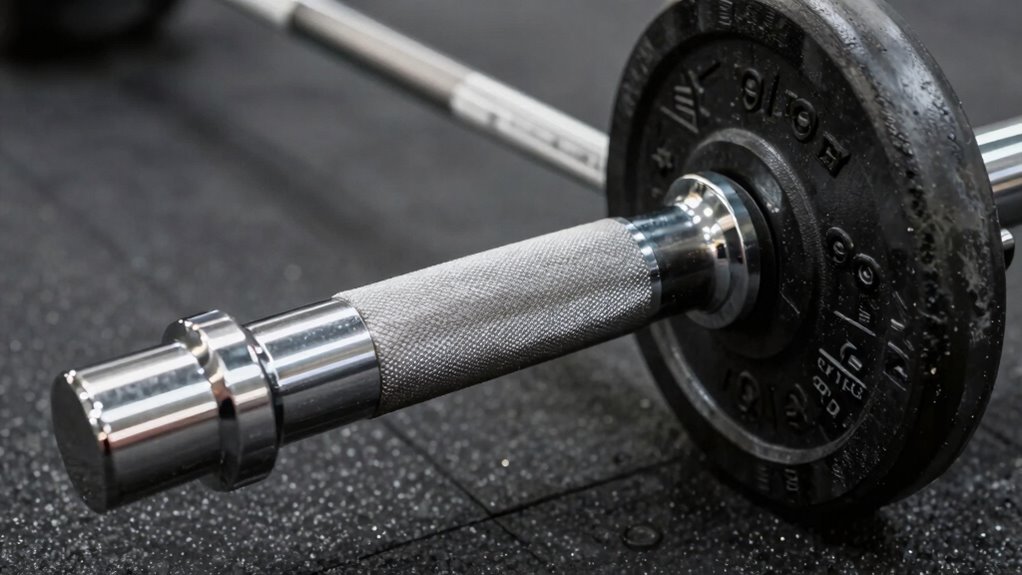
When you see tensile strength ratings on barbell labels, they indicate the material’s ability to withstand pulling forces without breaking. These numbers help you understand the barbell’s durability and safety during heavy lifts. Knowing what these ratings signify ensures you choose equipment that supports both performance and your safety.
Material Strength Indicators
Tensile strength ratings on barbell labels provide a quick way to understand the durability and quality of the steel used. These ratings reflect specific material properties, primarily how much force the steel can withstand before breaking. The manufacturing processes directly influence these properties, affecting the steel’s strength, ductility, and overall performance. Higher tensile strength indicates the steel has been carefully processed to optimize its ability to handle heavy loads without failure. When you see a rating on a barbell, it’s a sign of the steel’s capacity to resist stretching or snapping under stress. Understanding these material strength indicators helps you assess a barbell’s quality, ensuring you choose equipment suited for your training needs and safety standards.
Safety and Performance
Understanding what tensile strength ratings mean on barbell labels is essential for guaranteeing both safety and peak performance during your workouts. Higher ratings typically indicate stronger materials, capable of handling heavier loads without failure. Material composition and strict manufacturing standards influence these ratings, ensuring consistency and reliability. Recognizing these factors helps you select barbells suited for your lifting goals while minimizing safety risks. Here’s a quick comparison:
| Tensile Strength Rating | Safety Implication |
|---|---|
| 150,000 psi | Suitable for heavy, professional use |
| 100,000 psi | Ideal for general fitness and moderate lifts |
| 80,000 psi | Suitable for light or beginner workouts |
| 60,000 psi | May have lower durability, caution advised |
Always verify the manufacturing standards to guarantee your equipment’s safety and performance potential. Material composition and manufacturing standards directly impact these ratings and overall durability.
professional gym barbells with high load capacity
As an affiliate, we earn on qualifying purchases.
As an affiliate, we earn on qualifying purchases.
Types of Barbells: Standard, Commercial, and Competition-Which Is Right for You?
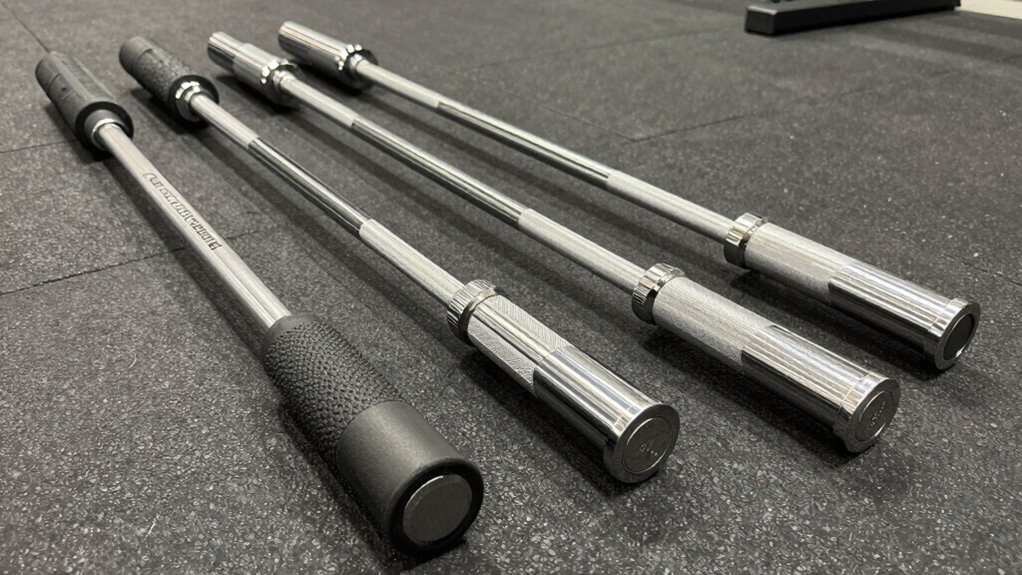
Are you unsure which type of barbell best suits your lifting needs? Choosing between standard, commercial, and competition barbells depends on your goals and training environment. Standard barbells typically use basic barbell materials and manufacturing processes, making them affordable and suitable for home gyms or beginners. Commercial barbells are designed for high-use settings like gyms, featuring more durable materials and precise manufacturing processes to withstand frequent heavy lifts. Competition barbells adhere to strict standards, with optimized barbell materials and manufacturing techniques that ensure maximum tensile strength and minimal flex. Your choice hinges on how often you lift, your lifting goals, and your budget. Understanding the differences in barbell materials and manufacturing processes helps you select the right barbell to meet your performance needs.
How Tensile Strength Affects Barbell Durability and Safety
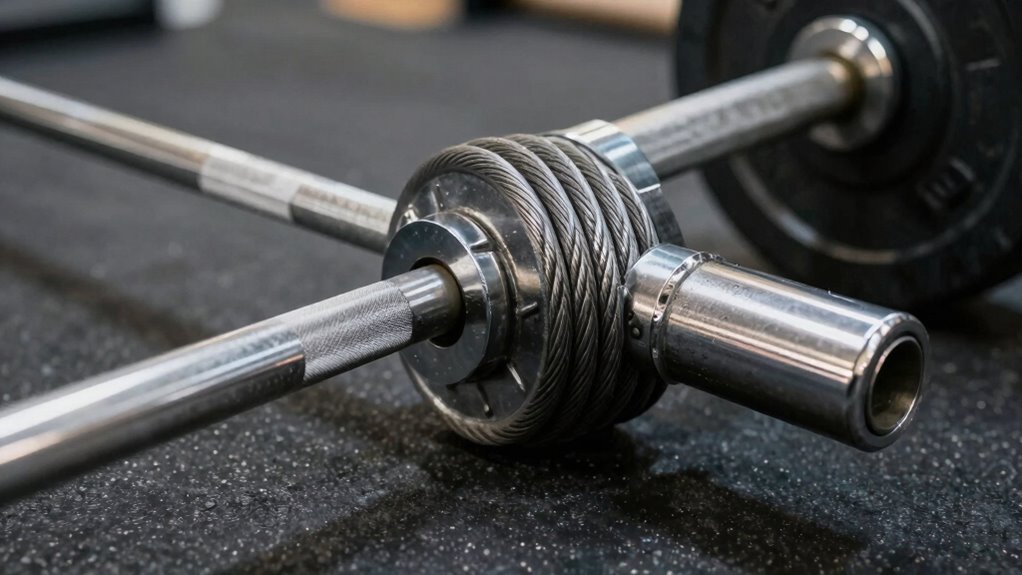
Higher tensile strength in a barbell directly impacts its durability and safety during lifts. When a barbell’s material composition includes high-quality steel or alloy blends, it can withstand repeated stress without bending or breaking. Manufacturing processes, like hot rolling or heat treatment, enhance the steel’s tensile properties, ensuring the bar maintains strength under heavy loads. A bar with superior tensile strength resists elongation and deformation, reducing the risk of failure during intense lifts. This means fewer chances of injury and longer-lasting equipment. Investing in a bar with optimized material composition and precise manufacturing processes guarantees that your barbell remains reliable, safe, and durable through countless training sessions. Ultimately, stronger tensile strength translates into a safer lifting experience.
What Factors Influence a Barbell’s Tensile Strength?
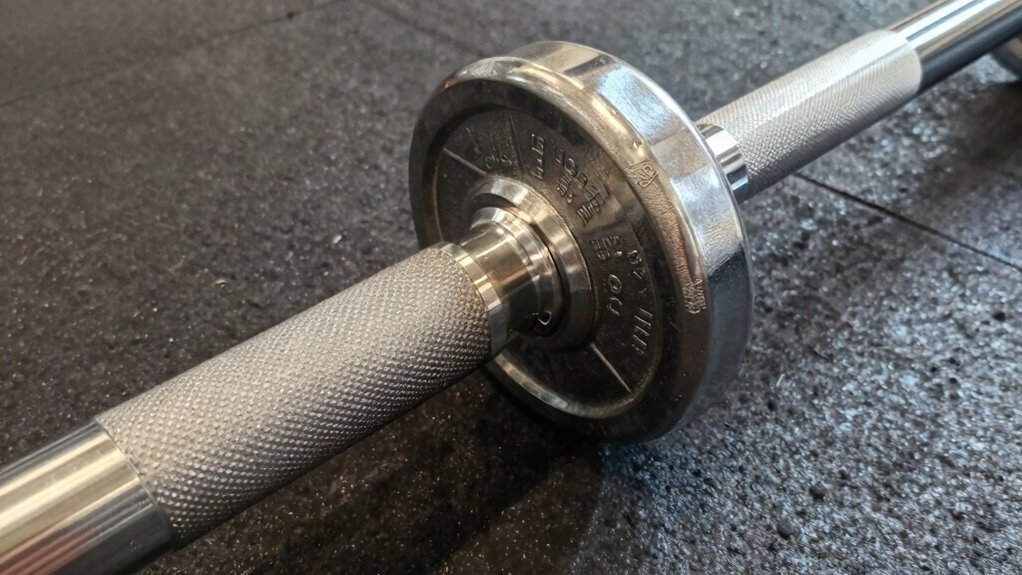
Various factors determine a barbell’s tensile strength, shaping how well it withstands heavy loads and repeated use. Material composition plays a key role—steel alloys with higher carbon content generally offer greater strength. Manufacturing processes also impact tensile strength; precision forging and heat treatment enhance durability. The table below highlights these influences:
| Factor | Effect | Example |
|---|---|---|
| Material composition | Determines raw strength | High-carbon steel |
| Manufacturing process | Improves grain structure, strength | Precision forging, heat treatment |
| Surface finish | Reduces stress concentrations | Smooth, polished surface |
Understanding these factors helps you choose a barbell suited to your training demands and ensures safety during heavy lifts. Proper material selection is essential for achieving optimal performance and longevity in your equipment.
How to Choose the Best Barbell Based on Tensile Strength for Your Training
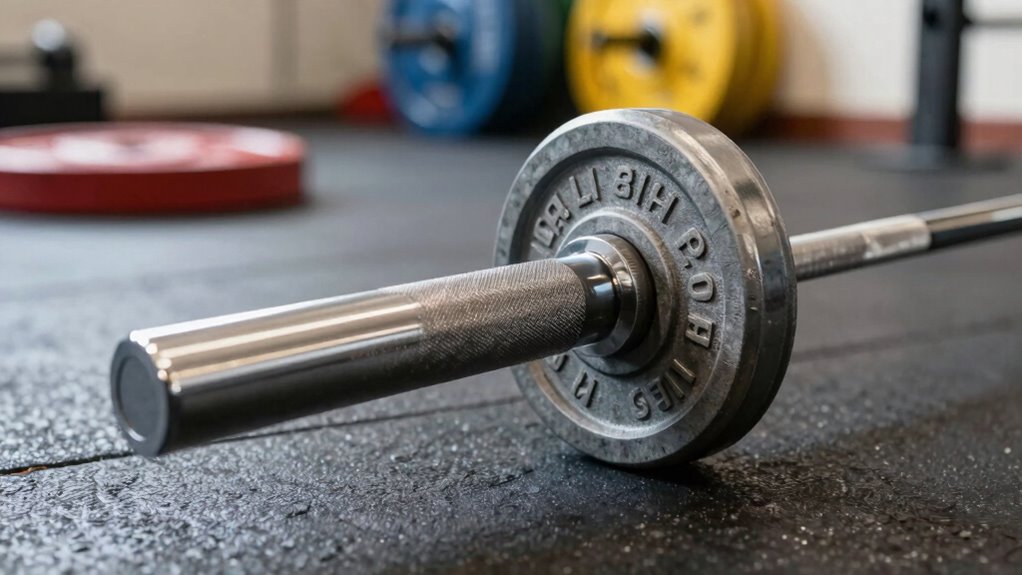
Choosing the right barbell for your training requires considering its tensile strength to guarantee safety and durability under heavy loads. To do this, focus on the barbell material, as it influences tensile strength and performance. During tensile testing, manufacturers evaluate how much force the bar can withstand before failure. When selecting a barbell, pay attention to:
- Material composition (e.g., steel, stainless steel)
- Results from tensile testing data
- Warranties or guarantees based on tensile strength
- Barbell design and construction quality
- Recommendations from trusted brands or professionals
Understanding material properties can help you better assess a barbell’s capacity to handle your training demands.
Common Myths About Barbell Tensile Strength: Debunked
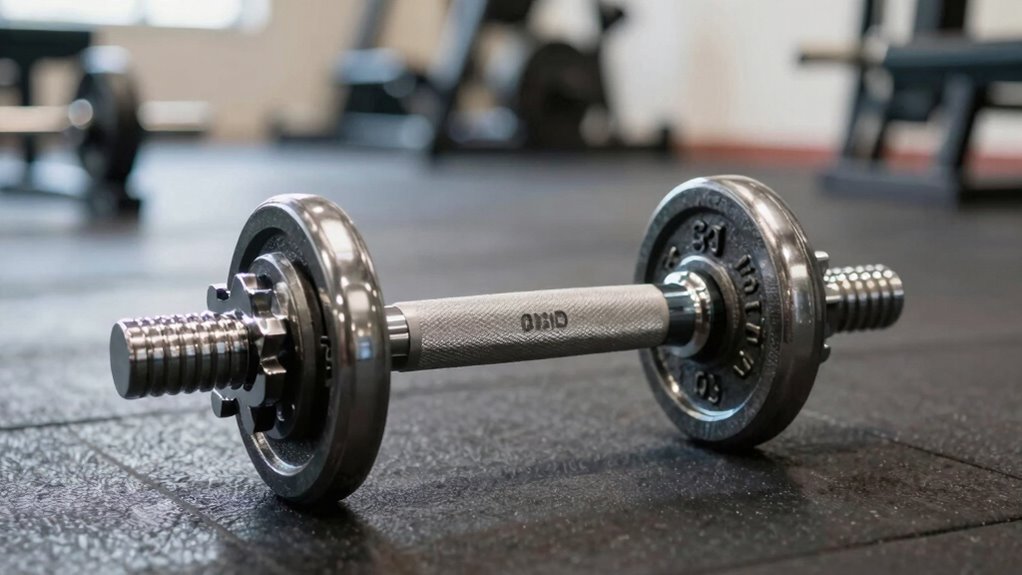
Many people believe that a barbell’s tensile strength is the only factor determining its durability, but this is a common misconception. Myth correction shows that other elements, like material quality, weld integrity, and manufacturing standards, play essential roles. Strength misconceptions often lead lifters to overlook these aspects, assuming high tensile strength alone guarantees longevity. In reality, a barbell with excellent tensile strength may still fail if it has poor craftsmanship or inconsistent quality control. Understanding nail biology can help you appreciate the importance of overall construction and safety features in equipment. Don’t fall for the myth that tensile strength is everything; instead, consider the overall construction and other safety features. Understanding these myths helps you make smarter choices, ensuring your equipment performs safely and lasts longer. Remember, tensile strength is critical but not the sole indicator of a barbell’s durability.
How to Maintain and Inspect Your Barbell’s Tensile Strength Over Time
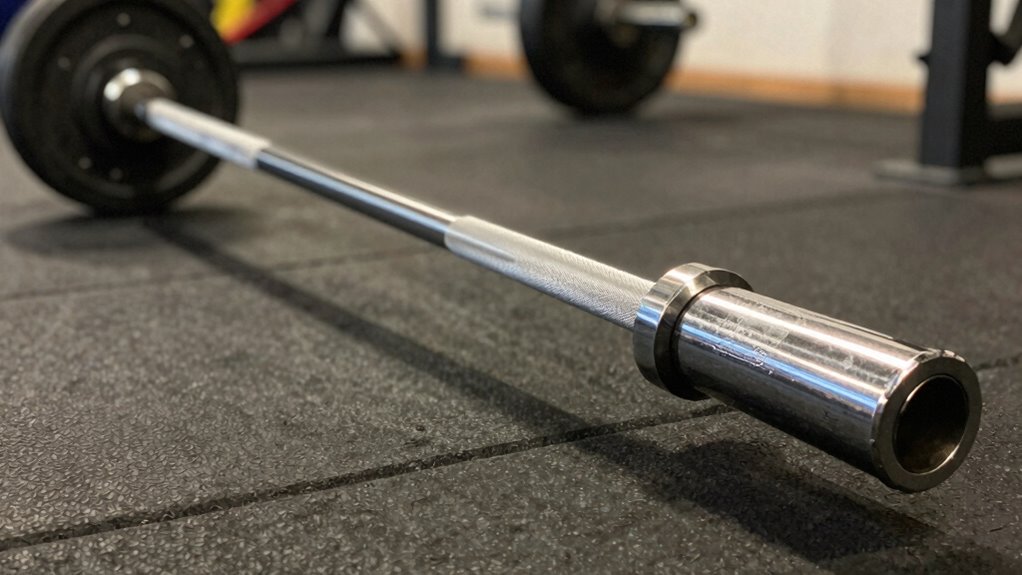
Even though tensile strength isn’t the only factor influencing your barbell’s durability, regular maintenance and inspections are vital to guarantee it stays safe and reliable over time. To maintain your barbell’s tensile strength, perform routine barbell maintenance, including checking for signs of wear or corrosion. Use proper tensile testing techniques to assess its integrity periodically—these can include load testing or visual inspections. Keep the bar clean and dry to prevent rust, and avoid overloading beyond manufacturer recommendations. Regularly examine the welds, shaft, and end caps for cracks or deformities. Lubricate moving parts as needed. Staying proactive with these steps helps ensure your barbell remains safe and maintains its tensile properties for years to come. Additionally, understanding the tensile testing methods used by professionals can help you better interpret your own inspection results and ensure ongoing safety.
Frequently Asked Questions
How Does Tensile Strength Affect Barbell Weight Capacity?
Your barbell’s tensile strength directly impacts its weight capacity, as higher tensile strength means the material can withstand more pulling force without breaking. When considering this, look at the material composition and confirm it meets testing standards, which verify its durability. This helps you gauge how much weight the barbell can handle safely, ensuring your workouts are effective and secure. Always choose a barbell with appropriate tensile strength for your lifting needs.
Are Higher Tensile Strength Bars More Expensive?
Yes, higher tensile strength bars tend to be more expensive. You’ll notice a cost comparison because these bars are made from advanced materials like high-grade steel, which increases manufacturing costs. Material differences contribute considerably to price, as stronger bars require specialized alloys and processing. While they cost more upfront, investing in a high tensile strength bar offers better durability and safety, making it a worthwhile choice for serious lifting enthusiasts.
Can Tensile Strength Vary Between Different Barbell Brands?
Yes, tensile strength can vary between different barbell brands due to differences in material durability and manufacturing standards. Some brands prioritize high-quality steel and strict standards, resulting in stronger, more durable bars. Others may use different materials or have less rigorous quality checks, leading to lower tensile strength. Always check the specifications and brand reputation to verify you’re choosing a barbell that meets your strength and safety needs.
Is Tensile Strength the Only Factor in Barbell Safety?
Imagine gripping a barbell, feeling its sturdy grip in your hands. Tensile strength isn’t the only safety factor; material composition and manufacturing processes play vital roles. A well-made barbell with high-quality steel and precise craftsmanship ensures durability and safety during lifts. You should also consider weld quality, coating, and bar design. These elements work together, making sure your training is safe and effective, not just relying on tensile strength alone.
How Does Tensile Strength Impact Barbell Flexibility?
Tensile strength directly impacts barbell flexibility by determining how much the bar can bend or stretch without breaking. Higher tensile properties mean the barbell resists bending, making it less flexible but stronger, while lower tensile strength allows more flexibility. If you need a barbell that absorbs shocks and bends under load, look for one with lower tensile strength, ensuring it offers the flexibility you require for dynamic lifts.
Conclusion
So, next time you spot a barbell’s tensile strength rating, remember it’s more than just a number — it’s about safety and longevity. Imagine casually lifting at your favorite gym, knowing your gear can handle the weight, just like it did when it was first made. When you choose and care for your barbell wisely, you’re not only protecting yourself but also ensuring many more successful workouts ahead. It’s a small detail that makes a big difference.
Fall Picks
fall essentials
As an affiliate, we earn on qualifying purchases.