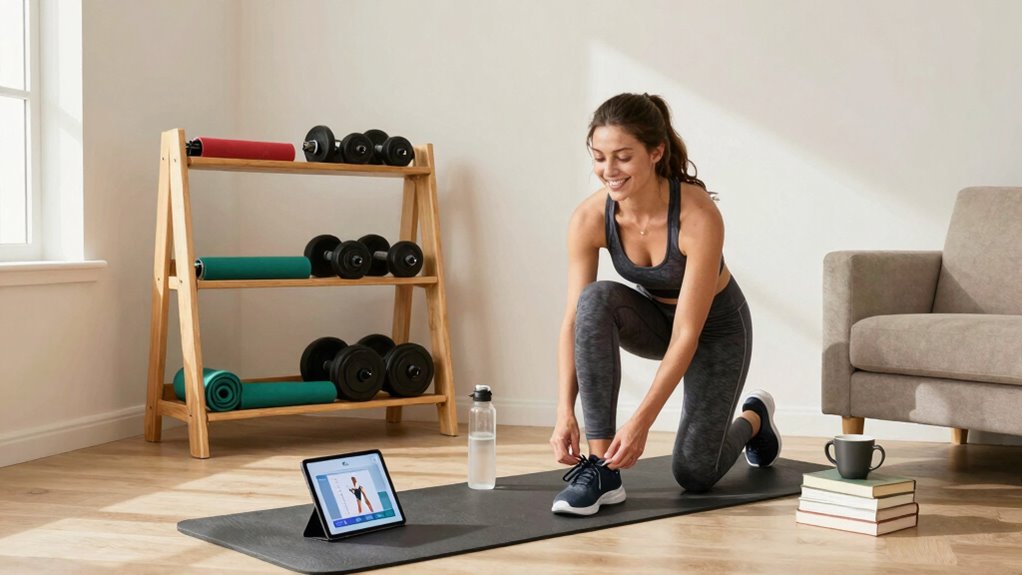

To effectively link workouts to what you already do, use habit stacking by connecting small exercises to familiar routines. For example, do lunges after brushing your teeth or stretch during TV commercial breaks. Choose simple, specific actions that fit naturally into your daily activities, making them automatic over time. Consistently pairing exercises with existing habits helps create lasting routines. Keep going, and you’ll discover more ways to seamlessly turn your daily activities into opportunities for fitness.
Key Takeaways
- Connect new exercises to existing daily routines, such as brushing teeth or watching TV, to create seamless habit links.
- Use reliable triggers, like finishing a task or routine activity, to prompt quick workouts or stretches.
- Pair workouts with specific times or habitual activities to reinforce consistency and reduce decision fatigue.
- Keep linked routines simple and manageable to ensure they become automatic over time.
- Leverage mental cues and environment cues to reinforce and maintain the new fitness habits effortlessly.
If you’re looking to build a consistent fitness routine, habit stacking offers an effective strategy. The key is to connect new exercises or activity habits to routines you already perform daily. This approach leverages existing mental cues and habit triggers to make sticking with workouts easier. The goal is to create a chain of habits that reinforce each other, reducing decision fatigue and increasing your chances of sticking with your goals. For example, if you already brush your teeth every morning, you can add a quick set of squats or stretches afterward. The mental cue of finishing your brushing serves as a trigger, reminding you to move your body without requiring extra thought or motivation.
Using habit triggers effectively means identifying those small, reliable moments in your day when you’re already in a routine. These triggers act as mental cues that prompt the next action, making it less likely you’ll forget or skip your workout. For instance, after you pour your morning coffee, you might do a set of lunges or arm circles. The act of pouring coffee becomes the habit trigger, serving as a mental cue that signals it’s time for movement. Over time, these triggers become automatic, and your brain associates the two actions, making fitness a natural part of your daily rhythm. The goal is to create a chain of habits that reinforce each other, reducing decision fatigue and increasing your chances of sticking with your goals. Incorporating habit formation principles can further enhance your ability to develop lasting routines.
Identify small daily moments, like pouring coffee, to trigger new habits and build automatic fitness routines.
Another effective method involves pairing your workouts with existing routines that happen at specific times. If you watch TV in the evening, you can perform a series of stretches or core exercises during commercial breaks. The consistency of watching TV acts as a mental cue, and the habit trigger becomes the act of sitting down to relax. When you start associating the two, your brain begins to anticipate the workout as part of that familiar activity. This not only makes the habit easier to remember but also more enjoyable, because it integrates seamlessly into your leisure time. By linking fitness to habitual triggers, you eliminate the need for extra planning and willpower, making it more likely that you’ll maintain your routine over the long term.
Ultimately, habit stacking works best when you keep it simple and specific. Focus on small, manageable actions that fit naturally into your existing routines. Over time, these small additions become automatic, and your overall activity level increases without feeling burdensome. The use of mental cues and habit triggers transforms the way you approach fitness, turning it from a chore into an integrated part of your daily life. When you consistently connect workouts to what you already do, you set yourself up for lasting success, making fitness a habit rather than a fleeting motivation.

Habit Tracker Journal Workout Motivation Fridge Calendar Dry Erase 13” X 17” Magnet Health Fitness Goal Tracker Goals Board – With Shopping Grocery List – 6 Markers Included
🏅 ULTIMATE HABIT TRACKER : The magnetic dry erase habit tracker is an undated clear habit tracker journal…
As an affiliate, we earn on qualifying purchases.
As an affiliate, we earn on qualifying purchases.
Frequently Asked Questions
How Can I Ensure Consistency With Habit Stacking?
To stay consistent with habit stacking, find accountability partners who motivate you and keep you on track. Track your progress regularly to see improvements and stay motivated. Set small, achievable goals and link workouts to existing routines, making them easier to integrate daily. By sharing your goals with others and monitoring your growth, you’ll build momentum and develop lasting habits that stick over time.
What Are Some Common Mistakes to Avoid?
Don’t fall into the trap of overestimating complexity or ignoring your personal preferences. You might think stacking habits requires a complicated system, but it’s usually simple. Skipping this step because it feels tedious or forcing exercises you dislike leads to burnout. Keep it fun and manageable. Remember, if you hate running, don’t force it—find something you actually enjoy and integrate it seamlessly into your daily routine.
How Long Does It Take to See Results?
You’ll start noticing progress within a few weeks if you track your workouts and stay consistent. Regular progress tracking keeps you motivated and helps you see improvements, even small ones. Combining this with motivation strategies like rewarding yourself or setting achievable goals boosts your persistence. Remember, results vary based on effort and consistency, but stay committed, and you’ll see positive changes sooner than you think.
Can Habit Stacking Work for Weight Loss?
Yes, habit stacking can work for weight loss by strengthening your habit formation and keeping motivation strategies high. When you link small, consistent activities—like stretching after brushing your teeth—you create a routine that becomes automatic. This consistency helps you stay on track without feeling overwhelmed, making it easier to lose weight over time. Keep adding simple, manageable habits to your daily routine, and you’ll see progress naturally.
Is Habit Stacking Suitable for Beginners?
If you’re a beginner, habit stacking works well because it simplifies overcoming challenges like low motivation. For example, you could tie a 5-minute stretch routine to brushing your teeth each morning. This builds consistency without feeling overwhelming. It helps you stay motivated by making fitness part of your daily routine, reducing the initial hurdles. Start small and gradually add new habits to boost confidence and sustain your progress.

Calm: A Practical Guide to Mindfulness Based on the Popular App―Simple Meditation Habits for a Busy Life
As an affiliate, we earn on qualifying purchases.
As an affiliate, we earn on qualifying purchases.
Conclusion
By stacking your workouts onto daily habits, you’re planting seeds of consistency that grow into a lush forest of fitness. It’s like weaving tiny threads into a strong, unbreakable fabric—each habit strengthening the whole. Keep layering these small efforts, and soon, your routine will become a unstoppable train rolling toward your goals. Remember, small sparks ignite mighty fires—so start stacking today and watch your fitness journey blaze brighter than ever.
stretching during TV commercial breaks
As an affiliate, we earn on qualifying purchases.
As an affiliate, we earn on qualifying purchases.

MQRW Push Up Board,Home Gym,Portable Exercise Equipment,Pilates Bar and 20 Fitness Accessories with Resistance Bands and Ab Roller Wheel,Full Body Workout at Home
【Workout Equipment System】Portable Exercise Pack is used with various workout equipment attachments:Foldable Push up board,3-section Bar,6 Resistance Bands,…
As an affiliate, we earn on qualifying purchases.
As an affiliate, we earn on qualifying purchases.