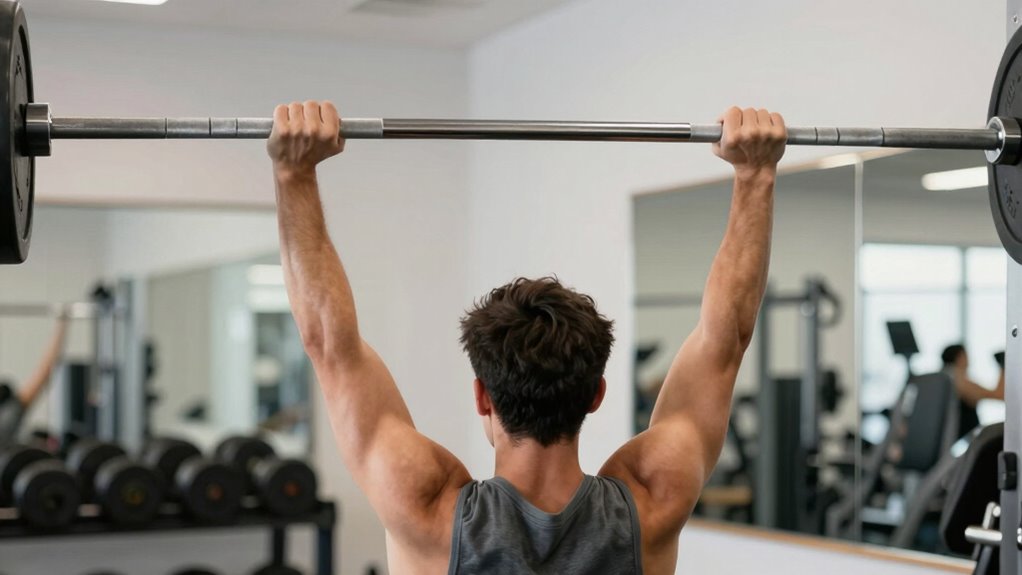

To perform an overhead press without pain, focus on a shoulder-friendly setup by maintaining proper body positioning—feet shoulder-width apart, shoulder blades gently pinched, and core engaged. Use a grip slightly wider than shoulder-width and keep motions controlled, avoiding overextension. Incorporate mobility exercises and support accessories like wrist wraps or braces as needed. Adjust your range of motion and progression gradually to protect your shoulders, and discover more tips for a safe, effective press.
Key Takeaways
- Maintain proper body alignment with shoulder-width stance, scapular retraction, and core engagement to reduce shoulder strain.
- Use a grip slightly wider than shoulder-width and keep wrists neutral for optimal shoulder positioning.
- Incorporate mobility exercises like shoulder circles and wall slides daily to enhance flexibility and joint health.
- Limit range of motion by pressing to shoulder height or shorter to prevent impingement and shoulder pain.
- Progress gradually with manageable weights, listening to your body, to build strength without overstressing shoulder tissues.

Deltoid and Shoulder Press Machine & Reverse Fly, 3-in-1 Shoulder Machine with Shoulder Press, Lateral Raise & Bent-Over Reverse Fly with Adjustable Seat and Backrest, Upper Body Home Gym Equipment
Your Complete Shoulder Day, Solved: 1 machine. 3 movements. This machine targets all three deltoid heads with three…
As an affiliate, we earn on qualifying purchases.
As an affiliate, we earn on qualifying purchases.
Why Shoulder Pain Happens During Overhead Presses

Shoulder pain during overhead presses often results from improper technique or underlying shoulder issues. One common cause is rotator cuff strain, as these muscles stabilize your shoulder joint. When your rotator cuff isn’t functioning at its best, it can lead to pain or injuries during pressing movements. Additionally, poor scapular stability hampers proper shoulder alignment and movement. If your shoulder blades don’t move smoothly or stay stable, it puts extra stress on the shoulder joint and rotator cuff tendons. Over time, this imbalance can cause discomfort, impingement, or tears. Recognizing these issues is essential to prevent pain. Addressing rotator cuff weakness and improving scapular stability helps ensure your shoulders are prepared for overhead presses, reducing the risk of injury and making your workout safer. Proper floor care and keeping your workout space clean can also help prevent additional strain or injury.
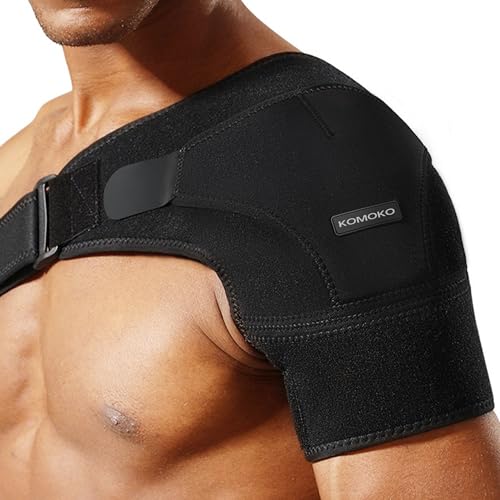
Komoko Shoulder Brace, Rotator Cuff Support Brace and Arm Sling for Pain Relief, Shoulder Compression Sleeve for Preventing Strains and Dislocation, Adjustable Fits Left and Right Arm, Men & Women
Speedy Shoulder Recovery: Accelerate your shoulder rehabilitation with our shoulder brace. Designed to provide support and stability while…
As an affiliate, we earn on qualifying purchases.
As an affiliate, we earn on qualifying purchases.
How to Set Up Your Body for a Shoulder-Safe Overhead Press

To set up your body for a shoulder-safe overhead press, start by positioning your feet shoulder-width apart with your toes slightly pointed outward for stability. Focus on proper scapular positioning by gently retracting and pinching your shoulder blades together, creating a solid base. Engage your core to stabilize your spine and prevent overextension or collapse. Keep your chest up and maintain a neutral spine throughout the movement. Additionally, paying attention to door swings and other architectural details can help create a workout space that supports proper form and safety.

Shoulder Pulley Over The Door Physical Therapy System, Exercise Pulley, Alleviate Shoulder Pain and Facilitate Recovery from Surgery
Easy Door Over-the-Door Shoulder Pulleys – During the initial stages of treatment for shoulder pain or dysfunction, it…
As an affiliate, we earn on qualifying purchases.
As an affiliate, we earn on qualifying purchases.
Choosing the Right Barbell and Equipment for Shoulder Comfort
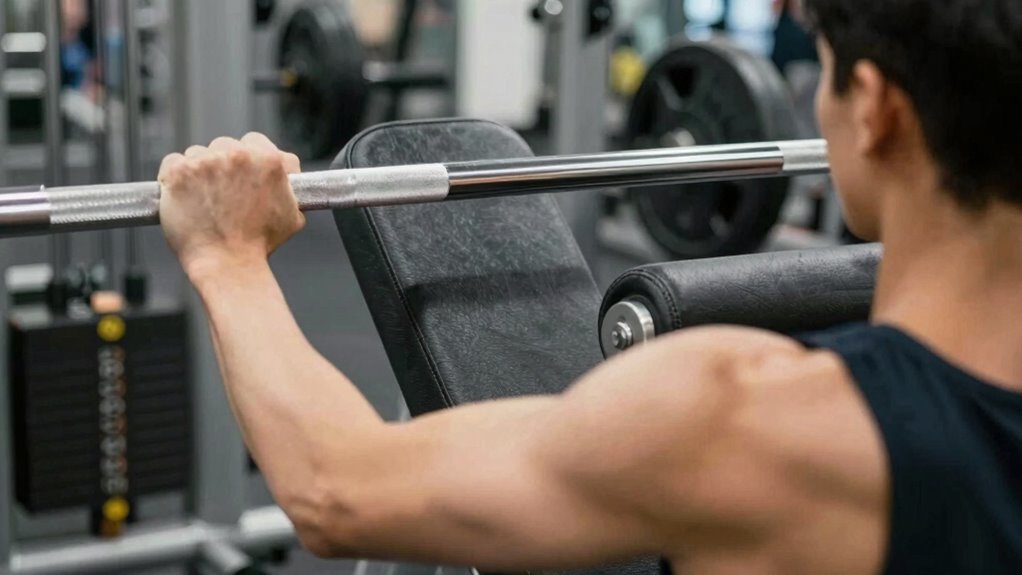
Choosing the right barbell and equipment plays a crucial role in guaranteeing shoulder comfort during overhead presses. Your barbell selection matters—opt for a bar with a comfortable, smooth grip that minimizes strain on your shoulders. A standard or Olympic bar with a moderate knurling pattern can provide a secure grip without causing unnecessary pressure. Additionally, consider using equipment that promotes safety, like bumper plates and collars, to prevent accidents that might compromise your form. Proper equipment safety ensures you maintain control and stability throughout each lift, reducing the risk of injury. Avoid overly narrow or wide bars that may strain your shoulders. Selecting gear thoughtfully allows you to focus on proper technique, making your overhead presses more comfortable and pain-free. Incorporating Free Floating principles into your setup can also help minimize shoulder strain by allowing greater freedom of movement and reducing unnecessary tension.
GravityFit TPro Swing Kit 2.0 | Complete Golf Swing Trainer Aid | Trusted by PGA Coaches | Backed by 30 Years of Research | Elevate Your Golf Training | Enhance Strength, Stability, Rotation & Posture
COMPLETE SWING ENHANCEMENT: Elevate your golf game with the GravityFit TPro Swing Kit 2.0, combining the power of…
As an affiliate, we earn on qualifying purchases.
As an affiliate, we earn on qualifying purchases.
Optimal Grip and Hand Placement for a Pain-Free Overhead Press
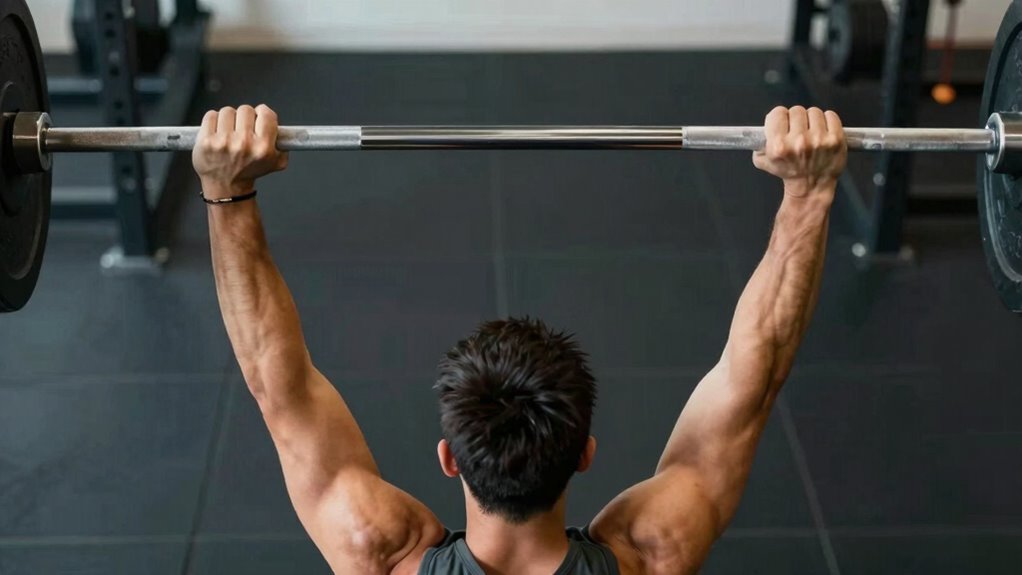
Your grip and hand placement directly impact your comfort and safety during an overhead press. To find the right hand positioning, focus on grip width and how your hands sit on the bar. Here are key tips:
- Keep your hands slightly wider than shoulder-width to reduce strain and maintain control.
- Ensure your grip is firm but not overly tight, allowing for natural wrist alignment.
- Position your hands evenly on the bar to promote balanced movement and shoulder stability.
- Remember, staying aware of your grip and hand placement helps you make responsible choices that prevent injury and improve your overall safety during the lift.
Adjusting your grip width can alleviate shoulder discomfort and improve overall form. Remember, a comfortable grip helps prevent unnecessary stress on your shoulders, making your overhead press both safer and more effective. Focus on these simple guidelines to optimize your hand placement.
How to Adjust Your Range of Motion for Shoulder Stability and Comfort
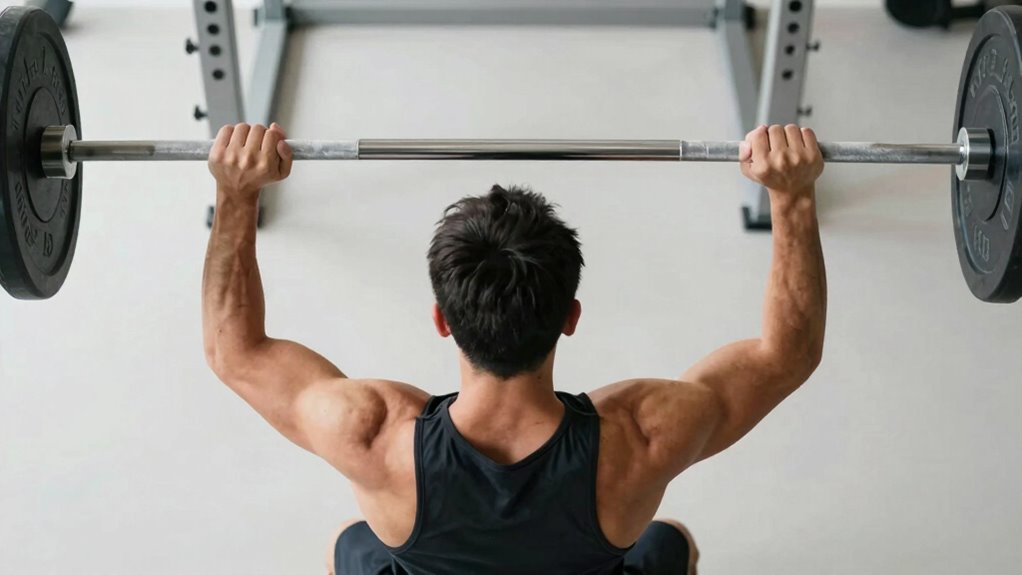
Adjusting your range of motion during the overhead press can considerably enhance shoulder stability and comfort. By limiting or modifying the movement, you reduce excessive strain on your shoulder joint, which helps prevent pain and injury. For example, lowering the bar to a slightly shorter range of motion allows you to maintain better control and stability. Focus on a smooth, controlled movement that keeps your shoulder joint stable throughout each rep. If full overhead movement causes discomfort, try pressing to a slightly lower point—like shoulder height—until your joint adapts. This approach promotes joint stability and encourages proper muscle engagement. Remember, gradual adjustments are key. Listening to your body ensures you find the ideal range of motion that maximizes stability and comfort during every overhead press. Incorporating movement modification strategies can further prevent burnout and improve long-term joint health.
Using Supportive Accessories to Protect Your Shoulders During Overhead Presses
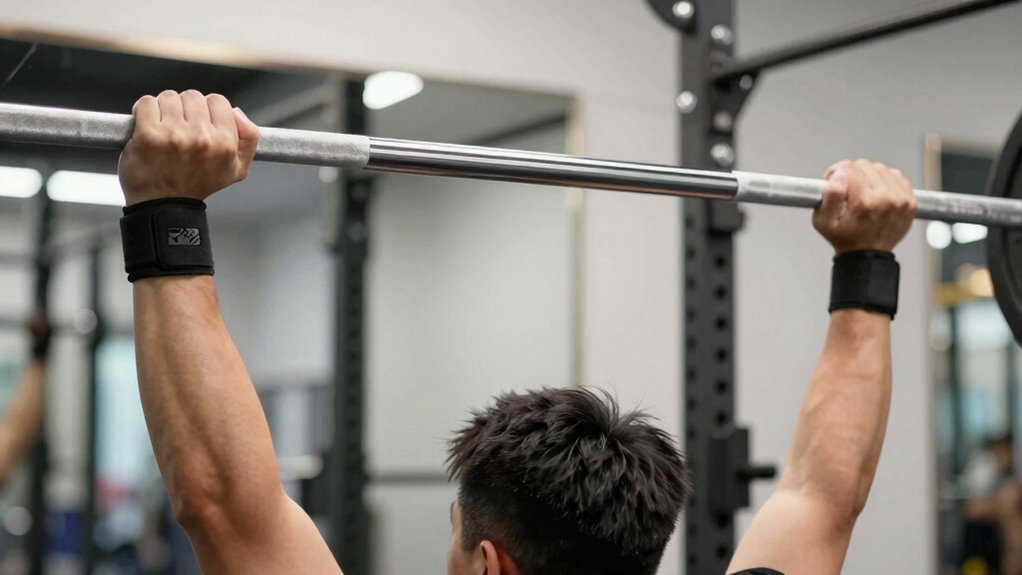
Supportive accessories can play a crucial role in protecting your shoulders during overhead presses by providing extra stability and reducing strain. Using the right supportive accessories helps enhance shoulder protection and keeps your joints safe. Consider these options:
- Wrist wraps—stabilize your wrists for better control and reduce shoulder strain.
- Shoulder sleeves or braces—provide compression and support, helping prevent overstretching.
- Lifting belts—offer core stability, which indirectly supports shoulder health during pressing movements.
- Incorporating proper technique and mobility exercises can further reduce the risk of shoulder injury and improve overall pressing performance.
Incorporating these supportive accessories ensures your shoulders stay protected while maintaining proper form. They’re a smart addition to your training routine, especially if you’re prone to discomfort or injury. Remember, the goal is to enhance shoulder protection without compromising mobility or technique.
Common Mistakes That Cause Shoulder Discomfort and How to Fix Them
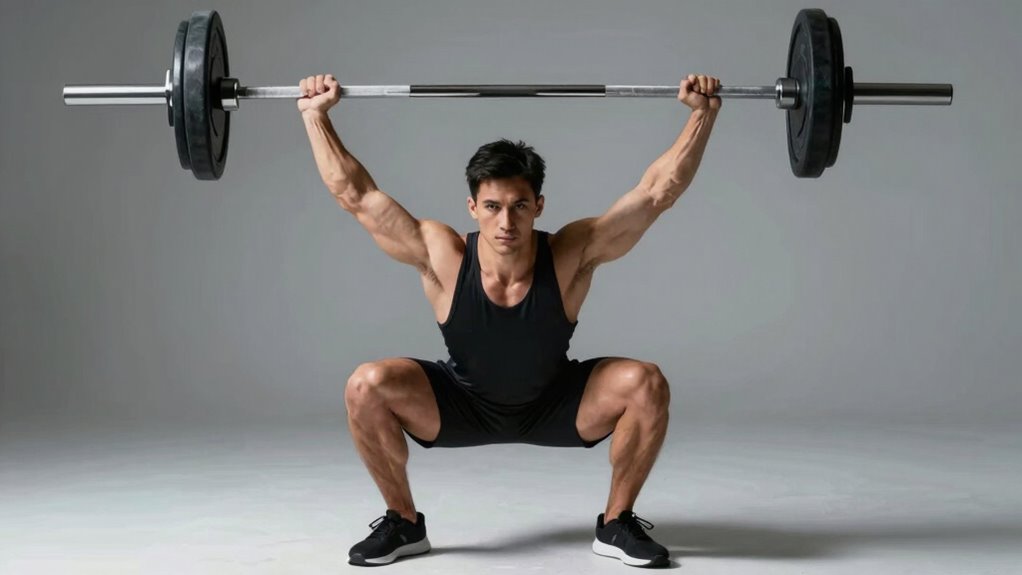
Many common mistakes during overhead presses can lead to shoulder discomfort or injury, often because of incorrect posture or skipping an improper warm-up. Poor posture—like flaring your elbows or arching your back—places unnecessary stress on your shoulder joints. Additionally, neglecting to properly warm up your shoulders and surrounding muscles can leave them stiff and vulnerable. Rushing into lifts without preparing your muscles increases the risk of strain. To fix these issues, focus on maintaining a neutral spine, keeping your elbows in a safe position, and ensuring your shoulders are mobile before pressing. Incorporate dynamic warm-up exercises targeting shoulder mobility. Ensuring proper technique and muscle readiness helps prevent discomfort and set a solid foundation for safe, pain-free overhead pressing.
Tips for Progressing in Overhead Press Without Pain
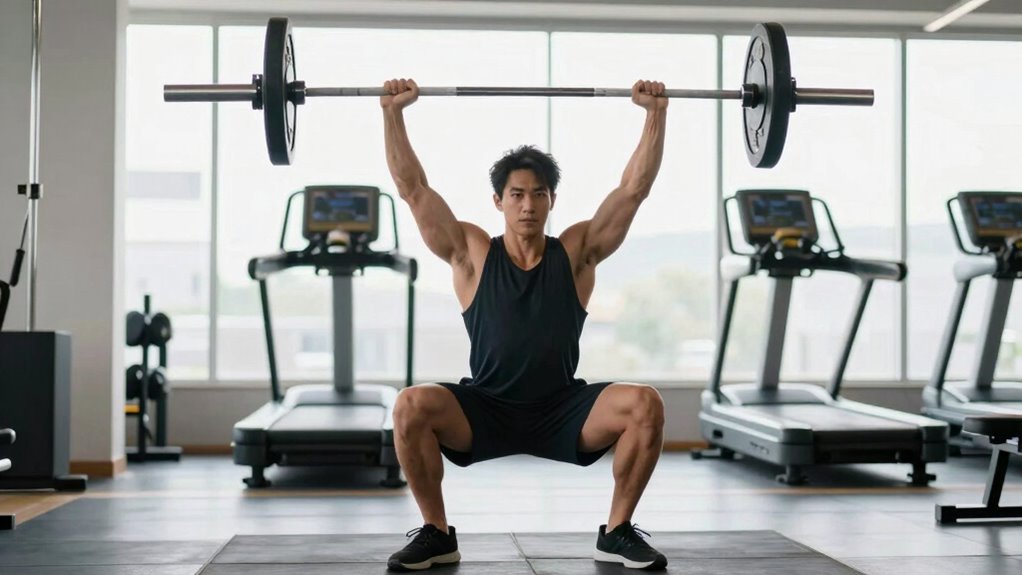
To progress safely in the overhead press, focus on gradually increasing your weight to avoid strain. Make sure your shoulder mobility is improving so your joints stay healthy, and always maintain proper technique to prevent injury. These steps will help you build strength without pain. Additionally, incorporating joint health practices can support your shoulder resilience and optimize your training progress.
Gradually Increase Weight
Progressively increasing the weight you lift is essential to building strength safely and avoiding pain. To guarantee proper weight progression and follow safety precautions, take small, controlled steps.
- Start with a manageable weight that allows you to complete your reps with good form.
- Increase the load gradually—about 5% to 10% per session—to prevent overload.
- Listen to your body; if you experience discomfort, reduce the weight and reassess your form.
Prioritize Shoulder Mobility
Prioritizing shoulder mobility is essential for safely progressing in the overhead press. Improving shoulder flexibility and joint mobility helps prevent pain and injury while increasing strength. Incorporate daily mobility exercises like shoulder circles, wall slides, and band pull-aparts. Focus on moving through full ranges of motion to enhance joint health. Here’s a simple guide:
| Exercise | Target Area | Frequency |
|---|---|---|
| Shoulder Circles | Shoulder joint mobility | 2-3 times daily |
| Wall Slides | Shoulder flexibility | 10 reps daily |
| Band Pull-Aparts | Shoulder stability | 15 reps daily |
| Overhead Stretch | Shoulder extension | Hold 30 seconds |
Consistent practice of these mobility drills can improve shoulder health and boost your overhead press performance while reducing pain risks.
Maintain Proper Technique
Maintaining proper technique is essential for progressing in the overhead press without experiencing pain. Focus on alignment and controlled movement to protect your shoulders. If you’re experiencing discomfort, consider these tips:
- Use dumbbell alternatives like the seated overhead press to reduce strain and improve stability.
- Keep your core engaged and shoulders back to prevent overextension and maintain proper posture.
- Gradually increase weight, ensuring each lift feels smooth and pain-free before progressing.
Pay attention to your form, especially during the lockout phase, to avoid unnecessary shoulder stress. Proper technique ensures safe progression and helps prevent injuries, making your shoulder-friendly overhead press more effective and comfortable.
Frequently Asked Questions
Can I Perform Overhead Presses With Pre-Existing Shoulder Injuries?
You can perform overhead presses with pre-existing shoulder injuries, but you should prioritize injury risk and training modifications. Consult your healthcare provider to assess your specific condition, and consider starting with lighter weights and modified movements to avoid aggravating your injury. Focus on proper form, warm up thoroughly, and listen to your body. Incorporating shoulder-friendly techniques can help you stay safe while maintaining your fitness goals.
What Warm-Up Exercises Best Prepare Shoulders for Overhead Pressing?
You should start with dynamic stretching and shoulder activation exercises to prepare your shoulders for overhead pressing. Focus on arm circles, band pull-aparts, and scapular push-ups to increase blood flow and loosen the shoulder joints. These exercises help activate stabilizers and improve mobility, reducing injury risk. Incorporate them into your warm-up routine to make certain your shoulders are adequately prepared for the overhead press, especially if you’re prone to discomfort.
How Often Should I Rest Between Overhead Press Sessions?
You should aim for a gentle balance in your rest frequency, allowing adequate recovery time between overhead press sessions. Typically, resting 48 to 72 hours gives your shoulders enough time to heal and rebuild, reducing strain and preventing overuse injuries. Listen to your body; if you’re still feeling sore or fatigued, extend your rest period. Consistent, mindful recovery guarantees sustained strength and shoulder health over time.
Are There Specific Stretches That Improve Shoulder Mobility for Pressing?
Yes, incorporating shoulder stretching and mobility exercises can markedly improve your pressing. Try dynamic stretches like arm circles and wall slides to warm up your shoulders, and static stretches such as cross-body shoulder stretches to enhance flexibility. Regularly practicing shoulder mobility exercises helps loosen tight muscles, increases range of motion, and reduces pain during overhead presses. Dedicate a few minutes before your workout to these stretches for ideal shoulder health.
When Should I Consult a Professional for Shoulder Pain During Overhead Presses?
You should consult a professional if shoulder pain persists despite doing rehabilitation exercises and ergonomic adjustments. If pain worsens or doesn’t improve after a few days of rest and proper form, seek expert advice. A healthcare provider can assess underlying issues, recommend personalized rehabilitation exercises, and suggest ergonomic adjustments to prevent further injury. Don’t ignore ongoing discomfort—early intervention helps guarantee safe, pain-free pressing in the future.
Conclusion
By paying attention to your setup, choosing the right equipment, and listening to your body, you can keep shoulder pain at bay. Avoid rushing your progress and stay mindful of proper form—these tweaks can make all the difference. Remember, slow and steady wins the race, so don’t push through pain. With patience and practice, you’ll be pressing overhead pain-free, turning your shoulder health into a true feather in your cap.