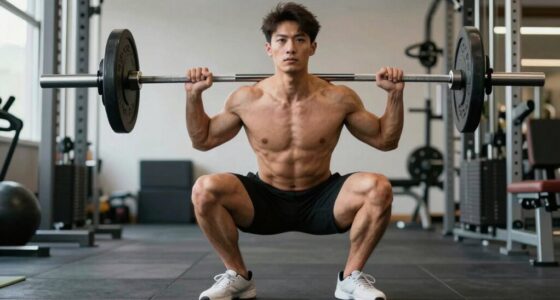
Your knees cave in during movement because of alignment issues, muscle imbalances, or poor technique. Weak hip muscles like the gluteus medius fail to stabilize your pelvis, while tight muscles pull your knees inward. Addressing these problems involves strengthening weak areas, stretching tight muscles, and correcting your movement mechanics. Monitoring your progress and making adjustments can improve your knee tracking. Keep exploring to discover effective exercises and tips to keep your knees safe and strong.
Key Takeaways
- Inward knee movement often results from muscle imbalances, especially weak hip abductors and glutes.
- Poor alignment of hips, ankles, or feet can cause knees to cave in during movement.
- Tight quadriceps, hamstrings, or IT bands pull knees inward, affecting proper tracking.
- Monitoring your knee position and correcting form during exercise prevents inward collapse.
- Strengthening targeted muscles and addressing alignment issues improve knee tracking and prevent injury.
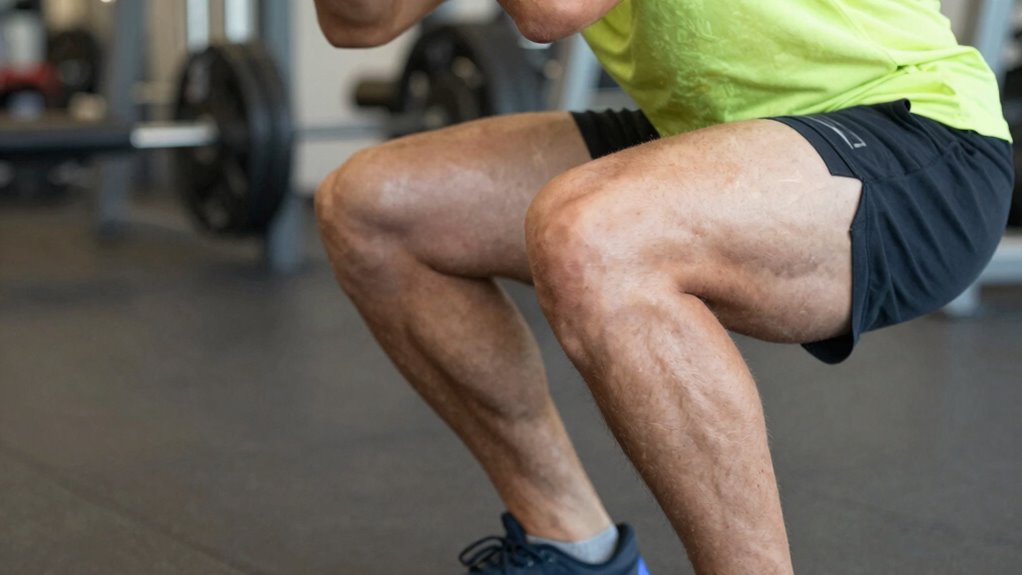
Have you ever wondered how athletes and physical therapists monitor knee movement during activity or recovery? It’s because understanding how your knees track—whether they stay aligned or cave inward—is essential to preventing injury and improving performance. When your knees tend to collapse inward during exercises like squats or running, it’s often due to issues like alignment correction and muscle imbalances. Recognizing these factors helps you address the root causes rather than just the symptoms, making your workouts safer and more effective.
Understanding knee tracking is key to injury prevention and optimal performance.
Alignment correction plays a significant role in ensuring your knees move properly. If your hips, ankles, or feet are misaligned, your knees won’t track smoothly. For example, overpronation or flat feet can cause your knees to cave inward because of the altered biomechanics. Correcting this alignment involves more than just adjusting footwear; it may require targeted exercises and sometimes orthotics to realign your joints. When your body parts are correctly aligned, your muscles work more efficiently, reducing undue stress on your knees and decreasing the risk of injuries like patellar tendinitis or ACL tears.
Muscle imbalances are another common culprit behind inward knee collapse. If certain muscles are weak while others are tight, your body compensates by shifting your knees into poor tracking positions. Typically, weak gluteus medius and hip abductors fail to stabilize your pelvis, leading your knees to cave in during movement. Simultaneously, tight quadriceps or iliotibial bands can pull your knees inward. Addressing these imbalances involves strengthening the weak muscles—like your hips and glutes—and stretching the tight ones. Incorporating exercises such as clamshells, lateral band walks, and hip bridges can help restore balance, encouraging proper knee tracking.
Monitoring knee movement during activity is essential because it provides feedback on your progress and highlights persistent issues. Using tools like mirrors, video analysis, or even wearable sensors, you can observe how your knees behave during different exercises. This awareness allows you to correct form in real-time, preventing the development of bad habits that lead to poor tracking. It also helps you recognize whether your efforts to improve alignment correction and muscle balance are working.
Additionally, proper movement mechanics are crucial for maintaining knee health and ensuring long-term success in your training. When your knees track properly, you move more efficiently and with less pain. By paying attention to how your body aligns and strengthening the right muscles, you can reduce the tendency for your knees to cave in and enjoy a safer, more confident workout routine.

BraceAbility Patella Knee Brace for Women and Men – Patella Stabilizer Brace for Kneecap Dislocation, Patellofemoral Pain, Runners Knee, Tendonitis, MCL LCL Arthritis, Patellar Tendon, ACL Support (M)
Patella Knee Stabilizer for Medial and Lateral Kneecap Tracking: Controls medial and lateral patella tracking, reduces joint pressure,…
As an affiliate, we earn on qualifying purchases.
As an affiliate, we earn on qualifying purchases.
Frequently Asked Questions
Can Knee Caving Be Caused by Footwear Issues?
Yes, footwear issues can cause your knees to cave in. If your shoes lack proper footwear stability, they won’t support your feet and knees properly, leading to misalignment. Additionally, excessive shoe cushioning can reduce feedback from the ground, making it harder to control your movements. Wearing shoes with good stability and appropriate cushioning helps maintain proper knee alignment, reducing the risk of caving in during workouts or daily activities.
How Long Does It Take to Correct Knee Tracking Problems?
It can take anywhere from several weeks to a few months to correct knee tracking issues, depending on your commitment. You’ll need to focus on improving your knee alignment and addressing muscular imbalance through targeted exercises. Consistency is key; as your muscles strengthen and realign, you’ll notice your knees tracking better. Working with a physical therapist can help guarantee you’re doing the right exercises for your specific needs.
Is Knee Caving More Common in Certain Sports?
Yes, knee caving is more common in sports with high sports-specific risks like basketball, soccer, and volleyball. These activities involve rapid direction changes, jumping, and cutting movements that put extra stress on your knees. If you don’t address knee caving, it can hinder your athletic performance and increase injury risk. Strengthening your muscles and improving technique are key steps to prevent this issue and boost your overall game.
Are There Specific Exercises to Prevent Knees From Caving In?
Think of your knees as hinges that need proper alignment to work smoothly. You can prevent knees from caving in by doing targeted strengthening exercises like clamshells, lateral band walks, and squats with proper form. These exercises help improve knee alignment and strengthen the hip and thigh muscles, giving your knees stability. Incorporate them into your routine consistently, and you’ll notice better control and less caving over time.
When Should I See a Doctor About Knee Tracking Issues?
You should see a doctor if you experience persistent knee pain or swelling that doesn’t improve with rest or home remedies. Seek medical attention promptly if your knees cave in during movement, especially if it’s accompanied by instability, locking, or a clicking sensation. Ignoring these signs can worsen the issue or cause long-term damage, so don’t delay consulting a healthcare professional to get an accurate diagnosis and appropriate treatment.

Tribe Lifting Fabric Resistance Bands for Working Out – 5 Exercise Bands Set for Legs and Glutes – Booty Bands for Women and Men – Thick Cloth Workout Bands for Physical Therapy, Hip Training
THICK FABRIC RESISTANCE LOOPS THAT STAY PUT — Wide cloth weave grips your thigh and legs without rolling…
As an affiliate, we earn on qualifying purchases.
As an affiliate, we earn on qualifying purchases.
Conclusion
By paying attention to your knee tracking, you’re like a skilled conductor guiding an orchestra—every movement should be in harmony. When your knees cave in, it’s a sign something’s off, but with mindful practice and proper techniques, you can correct it. Think of it as tuning an instrument; small adjustments lead to better performance. Keep working on your form, stay consistent, and soon your knees will move smoothly like a well-rehearsed symphony.

PowerStep Pinnacle Maxx Orthotic Insoles, Maximum Stability & Comfort, Firm & Flexible Angled Heel, Flat Feet & Overpronation, Heavy Duty Shoe Inserts for Men & Women, Made in USA (M 11-11.5)
Slightly Angled Heel Post: PowerStep Pinnacle Maxx insoles for men & women keep the feet from rolling inward,…
As an affiliate, we earn on qualifying purchases.
As an affiliate, we earn on qualifying purchases.
ProsourceFit Exercise Balance Pad – Non-Slip Cushioned Foam Mat & Knee Pad for Fitness and Stability Training, Yoga, Physical Therapy 15.5”x12.75”, Blue
IMPROVE BALANCE & STRENGTH – Foam creates unstable surface for working on balance & core strength, which also…
As an affiliate, we earn on qualifying purchases.
As an affiliate, we earn on qualifying purchases.