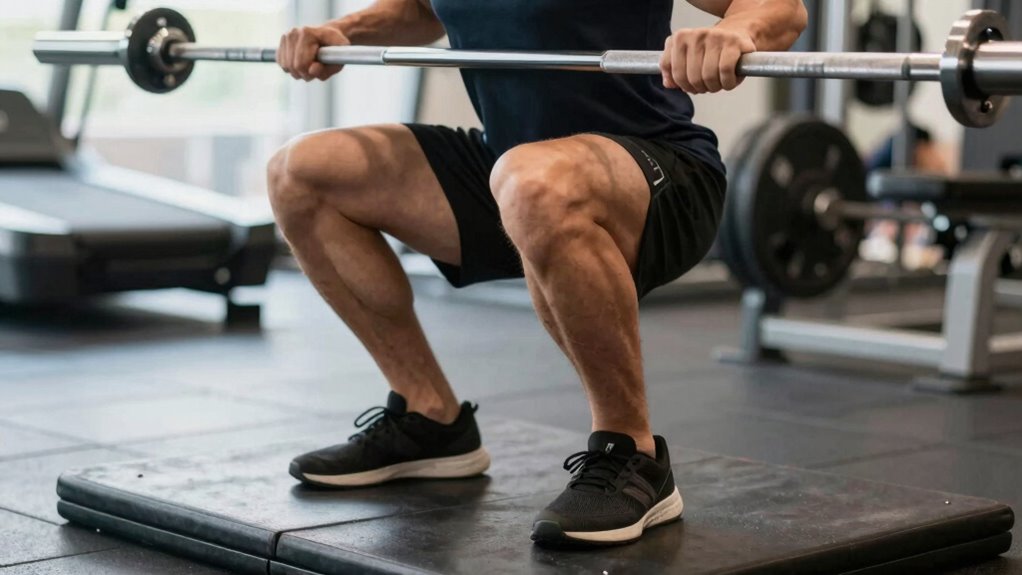
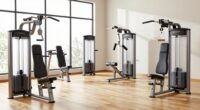
To avoid lower back stress during hack squats, focus on maintaining proper form by engaging your core, keeping your spine neutral, and avoiding forward or rounding motions. Position your feet shoulder-width apart, distribute weight evenly, and limit your squat depth if needed. Use supportive gear if heavy lifting is involved, and practice controlled movements. Pay attention to any signs of strain, and continue refining your technique for safer, more effective workouts. If you keep these tips in mind, you’ll discover even more ways to protect your lower back.
Key Takeaways
- Engage your core by pulling your belly button toward your spine and keeping ribs down throughout the movement.
- Maintain proper foot placement and keep hips square to ensure balanced weight distribution and spinal alignment.
- Avoid excessive squat depth; control range of motion to prevent overloading your lower back.
- Use supportive equipment like a weightlifting belt or knee sleeves to enhance stability during heavy lifts.
- Incorporate mobility exercises for hips and ankles to improve flexibility and reduce compensatory lower back stress.

Self-Locking Weight Lifting Belt – Premium Weightlifting Belt for Serious Functional Fitness, Power Lifting, and Olympic Lifting Athletes – Training Belts for Men and Women (Medium, Black)
SELF-LOCKING SECURITY: Unlike other lifting belts that only rely on cheap straps to support your lifts, our weight…
As an affiliate, we earn on qualifying purchases.
As an affiliate, we earn on qualifying purchases.
Why Proper Hack Squat Form Is Key to Protecting Your Lower Back
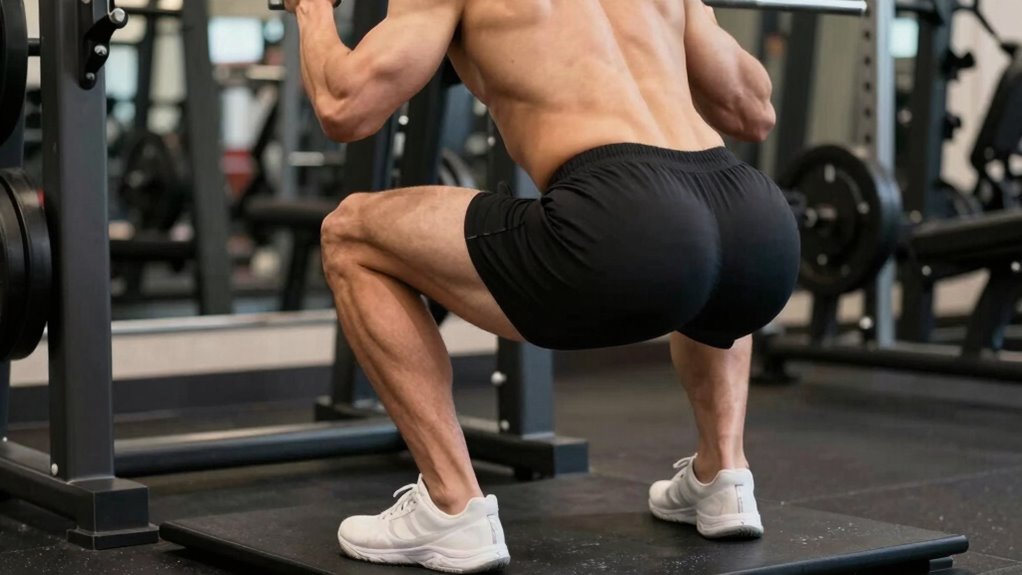
Proper hack squat form is essential because it helps protect your lower back from injury. When you use correct breathing techniques, you maintain core stability, reducing strain on your spine. Inhale as you prepare for the squat, then exhale slowly as you lift, engaging your core muscles and promoting muscle activation in your legs and hips. Proper breathing keeps your posture steady and prevents unnecessary forward or backward leaning, which can stress your lower back. Focusing on muscle activation ensures that you’re engaging the right muscles during each movement, rather than relying on your lower back to compensate. This controlled approach minimizes the risk of overextension or improper loading, keeping your lower back safe while maximizing the effectiveness of your workout. Additionally, incorporating proper ergonomic practices can further enhance safety during your exercises. Being mindful of spinal alignment is also crucial for maintaining a safe and effective squat, especially when you focus on proper movement patterns to prevent injury. Paying attention to core engagement throughout the movement also plays a vital role in supporting your lower back. Ensuring proper body positioning can make a significant difference in maintaining proper form and reducing injury risk.

Gymreapers Knee Sleeves (1 Pair) With Gym Bag – IPF Approved – Knee Compression Sleeve Support for Squats, Weightlifting, and Powerlifting 7MM Neoprene Sleeves – 1 Year Warranty (Black/Black, Large)
𝗚𝗬𝗠𝗥𝗘𝗔𝗣𝗘𝗥𝗦 𝟳𝗠𝗠 𝗞𝗡𝗘𝗘 𝗦𝗟𝗘𝗘𝗩𝗘𝗦 – Built for serious lifters who demand maximum joint support, these 7MM neoprene knee…
As an affiliate, we earn on qualifying purchases.
As an affiliate, we earn on qualifying purchases.
How to Properly Set Up Your Feet and Body for Safe Hack Squats
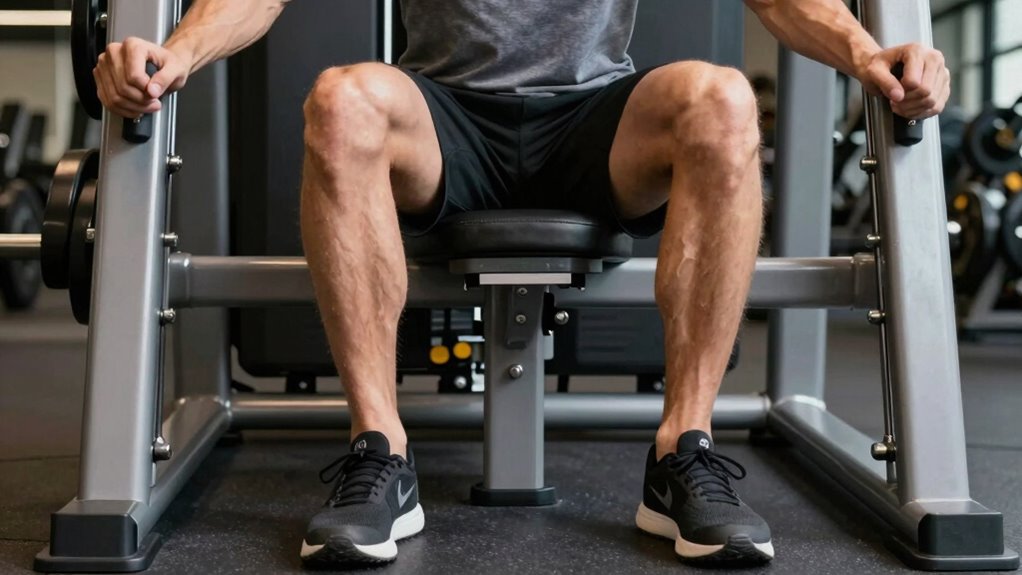
To set yourself up for safe and effective hack squats, start by positioning your feet shoulder-width apart or slightly narrower, with your toes pointed slightly outward. Proper foot placement guarantees stability and reduces strain on your hips and lower back. Focus on maintaining good hip positioning by keeping your hips square and aligned with your knees throughout the movement. Additionally, ensuring your foot placement is correct helps distribute your weight evenly and supports proper form during the exercise. Consider these tips:
- Place your feet firmly on the platform, ensuring even weight distribution.
- Keep your hips squared and avoid twisting or collapsing inward.
- Adjust your foot angle to match your hip mobility and comfort levels.
This setup helps engage the right muscles, maintains balance, and minimizes unnecessary stress on your lower back during the squat.

Mdeam Leg Press Hack Squat Machine,Leg Press Machine with Linear Bearing 45-Degree Hack Squat Machine for Gym Home Lower Body Strength Training for Quads, Hamstring, Glutes, Calves
2-In-1 LOWER BODY TRAINING MACHINE: 45-Degree Leg press hack squat combo provides an awesome lower body exercises by…
As an affiliate, we earn on qualifying purchases.
As an affiliate, we earn on qualifying purchases.
How to Keep a Neutral Spine During Hack Squats
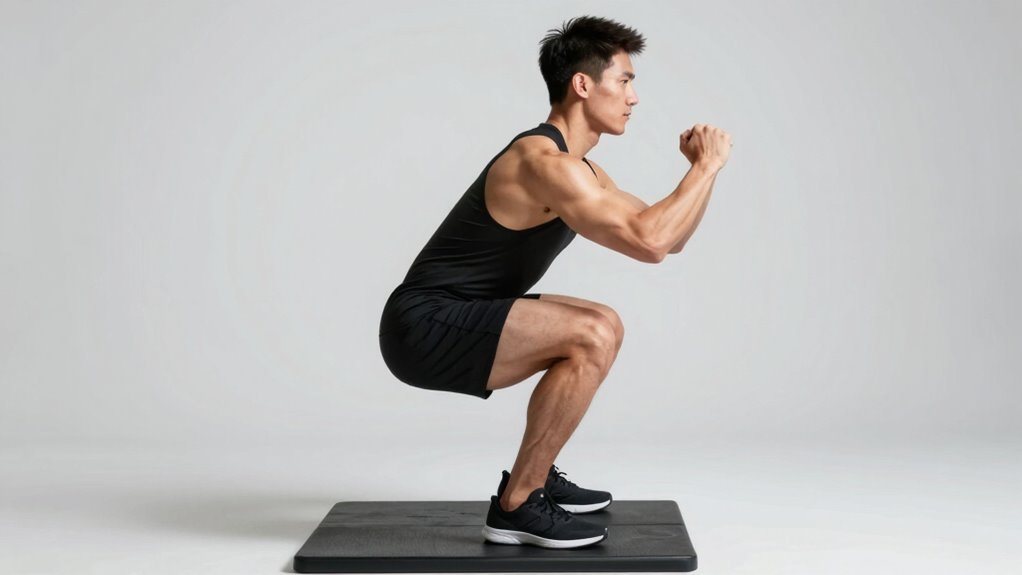
Maintaining a neutral spine during hack squats is crucial for preventing injury and ensuring effective muscle engagement. To achieve proper spinal alignment, focus on keeping your chest up and shoulders back without overextending your lower back. Engage your core to support your posture and avoid collapsing or arching your back. Regular posture correction throughout the movement helps preserve spinal neutrality, reducing unnecessary stress on your lower back. Keep your head aligned with your spine, looking slightly forward rather than down or up. As you descend, consciously maintain this alignment, avoiding any twisting or leaning. Paying attention to your body mechanics ensures you maintain proper form and prevent strain. Additionally, incorporating mobility exercises can improve your range of motion and support better posture during the movement. Practicing these techniques consistently can lead to better posture awareness and injury prevention. By consciously controlling your posture and focusing on spinal alignment, you minimize lower back strain and maximize the benefits of your hack squat.

ProsourceFit Core Balance Disc Trainer, 14" Diameter with Pump for Fitness, Balance Training, or Seating; Wobble Board for Core Stability; Flexible Floor Cushions for Kids, Gray
IMPROVE CORE STRENGTH & BALANCE – Strengthens and engages multiple core muscles at once to maintain balance during…
As an affiliate, we earn on qualifying purchases.
As an affiliate, we earn on qualifying purchases.
Common Mistakes That Increase Lower Back Stress During Hack Squats
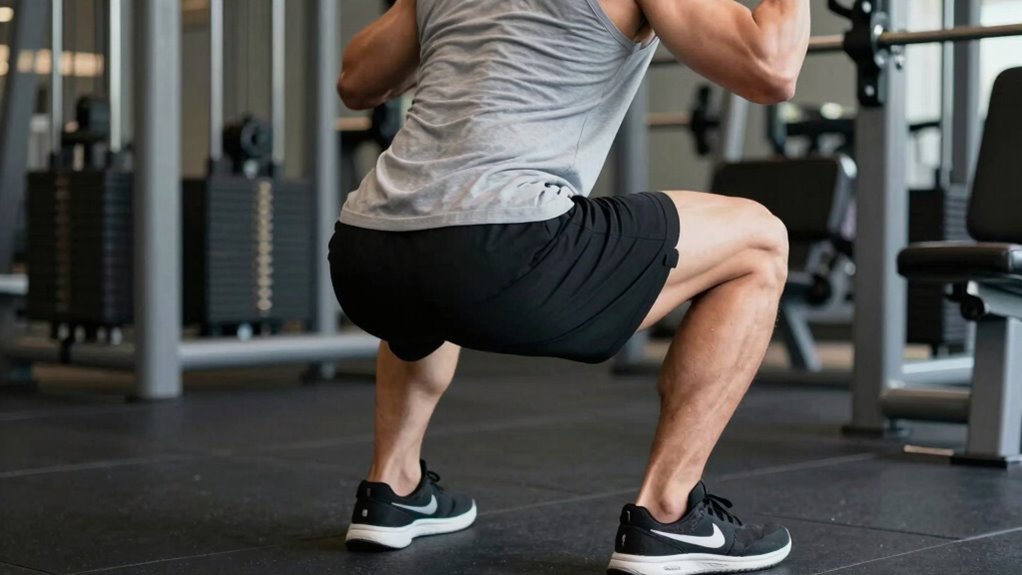
One common mistake that increases lower back stress during hack squats is allowing your hips to shoot forward or shift excessively as you descend. This misalignment places unnecessary strain on your lower back. To avoid this, focus on proper breathing techniques to maintain intra-abdominal pressure and stabilize your core. Poor muscle activation can also lead to compromised form, increasing back stress. Be mindful of these errors:
- Failing to engage your core muscles, causing instability
- Relying on momentum instead of controlled movement
- Breathing shallowly, reducing core support
- Neglecting to monitor your body alignment, which is crucial for injury prevention and optimal performance. Incorporating proper technique and mindful adjustments can greatly improve your form. Ensuring proper muscle engagement throughout the movement can significantly reduce the risk of lower back injury. Additionally, developing awareness of body positioning helps maintain safety and effectiveness during the exercise.
Adjusting Range of Motion for Safe and Effective Hack Squats
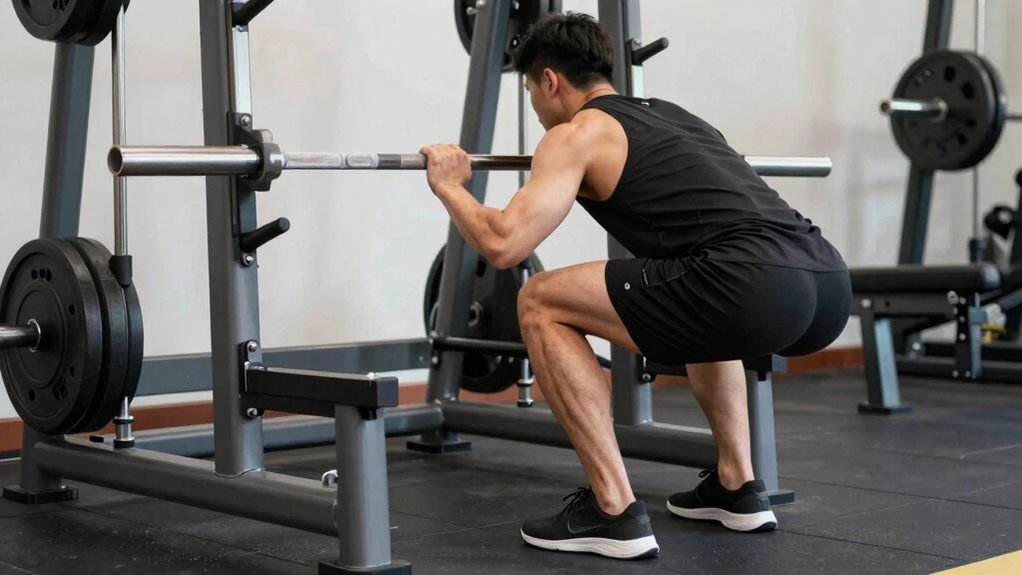
Adjusting your range of motion during hack squats can help protect your lower back while maximizing effectiveness. Focus on range adjustment by controlling how deep you squat. Limiting your squat depth to a comfortable level reduces unnecessary stress on your lower back and knees. Use depth control to find the balance between a challenging workout and safety. If you feel discomfort or strain, don’t push past your safe range; instead, gradually increase depth as your strength improves. Proper range adjustment ensures you target your muscles effectively without overloading your spine. Remember, a controlled, moderate range of motion often yields better results and helps prevent injuries. Listening to your body and modifying your depth accordingly promotes safe solar system design, ensuring consistent, safe progress.
How to Use the Hack Squat Machine Without Overloading Your Lower Back
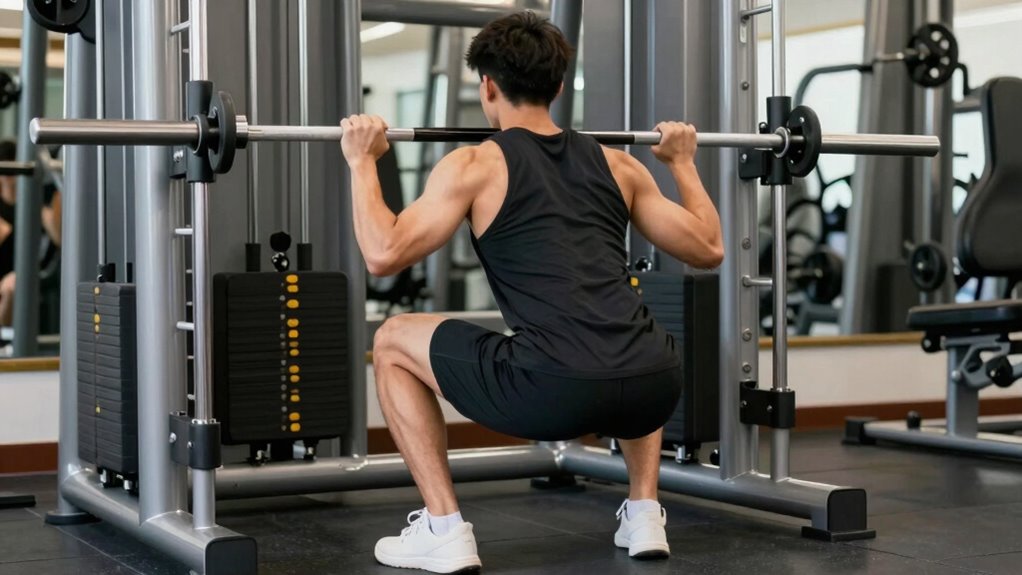
To prevent overloading your lower back during hack squats, it’s essential to focus on proper technique and setup. Start by ensuring your foot positioning is stable—place your feet shoulder-width apart and slightly angled. Use controlled breathing techniques: inhale on the way down and exhale as you push up, maintaining core engagement. Keep your back firmly against the pad and avoid leaning forward or hyperextending your lower back. To further protect your spine, consider these tips:
- Adjust foot placement to find a comfortable, balanced stance
- Maintain steady, controlled breathing throughout each rep
- Focus on keeping your hips and knees aligned during movement
- Be aware of spinal alignment and how proper posture can prevent injury
- Incorporate core stability exercises to enhance overall spinal support and reduce stress during the movement
- Pay attention to joint positioning to ensure safe and effective squat mechanics
- Understanding ergonomics can help optimize your squat setup and minimize strain
- Additionally, practicing proper body mechanics can significantly reduce the risk of lower back stress during hack squats.
How to Engage Your Core for Better Lower Back Support During Hack Squats
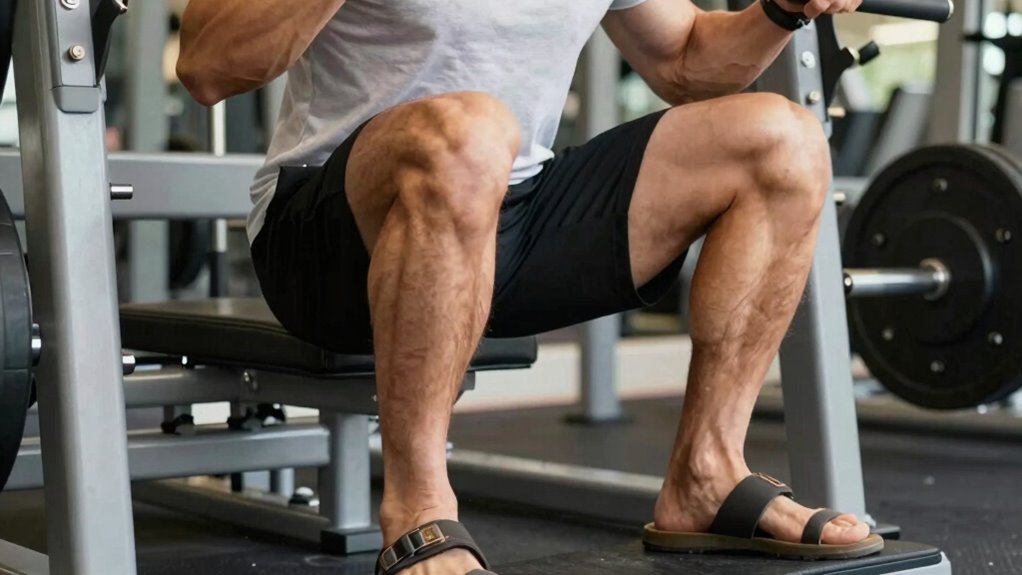
Engaging your core during hack squats helps stabilize your spine and prevents lower back strain. To achieve this, focus on core activation by tightening your abdominal muscles as if bracing for a punch. Keep your ribs down and imagine pulling your belly button toward your spine. Proper core engagement maintains spinal alignment, ensuring your lower back stays in a neutral position throughout the movement. Avoid letting your hips jut forward or rounding your back, as this can lead to unnecessary stress. Throughout each repetition, consciously tighten your core muscles before initiating the movement and maintain that tension. This active engagement creates a solid foundation, helping you perform hack squats safely while protecting your lower back from strain or injury. Incorporating heat buffering techniques can further reduce the risk of injury and improve overall stability during your workout. Additionally, understanding spinal alignment fundamentals can enhance your awareness and help prevent improper form. Developing body awareness can also aid in maintaining proper posture and avoiding compensation that may cause pain. Recognizing how vetted water activities support lower back health can offer additional insights into safe exercise practices. Incorporating knowledge about muscle activation strategies can optimize your form and effectiveness during exercises.
When and How to Use Supportive Equipment for Extra Stability
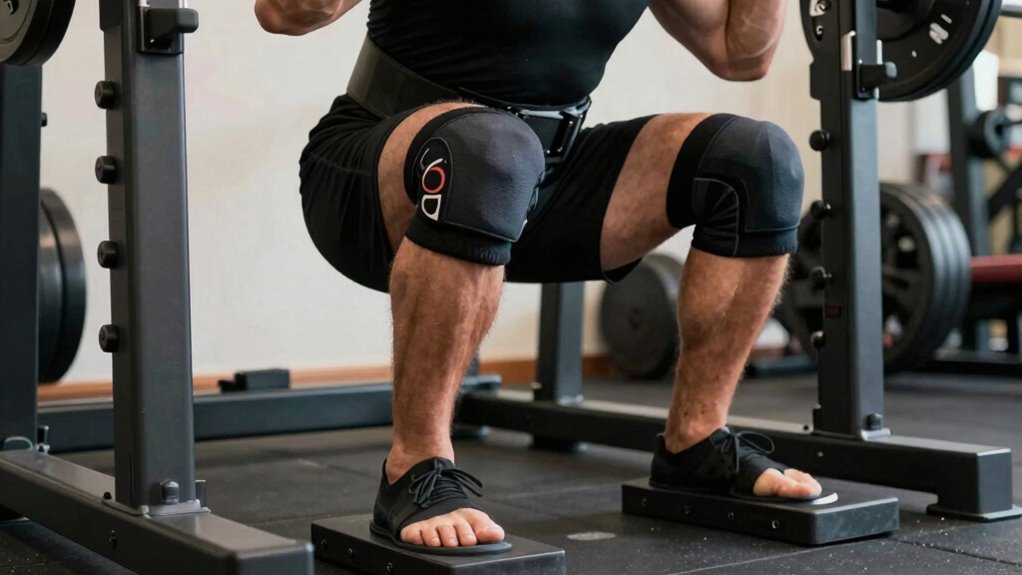
Using supportive equipment can boost your stability during hack squats, but only if you choose the right gear and guarantee it fits properly. Knowing when to incorporate this gear helps prevent injury and improve your form. Let’s explore how to select and use support effectively for safer, more effective workouts. Incorporating the appropriate battery inverter generator capacity ensures your equipment operates reliably, especially during longer or intensive training sessions.
Choosing Proper Support Gear
Choosing the right support gear can make a significant difference in your hack squat performance and safety. Proper support gear enhances stability and helps prevent injury during heavy lifts. When selecting support gear, consider these options:
- Knee sleeves or wraps for joint warmth and added compression
- Weightlifting belts to stabilize your core and reduce lower back stress
- Wrist wraps to support grip and forearm strength
Use support gear when lifting heavier loads or if you have previous injuries, as it promotes injury prevention and maintains proper form. Ensuring your gear fits well—correct fit and sizing—is crucial, as too tight can restrict movement, and too loose offers little benefit. Remember, support gear supplements your technique, not replaces proper form. Investing in quality support gear is a smart move toward safer, more effective hack squats. Additionally, understanding proper equipment use can further optimize your lifting safety and results.
When To Use Support
Supportive equipment should be used whenever you lift heavier loads or aim to improve stability during your hack squats. If you’re pushing close to your max or increasing weight, supportive footwear can help keep your feet secure and aligned, reducing strain on your lower back. Additionally, using supportive gear like weight belts or knee sleeves can provide extra stability and confidence during heavier sets. Incorporate stretching routines beforehand to prepare your muscles and prevent injury, especially if you’re adding support equipment. Supportive footwear ensures your footing remains firm, while other supportive gear helps maintain proper posture and balance. Use support strategically—only when necessary—to enhance safety and performance without relying on it constantly.
Ensuring Correct Fit
Proper fit is key to maximizing the benefits of supportive equipment during your hack squats. To guarantee this, focus on your foot placement and hip alignment. Correctly fitted gear provides added stability and reduces lower back stress. When using supports, check that your foot placement allows your knees to track over your toes comfortably. Make sure your hips are aligned and don’t shift forward or backward during the movement.
Consider these tips:
- Adjust support height for ideal hip alignment
- Use straps or belts to stabilize your core
- Ensure your foot position feels balanced and secure
Progressively Improving Your Hack Squat Technique Over Time
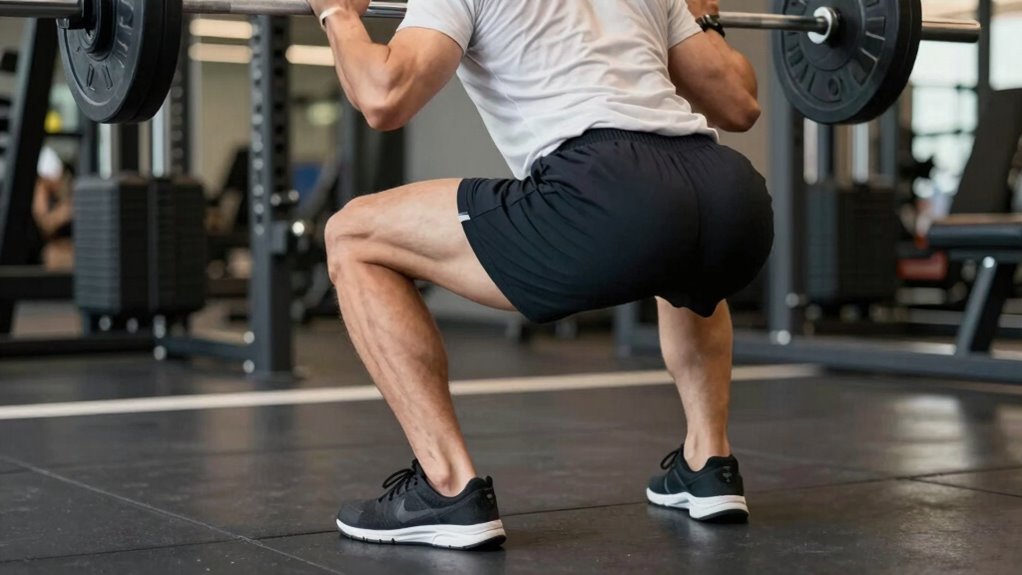
To continually improve your hack squat technique, focus on making small, deliberate adjustments over time. Pay attention to your breathing techniques, guaranteeing you breathe steadily to maintain core stability and reduce unnecessary strain. Proper breathing enhances muscle activation, helping you engage the right muscles during each rep. Start by focusing on controlled movements, gradually increasing weight or repetitions as you become more comfortable. Record your form or work with a trainer to identify areas for improvement. As you progress, refine your stance, depth, and foot placement to optimize safety and effectiveness. Consistent practice, combined with mindful breathing and attention to muscle activation, ensures steady progress while minimizing the risk of lower back stress. Patience and persistence are key to mastering proper hack squat form.
Signs of Lower Back Strain and How to Address Them
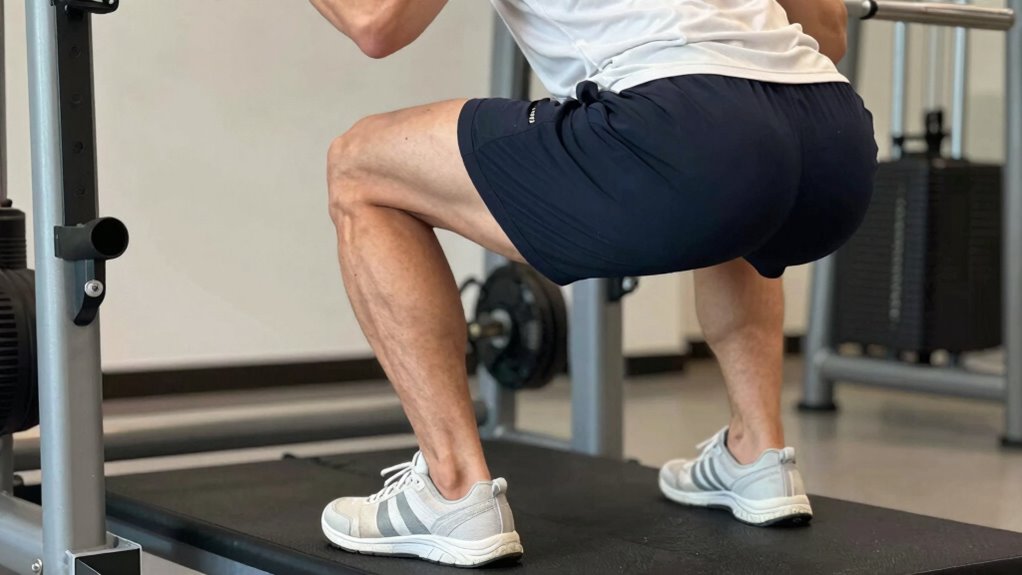
As you refine your hack squat form, it’s important to recognize the signs that your lower back might be under strain. You may notice persistent soreness, sharp pain during or after the lift, or a feeling of tightness in your lower back. These symptoms often indicate improper technique, possibly caused by limited ankle mobility or hip flexibility, which can force your back to compensate. To address these issues:
- Improve ankle mobility to ensure proper foot placement and balance
- Incorporate hip flexibility exercises to reduce compensatory movements
- Adjust your stance or depth to avoid overloading your lower back
Listening to your body and making these adjustments helps prevent injury and keeps your lower back healthy during hack squats.
Frequently Asked Questions
Can I Do Hack Squats if I Have Lower Back Pain?
If you have a lower back injury, it’s best to avoid hack squats until you’ve healed and gotten clearance from your doctor. Doing hack squats with pain can worsen your injury. Instead, try exercise modifications like lighter weights or alternative leg exercises that don’t stress your lower back. Always prioritize proper form and listen to your body to prevent further injury and promote recovery.
How Often Should I Vary My Hack Squat Workout?
Think of your hack squat routine like tending a garden—you need variety to keep growth steady. You should vary your training frequency every 4 to 6 weeks to prevent plateaus and promote workout progression. Incorporate different rep ranges, weights, and rest periods, listening to your body. This approach guarantees you avoid overtraining and keep your muscles challenged without risking lower back stress. Consistency with variation is key to progress.
What Are the Best Stretches to Prevent Back Strain?
To prevent back strain, focus on stretches that boost core stability and hamstring flexibility. Try planks and bird-dogs to strengthen your core, which supports your lower back. Incorporate hamstring stretches like seated forward bends and standing splits to keep those muscles flexible. Consistently stretching these areas helps stabilize your spine during hack squats, reducing the risk of lower back stress and improving overall workout safety.
Is It Better to Use Free Weights or Machines for Squats?
You should consider using machine squats if you’re concerned about lower back stress, as they offer more stability and controlled movement. Free weights, like barbells, engage more muscles and improve balance but require proper form to prevent injury. For beginners or those with lower back issues, machine squats are often safer and more effective. Ultimately, mixing both based on your goals and comfort level can give you the best results.
How Do I Know if My Hack Squat Form Is Correct?
To check if your hack squat form is correct, focus on maintaining proper squat depth and foot placement. Confirm your knees stay aligned with your toes and don’t go past your toes during the movement. Keep your back flat against the pad, and avoid leaning forward too much. If you feel stress in your lower back, adjust your foot position or reduce squat depth. Use a mirror or record yourself to analyze your form.
Conclusion
Mastering proper hack squat form isn’t just about lifting more—it’s about protecting your lower back from hidden dangers. If you ignore the signs or rush your technique, you could face setbacks or injuries. But what if the key to safe, effective squats is simpler than you think? Stay attentive, practice with care, and reveal your true strength—because the next move could make all the difference in your fitness journey. Are you ready to squat smarter?